Table of Contents
Graham Thomas Rose: The Golden Standard of Modern Yellow Shrub Roses
The Graham Thomas rose is one of the defining achievements of twentieth-century rose breeding: a richly scented English shrub rose whose deep, cupped flowers combine the romance of historic garden roses with the repeat-flowering character expected of modern cultivars. Its radiant yellow blossoms suggest warmth, generosity, friendship, and cultivated happiness, yet their symbolism also carries echoes of older—and occasionally less cheerful—interpretations of yellow roses.
Introduced by David Austin Roses in 1983, the cultivar was named for Graham Stuart Thomas, the influential British horticulturist, author, garden designer, and guardian of old rose traditions. Thomas helped restore historic roses to public appreciation at a time when many gardeners favored formally shaped hybrid teas. Naming this golden rose for him was therefore more than a personal tribute: it linked a modern breeding accomplishment with centuries of botanical heritage.
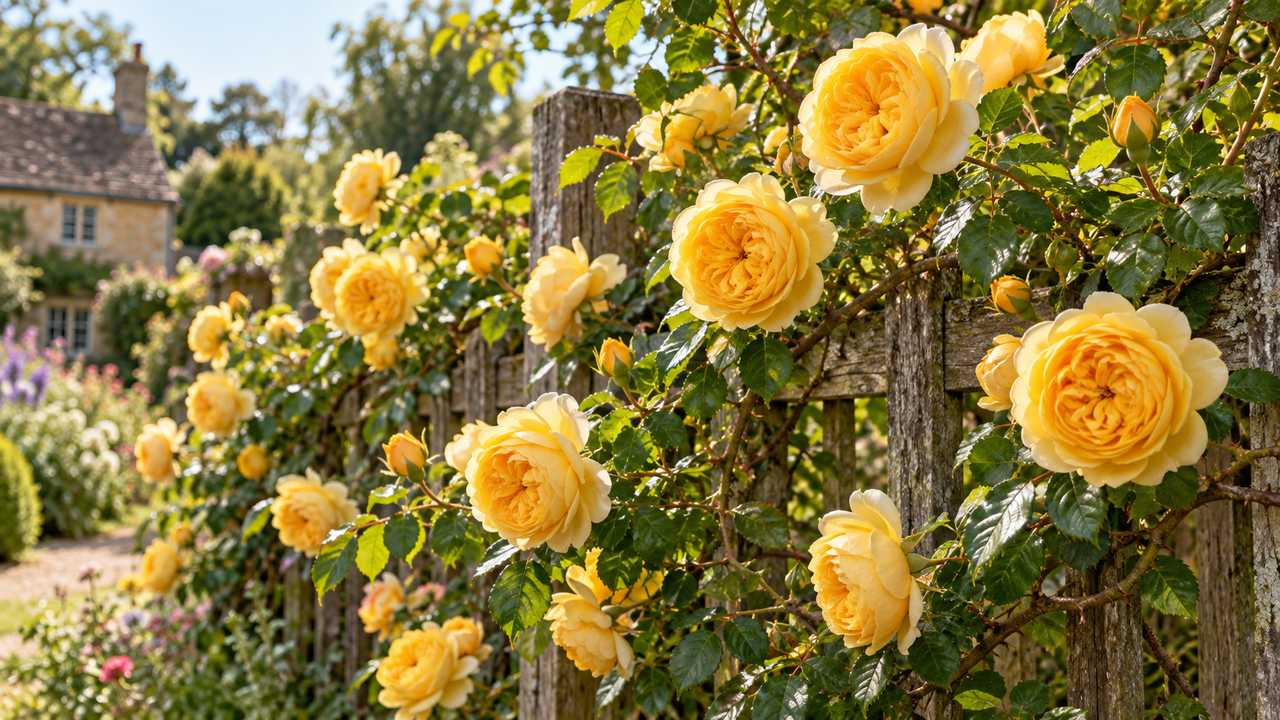
Botanically, Graham Thomas is an English shrub rose, generally classified as Rosa ‘Graham Thomas’. It bears clusters of medium-to-large, many-petalled flowers in an old-fashioned, chalice-like form. The blooms open from rounded buds into cupped rosettes, usually accompanied by a pronounced tea fragrance. Upright, arching growth allows the plant to function as a substantial shrub or, in warmer climates, a short climber.
Meaning and Symbolism of the Graham Thomas Rose
The primary language of the Graham Thomas rose is joyful affection. Its clear golden coloring feels warmer and more substantial than pale lemon, but less fiery than orange. It communicates admiration without the romantic intensity traditionally assigned to red roses. As a result, it is especially well suited to friendships, family relationships, professional congratulations, and expressions of gratitude.
Friendship, Warmth, and Goodwill
In contemporary floristry, yellow roses are widely understood as emblems of friendship, optimism, and emotional warmth. Graham Thomas deepens this familiar message through its historic-looking form. A bouquet can say, “Your presence enriches my life,” without necessarily implying courtship. Its generous petals and warm color also suggest openhearted hospitality—the pleasure of welcoming someone into a home, garden, or community.
Esteem and Horticultural Legacy
Because the rose honors a distinguished horticulturist, it carries an additional meaning of respect for knowledge, stewardship, and enduring contribution. It is particularly appropriate for teachers, mentors, gardeners, writers, preservationists, and people whose work protects cultural or natural heritage. In this context, the flower symbolizes not merely success, but a legacy lovingly cultivated over time.
Joy Tempered by History
Yellow roses have not always conveyed uncomplicated happiness. In some nineteenth-century European flower dictionaries, they represented jealousy, waning affection, or infidelity. Interpretations varied between publications, and flowers gained meaning through combinations, presentation, and social context. Readers exploring the Victorian language of flowers should remember that it was never one perfectly standardized code.
By the twentieth century, especially in North American popular culture, yellow roses had largely shed these suspicious associations. They became flowers of friendship, welcome, remembrance, and cheerful recovery. Today, Graham Thomas is far more likely to be read as sunny and appreciative than jealous. Nevertheless, when sending it in a sensitive romantic situation, a short card prevents an unintended message.
Cultural Interpretations
Color symbolism differs across cultures. In many Western settings, golden yellow suggests sunlight, celebration, hope, and companionship. In Chinese cultural history, yellow has associations with prestige, centrality, and imperial authority, although those meanings should not automatically be treated as a fixed code for every yellow rose gift. In contemporary international floristry, personal and situational context usually matters more than any supposedly universal rule.
| Context | Likely Meaning | Best Presentation |
|---|---|---|
| Close friendship | Loyalty, happiness, appreciation | Loose garden-style bouquet with foliage |
| Mentorship or retirement | Esteem, wisdom, lasting influence | Established potted plant or formal arrangement |
| Housewarming | Welcome, abundance, hospitality | Golden roses with herbs and seasonal foliage |
| Recovery or encouragement | Hope, renewed energy, good cheer | Small, lightly scented bedside arrangement |
| Romantic gift | Warm affection rather than overt passion | Blend with blush or apricot roses and include a note |
Shades, Variations, and Bouquet Nuance
Graham Thomas flowers are commonly described as rich, pure, or golden yellow, but their appearance changes with climate, maturity, and light. Newly opened central petals may look saturated and buttery, while outer petals soften toward primrose as the flower ages. Strong sun can fade blooms more rapidly; cool weather often preserves a deeper golden tone.
These distinctions influence the message. Vivid gold feels celebratory and confident, making it ideal for promotions, anniversaries, and milestone birthdays. Softer yellow suggests tenderness, remembrance, or quiet encouragement. Garden-grown stems containing buds, open cups, and fading rosettes create a natural meditation on continuity and change. For comparison, peachier flowers communicate a gentler welcome; the traditional apricot rose meaning emphasizes hospitality, warmth, and affectionate gratitude.
The number of roses can shape presentation, but rigid numerical codes are neither historic universals nor reliable across cultures. One exceptional bloom can express focused admiration, while a generous armful conveys abundance and celebration. The broader guide to rose color meanings is useful when designing mixed bouquets, though the recipient’s preferences should always take precedence over formula.
When and How to Give Graham Thomas Roses
- Birthdays: Choose them for optimistic, sociable recipients, particularly gardeners and lovers of English-style flowers.
- Congratulations: Their gold coloring suits graduations, promotions, publications, awards, and successful creative projects.
- Thank-you gifts: Present them to hosts, teachers, neighbors, mentors, or volunteers as an expression of generous appreciation.
- Housewarmings: A potted plant is a lasting emblem of welcome, growth, and a happy future in the new home.
- Memorial occasions: Use softer blooms with white flowers and restrained greenery to honor a warm, influential personality.
- Romantic occasions: Pair them with blush, cream, or apricot roses when the intended message is affectionate and intimate.
Modern etiquette favors clarity and consideration. Include a personal card rather than expecting the recipient to decode the color. Check whether strong fragrance is welcome, especially in hospitals, workplaces, or small apartments. For bereavement, investigate family and religious customs before sending bright flowers. A living Graham Thomas plant is a thoughtful gift only when the recipient has suitable space and genuinely enjoys gardening.
Companion Flowers and Styling
Graham Thomas naturally suits loose, painterly arrangements. Blue delphiniums, cornflowers, or campanulas create a vivid complementary contrast. Lavender and catmint produce a softer cottage-garden mood, while white sweet peas, phlox, or cosmos make the yellow appear luminous. Cream roses and pale apricot blooms form a refined tonal palette for weddings and elegant dinners.
For foliage, use airy stems rather than dense, glossy masses. Lady’s mantle, scented geranium leaves, mint, rosemary, or delicate grasses reinforce the rose’s garden character. Avoid crowding the cupped blooms: their architectural form is most effective when each flower has room to open. A low ceramic bowl feels informal and abundant; a tall stoneware vessel emphasizes the cultivar’s arching stems.
Cultivation and Cut-Flower Care
Plant Graham Thomas in fertile, moisture-retentive but well-drained soil with at least six hours of direct sun. In very hot regions, light afternoon shade can help preserve flower color. Water deeply at the base, mulch to moderate soil temperature, and maintain good air circulation. Feed after the first spring growth and again following the initial flowering flush, according to local conditions and product guidance.
The plant commonly develops into a tall, upright shrub and may be trained against a wall, fence, or pillar where winters are mild. Tie long canes loosely to supports and prune with its intended form in mind: shorten and shape shrub-grown plants, but retain useful structural canes on specimens trained as climbers. Disease performance varies by climate, so remove fallen leaves and select an open site where foliage dries promptly.
For arrangements, harvest when the sepals have relaxed and the outer petals are beginning to open. Cut in the cool morning, recut stems at an angle, remove foliage below the waterline, and place them promptly in a clean vase with floral preservative. Refresh the water every day or two. These many-petalled garden roses may have a shorter vase life than commercial florist cultivars, but their fragrance and form compensate beautifully.
Spent blooms can also become keepsakes. Select flowers before they brown, since yellow petals may deepen or mute during preservation. A careful drying roses technique helps retain their shape and as much of their golden character as possible.
A Rose of Living Gold
The Graham Thomas rose succeeds because it unites several kinds of value: botanical vigor, old-rose beauty, memorable fragrance, historical tribute, and unusually versatile symbolism. It can honor a mentor, welcome a friend, brighten a recovery, celebrate achievement, or bring cultivated warmth to a garden. Its yellow petals acknowledge that flower meanings change over time—from Victorian suspicion to modern friendship—while its enduring form reminds us that beauty is often strongest when tradition and innovation grow together.