Table of Contents
Buttercup Yellow Rose Meaning: Childlike Joy, Radiant Energy, and Positivity
The buttercup yellow rose carries the emotional brightness of a sunlit garden. Its clear, glowing color evokes carefree laughter, youthful curiosity, spring meadows, and the simple pleasure of sharing happiness with another person. Unlike deeper golden roses, which can appear stately or ceremonial, buttercup yellow blooms tend to feel playful, fresh, and spontaneous. Their message is less about grandeur and more about delight: “You make life brighter.”
Botanically, “buttercup yellow” is a descriptive color rather than a formal rose classification. Florists use the term for roses whose petals resemble the luminous yellow of buttercup flowers in the genus Ranunculus. Depending on the cultivar, the bloom may be a uniform lemon-yellow, a warm sunny shade, or a softer yellow that fades toward cream at the outer petals. Color, petal form, fragrance, and bouquet companions all influence the final symbolism.
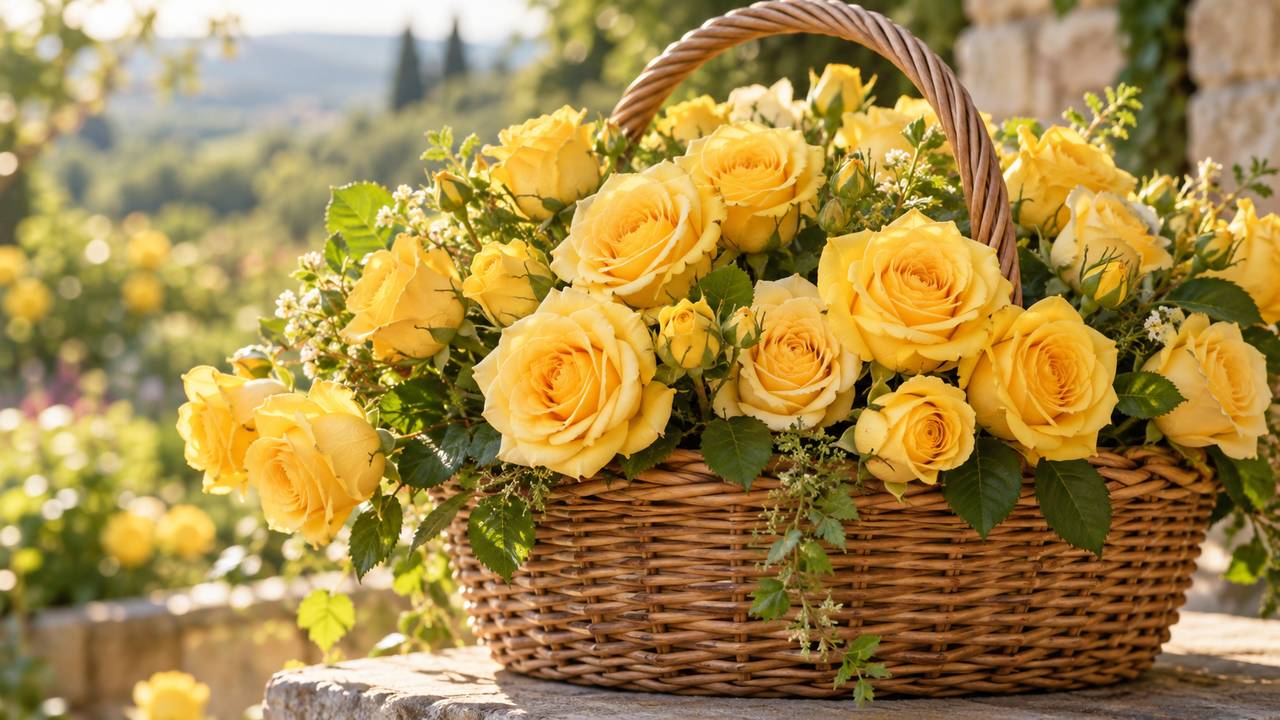
The history is equally nuanced. Yellow roses once carried associations with jealousy, fading affection, and suspicion in European flower-language books. Over time, particularly during the twentieth century, those uneasy meanings gave way to friendship, welcome, optimism, and celebration. The modern buttercup yellow rose meaning draws from this happier tradition while adding a distinctive note of childlike wonder.
What Does a Buttercup Yellow Rose Mean?
At its heart, the buttercup yellow rose symbolizes radiant happiness freely shared. It is affectionate without necessarily being romantic, making it one of the most versatile roses for friends, relatives, colleagues, and loved ones. Its principal meanings include:
- Childlike joy: The vivid color recalls play, imagination, innocence, and uncomplicated happiness.
- Radiant energy: Like sunlight, it conveys warmth, vitality, encouragement, and renewed motivation.
- Friendship: It celebrates companionship, loyalty, shared humor, and platonic affection.
- Positivity: Buttercup yellow roses offer an uplifting message during recoveries, transitions, or difficult seasons.
- New beginnings: Their fresh appearance suits graduations, new jobs, housewarmings, and personal reinvention.
- Gratitude: A bouquet can express sincere appreciation without the romantic intensity of red or burgundy roses.
These associations belong to the wider tradition of yellow rose meaning, but the buttercup shade is especially buoyant. It suggests happiness in motion: dancing, laughing, exploring, and beginning again with confidence.
Historical and Cultural Interpretations
Yellow roses were unknown to the earliest European rose gardens, which were dominated by white, pink, and red forms. Naturally yellow species entered European cultivation from regions of western and central Asia, expanding both rose breeding and floral symbolism. By the nineteenth century, yellow roses had become visually striking participants in the increasingly elaborate language of flowers.
Victorian floriography was never governed by one universal dictionary. Meanings varied among authors, countries, and editions. Nevertheless, yellow roses were frequently connected with jealousy, infidelity, or a decline in love. That interpretation may have arisen partly from the color yellow’s older European associations with envy, betrayal, and social exclusion. A recipient familiar with those conventions might have read a yellow rose as an emotionally cautious or even accusatory gift.
Modern Western customs have largely reversed that message. Yellow roses now represent friendship, good spirits, congratulations, and welcome. In the United States, they are often associated with hospitality and remembrance, while in many contemporary international settings yellow flowers communicate prosperity, warmth, or cheerful celebration. Cultural context still matters, however: in some communities, yellow flowers may be linked with separation, mourning, or romantic rejection. When gifting across cultures, a short card explaining your intention prevents ambiguity.
The buttercup yellow rose is also symbolically distinct from darker rose colors. The mystery and transformation associated with black rose meaning create a dramatically different emotional atmosphere, while burgundy rose passion suggests mature desire and profound devotion. Buttercup yellow remains open, sociable, and lighthearted.
Meanings by Shade and Presentation
| Variation | Primary Meaning | Best Context |
|---|---|---|
| Pale butter yellow | Gentleness, hope, quiet encouragement | Recovery, new baby, thoughtful friendship |
| True buttercup yellow | Childlike joy, optimism, lively affection | Birthdays, congratulations, reunions |
| Golden yellow | Achievement, abundance, admiration | Graduations, promotions, anniversaries |
| Yellow with peach edges | Warm gratitude, fondness, gentle attraction | Thank-you gifts, early romance |
| Yellow and white bouquet | Fresh starts, sincerity, peaceful happiness | Weddings, housewarmings, spring events |
The number and condition of the roses also shape their message. A single buttercup yellow rose is a small, personal spark of encouragement. A loose bunch feels spontaneous and friendly, while a dozen creates a generous celebration. Fully open roses appear exuberant and abundant; tighter buds suggest potential, youth, and beginnings. Avoid damaged or browning petals, because freshness is central to the color’s symbolism.
When and to Whom Should You Give Them?
Buttercup yellow roses are particularly appropriate for a friend’s birthday, a sibling’s accomplishment, a colleague’s promotion, or a student’s graduation. They also make gracious housewarming flowers because yellow energizes a room without seeming overly formal. For someone recovering from illness or disappointment, their brightness can communicate, “I am thinking of you, and better days are possible.” Always check hospital fragrance and flower restrictions before sending them.
They are well suited to mentors, teachers, hosts, neighbors, and teammates. In romance, however, etiquette requires more awareness. A yellow bouquet sent without explanation can read as purely platonic or, to someone familiar with older symbolism, as emotional distance. If your intention is romantic, combine the roses with a warmer flower or write a clear card. A message such as “You bring so much happiness and light into my life” preserves their joyful character while clarifying affection.
For sympathy occasions, use buttercup yellow thoughtfully. It can honor a person remembered for humor, warmth, or an optimistic nature, but a very bright arrangement may feel unsuitable to some mourners. Softer yellow roses mixed with cream flowers and restrained greenery create a more contemplative tribute.
Companion Flowers and Bouquet Styling
White lisianthus, sweet peas, chamomile, and airy feverfew enhance the innocent, meadow-like personality of buttercup yellow roses. Blue delphinium or cornflower tones provide crisp contrast, while lavender statice introduces calmness. Eucalyptus lends a silvery modern finish, although delicate greenery such as bupleurum produces a more natural garden style.
For warmth and gentle romantic interest, pair yellow roses with peach or coral blooms. Understanding coral rose symbolism is useful here: coral can express desire, enthusiasm, and approachable romance, turning a friendly yellow arrangement into one of affectionate attraction. For formal events, combine buttercup yellow with ivory roses and restrained foliage. For a playful birthday bouquet, use tulips, ranunculus, snapdragons, or gerbera daisies in citrus shades.
Choose wrapping that supports the intended mood. Kraft paper and raffia feel rustic and spontaneous; cream paper looks elegant; pale blue wrapping creates a fresh complementary contrast. Avoid excessive glitter or crowded embellishment, which can overwhelm the rose’s naturally sunny simplicity.
Botanical Care and Vase Longevity
Fresh cut roses commonly last about five to ten days, depending on cultivar, handling, and room conditions. Select stems with firm petals, healthy green sepals, and buds that are beginning to loosen. Extremely tight buds may never open, while fully expanded flowers will generally have a shorter vase life.
- Wash the vase thoroughly to reduce bacteria.
- Recut one to two centimeters from each stem at an angle with a clean, sharp tool.
- Remove every leaf that would sit below the waterline.
- Add commercial flower food according to its directions rather than improvising a strong sugar solution.
- Refresh the water and clean the vase every two days.
- Keep roses away from direct sun, heaters, drafts, and ripening fruit, which releases aging-promoting ethylene.
In the garden, yellow rose cultivars generally need at least six hours of direct sunlight, fertile but well-drained soil, and good air circulation. Water deeply at soil level rather than repeatedly wetting the leaves. Cultivar selection matters: disease resistance, fragrance, mature size, and climate suitability are more reliable purchasing criteria than color alone.
A Lasting Message of Light
The buttercup yellow rose meaning is ultimately one of happiness made visible. It celebrates the friend who restores your spirits, the childlike wonder that survives adulthood, and the courage to greet a new chapter with hope. Although yellow roses have carried more troubled meanings in earlier flower lore, contemporary gifting emphasizes friendship, vitality, welcome, and positive energy.
Given with cultural awareness and a sincere note, buttercup yellow roses are both beautiful and emotionally precise. Whether presented as one luminous stem or arranged in a relaxed garden bouquet, they say something universally welcome: your presence brings warmth, and this moment deserves joy.