Few botanical specimens command the immediate, dramatic attention of the dark, velvet-petaled rose. While mainstream horticulture often celebrates bright blooms—much like the cheerful warmth explored in our Yellow Rose Meaning: How Friendship, Joy, and Historical Jealousy Shape Its Symbolism guide—the dark iteration whispers tales of the mysterious, the profound, and the eternal. To fully understand the black rose meaning: myth, mourning, rebirth, and gothic romantic symbolism, one must journey through centuries of folklore, literature, and modern floral artistry.
True black roses do not naturally exist in the wild; what we perceive as black is actually an intensely saturated shade of purple, maroon, or red, such as the famous Halfeti roses of Turkey. This scarcity in nature has only heightened their mystique. In this comprehensive guide, we will unpack the layers of history, emotional resonance, and cultural impact wrapped inside these captivating blooms.
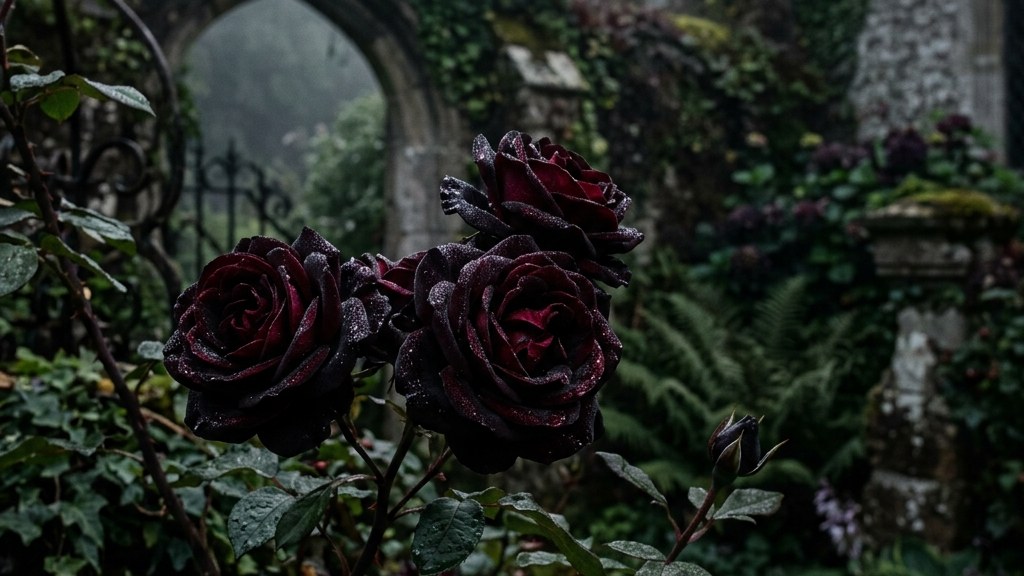
Table of Contents
The Botanical Reality: Are True Black Roses Real?
Before diving into the rich tapestry of symbolism, it is crucial to address the horticulture. Botanically speaking, plants lack the genetic capability to produce true black pigmentation (delphinidin combined with specific cellular pH levels usually results in very dark violet or crimson). Roses labeled as “black” are extreme variants cultivated through selective breeding.
The most legendary of these is the Halfeti rose, which grows exclusively in a small village in Sanliurfa, Turkey. Due to the unique regional soil conditions and the groundwater’s pH levels flowing from the Euphrates River, these roses bloom a deep, ominous crimson in the spring and shift to an absolute midnight black by the height of summer. Gardeners worldwide attempt to replicate this intensity through intensive cross-breeding of dark-toned varieties like ‘Black Baccara’ and ‘Black Magic.’ For additional helpful context, take a look at our guide on Yellow Rose Meaning: How Friendship, Joy, and Historical Jealousy Shape Its Symbolism.
Mythology and Folklore: Origins of the Dark Bloom
Throughout ancient mythologies, darkness was rarely viewed solely as evil; rather, it represented the unknown, the subconscious, and the fertile womb of the Earth. In ancient Greek and Roman mythologies, dark flowers were often tied to underworld deities such as Hades and Persephone. They served as physical manifestations of mystery, secrecy, and the boundary between the living realm and the afterlife.
In Victorian flower language (floriography), where every sentiment required a specific botanical ambassador, dark or blackened blooms carried heavy, complex messages. While lighter variations like those detailed in our White Rose Meaning and Symbolism: Complete Guide to Purity, Weddings, and Remembrance focused on innocence, the dark rose stood as a stark counter-narrative, often deployed to signal absolute finality, broken ties, or dangerous obsessions.
Core Themes of Black Rose Symbolism
To grasp the multifaceted nature of the dark rose, we must examine its four primary symbolic pillars: myth, mourning, rebirth, and gothic romance.
1. Myth and Mystery
Because they defy standard expectations of floral brightness, dark roses represent enigma and the unattainable. In literature and art, gifting a black bloom implies that the recipient holds secrets or that the sender’s intentions are layered, deep, and beyond surface-level interpretation.
2. Mourning, Grief, and Farewell
Traditionally, deep crimson and near-black flowers have been utilized in memorial services and funerals. They symbolize a profound, heavy sorrow, a permanent parting, or the end of a significant chapter in life. They offer a dignified, solemn aesthetic for honoring those who have passed beyond the veil.
3. Rebirth, Transformation, and New Beginnings
Paradoxically, black roses are deeply tied to rebirth. In alchemy and ancient esoteric traditions, darkness is the necessary precursor to illumination—the blackening phase (nigredo) represents the breakdown of the old ego before spiritual transformation can occur. Just as a forest fire clears the soil for vibrant new growth, the dark rose signifies that an old phase must completely end for a powerful new beginning to take root.
4. Gothic Romance and Devotion
In modern alternative subcultures and gothic literature, the dark rose is the ultimate emblem of undying, tragic, or unconventional love. Unlike fleeting infatuations, gothic romance embraces the shadows, portraying a love that survives trials, darkness, and time itself. It is passionate, intense, and unapologetically dramatic.
Comprehensive Comparison of Rose Symbolism by Color
To understand where the dark rose fits within the broader spectrum of floral communication, review the comparative analysis below:
| Rose Color | Primary Emotional Meaning | Traditional Cultural Association | Ideal Occasion |
|---|---|---|---|
| Black / Dark Maroon | Rebirth, mystery, deep mourning, gothic devotion | The occult, profound transformation, tragic romance | Artistic statements, alternative weddings, memorials |
| Red | Passionate love, romance, deep desire | Classic Valentine’s Day sentiment | Anniversaries, romantic proposals |
| White | Purity, innocence, new beginnings, spiritual reverence | Weddings, solemn remembrance | Bridal bouquets, sympathy arrangements |
| Yellow | Friendship, joy, welcoming energy | Platonic bonds, celebration | Graduations, congratulatory milestones |
Preserving the Shadow: How to Keep Dark Roses Intact
Because naturally dark or dyed black roses hold such dramatic aesthetic value, floral enthusiasts often wish to keep them permanently as decorative showpieces. Preserving their midnight hue requires specific techniques to prevent fading or browning.
If you are looking to retain their structural integrity and velvety texture for long-term display, proper preservation is key. You can read professional step-by-step instructions in our guide on How to Dry Roses and Preserve Their Natural Color: Air Drying vs Silica Gel Sand, which outlines how to lock in rich pigments without ruining delicate petals.
Modern Applications: From Avant-Garde Decor to Executive Gifting
While the dark rose was once relegated strictly to Halloween aesthetics or gothic poetry, contemporary floral design has elevated it to high-fashion status. High-end event planners utilize near-black blooms in minimalist, modern spaces to create striking visual contrasts against stark white marble or metallic gold accents.
Interestingly, the bold statement made by dark florals has even trickled into high-end professional settings. When curated with sleek, sophisticated framing, avant-garde arrangements can communicate absolute confidence and avant-garde luxury. For those navigating high-level professional relationship management, exploring refined design philosophies can be found in our resource on Corporate Gifting Rose Etiquette: Elegant Floral Arrangements for Executive Milestones, proving that unconventional color palettes have found a permanent place in modern executive curation.
Conclusion
The black rose meaning: myth, mourning, rebirth, and gothic romantic symbolism stretches far beyond a mere novelty item. It is a complex botanical paradox that challenges our perceptions of beauty and darkness. Whether used to mark a profound personal transition, honor a memory, or express an intense, unconventional romance, the dark rose remains one of nature’s most mesmerizing and multifaceted masterpieces.