Few floral gifts evoke as much emotional resonance, romantic tenderness, and celebratory joy as a fresh bouquet of garden roses. Whether received as an anniversary token, an executive congratulatory milestone, or a sentimental keepsake from a memorable bridal bouquet, the fleeting lifespan of fresh petals often brings a tinge of melancholy as they begin to wither and fade after a week. Learning how to properly dry and preserve roses allows you to transform these ephemeral botanical wonders into timeless decorative keepsakes that can endure for years without crumbling into dust.
While preserving flowers has been practiced for centuries across botanical institutions and royal estates, modern floral enthusiasts generally debate between two premier methods: traditional hanging air drying and chemical desiccation using fine silica gel sand. Each technique produces distinctly different aesthetic results in petal geometry, texture, and color preservation. Exploring these preservation options provides an artistic companion to two-dimensional pressing techniques such as how to press roses for framing, while extending the longevity of elegant floral gifts discussed in our guide to corporate gifting rose etiquette.
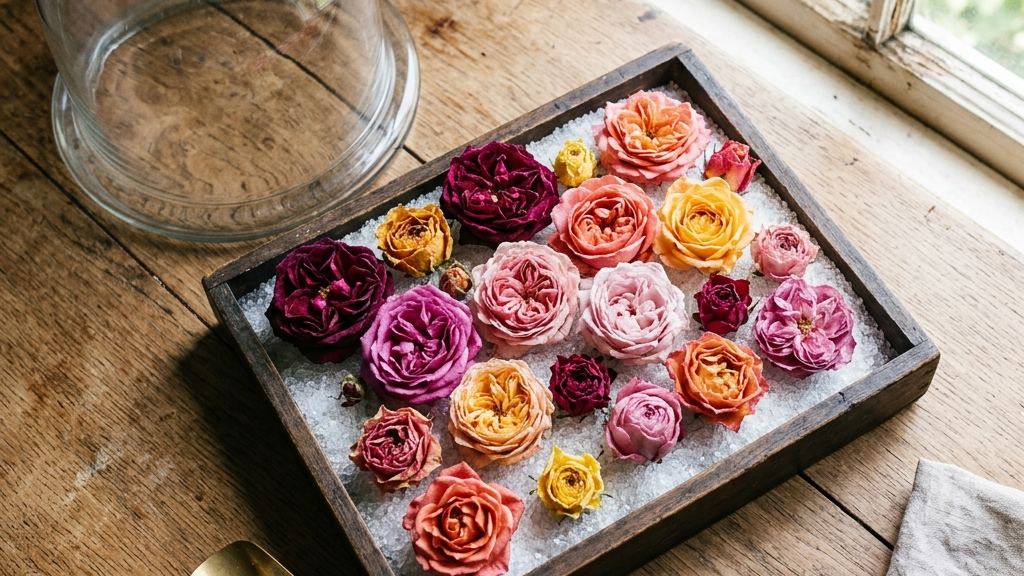
Table of Contents
Understanding the Science of Floral Moisture Loss and Pigment Retention
To preserve a rose successfully, one must comprehend what happens to organic botanical tissues during dehydration. Fresh rose petals are composed of roughly 80 to 90 percent water. As water molecules evaporate, the cellular walls collapse inward, causing petals to contract, curl, and turn brittle. Concurrently, natural plant pigments, primarily anthocyanins responsible for reds, pinks, and purples, and carotenoids responsible for yellows and oranges, are vulnerable to photo-oxidation from sunlight exposure and enzymatic degradation triggered by prolonged ambient humidity.
If roses dry too slowly in an environment with poor airflow, mold spores thrive and pigments oxidize into dull brownish tones. Conversely, if moisture is extracted rapidly while the structural matrix is held under physical support, anthocyanin bonds remain locked within the cellular walls, retaining vivid, true-to-life coloration. This preservation dynamic applies equally whether you are working with soft celebratory hues like champagne roses, emotional memorial arrangements featured in roses for sympathy and funerals, or rich grateful expressions seen in dark pink rose arrangements.
Method 1: The Traditional Hanging Air-Drying Method
The hanging air-drying method is the most accessible, nostalgic, and time-honored technique. It requires no specialized synthetic materials, making it the preferred approach for creating rustic cottagecore floral bundles, vintage wreath arrangements, and aromatic dried potpourri.
Selecting and Preparing the Stems
Timing is paramount. Harvest or select roses when the blossoms are roughly halfway to two-thirds open. Avoid fully blown roses whose petals have begun dropping, as they will shed their heads completely once dried. Strip away all leaves and foliage from the bottom two-thirds of each stem, as leaves retain residual moisture and encourage fungal development.
The Elastic Binding and Suspension Protocol
Group roses into small bunches of three to five stems. Always secure the stems together using an elastic rubber band rather than a rigid twine knot. As stems dry, they shrink by up to 50 percent in diameter; an elastic band contracts automatically, maintaining a snug grip and preventing inverted stems from slipping onto the floor.
Suspend the bunches upside down in a warm, completely dark, well-ventilated space such as a spare closet, attic, or dry pantry. Total darkness is vital to shield sensitive organic pigments from ultraviolet degradation. Allow the roses to hang undisturbed for two to three weeks until the petals feel papery and the stems snap cleanly when bent.
Method 2: Precision Desiccation Using Silica Gel Sand
For botanical preservationists, crafters, and wedding bouquet artisans who demand three-dimensional petal architecture and near-perfect color fidelity, fine-grain silica gel sand is the gold standard. Unlike hanging air drying which shrinks and crinkles petals, silica gel crystals physically cradle each petal from above and below, absorbing moisture in all directions simultaneously without altering the natural bloom shape.
Choosing the Right Silica Desiccant
Do not use granular silica gel packets typically found in shoe boxes. Purchase specialized, fine-mesh floral desiccant crystals that resemble white and blue beach sand. The fine texture ensures that the sand glides effortlessly between delicate inner petals without tearing or bruising fragile tissue.
Step-by-Step Immersion Procedure
- Select an airtight plastic container large enough to accommodate the rose blooms with at least one inch of clearance on all sides.
- Pour an even base layer of silica gel sand roughly 1.5 inches deep across the bottom of the container.
- Trim rose stems to approximately one to two inches in length so the flowers can stand vertically upright with blooms facing upward.
- Gently place the rose stems into the sand base, ensuring they remain upright and separated from adjacent blossoms.
- Using a small measuring cup or plastic spoon, slowly sift additional silica sand around the base of the petals. Allow the sand to gently flow between every petal layer until the entire flower head is completely submerged beneath the surface.
- Seal the container with its airtight lid and store it at ambient room temperature for five to seven days.
Comprehensive Comparison: Air Drying vs. Silica Gel Desiccation
The following detailed comparison table outlines the critical performance metrics, requirements, and aesthetic outcomes of both rose preservation methodologies:
| Preservation Criteria | Traditional Air-Drying Technique | Silica Gel Desiccation Sand | Practical Recommendation |
|---|---|---|---|
| Petal Color Retention | Petals darken significantly into vintage, antique hues | Vibrant, rich, true-to-life original floral colors | Use silica gel for vibrant pastels, air dry for gothic vintage aesthetic |
| Floral Geometry and Volume | Petals contract, curl inward, and lose 30 to 40 percent volume | Full three-dimensional bloom shape perfectly preserved | Silica gel maintains lifelike bouquet architecture |
| Processing Duration | 14 to 21 days in dark, ventilated ambient conditions | 5 to 7 days ambient (or 3 minutes via microwave assist) | Silica gel is three times faster and more predictable |
| Material and Setup Cost | Virtually zero cost (requires only rubber bands and hangers) | Moderate investment ($15 to $30 for reusable silica sand) | Silica gel crystals can be recharged in the oven endlessly |
| Petal Fragility | Moderately flexible with slight leathery durability | Extremely brittle, delicate, and crisp like potato chips | Handle silica-dried blooms with extreme care and soft tweezers |
| Best Suited Applications | Wreaths, hanging wall bundles, rustic cottage decor | Glass cloches, shadowbox frames, resin casting jewelry | Select technique based on your final display showcase |
Post-Preservation Care and Long-Term Display Protection
Regardless of the dehydration method you select, dried roses remain naturally hygroscopic, meaning they will relentlessly reabsorb ambient humidity from room air if left unprotected in humid weather. Moisture reintroduction invites microscopic mildew and causes petals to sag.
To safeguard your preserved roses, apply a light, even mist of matte acrylic UV floral spray or artist-grade pastel fixative from a distance of 12 inches. This transparent coating seals petal pores against humidity fluctuations and provides a barrier against airborne dust. For maximum longevity, showcase your finished dried roses inside an enclosed glass bell jar (cloche), a deep shadowbox display frame, or a curio cabinet situated well away from direct sunlight, heating radiators, and humid bathroom doorways. Treated with proper care, your preserved roses will captivate viewers with their timeless natural grace for many years to come.