Table of Contents
Golden Amber Rose Meaning: Abundant Wealth, Harvest Blessings, and Prestige
The golden amber rose meaning centers on abundance, earned success, harvest blessings, warmth, and refined prestige. Its color recalls late-afternoon sunlight, ripened grain, honey, burnished gold, and amber gemstones—images associated with prosperity and preservation across many cultures. Unlike bright yellow roses, which often communicate cheerful friendship, golden amber roses carry a deeper, more ceremonial emotional tone. They celebrate not merely happiness, but happiness made substantial: a thriving household, a fruitful career, a lasting partnership, or wisdom accumulated through experience.
Golden amber is primarily a modern horticultural and floristry color description rather than a single botanical classification. Roses sold under this name may range from honey-gold and tawny apricot to copper-yellow blooms with bronze or caramel edges. Their petals often change as they open, creating a nuanced flower that seems illuminated from within. That transformation is central to their symbolism: prosperity ripening over time, beauty enriched by maturity, and rewards gathered after patient effort.
Historical Roots of Golden and Amber Symbolism
Although Victorian flower dictionaries did not consistently list “golden amber rose” as a separate emblem, they established much of the symbolic vocabulary from which its modern meaning developed. Yellow roses could suggest delight, affection, jealousy, or fluctuating emotions depending on the source and period. Today, the familiar yellow rose meaning emphasizes friendship, optimism, and joy. Adding amber, copper, or bronze tones gives that sunny symbolism greater gravity, suggesting achievement, dignity, and material or spiritual wealth.
Gold has long signified divine light, sovereignty, excellence, and incorruptible value. In ancient Egypt, it was associated with the gods and eternity; in classical and medieval Europe, gilded objects represented sacred or royal authority. Across parts of Asia, golden hues remain auspicious colors for prosperity, honor, and celebration. Amber contributes another historical layer. Prized along ancient trade routes from the Baltic to the Mediterranean and beyond, the fossilized resin was worn as an ornament and protective talisman. Because amber preserves traces of ancient life, it also came to represent memory, endurance, healing warmth, and the ability to hold precious moments intact.
Primary Golden Amber Rose Meanings
- Abundant wealth: Golden petals evoke coins, treasure, fertile fields, and the richness of a life supplied with both material comfort and meaningful relationships.
- Harvest blessings: Wheat, honey, autumn leaves, and ripened fruit connect amber roses with gratitude, successful labor, and nature’s generous return.
- Prestige and distinction: Their burnished coloring feels stately without the romantic intensity of red, making them suitable for honoring leadership and exceptional achievement.
- Mature affection: Copper and caramel undertones suggest a bond seasoned by loyalty, shared history, and emotional depth.
- Optimism with substance: Where lemon-yellow can feel playful, amber-gold conveys confidence grounded in experience.
- Transformation: Their shifting tones mirror change, encouraging the recipient to recognize growth and welcome a rewarding new phase.
Shade Variations and Their Nuances
Color interpretation depends on undertone, saturation, and presentation. Pale honey roses express gentle appreciation and understated good fortune. Clear golden-yellow blooms feel triumphant and celebratory. Deep amber, cinnamon, or bronze roses suggest heritage, maturity, and autumnal abundance. Roses with peach centers add tenderness and sincerity, while red-edged amber petals introduce desire, courage, or passionate admiration.
Champagne-gold varieties are quieter and more polished. Their associations overlap with the champagne rose meaning, especially elegance, tasteful luxury, and sophisticated celebration. Florists should describe the actual shade when taking an order, since “amber” may refer to anything from warm yellow to coppery orange.
| Golden Amber Variation | Principal Meaning | Best Occasion | Ideal Companion Flowers |
|---|---|---|---|
| Pale honey-gold | Gratitude and gentle prosperity | Thank-you gift or housewarming | Cream lisianthus and chamomile |
| Radiant metallic gold | Victory, status, and excellence | Promotion, award, or graduation | White orchids and glossy foliage |
| Copper or bronze amber | Maturity, endurance, and legacy | Milestone birthday or anniversary | Burgundy dahlias and oak leaves |
| Peach-amber blend | Warm affection and sincere thanks | Hostess gift or family celebration | Peach ranunculus and waxflower |
| Amber with red edges | Admiration strengthened by passion | Romantic milestone | Red roses and copper beech |
Cultural and Seasonal Interpretations
In contemporary Western floristry, golden amber roses are closely linked with autumn, Thanksgiving gatherings, retirement celebrations, and golden wedding anniversaries. Their harvest palette makes them natural emblems of gratitude and plenty. At weddings, they can symbolize a prosperous shared future, particularly when paired with cream flowers and wheat.
In settings influenced by East Asian color traditions, gold may communicate fortune, elevated rank, and auspicious success. However, customs vary significantly among regions and families, so flowers should support rather than replace culturally specific gifts or rituals. In business contexts, amber roses convey congratulations with warmth while avoiding an overtly romantic message.
They may also be used thoughtfully in memorial work, where their sunset color can honor a full, accomplished life. For bereavement, softer gold combined with cream or white is generally more appropriate than a brilliant celebratory arrangement. Consult established guidance on roses for sympathy and respect the family’s religious and cultural preferences.
When and to Whom Should You Give Golden Amber Roses?
Give golden amber roses when the message is “your efforts have borne fruit.” They are excellent for entrepreneurs opening a business, colleagues receiving promotions, graduates entering a profession, artists completing important work, and couples celebrating a long marriage. They also suit mentors, parents, hosts, and friends whose generosity deserves recognition.
For a romantic partner, combine amber roses with red or blush blooms so affection is unmistakable. For a friend or professional contact, use greenery, cream flowers, or a monochromatic gold arrangement. Include a card that names the achievement or quality being honored; this prevents an unusual color from being misunderstood.
Modern etiquette favors natural presentation over glitter, metallic spray, or excessive gold wrapping. Choose roses whose color is naturally warm and complex, and avoid extravagant arrangements where they could create pressure or imply repayment. Odd-numbered bouquets often look relaxed and artistic, while twelve or more stems create formal impact. In some cultures, flower numbers carry specific meanings, so check local custom before sending a large ceremonial gift.
Companion Flowers and Bouquet Styling
For refined luxury, pair golden amber roses with ivory garden roses, white orchids, or cream lisianthus. The contrast draws on the purity and ceremonial associations of white rose symbolism while allowing amber tones to remain the focal point. Eucalyptus, olive foliage, and magnolia leaves add structure without competing for attention.
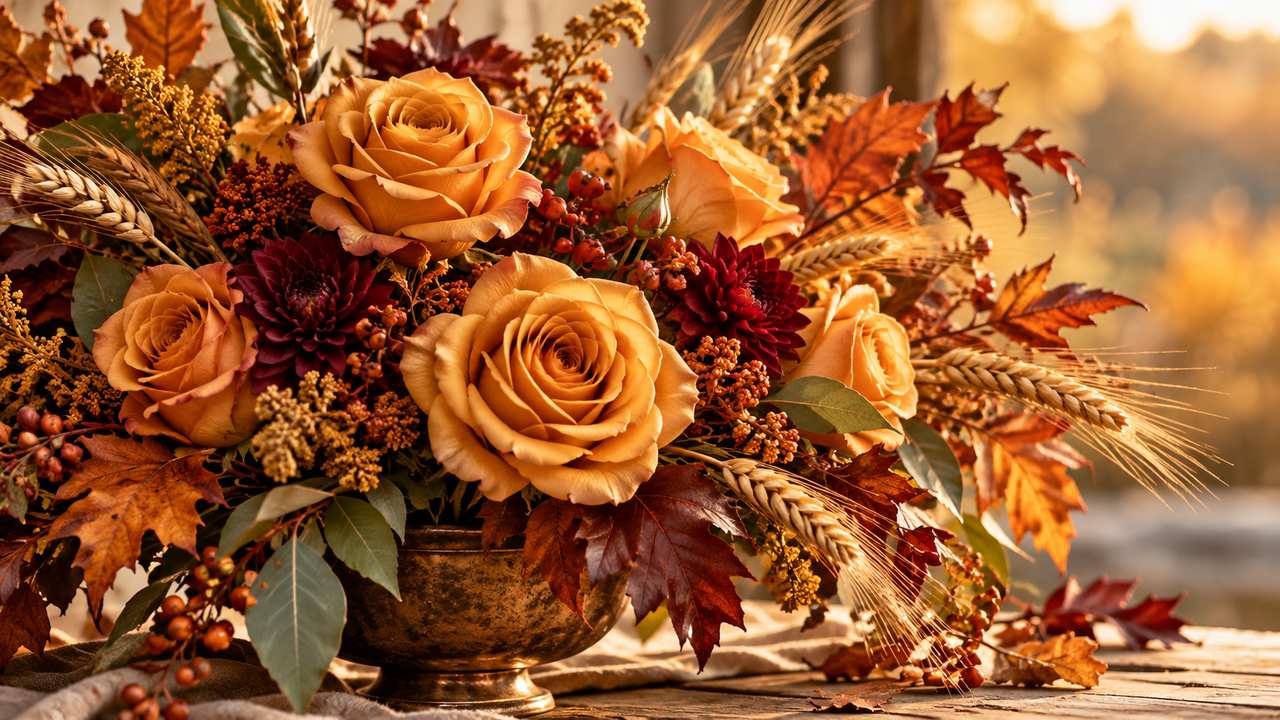
For a harvest arrangement, use dahlias, chrysanthemums, rudbeckia, berries, wheat, and copper beech. Terracotta vessels, smoked glass, or aged brass reinforce the palette. For a contemporary bouquet, combine amber roses with apricot ranunculus, chocolate cosmos, and airy grasses, leaving negative space between flower groups. Avoid mixing too many strong orange and yellow shades unless an exuberant festival effect is intended.
Botanical Care and Vase Longevity
Freshly cut roses commonly last five to ten days, with cultivar, transport, and care determining the result. Select firm blooms with intact guard petals and no dark, soft areas at the neck. Using clean shears, recut one to two centimeters from each stem at a diagonal. Remove every leaf that would sit below the waterline, then place the roses promptly in a clean vase filled with fresh water and commercial flower food.
Keep the arrangement away from direct sun, heaters, drafts, and ripening fruit, which releases bloom-aging ethylene gas. Replace the water, wash the vase, and recut the stems every two days. If a rose droops, recut it and hydrate it separately in deep, lukewarm water.
Gardeners seeking amber flowers should remember that soil chemistry does not determine rose color in the dramatic way it affects some hydrangeas. Cultivar genetics, temperature, sunlight, and bloom age shape the final shade. Plant graft unions at the depth recommended for the local climate, provide at least six hours of sun, water deeply at soil level, and maintain airflow to discourage fungal disease. In intense heat, some golden cultivars fade quickly, so gentle afternoon protection can preserve richer amber tones.
A Symbol of Prosperity Earned and Shared
The golden amber rose is a sophisticated emblem of wealth in its broadest sense: accomplishment, gratitude, enduring relationships, wisdom, and a life made fruitful through care. Its harvest warmth celebrates success without cold ostentation, while its amber depth honors memory and maturity. Whether presented for a promotion, anniversary, new home, retirement, or heartfelt thank-you, it says that abundance is most meaningful when recognized, preserved, and generously shared.