Table of Contents
Canary Yellow Rose Meaning: Unbounded Sunshine, Warm Friendship, and Success
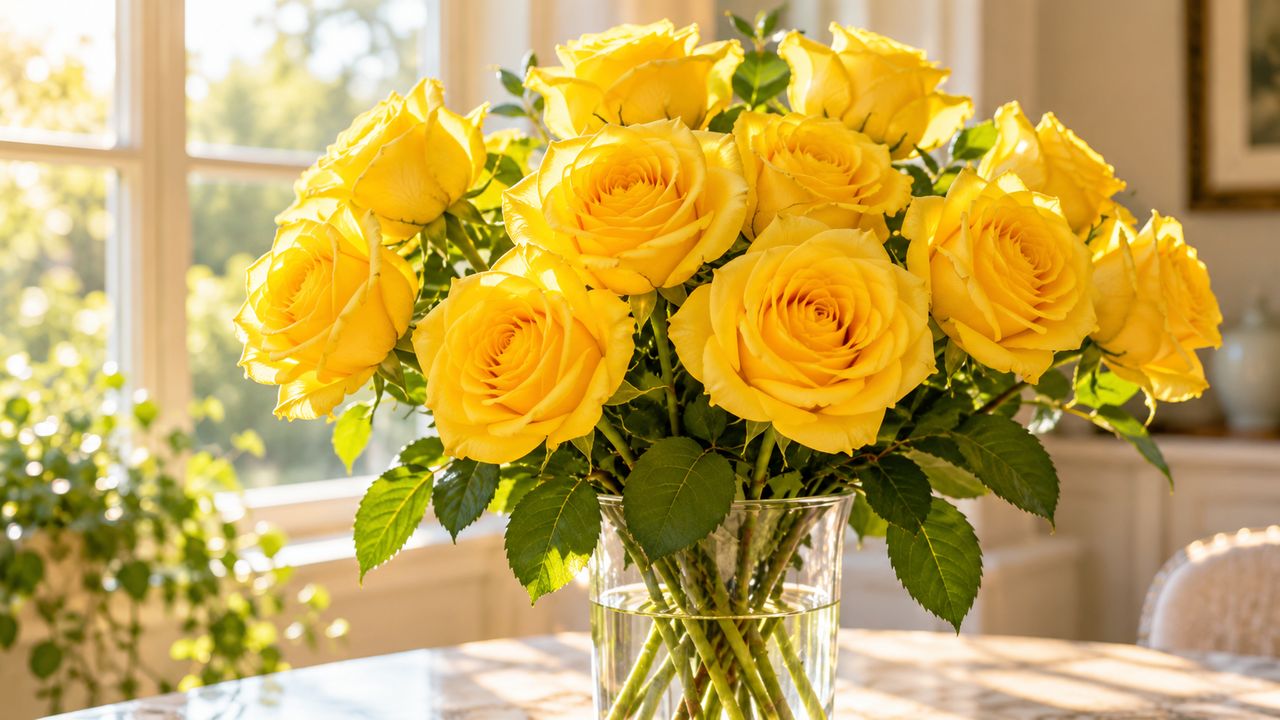
The canary yellow rose carries the visual energy of sunlight captured in petals. Brilliant, clear, and optimistic, it is associated today with warm friendship, uncomplicated joy, encouragement, and well-earned success. Unlike red roses, which traditionally declare romantic passion, canary yellow roses usually communicate affection without possession: “You brighten my life,” “I believe in you,” or simply, “I am happy we are friends.”
Yet the canary yellow rose meaning has not always been so cheerful. Yellow roses reached European gardens in significant numbers during the eighteenth century, when species such as Rosa foetida and related yellow-flowered roses arrived from western and central Asia. Their unusual color fascinated breeders accustomed primarily to pink, white, and crimson blooms. Early yellow roses often lacked the refined fragrance and repeat-flowering habit of later hybrids, but their golden color transformed rose breeding. Over time, cultural symbolism changed as dramatically as the flowers themselves: suspicion and jealousy gradually gave way to friendship, freedom, prosperity, and delight.
What Does a Canary Yellow Rose Symbolize?
Canary yellow is a particularly vivid yellow, resembling the luminous plumage associated with the domestic canary. In floristry, the term describes color rather than a single botanical variety. A rose sold as canary yellow may belong to a hybrid tea, floribunda, spray rose, garden rose, or miniature cultivar. Its defining characteristic is a bright, relatively pure yellow with little orange, bronze, or cream in the petals.
Its most important meanings are sunshine, optimism, loyal friendship, intellectual confidence, and forward movement. Because the color is highly visible and emotionally invigorating, these roses also symbolize renewed energy after difficulty. They celebrate someone who has passed an examination, earned a promotion, launched a business, recovered from illness, or entered an exciting new chapter.
- Warm friendship: Affectionate companionship without an automatic declaration of romance.
- Joy and optimism: A wish for happiness, hope, and brighter days.
- Success: Recognition of achievement, confidence, and personal momentum.
- Encouragement: Emotional sunshine for someone facing uncertainty or change.
- Welcome and hospitality: An openhearted greeting for guests, colleagues, or new neighbors.
- Freedom: Affection that respects independence rather than demanding exclusivity.
From Jealousy to Joy: Historical Interpretations
In European flower symbolism of the eighteenth and nineteenth centuries, yellow could carry uneasy associations. Depending on the source, a yellow rose might imply jealousy, fading affection, infidelity, or a request to remember a relationship. Victorian floriography was never governed by one universal dictionary, however. Meanings varied among publishers, regions, flower combinations, and even the direction in which a bloom was presented. It is therefore misleading to claim that every Victorian understood yellow roses in exactly the same way.
During the twentieth century, especially in North American commercial floristry, the dominant interpretation became distinctly positive. Yellow roses emerged as emblems of friendship, good wishes, and cheerful remembrance. Their sunny appearance made them popular for birthdays, hospital visits, congratulations, and domestic arrangements. Today, most recipients read a clear yellow bouquet as generous and uplifting, although romantic context can still introduce ambiguity.
Across cultures, yellow may suggest sunlight, wealth, sacred illumination, royalty, harvest, or good fortune. In some East Asian settings, gold and yellow can reinforce ideas of prosperity and honor, making vivid yellow roses suitable for professional milestones. In parts of Latin America, yellow flowers are increasingly exchanged in popular seasonal traditions as signs of love, hope, and abundance. Customs vary by country and generation, so a personal message remains the best guide to intention.
Shade, Number, and Bouquet Context
Color changes interpretation. Pale lemon roses feel gentle, fresh, and youthful. Saturated canary yellow communicates exuberance and confidence. Golden yellow appears more ceremonial and achievement-oriented, while amber or orange-edged yellow introduces enthusiasm, desire, and creative energy. Yellow roses fading toward ivory become quieter and more considerate, approaching the elegance described in cream rose symbolism.
| Rose or Arrangement | Primary Message | Best Occasion |
|---|---|---|
| Single canary yellow rose | A bright, sincere gesture of appreciation | Thank-you, casual encouragement, or first meeting |
| Yellow rose bouquet | Friendship, happiness, and collective celebration | Birthday, graduation, promotion, or housewarming |
| Yellow and cream roses | Warmth balanced by grace and thoughtfulness | Professional thanks, retirement, or family celebration |
| Yellow and red roses | Joy joined with romantic affection | Anniversary or an established relationship |
| Yellow and orange roses | Energy, ambition, and enthusiastic success | Business launch, performance, or major achievement |
Numbers can add emphasis, although modern etiquette does not require strict numerical codes. One bloom is intimate and direct; three make a modest, polished gesture; six or twelve feel generous and celebratory. A large mass of yellow roses creates a triumphant effect suitable for public honors, major anniversaries, or stage presentations.
When and to Whom Should You Give Them?
Canary yellow roses are excellent gifts for close friends, siblings, teachers, mentors, colleagues, hosts, and anyone whose presence feels encouraging. They are especially appropriate for birthdays, graduations, new jobs, promotions, retirements, housewarmings, thank-you gestures, and “get well” arrangements. Their brightness can also support someone after a setback, provided the message acknowledges the person’s experience rather than insisting on cheerfulness.
Modern etiquette calls for clarity when romance may be expected. A bouquet of yellow roses on Valentine’s Day could be interpreted as platonic or emotionally distancing unless accompanied by a note. For a romantic partner who loves yellow, combine the roses with red, coral, or meaningful seasonal flowers and explain the choice. Conversely, yellow is ideal when warmth is intended without courtship.
Consider cultural and personal associations before sending flowers for mourning. Yellow roses may honor a joyful personality or celebrate a life well lived, but some families prefer white or subdued colors. Their bright optimism contrasts strongly with the farewell, transformation, and remembrance associated with the black rose meaning.
Companion Flowers and Styling
For a meadow-like friendship bouquet, combine canary yellow roses with chamomile, white cosmos, feverfew, or delicate asters. Blue delphinium, cornflower, or iris provides a complementary color contrast and adds calmness to yellow’s visual intensity. The pairing can also suggest aspiration and possibility, echoing the blue rose mystery without sacrificing natural garden character.
For refined occasions, use cream roses, white lisianthus, pale ranunculus, eucalyptus, and restrained foliage. Success bouquets benefit from orange tulips, golden solidago, or bronze chrysanthemums. Avoid crowding vivid roses with too many equally saturated colors unless exuberance is the goal. A multicolored celebratory design can intentionally embrace the inclusive joy expressed by the rainbow rose meaning.
Containers shape the mood. Clear glass looks fresh and informal; matte white ceramic emphasizes modern elegance; blue-and-white pottery creates crisp contrast; and brass or warm-toned metal enhances the roses’ golden character. Choose wrapping in kraft paper, ivory, sage, or navy rather than bright yellow, which can flatten the flowers’ visual impact.
Botanical Care and Vase Longevity
Freshly cut roses should have resilient petals, upright necks, and healthy green sepals. A few flexible outer guard petals are normal and protect the bloom in transit. Recut each stem by 2 to 3 centimeters with a clean, sharp blade, remove all foliage that would sit below water, and place the roses immediately in a thoroughly washed vase containing fresh water and commercial flower food.
Keep the arrangement away from direct sun, heating vents, drafts, and ripening fruit, which releases ethylene gas that accelerates aging. Refresh the water and clean the vase every two days, recutting stems if uptake slows. With good care, quality roses commonly last five to ten days, depending on cultivar and harvest stage.
In the garden, yellow roses generally require at least six hours of direct sunlight, fertile well-drained soil, consistent deep watering, and moving air around the foliage. Water near the soil rather than wetting leaves, and select disease-resistant cultivars suited to the local climate. Regular deadheading encourages repeat-flowering varieties, while balanced feeding supports both foliage and bloom production.
A Message of Living Sunlight
The modern canary yellow rose meaning is one of generous happiness: friendship freely given, courage restored, and success warmly applauded. Its history adds depth, reminding us that floral language evolves with society and context. Whether offered as a single radiant stem or arranged in a celebratory bouquet, canary yellow roses speak most beautifully when accompanied by a sincere note. Their essential message is simple but powerful: your presence brings light, and your future deserves to shine.