Table of Contents
Roald Dahl Rose: Soft Peach-Apricot Blooms Inspired by James and the Giant Peach
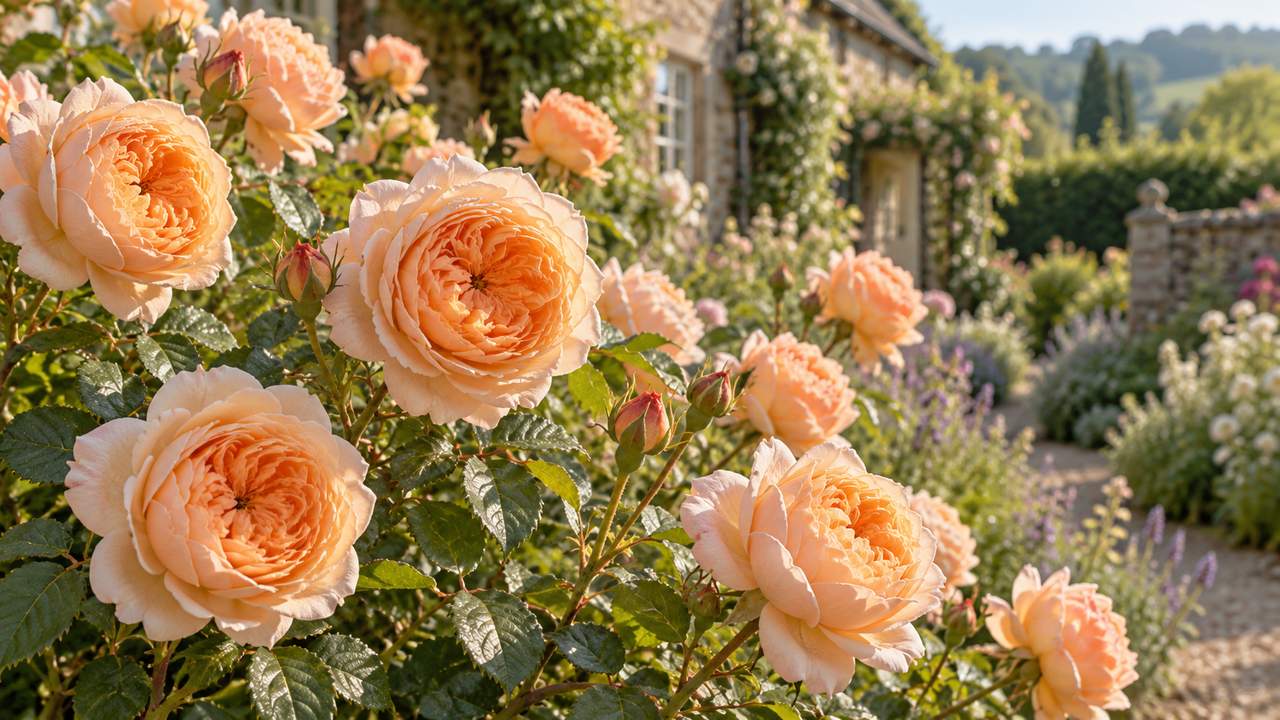
The Roald Dahl rose is a warm, softly glowing English shrub rose whose peach-apricot flowers seem perfectly suited to the imaginative world of James and the Giant Peach. Introduced by David Austin Roses in 2016, the centenary year of British author Roald Dahl’s birth, the cultivar was named in celebration of his literary legacy. Its rounded buds open into beautifully cupped, many-petalled rosettes, while a gentle tea fragrance with fruity nuances adds another layer of charm.
Botanically, Roald Dahl is a repeat-flowering shrub rose, commonly listed under the breeder’s code AUSowlish. It forms a healthy, rounded plant with glossy green foliage and relatively few thorns, generally reaching about 90 centimetres in height and spread, although climate and pruning can alter its dimensions. Because this is a modern named cultivar rather than a flower known to historical floriographers, its symbolism is not inherited from one fixed Victorian definition. Instead, it combines traditional rose meanings with the emotional associations of peach coloring, childhood storytelling, generosity, wonder, and transformation.
Primary Meaning and Symbolism
The central meaning of the Roald Dahl rose is affectionate gratitude expressed with warmth rather than ceremony. Peach roses traditionally occupy a graceful middle ground between friendship and romance. They can communicate appreciation, sincerity, modest admiration, and the pleasure of sharing someone’s company. The cultivar’s apricot undertones introduce liveliness and creative energy without carrying the intensity of scarlet roses.
- Gratitude: Its peach coloring makes it an elegant way to say “thank you” for kindness, hospitality, mentorship, or loyal support.
- Imagination: The literary name connects the flower with storytelling, curiosity, humor, and the freedom to see ordinary life differently.
- Transformation: A bud unfolding into a many-petalled cup echoes the journey from uncertainty to confidence found in James and the Giant Peach.
- Gentle affection: The rose conveys fondness and emotional warmth without automatically declaring passionate love.
- Childhood joy: Its rounded, confection-like blooms suggest celebration, playfulness, and treasured memories.
- Generosity: The rose’s association with charitable fundraising strengthens its suitability as a symbol of compassionate action.
Historical and Cultural Interpretations
In classical societies, roses were associated with beauty, love, secrecy, celebration, and the fleeting nature of life. Yet ancient writers did not assign a specific meaning to a peach English rose, since this exact color class and cultivar did not exist. Its symbolism is therefore best understood as a modern development built upon older rose traditions.
During the nineteenth century, European and American gift-givers popularized elaborate floral dictionaries. In the Victorian language of flowers, species, colors, quantities, and presentation could all modify a message. Historical dictionaries frequently contradicted one another, so flowers were never a perfectly standardized secret code. Nevertheless, pale warm roses gradually became associated with grace, admiration, sociability, and gratitude—ideas that remain central to modern peach-rose etiquette.
In contemporary Western floristry, Roald Dahl roses suggest cultivated friendliness and understated luxury. In literary settings, they may honor teachers, librarians, writers, or devoted readers. British audiences are especially likely to recognize the authorial reference, while recipients elsewhere may first respond to the bloom’s color and fragrance. Across cultures, symbolism should be adapted to local customs: roses may signify romance in one setting, ceremonial respect in another, and remembrance or religious devotion in a third.
How Color, Number, and Context Change the Message
Roald Dahl flowers evolve as they open. Deeper orange-apricot buds suggest anticipation, confidence, and enthusiasm. Fully opened peach rosettes feel softer and more grateful, while blooms fading toward cream can imply serenity, tenderness, and reflection. Their warmth overlaps with orange rose symbolism, but the restrained pastel coloring makes the message gentler and less overtly passionate.
Quantity also shapes interpretation. A single bloom feels personal and literary, as though it were a carefully chosen token. Three stems can represent the past, present, and future of a relationship or simply form a balanced miniature arrangement; readers interested in traditional numerical messages can explore the three roses meaning. A generous garden-style bouquet emphasizes abundance, celebration, and shared happiness.
| Presentation | Suggested Meaning | Best Occasion | Styling Note |
|---|---|---|---|
| One stem | Singular appreciation | A thoughtful thank-you | Pair with a handwritten note |
| Three stems | Enduring affection or shared time | Anniversary or friendship gift | Use a small ceramic vase |
| Peach and cream bouquet | Grace, sincerity, and welcome | Wedding or housewarming | Keep the silhouette loose and airy |
| Peach and lavender palette | Wonder and enchantment | Creative milestone | Balance warm roses with cool accents |
| Living rose plant | A legacy that continues growing | Retirement, memorial, or new home | Include planting and care information |
When and to Whom Should You Give It?
Give Roald Dahl roses for birthdays, graduations, book launches, teaching awards, retirements, new homes, and expressions of thanks. They are particularly apt for authors, educators, librarians, gardeners, parents, grandparents, and anyone who associates Dahl’s stories with childhood. At weddings, their color communicates joyful affection without overpowering a soft seasonal palette. As a memorial planting, the shrub can honor someone remembered for humor, generosity, courage, or a love of books.
Modern etiquette depends more on clarity than rigid floral rules. Peach roses are usually safe for friends, colleagues, and relatives because they are less romantically charged than red roses. Even so, include a short card when ambiguity might matter. For professional thanks, choose a restrained arrangement or a plant rather than an extravagant romantic bouquet. Check whether hospitals, workplaces, or care facilities permit strongly scented flowers, and never assume a recipient has garden space.
Companion Flowers and Bouquet Styling
For a relaxed English-garden arrangement, combine Roald Dahl roses with cream sweet peas, white cosmos, apricot ranunculus, pale snapdragons, and airy foliage. Chamomile or feverfew adds storybook informality, while rosemary contributes fragrance and the traditional association of remembrance. Blue delphiniums or cornflowers provide crisp contrast; burgundy dahlias and copper foliage create a richer autumn composition.
For an enchanted palette, add mauve scabiosa, lilac, or lavender roses. The lavender rose meaning is commonly linked with fascination and love at first sight, so this pairing shifts the bouquet from simple gratitude toward wonder or romantic intrigue. Avoid crowding the deeply cupped flowers with too many equally dense blooms. Use branching greenery and smaller filler flowers to create breathing room, and display them in matte ceramic, clear glass, or aged brass vessels.
Cultivation and Cut-Flower Care
Plant the shrub in fertile, moisture-retentive but well-drained soil. It performs best with abundant light—ideally at least four to six hours of direct sun—although conditions vary by climate. Water deeply at the base during establishment and dry weather, mulch with composted organic matter, and feed with a balanced rose fertilizer according to local guidance. Good air circulation and soil-level watering help limit fungal problems. Prune in late winter or early spring, removing dead, damaged, weak, or crossing growth before shaping the plant. Deadheading encourages repeat bloom, although leaving a few hips can add seasonal interest where they develop.
For cutting, harvest partially opened flowers in the cool morning with clean tools. Place stems immediately into water, remove foliage that would sit below the waterline, and recut them at an angle before arranging. Use a thoroughly cleaned vase and floral preservative, refresh the water every one or two days, and keep the arrangement away from direct sun, radiators, drafts, and ripening fruit. Garden roses are naturally more delicate than many commercial florist hybrids, so vase life is often approximately four to seven days, depending on harvest stage and conditions.
A Rose of Gratitude, Imagination, and Joy
The Roald Dahl rose brings together horticultural refinement and literary delight. Its cupped peach-apricot blooms communicate gratitude, gentle affection, optimism, and creative wonder, while its repeat-flowering habit makes those meanings return throughout the season. Whether presented as a single thoughtful stem, arranged in a loose garden bouquet, or planted as a lasting tribute, it offers a nuanced message: cherish kindness, remain curious, and leave room for the marvelous.