Table of Contents
Gertrude Jekyll Rose: Quintessential Old Rose Perfume and Vibrant Pink Petals
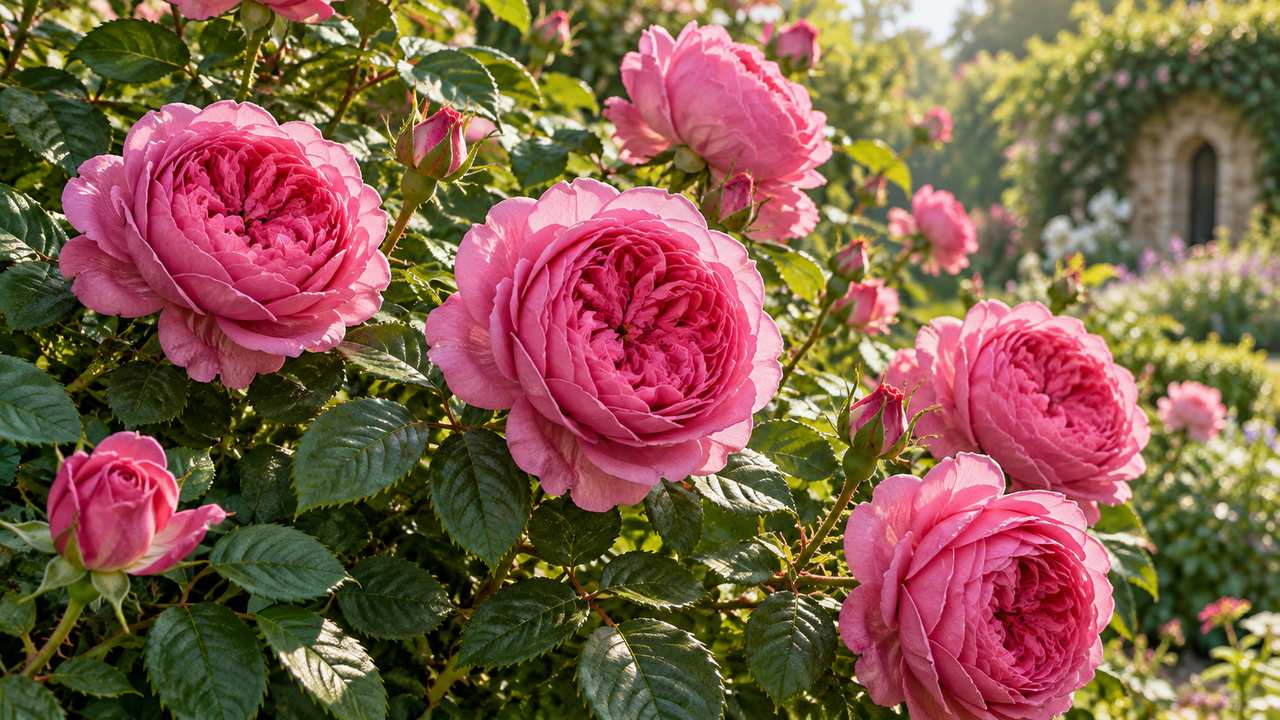
The Gertrude Jekyll rose is celebrated as much for its fragrance as for its luxuriant, luminous pink flowers. Introduced by British rose breeder David Austin in 1986, this English shrub rose combines the romantic form and perfume of historic garden roses with the repeat-flowering character expected of a modern cultivar. Its densely petalled blooms open from neatly pointed buds into generous rosettes, filling the garden with a remarkably powerful old rose scent.
Its name honors Gertrude Jekyll (1843–1932), the influential British horticulturist, garden designer, photographer, and writer whose painterly planting schemes transformed modern garden design. Jekyll arranged plants according to color, texture, season, and emotional effect, treating the border almost like a living canvas. A richly fragrant pink rose is therefore a fitting tribute: cultivated yet exuberant, historically evocative yet thoroughly useful in contemporary landscapes.
In floriography, the Gertrude Jekyll rose has no fixed Victorian dictionary definition because the cultivar appeared long after that tradition’s nineteenth-century heyday. Its meaning is instead created by combining the symbolism of pink roses, the nostalgic form of old roses, its exceptional perfume, and its association with a pioneering woman. The result is a flower that eloquently communicates admiration, gratitude, cultivated beauty, affectionate remembrance, and enduring creative influence.
Botanical Identity and Character
Known botanically as Rosa ‘Gertrude Jekyll’—with the registered breeding name ‘AUSbord’—this cultivar belongs to the family of David Austin English roses. It was bred from ‘Wife of Bath’ and ‘Comte de Chambord’, ancestry that helps explain its antique flower shape and commanding fragrance.
- Flower color: Rich, clear pink, usually deeper toward the center and softer on the outer petals.
- Flower form: Large, very double rosettes with numerous overlapping petals and a quartered, old-fashioned appearance.
- Fragrance: Exceptionally strong old rose perfume, often described as warm, sweet, deep, and classically damask-like.
- Habit: An upright, vigorous shrub that may also be trained as a short climber in suitable climates.
- Flowering: A dramatic early flush followed by repeat bloom, particularly when spent flowers are removed and the plant is well fed.
- Foliage and stems: Medium green foliage on vigorous, notably thorny canes.
Primary Meanings and Symbolism
Admiration and appreciation are the cultivar’s clearest messages. Its saturated pink coloring is more emphatic than blush pink but less overtly passionate than scarlet. It therefore expresses heartfelt praise without automatically implying romantic desire. This aligns closely with the traditional dark pink rose meaning, especially when the blooms are selected at their richest stage of color.
Gratitude is another natural interpretation. A bouquet of Gertrude Jekyll roses can thank a mentor, host, parent, teacher, caregiver, or loyal friend. Their abundance gives the gesture emotional weight, while the perfume makes the gift memorable and intimate.
Feminine achievement and creative legacy arise from the rose’s namesake. Gertrude Jekyll established professional authority in fields often resistant to women, and her collaborations with architect Edwin Lutyens helped define the Arts and Crafts garden. The rose can consequently honor artistic vision, horticultural skill, intellectual independence, or a life devoted to making beauty.
Remembrance and continuity come from the flower’s historic appearance. Rosette blooms recall old European roses, while repeat flowering represents renewal. This duality makes the cultivar suitable for anniversaries, memorial gardens, family celebrations, and moments that connect past and present.
Interpretations Across Eras and Cultures
In classical Mediterranean traditions, roses were associated with Aphrodite or Venus and carried meanings of beauty, love, mortality, and secrecy. In medieval Europe, the rose acquired additional sacred associations, including Marian purity and divine love. By the Victorian era, pink roses generally conveyed grace, gentle affection, happiness, and admiration, although meanings varied among floral dictionaries.
The Gertrude Jekyll rose itself belongs to the late twentieth-century revival of interest in heritage-style flowers. Its old-fashioned silhouette evokes Victorian and Edwardian gardens, but its modern symbolism is broader: authenticity, craftsmanship, sensory richness, and respect for tradition. In contemporary Western gifting, pink roses commonly communicate appreciation and affection. In many East Asian settings, pink flowers are also welcomed as expressions of happiness, elegance, and good wishes, though local color customs and family preferences should always take precedence.
| Presentation | Likely Meaning | Best Occasion | Styling Note |
|---|---|---|---|
| One open bloom | Singular admiration | Personal thank-you | Place in a small bud vase |
| Three stems | Affection, unity, or “I love you” | Anniversary or romantic gesture | Consider the traditional three roses meaning |
| Loose garden bouquet | Warmth and generous gratitude | Birthday, hosting gift, or congratulations | Mix open rosettes with buds |
| Pink and white arrangement | Tender remembrance and peace | Condolence or memorial | Keep the design restrained and elegant |
| Garden plant | Enduring influence and renewal | Retirement, housewarming, or memorial planting | Include care instructions |
Shade, Stage, and Bouquet Nuance
Color intensity alters the emotional register. Deep pink central petals emphasize gratitude, confidence, and admiration. Softer outer petals suggest gentleness and grace. Tight buds communicate promise or anticipation, while fully open rosettes imply emotional openness, abundance, and mature affection. Blooms at several stages create a particularly expressive arrangement, suggesting a relationship or legacy unfolding over time.
Although wonderfully romantic, this rose need not be reserved for a partner. Its strongest non-romantic associations—respect, thanks, and creative accomplishment—make it appropriate for colleagues, relatives, teachers, and friends. For bereavement, combine it with white flowers and use a card that clearly expresses remembrance. Guidance on roses for sympathy can help distinguish a comforting tribute from a bouquet that might appear celebratory or romantic.
Companion Flowers and Styling
For an English garden arrangement, pair Gertrude Jekyll roses with lavender, catmint, foxglove, delphinium, or airy lady’s mantle. Their cooler blues, violets, and acid greens sharpen the rose’s warm pink. Sweet peas, peonies, and scented stock create a lavish spring or early-summer composition, but use fragrance-rich companions sparingly so they do not compete with the rose’s perfume.
White garden roses, ivory lisianthus, and pale clematis produce a graceful wedding palette. Burgundy scabiosa, chocolate cosmos, or dark foliage lend drama to autumnal arrangements. For a natural Jekyll-inspired effect, avoid forcing every stem into perfect symmetry. Use graduated color, varied heights, arching greenery, and pockets of visual rest. Remove foliage below the waterline, protect hands from the thorns, and support heavy flower heads with branching foliage.
When to Gift and Modern Etiquette
- Birthdays: Ideal for gardeners, designers, writers, historians, and lovers of fragrance.
- Thank-you gifts: Give a generous bouquet to recognize hospitality, guidance, or sustained support.
- Anniversaries: Choose three stems for intimacy or a fuller arrangement for established devotion.
- Professional milestones: Appropriate for retirement, publication, exhibition openings, and creative achievement.
- Memorials: Offer soft pink and white flowers or plant a rose in a place where it can become a living remembrance.
- Housewarmings: A healthy container-grown plant is meaningful when the recipient has adequate light, space, and interest in gardening.
Modern etiquette favors clarity over rigid floral codes. Include a brief note explaining why you chose the rose, especially in professional or condolence contexts. Ask about fragrance sensitivity before sending a heavily scented bouquet to a hospital, workplace, or small home. A living plant should not be given as an obligation: confirm that the recipient can accommodate a vigorous, thorny rose.
Cultivation and Cut-Flower Care
Plant Gertrude Jekyll in fertile, moisture-retentive but well-drained soil with at least six hours of direct sun. Good air circulation helps discourage fungal disease. Water deeply at the base during dry periods, mulch with compost or well-rotted organic matter, and feed in spring and after the first flowering flush. Deadheading encourages repeat bloom. Prune according to its intended form: maintain it as an upright shrub or tie strong canes to a pillar, wall, or arch as a short climber.
For the vase, cut stems early in the morning when buds are beginning to loosen. Use clean, sharp secateurs and immediately place stems in cool water. Recut them at an angle, remove submerged leaves, and use a clean vase with floral preservative. Refresh the water every one or two days and keep the arrangement away from direct sun, radiators, and ripening fruit. Garden roses naturally have a shorter vase life than many commercial florist roses, but careful conditioning can preserve their beauty for several rewarding days.
A Rose of Gratitude, Artistry, and Living Memory
The Gertrude Jekyll rose unites botanical vigor, historic atmosphere, and one of the rose world’s most compelling perfumes. Its vibrant pink petals speak most naturally of admiration and gratitude, while its namesake adds themes of creative independence, horticultural artistry, and lasting influence. Whether offered as three meaningful stems, arranged in an abundant garden bouquet, or planted as a living tribute, it conveys affection with depth rather than sentimentality—a modern rose carrying the soul of an old one.