Table of Contents
Boscobel Rose: Rich Salmon-Pink Rosettes with Myrrh and Hawthorn Notes
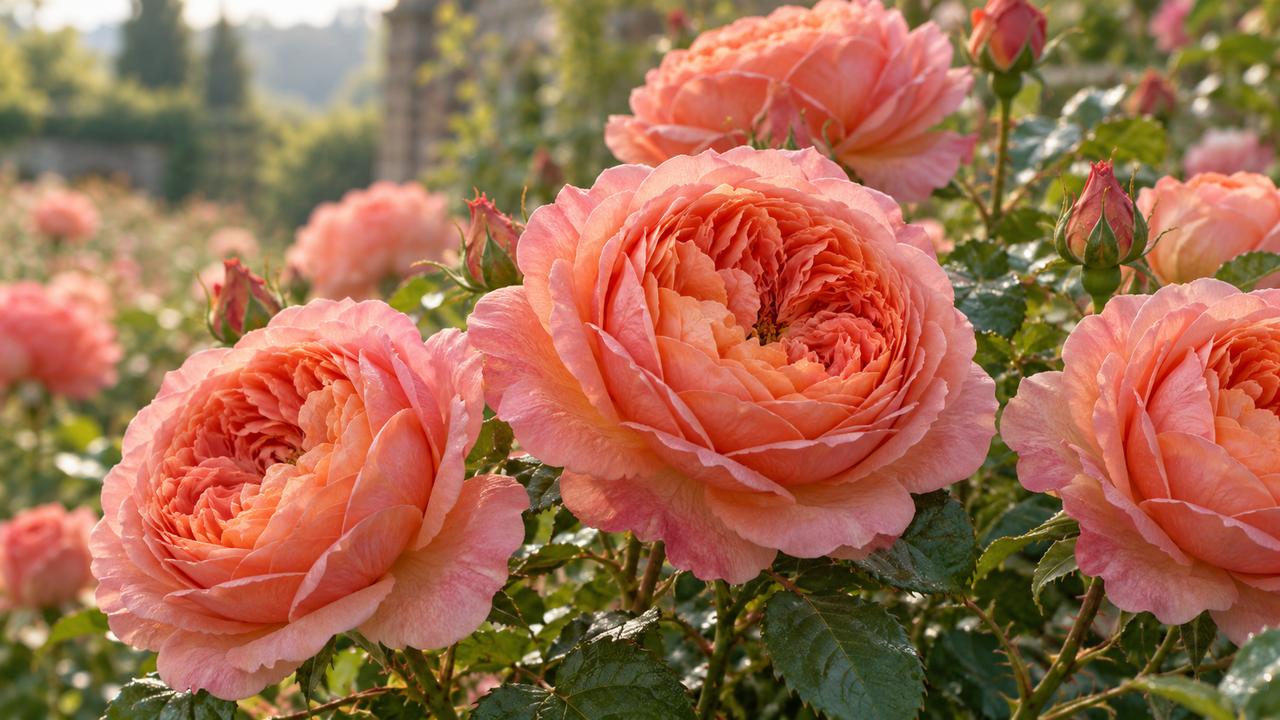
The Boscobel rose brings together the theatrical beauty of an old-fashioned rosette and the dependable flowering habit of a modern English shrub rose. Introduced by David Austin Roses in 2012, this cultivar opens from red-orange buds into densely petalled, upward-facing blooms. Their color develops through coral and warm salmon before settling into a rich pink, often with subtly paler outer petals. The effect is glowing rather than sugary: romantic, spirited, and unmistakably luxurious.
Its name carries a remarkable historical association. Boscobel House in Shropshire, England, is celebrated as the place where the future King Charles II sought refuge after the Battle of Worcester in 1651. He famously hid in an oak tree nearby, an episode remembered through the Royal Oak tradition. Consequently, the Boscobel rose can suggest sanctuary, loyalty under pressure, survival, and the preservation of hope. Its fragrance adds another layer of character: a distinctive myrrh foundation enriched by impressions of hawthorn, elderflower, pear, and almond.
Meaning and Symbolism of the Boscobel Rose
No fixed Victorian dictionary could have assigned a meaning to the Boscobel rose, because the cultivar was created long after the great nineteenth-century fashion for floriography. Its interpretation instead draws upon the traditional symbolism of pink roses, its salmon-coral coloring, its historic name, and the sensory character of its fragrance.
Admiration and Warm Affection
Pink roses traditionally communicate admiration, tenderness, grace, and affectionate happiness. Boscobel intensifies that familiar message. Its warm salmon undertones make the sentiment feel more animated than the sweetness associated with pale blush roses, yet less overtly passionate than the declaration carried by deep red roses. It is therefore an excellent emblem of affection that is heartfelt but not possessive.
Gratitude and Generosity
The lavish, many-petalled flowers evoke abundance and generosity. A bouquet of Boscobel roses can say, “Your kindness has mattered deeply,” making it especially suitable for thanking a mentor, host, caregiver, colleague, or close friend. Compared with the cheerful companionship expressed through the yellow rose meaning, Boscobel conveys gratitude with greater intimacy and emotional depth.
Refuge, Loyalty, and Resilience
The Boscobel House connection gives this rose symbolism rarely found in a modern pink cultivar. The story of Charles II’s concealment suggests protection in danger, loyalty during adversity, and eventual restoration. Gifted thoughtfully, the rose can honor someone who has provided safety, kept confidence, or remained steadfast through a difficult season. It may also celebrate personal resilience: beauty returning after uncertainty.
Refined Romance
Boscobel belongs naturally in romantic arrangements, particularly where a red rose might feel too conventional or intense. Its changing shades can represent affection ripening into love, while its intricate rosette form speaks of emotional complexity. It suits established partnerships, anniversaries, and elegant courtship more readily than a casual first-date gesture.
Color, Form, and Cultural Nuance
Boscobel flowers begin as red buds and open into substantial cupped rosettes filled with numerous small petals. Newly opened blooms may appear coral-red or salmon, while mature flowers usually read as a deeper, warmer pink. Temperature, sunlight, soil, and bloom age can alter the balance: cool conditions often strengthen the pink, whereas warm light emphasizes peach and coral.
These variations influence the floral message. Coral-salmon blooms imply enthusiasm, desire, and sociable warmth. Clear pink flowers emphasize admiration and gratitude, while pale outer petals introduce gentleness and grace. Unlike the innocence, solemnity, and spiritual associations found in white rose symbolism, Boscobel feels vividly human—warm, expressive, and emotionally present.
In British settings, the name may evoke royal history, heritage gardens, and the celebrated Royal Oak story. Elsewhere, recipients are more likely to interpret the flowers through color: pink for affection, coral for enthusiasm, and the full rosette for romance and abundance. Because symbolism changes across families and cultures, a short card explaining the intended meaning is both useful and gracious.
| Feature or Context | Suggested Meaning | Best Use |
|---|---|---|
| Salmon-coral bloom | Enthusiasm, attraction, warm appreciation | Romantic gifts and celebrations |
| Mature rich-pink rosette | Admiration, gratitude, affectionate devotion | Thank-you and anniversary bouquets |
| Boscobel historical name | Sanctuary, loyalty, endurance, restoration | Milestones and encouragement gifts |
| Myrrh-led fragrance | Mystery, remembrance, spiritual depth | Intimate arrangements and contemplative gardens |
| Garden plant | Affection that renews and grows | Housewarmings, weddings, and memorial planting |
When and How to Give Boscobel Roses
- Anniversaries: Their mature romance and unfolding color beautifully represent a relationship that has deepened over time.
- Thank-you gifts: Give them to someone whose generosity, hospitality, or loyal support deserves more than a routine acknowledgment.
- Birthdays and achievements: The exuberant color celebrates confidence, creativity, and a warmly admired personality.
- Weddings: They are especially effective in English-garden, heritage, or late-spring and summer designs.
- Recovery and encouragement: Their historical associations with refuge and survival make them meaningful after illness, upheaval, or personal challenge.
- Housewarmings: A living Boscobel plant symbolizes a welcoming refuge and affection that will flower repeatedly.
For modern etiquette, match the scale of the gift to the relationship. A single stem or small garden-style posy feels thoughtful for a colleague or new acquaintance; an abundant bouquet is more intimate. Include a note if you mean to emphasize the Boscobel story, since not every recipient will know it. For bereavement, its warmth can express affectionate remembrance, but subdued pink-and-cream arrangements may be more appropriate than exuberant coral bouquets. Local and religious customs should always guide the choice; consult established guidance on roses for sympathy when the family’s preferences are uncertain.
Companion Flowers and Bouquet Styling
Boscobel’s rounded, petal-rich flowers benefit from lighter shapes around them. White sweet peas, astrantia, scabious, orlaya, and airy grasses prevent the arrangement from becoming visually heavy. Sprigs of hawthorn may poetically echo the fragrance description, although a florist should handle thorny woody material carefully and avoid gathering it where foraging is restricted.
For a romantic palette, combine Boscobel with blush garden roses, pale peach ranunculus, white lisianthus, and silvery eucalyptus. Cream or beige flowers bring out its coral warmth; the refined associations of the champagne rose meaning make champagne-colored roses natural partners for weddings and milestone dinners. Burgundy foliage or chocolate cosmos creates a dramatic autumnal contrast, while yellow flowers make the composition sunnier and more informal.
Use a loose, asymmetrical shape to preserve the rose’s garden character. Place several blooms at slightly different heights rather than compressing them into a tight dome. Because the blossoms are visually commanding, simple ceramic vessels, footed bowls, and softly aged metal containers generally complement them better than heavily ornamented vases.
Botanical Care and Cultivation
Boscobel is a repeat-flowering English shrub rose with an upright, bushy habit, typically reaching roughly 90 to 120 centimeters, depending on climate and pruning. Plant it in fertile, moisture-retentive but well-drained soil, with at least six hours of direct sun and enough air circulation to help foliage dry after rain. In very hot climates, some afternoon protection can preserve flower color and reduce heat stress.
Water deeply at the base rather than sprinkling the foliage. Mulch in spring with compost or well-rotted organic matter, keeping it away from direct contact with the canes. Feed with a balanced rose fertilizer as growth begins and again after the first major flowering flush. Deadheading encourages repeat bloom; late-winter or early-spring pruning should remove dead, diseased, crossing, or weak growth before shortening healthy stems to maintain an open framework.
For vase use, cut stems early in the morning when the outer petals have begun to loosen but the bloom is not fully open. Use clean shears, remove foliage below the waterline, recut stems at an angle, and place them promptly in a clean vase with floral preservative. Refresh the water every one or two days and keep the arrangement away from radiators, direct midday sun, drafts, and ripening fruit. The naturally many-petalled blooms may have a shorter vase life than commercial florist roses, but careful conditioning allows their fragrance and changing color to be enjoyed fully.
A Rose of Warmth, History, and Loyal Affection
The Boscobel rose is more than a sumptuous salmon-pink flower. Its rosette form conveys abundance, its evolving color speaks of admiration becoming deeper affection, and its historic name introduces themes of refuge, courage, loyalty, and renewal. Whether planted beside a path, carried in a bridal bouquet, or given in gratitude, it offers a sophisticated message: warm feeling strengthened by constancy. Few modern roses unite beauty, fragrance, history, and emotional versatility so convincingly.