Table of Contents
Lady of Shalott Rose: Vibrant Copper-Orange Chalices of English Splendor
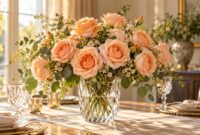
The Lady of Shalott rose glows as though it has captured the last warm light of an English summer evening. Its many-petaled, chalice-shaped blooms open in rich salmon, copper, and orange, while their golden-yellow reverse gives the flower an almost illuminated quality. Bred by David Austin and introduced in 2009, this vigorous English shrub rose combines the romantic form of historic garden roses with the repeat flowering, resilience, and strong growth expected of a modern cultivar.
Its name comes from Alfred, Lord Tennyson’s celebrated poem “The Lady of Shalott,” first published in 1832 and revised in 1842. Tennyson’s secluded heroine experiences the world indirectly through a mirror until she turns toward life, love, and destiny, accepting the consequences of that choice. The association gives the rose emotional depth: its radiant color suggests courage and vitality, while its literary name introduces themes of longing, creative vision, transformation, and beauty touched by transience.

Botanical Character and Garden Heritage
Known botanically as Rosa ‘Lady of Shalott’ (Ausnyson), this cultivar belongs to David Austin’s English Rose group. It forms a large, bushy shrub with slightly arching stems and attractive foliage whose young growth may show bronze-red tones. Mature plants commonly reach approximately 4 to 5 feet in height and spread, although they can grow larger in warm climates or when lightly trained against a support.
The rounded buds open into deeply cupped rosettes containing loosely arranged petals. Copper-orange interiors contrast with golden outer surfaces, creating shifting tones as the flowers move, age, and respond to changing light. Blooms appear repeatedly from late spring into autumn. The fragrance is generally described as warm tea rose with suggestions of spiced apple and clove: inviting rather than overpowering, and especially noticeable in warm, still weather.
Meanings and Symbolism
No traditional Victorian flower dictionary could have listed this particular cultivar, which was created more than a century after floriography’s nineteenth-century heyday. Its meaning is therefore best understood through three connected sources: the historical symbolism of roses, the emotional language of orange and gold, and Tennyson’s literary heroine.
- Courage and decisive action: Fiery copper petals evoke confidence, boldness, and the willingness to leave safety behind in pursuit of an authentic life.
- Creative awakening: The Lady’s weaving and mirror make the rose an eloquent emblem for artists, writers, musicians, and anyone moving from observation into active creation.
- Admiration and fascination: Orange roses traditionally express attraction, enthusiasm, and intense appreciation without necessarily making the solemn declaration associated with deep red roses.
- Transformation: Golden buds unfolding into copper rosettes suggest personal growth, reinvention, and the passage from uncertainty to self-knowledge.
- Resilient beauty: The plant’s strong growth and repeat flowering support a modern symbolism of perseverance, recovery, and renewed optimism.
- Poignant romance: Its Tennysonian name introduces longing and fateful love, making it romantic but more literary and nuanced than a conventional scarlet rose.
Historical and Cultural Interpretations
In medieval and Renaissance Europe, roses could represent love, secrecy, sacred beauty, or mortality, depending on color and setting. Orange roses did not occupy a clearly defined category in early European symbolism because truly orange garden roses became prominent much later through modern hybridization. Nevertheless, gold and flame were familiar signs of illumination, nobility, spiritual ardor, and transformation.
Victorian floriography refined floral giving into an elaborate social code. Red signified passionate love, pink conveyed gentler admiration, white suggested purity, and yellow carried meanings that varied from jealousy to friendship. A modern reader exploring yellow rose meaning will find that today’s cheerful interpretation harmonizes particularly well with the golden undersides of Lady of Shalott petals.
The cultivar’s copper-salmon coloring also approaches coral, a shade associated with warmth, modest romance, desire, and sociability. Understanding coral rose symbolism helps distinguish this rose’s spirited affection from the gravity of crimson. Paired with wine-colored flowers, however, it acquires greater sensuality through the tradition of burgundy rose passion. It stands at the opposite emotional pole from the mystery, mourning, endings, and renewal commonly discussed in black rose meaning, although both flowers can symbolize profound transformation.
Shade, Presentation, and Message
Color changes the message. Buds dominated by golden apricot feel hopeful and youthful. Fully open copper-orange flowers communicate confidence, attraction, and celebration. Faded salmon rosettes appear softer, nostalgic, and painterly. In bright sunlight the blossoms can read as festive and extroverted; in candlelight or autumn arrangements they become burnished, intimate, and dramatic.
The number and setting matter as well. A single garden-cut stem is a personal gesture of admiration. Three to six blooms make an elegant thank-you. A generous armful conveys exuberance and abundance, while a mixed bouquet allows the sender to moderate or deepen the rose’s fiery character.
| Occasion | Recipient | Intended Message | Best Presentation |
|---|---|---|---|
| Romantic celebration | Partner or spouse | Fascination, warmth, adventurous love | Copper roses with burgundy accents |
| Graduation or promotion | Friend, colleague, or graduate | Courage, achievement, bright beginnings | Loose bouquet with yellow and cream flowers |
| Creative milestone | Artist, writer, or performer | Inspiration and artistic awakening | Garden-style arrangement with textured foliage |
| Recovery or fresh start | Loved one facing change | Resilience, energy, and renewed hope | Apricot roses with calming blue flowers |
| Housewarming or autumn dinner | Host, friend, or family member | Welcome, generosity, and convivial warmth | Low arrangement with seed heads and herbs |
Gift Etiquette for Modern Occasions
Lady of Shalott roses are ideal for birthdays, engagements, anniversaries, promotions, housewarmings, theatrical openings, book launches, and celebrations of personal reinvention. They are especially suitable for an energetic partner, a courageous friend, a mentor, or a creatively inclined recipient who will appreciate the literary reference.
Because orange roses can imply attraction, include a short card when gifting them outside a romantic relationship. Phrases such as “In admiration of your courage” or “For your brilliant new chapter” prevent ambiguity. For sympathy, use the rose selectively: soften it with cream flowers and explain that it represents enduring warmth or renewal. Avoid sending a flamboyant orange arrangement to a solemn service unless the color reflects the deceased’s personality or the family’s wishes.
Companion Flowers and Bouquet Styling
For an English garden arrangement, combine Lady of Shalott with cream garden roses, white foxgloves, blush sweet peas, airy ammi, and silvery eucalyptus. Blue delphiniums, lavender, or cornflowers create a complementary color contrast that intensifies the copper petals. Dahlias, bronze chrysanthemums, crabapple branches, and rose hips produce an opulent autumn composition.
For romance, add burgundy roses, chocolate cosmos, or dark scabiosa. For friendship and celebration, choose yellow roses, chamomile, and golden yarrow. Florists should preserve the rose’s naturally arching posture rather than forcing every bloom upright. A footed bowl, ceramic urn, or loosely gathered hand-tied bouquet best suits its informal, old-world form.
Cultivation and Vase Care
Plant Lady of Shalott in fertile, well-drained soil where it receives at least six hours of sun, with some afternoon protection in exceptionally hot climates. Water deeply at the base, mulch annually with compost or well-rotted organic matter, and provide balanced rose feed in spring and after the first flowering cycle. Good air circulation and prompt removal of diseased leaves support health, although the cultivar is widely valued for comparatively strong disease resistance.
Prune in late winter or early spring, removing dead, damaged, crossing, or weak stems before shortening healthy growth to maintain an open framework. Deadheading encourages repeat bloom, but allowing a few late flowers to develop hips can enrich an informal autumn garden. In colder regions, protect the crown with mulch after the ground cools.
For the vase, cut stems early in the morning when outer petals have loosened but the centers remain firm. Use clean, sharp secateurs; strip foliage that would sit below water; and place stems promptly in a scrubbed vase filled with fresh water and floral preservative. Recut the stems at an angle, refresh the water every one or two days, and keep the arrangement away from direct sun, heaters, drafts, and ripening fruit. Garden roses naturally have a shorter vase life than many commercial florist roses, but careful conditioning can preserve their beauty for several rewarding days.
A Rose of Radiance and Resolve
The Lady of Shalott rose is more than a spectacular copper-orange flower. It unites English literary heritage, modern breeding, sensuous fragrance, and a compelling emotional vocabulary. Its golden chalices can speak of attraction without solemnity, courage without aggression, and transformation without forgetting the tenderness of what came before. Whether growing over a garden border, presented for a creative triumph, or gathered into a richly textured bouquet, it offers a memorable message: step toward life boldly, treasure beauty deeply, and meet change with radiant resolve.