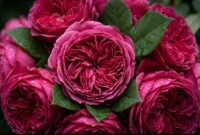
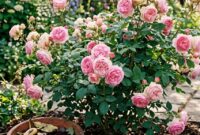
Few horticultural achievements in modern floral history have captured the hearts and imaginations of gardeners worldwide quite like the creation of English Roses by legendary British rosarian David Austin. Before his pioneering breeding programs began in Shropshire, England, during the 1950s, the rose-growing universe was starkly divided into two distinct camps. On one side stood the historic Old Garden Roses (such as Gallicas, Damasks, Albas, and Centifolias), celebrated for their breathtaking rosette forms, multi-petaled cupped blooms, and intoxicating scents, yet burdened by their strict once-a-year flowering habit and susceptibility to disease. On the other side stood modern Hybrid Teas and Floribundas, prized for their repeated flowering cycles throughout summer and autumn, but often criticized for their stiff, upright growth and diminished fragrance.
David Austin made it his life’s passionate quest to bridge this botanical divide. By meticulously cross-pollinating historic heritage roses with the most resilient modern varieties, he gave birth to an entirely new class: the English Rose. These breathtaking cultivars marry the delicate, ruffled charm and sublime historic perfumes of centuries past with the vigorous repeat-blooming nature and refined disease resistance of contemporary breeding. Understanding their heritage and distinctive olfactory profiles enriches any garden lover’s appreciation, much like deciphering the nuanced emotional expressions found in our Peach Rose Meaning and Symbolism guide.
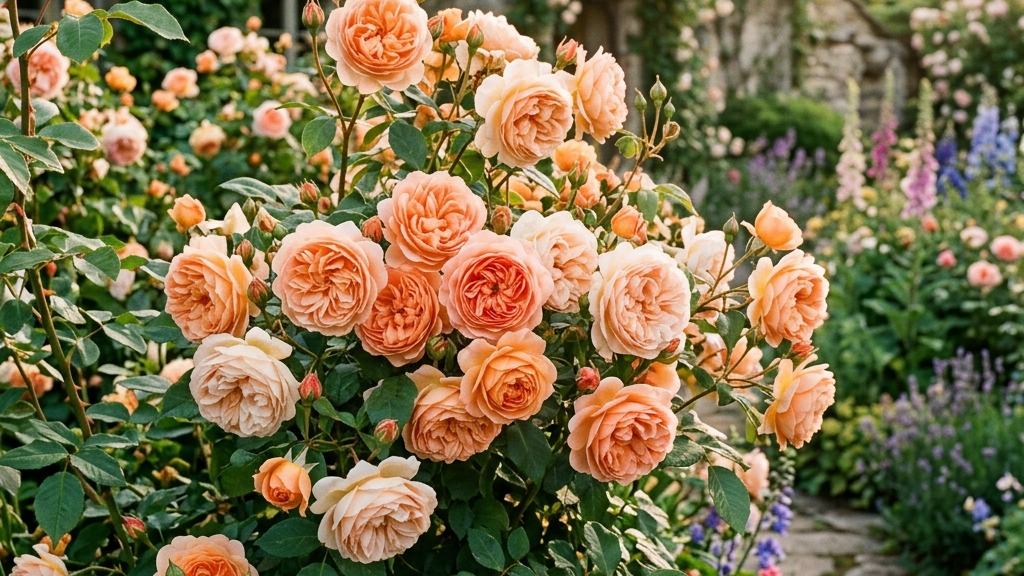
Table of Contents
The Genesis and Philosophy Behind David Austin Roses
David C.H. Austin (1926-2018) began his hybridizing journey as an amateur hobbyist on his family farm in Albrighton, Shropshire. His breakthrough came in 1961 with the introduction of ‘Constance Spry’, an exuberant climbing rose with massive, cupped, luminous pink blooms boasting an astonishing scent. While ‘Constance Spry’ bloomed only once in early summer, its overwhelming success confirmed Austin’s revolutionary vision. Over the ensuing six decades, Austin and his dedicated nursery team introduced more than 240 distinct English Rose cultivars, creating a global gardening phenomenon.
Austin’s breeding philosophy was anchored in holistic beauty. A true English Rose must not only display exquisite petals, but also form an attractive, naturally arching shrub that integrates seamlessly into mixed herbaceous perennial borders. Furthermore, Austin placed supreme emphasis on fragrance, establishing a dedicated olfactory evaluation panel that classified scents into five distinct master categories: Old Rose, Tea, Fruity, Musk, and the legendary, highly intriguing Myrrh scent.
Decoding the Enigmatic Myrrh Fragrance Profile
Among all rose scents, none is more famously synonymous with David Austin English Roses than the distinctive myrrh fragrance. Unlike the sweet confectionary notes of fruity roses or the heavy damask aroma of classic heritage varieties, the myrrh scent is complex, aromatic, and deeply evocative. It carries a warm, sweet-aniseed character reminiscent of culinary fennel seeds, sweet licorice, beeswax, and ancient aromatic resins.
Botanically, this unique fragrance originates from the influence of the historic Ayrshire rose (Rosa arvensis), which was incorporated into Austin’s early breeding lines through crosses involving ‘Belle Isis’. For many rosarians encountering it for the first time, the myrrh perfume is an unforgettable sensory revelation. Cultivars carrying this fragrance note often evoke feelings of spiritual serenity, royal luxury, and contemplative wonder, mirroring the regal sentiments explored in our comprehensive Lavender Rose Meaning and Symbolism compendium.
Celebrated Cultivars Every Rosarian Should Know
The vast catalog of David Austin English Roses encompasses a breathtaking spectrum of colors, shrub architectures, and fragrance intensities. Here are several celebrated cultivars that stand as quintessential masterpieces of the breeder’s art:
- ‘Graham Thomas’ (Introduced 1983): Widely recognized as one of the most famous yellow roses in the world and inducted into the World Federation of Rose Societies Hall of Fame. It produces richly colored, cupped blooms of pure, radiant deep yellow with a fresh, light tea fragrance accented by cool violet notes.
- ‘Boscobel’ (Introduced 2012): A compact, exceptionally bushy shrub bearing impeccably formed, upward-facing rosettes of rich salmon-pink that soften to peach-coral hues. Its complex fragrance opens with hawthorn blossoms and sweet pear, transforming into classic myrrh. Its warm enthusiasm connects deeply with the emotions celebrated in our Orange Rose Meaning: Unveiling the Symbolism of Enthusiasm article.
- ‘Gertrude Jekyll’ (Introduced 1986): Named after the iconic British garden designer, this vigorous shrub bears glowing, rich pink rosettes that exude arguably the strongest, most authentic quintessence of classic Old Rose damask fragrance ever captured in modern horticulture.
- ‘Claire Austin’ (Introduced 2007): Named after Austin’s daughter, this supreme white English rose showcases creamy white, globular chalice-shaped blooms that fade to pale ivory, emitting a wonderfully strong, clean myrrh perfume with subtle vanilla undertones.
- ‘Munstead Wood’ (Introduced 2007): An extraordinary deep crimson and velvety blackberry-colored rose with deeply cupped petals that release a warm, fruity Old Rose perfume laced with blueberry and plum nuances.
Comparison Table of Top David Austin English Rose Cultivars
The table below summarizes the key attributes, color classifications, growth habits, and scent categories of premier David Austin English Rose varieties:
| Cultivar Name | Bloom Color Classification | Primary Fragrance Profile | Growth Habit & Mature Size | Best Landscape Application |
|---|---|---|---|---|
| Graham Thomas | Rich Golden Honey Yellow | Light Tea with Violet Notes | Upright, Arching Shrub (5 x 4 ft) | Climber on pergolas or back of border |
| Gertrude Jekyll | Glowing Deep Pink | Quintessential Strong Old Rose | Tall, Vigorous Shrub (5 x 3.5 ft) | Specimen border shrub, sensory pathways |
| Boscobel | Salmon Pink to Coral Peach | Myrrh, Hawthorn, Sweet Pear | Neat, Compact Bush (3.5 x 3 ft) | Formal rose beds, large terracotta patio pots |
| Claire Austin | Soft Creamy White to Pale Ivory | Intense Myrrh with Heliotrope & Vanilla | Gracefully Arching (4.5 x 4 ft) | Cottage gardens, moon gardens, floral cutting |
| Olivia Rose Austin | Soft Luminous Porcelain Pink | Delicate Fruity Old Rose | Well-balanced, Highly Disease Resistant (4 x 3 ft) | Low hedges, mass planting, romantic beds |
| Lady of Shalott | Rich Apricot-Orange with Gold Reverse | Warm Spiced Apple & Clove | Robust, Bushes Freely (4.5 x 4 ft) | Mixed borders, vibrant color themes, trellis |
Cultivation, Pruning, and Care Tips for Bountiful English Roses
To coax the absolute best flowering performance and lush foliage from your David Austin roses, ensure they receive generous horticultural care tailored to their vigorous habit:
Provide at least six hours of unobstructed direct sunlight daily, although many paler pink and cream varieties benefit from light afternoon shade in excessively hot climates. English Roses are heavy feeders with voracious appetites; enrich planting beds with generous additions of well-rotted farmyard manure, homemade garden compost, and balanced slow-release organic fertilizers rich in potassium and micronutrients.
Pruning is remarkably straightforward compared to rigid Hybrid Teas. In late winter or early spring before bud break, simply reduce the overall shrub height by one-third to one-half, removing any dead, diseased, or crossing canes while shaping the bush into a pleasing, rounded natural dome. Regular deadheading of spent blooms throughout the summer encourages continuous, vigorous flushes of new buds right into the first autumn frosts.
Whether you grow these aristocratic British blooms for romantic garden borders, cut floral arrangements, or for long-lasting keepsake arrangements inspired by the meaning of dried white roses, English Roses represent the pinnacle of floral artistry, perfectly embodying the timeless messages found within the historic language of flowers.