Some messages are easier to hand over than to say out loud. A bouquet does that job quietly: it arrives, it sits on a table, and it says something specific — thank you, sorry, congratulations, I am still here. This guide is not a list of definitions. It is a practical walkthrough of the language of flowers: how it works, how to build a message out of colour, number and presentation, and how to get it right the first time.
Table of Contents
What the Language of Flowers Actually Is
Floriography — literally, writing with flowers — is older than the internet but younger than flowers themselves. European travellers in the 18th century brought back a Turkish custom called the sélam, in which objects and flowers carried coded meanings, and by the Victorian era printed dictionaries of flower meanings were everywhere. Since people could not always say what they felt, flowers became the workaround.
The catch is that no single dictionary ever won. White roses read as celebration in one tradition and mourning in another, and meanings shift between countries and generations. So rather than memorising a codebook, it is more useful to think of roses as a small vocabulary: colour sets the tone, the number adds emphasis, and how you deliver it decides whether the message lands.
Start With the Message, Not the Flower
The most common mistake is choosing a pretty bouquet first and hoping it says the right thing. Work the other way around:
- Write the sentence first. “Thank you for looking after me.” “Congratulations on the new shop.” “I am sorry, and I would like to try again.”
- Match the tone with colour. Warm and grateful, celebratory, calm, romantic, or sympathetic.
- Add emphasis with the count. A single stem is intimate; a dozen is a statement.
- Decide how it arrives. Handed over in person, left on a desk, or delivered with a short note — each changes how the same roses feel.
Pink Roses: Thank You, Admiration and Gentle Beginnings

Pink is the most generous colour in the rose family. It carries gratitude, admiration and affection without the intensity of red, which makes it the safest and warmest choice for almost anyone: a friend, a parent, a colleague, a new neighbour. Light pink softens the message further (sympathy, gentleness, a quiet thank you), while a deeper pink reads as appreciation and celebration.
Messages pink roses send well: thank you for everything you did this month; congratulations, you earned this; I noticed, and I am grateful. If you want the specifics of each shade, our guide to pink roses and their symbolism goes shade by shade — and for a broader comparison, see rose colour meanings.
White Roses: New Beginnings, Loyalty and Farewell
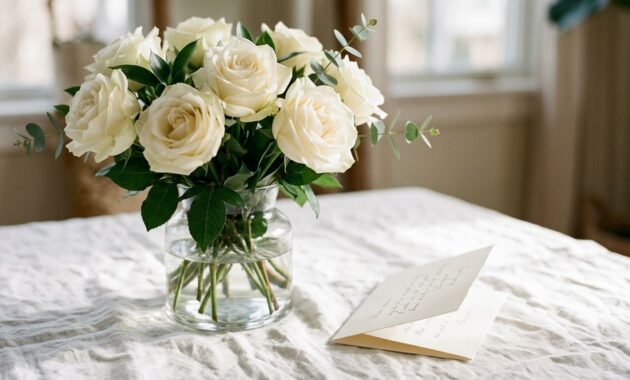
White roses are the most layered colour, because the same bloom covers two opposite moments. At a wedding or a housewarming they mean purity, loyalty and a clean start. At a memorial they mean remembrance and a respectful goodbye. Both readings come from the same idea: honesty, and something that is not complicated by drama.
Use them for: weddings and engagements, christenings, a first day at a new job, a new home, or an apology that needs to feel sincere rather than theatrical. Send them for sympathy too, but consider the recipient — in some cultures and families an all-white bouquet is reserved for funerals. If the flowers will be kept rather than thrown away, read our notes on the meaning of dried white roses before they fade.
Green Roses: Renewal, Abundance and Love That Lasts
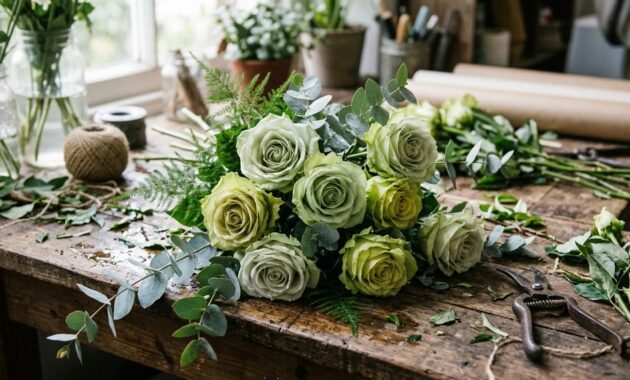
Green roses are the rarest colour in the family and the most modern in feel. Their green comes largely from sepals rather than petals, which is why the bloom looks unusual and why they are grown in small numbers. That rarity gives them weight: someone who sends green roses went out of their way.
They carry renewal, growth, abundance and long-term stability — a natural choice for a business opening, a promotion, a housewarming, or an anniversary where the point is endurance rather than fireworks. The deeper symbolism is covered in our articles on the green rose as a symbol of eternal love and its history and symbolism.
Mixing Colours: Bouquets That Speak in Sentences
- Pink + white — gratitude plus a fresh start. Weddings, thank-you gifts, gentle apologies.
- White + green — calm, clean, forward-looking. New jobs, new homes, healthy wishes.
- Pink + green — warmth plus steady growth. Perfect for a relationship you want to last, or a small business you want to encourage.
- All three — appreciation, sincerity and renewal in one arrangement; a good choice when the occasion is a milestone rather than a single feeling.
The Number Says Something Too
Colour is only half the sentence. The count is the emphasis:
- One rose — direct and personal; at its best with no card at all.
- Three roses — a classic “I appreciate you”: friendship, gratitude and respect. See three roses meaning.
- Six roses — affection and the wish to keep something going. See the meaning of six roses.
- Twelve roses — the traditional statement: full gratitude or full devotion. See a dozen roses.
Sending the Message Well
- Let the colour do the talking, then add only one line. A short handwritten note beats a paragraph; the flowers already said the rest.
- Think about where they will sit. Pale roses suit bright rooms and quiet moments; deep pink and green hold their own in larger, darker spaces.
- Match the occasion, not the trend. An out-of-season colour that fits the message beats the fashionable one that does not.
- Look after the stems. Cut them at an angle, strip the leaves that would sit below the waterline, change the water every second day, and keep the bouquet away from direct sun and ripe fruit.
Occasion Cheat Sheet
| Occasion | Best colour | Why it works |
|---|---|---|
| Thank-you gift | Pink | Gratitude without romantic pressure |
| Wedding or engagement | White (often with pink) | New beginnings, sincerity, loyalty |
| Sympathy | White or pale pink | Respect and gentleness |
| New home or new job | White with green | Clean start, healthy growth |
| Business opening | Green | Abundance and long-term success |
| Anniversary | Pink and green | Warmth plus staying power |
Other colours finish the vocabulary: gold roses for friendship and success, yellow for joy, and blue for the unattainable.
Frequently Asked Questions
Do roses really mean something specific?
There is no single enforced code, but there is a strong shared tradition. Pink, white and green roses consistently read as gratitude, sincerity and renewal across most flower dictionaries, which is what makes them safe choices for real occasions.
What if I am not sure which colour to pick?
Choose pink. It covers gratitude, admiration and warm friendship, and it is rarely misread. Add a single white stem if you also want to signal a fresh start, or a green one to wish the recipient growth.
Is it OK to send green roses as a gift?
Yes, and they are memorable precisely because they are unusual. They suit housewarmings, business milestones and long-term anniversaries better than romantic first gestures.
Final Thoughts
The language of flowers is not a secret code you have to memorise — it is a way of making a message land before anyone opens their mouth. Pick the sentence, choose the colour that fits the tone, add the count that matches the emphasis, and hand them over. Pink for gratitude, white for honesty and new chapters, green for growth that lasts: three colours are enough to say most of the things that matter.