Table of Contents
Pairing Roses with Bright Sunflowers: Golden Energy Meets Classic Romance
Few floral combinations feel as immediately joyful as roses paired with sunflowers. One flower represents centuries of cultivated romance, beauty, secrecy, and devotion; the other turns a bold golden face toward the light, evoking vitality, optimism, and steadfast affection. Together, they create a message that is warmer and more expansive than either bloom conveys alone. At its heart, the roses and sunflowers meaning is affectionate loyalty: love that is sincere, energizing, and confident about the future.
The pairing is historically fascinating because the flowers come from different botanical and cultural worlds. Roses belong to the genus Rosa and have deep roots in Eurasian horticulture, classical mythology, medieval symbolism, and nineteenth-century floriography. The common sunflower, Helianthus annuus, is native to North America, where Indigenous peoples cultivated it for food, dye, medicine, and ceremony long before its arrival in Europe during the sixteenth century. Their union in a bouquet is therefore largely modern—a meeting of Old World romance and New World solar abundance.
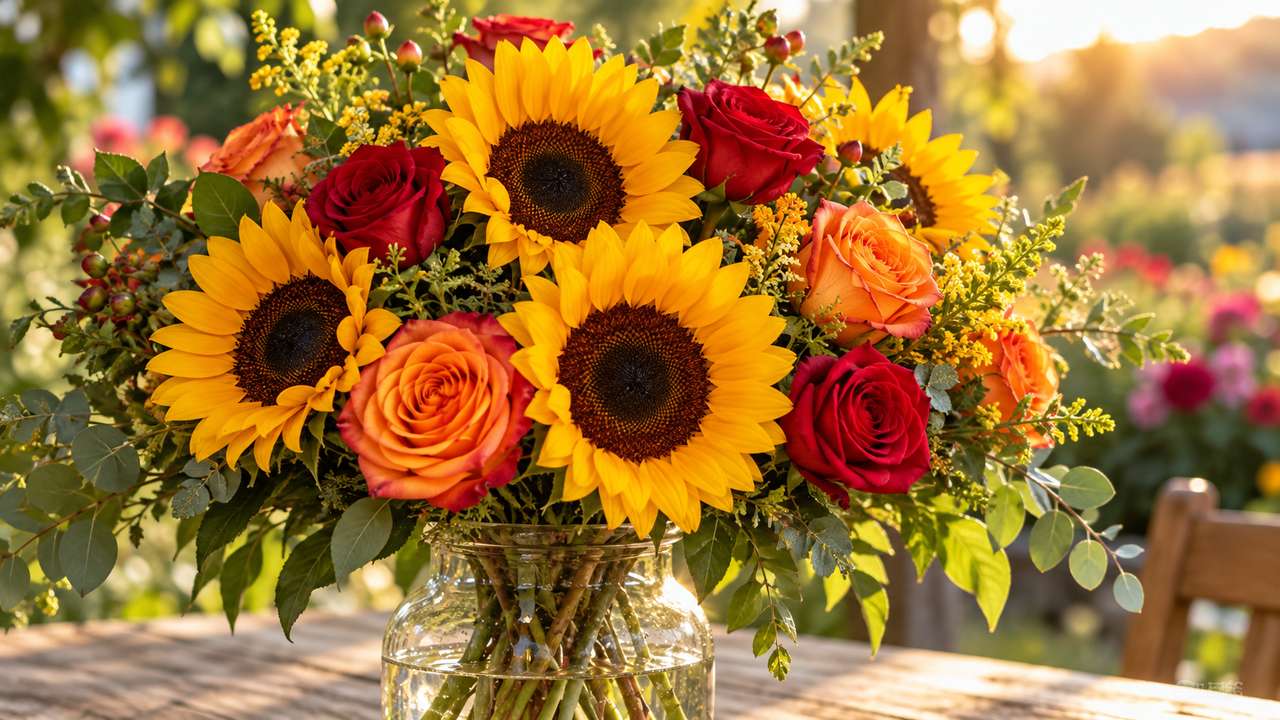
The Primary Meaning of Roses and Sunflowers
Roses provide the emotional vocabulary of the arrangement, while sunflowers amplify its brightness and resolve. A bouquet containing both commonly expresses passionate affection, admiration, happiness, loyalty, encouragement, and enduring warmth. It can suggest, “You are loved, and your presence brings light into my life.” Because sunflowers appear open and informal, they also soften the solemnity or intensity that roses can carry on their own.
This combination is especially effective when the giver wants to communicate romance without excessive formality. Red roses may declare love, but surrounded by sunflowers they feel spirited and life-affirming rather than ceremonious. Pink roses add tenderness; cream roses introduce grace; orange or salmon roses create an adventurous, sociable mood. The precise message always depends on color, number, arrangement style, occasion, and the relationship between giver and recipient.
Historical and Cultural Interpretations
In ancient Greek and Roman traditions, roses were associated with Aphrodite or Venus, linking them to love, beauty, desire, and loss. The Latin phrase sub rosa, or “under the rose,” connected the flower with secrecy and confidential speech. Christian art later gave roses additional meanings, including divine love, purity, martyrdom, and the Virgin Mary. By the Victorian period, published flower dictionaries had turned roses into a highly nuanced language in which color, stage of bloom, and presentation could alter the message.
Sunflowers followed a different symbolic path. Indigenous North American cultures valued the plant materially as well as spiritually, and interpretations varied among nations rather than forming one universal system. In Europe, the sunflower’s resemblance to the sun and its apparent movement toward daylight encouraged associations with constancy, worship, admiration, and loyalty. Victorian floriography sometimes assigned it meanings such as adoration, pride, or haughtiness—an ambiguity inspired by its impressive height and commanding face.
Modern Western floristry emphasizes the sunflower’s positive qualities: happiness, resilience, confidence, and hopeful energy. In Chinese-inspired popular symbolism, its golden color is often connected with good fortune and longevity. Across many contemporary settings, it is also used to celebrate harvest, late summer, gratitude, and personal strength. Importantly, historical flower dictionaries did not establish one universal definition for a combined rose-and-sunflower bouquet; today’s meaning is created by layering their inherited associations.
How Rose Colors Change the Message
Color selection determines whether the bouquet feels romantic, friendly, nostalgic, or celebratory. Red roses with yellow sunflowers communicate ardent love supported by loyalty and optimism. Deep burgundy creates a more dramatic, mature arrangement, while bright orange-red roses make the palette energetic and festive.
Pink roses temper the sunflower’s visual force. Blush and pale pink roses suggest sweetness, admiration, and gentle affection, making them suitable for new relationships, mothers, mentors, or close friends. Muted dusty rose colors add nostalgia and understated romance, particularly in autumn weddings or vintage-inspired arrangements.
For a warmer, less conventional expression, consider the blend of friendship and desire found in salmon rose meaning. Salmon roses harmonize naturally with sunflower petals and suit anniversaries, birthdays, or relationships that began as friendship. Cream roses provide calm contrast; the charm and consideration associated with cream rose symbolism make them ideal for elegant thank-you bouquets and refined country weddings.
| Rose and Sunflower Pairing | Principal Message | Best Occasion | Overall Mood |
|---|---|---|---|
| Red roses and golden sunflowers | Passionate, loyal, life-giving love | Anniversary or romantic celebration | Bold and affectionate |
| Pink roses and sunflowers | Admiration, tenderness, and joy | Birthday, new romance, or family gift | Sweet and uplifting |
| Cream roses and sunflowers | Grace, gratitude, and warm regard | Thank-you, wedding, or housewarming | Polished and welcoming |
| Salmon or orange roses and sunflowers | Enthusiasm, attraction, and friendship | Congratulations or milestone event | Vibrant and adventurous |
| White roses and pale sunflowers | Sincerity, hope, and peaceful devotion | Wedding, sympathy, or remembrance | Serene and heartfelt |
Occasions, Recipients, and Modern Etiquette
- Romantic partners: Choose red, coral, or deep pink roses when celebrating an anniversary, engagement, or relationship milestone. A handwritten note should clarify the personal meaning rather than relying solely on traditional symbolism.
- Friends and colleagues: Yellow, peach, salmon, or cream roses keep the bouquet warm without implying intense romance. This palette works well for birthdays, promotions, graduations, and thank-you gifts.
- Family members: Pink and cream roses with sunflowers express gratitude, admiration, and familiar affection, especially for Mother’s Day, reunions, or a cheerful “thinking of you” gesture.
- Someone recovering or facing difficulty: Sunflowers convey encouragement, while softly colored roses add care. Avoid overpoweringly fragrant varieties in hospitals and check institutional rules before sending flowers.
- Weddings: The pairing suits rustic, garden, farmhouse, bohemian, and late-summer ceremonies. Smaller sunflower cultivars preserve proportion in bridal bouquets and boutonnieres.
- Sympathy: Use restrained cream, white, or pale pink roses with muted or smaller sunflowers. Bright yellow can represent cherished memories and hope, but cultural and family preferences should guide the design.
Modern etiquette favors sensitivity over rigid floral codes. Yellow roses once carried conflicting associations, including jealousy in some European traditions, but now commonly signify friendship and happiness. Likewise, flower numbers can matter in certain cultures: even-numbered bouquets may be reserved for funerals in parts of Eastern Europe, while the number four can be considered inauspicious in some East Asian contexts. When gifting across cultures, ask a florist familiar with local custom.
Companion Flowers and Bouquet Styling
Sunflowers have broad faces and thick stems, while roses offer layered petals and rounded forms. A successful arrangement balances these different scales. Use sunflowers as focal blooms and place roses in small groups rather than alternating them mechanically. Three to five sunflowers can anchor a hand-tied bouquet, with roses forming a softer rhythm around them.
For a meadow-like style, add chamomile, feverfew, goldenrod, yarrow, or airy asters. Blue delphinium, eryngium, or cornflowers create striking complementary contrast. Burgundy dahlias and amaranthus deepen an autumn palette, while white lisianthus and waxflower make the design more refined. Eucalyptus, olive foliage, ruscus, and scented herbs provide movement and cool the dominant gold tones.
Choose wrapping that supports the intended message. Kraft paper and twine suggest rustic warmth; cream paper and silk ribbon feel wedding-ready; burgundy or forest-green wrapping creates richness. Avoid crowding the arrangement with too many competing focal flowers, and remember that strongly dyed or glittered blooms can diminish its natural elegance.
Botanical Care and Vase Longevity
Roses and sunflowers generally last about five to ten days in a vase, depending on freshness, cultivar, and care. Sunflowers are thirsty, and their coarse stems can cloud water quickly. Start with a scrupulously clean vase, dissolve commercial flower food in fresh lukewarm water, and remove every leaf that would sit below the waterline.
Recut one to two centimeters from each stem at an angle with a clean, sharp knife or floral shears. Refresh the water every one or two days, washing the vase if it becomes slippery. Keep the bouquet away from direct sun, heating vents, ripening fruit, and hot kitchens. Although sunflowers symbolize sunlight, cut stems remain fresher in a cool position with bright, indirect light.
For gardeners, both plants need abundant sun, but their cultivation differs. Annual sunflowers grow quickly from seed and prefer well-drained soil, consistent moisture, and enough space for their mature height. Roses require longer-term attention to soil fertility, airflow, pruning, and disease prevention. If growing them together, place tall sunflower varieties where they will not shade the roses, or select compact branching cultivars for easier visual and horticultural balance.
Golden Energy and Enduring Affection
The most compelling roses and sunflowers meaning is the union of enduring affection with radiant hope. Roses bring emotional depth, historical richness, and color-specific nuance; sunflowers contribute openness, loyalty, resilience, and unmistakable cheer. Whether offered to a partner, friend, relative, colleague, or someone in need of encouragement, the bouquet says that love should not merely be beautiful—it should also bring warmth, confidence, and light.