Table of Contents
Pairing Roses with White Carnations: Durability, Admiration, and Vintage Charm
Few floral pairings balance romance and resilience as gracefully as roses and white carnations. Roses bring sculptural petals, fragrance, and centuries of associations with love, beauty, secrecy, and honor. White carnations contribute ruffled texture, exceptional vase life, and a quieter symbolism of pure affection, remembrance, loyalty, and good fortune. Together, they create a bouquet that feels both emotionally expressive and reassuringly steadfast.
The historical roots of this combination reach into several traditions. Roses were sacred to deities of love in the ancient Mediterranean world and became important emblems in medieval Christianity, heraldry, poetry, and courtly romance. Carnations have an equally layered past: their botanical name, Dianthus caryophyllus, is commonly interpreted through Greek as “flower of the gods,” while their long cultivation around the Mediterranean made them familiar ceremonial and garden flowers. During the Victorian enthusiasm for floriography, both blooms acquired detailed messages based on color and presentation. Understanding the roses and carnations meaning therefore requires attention not only to species, but also to shade, culture, occasion, and the relationship between giver and recipient.
The Central Meaning: Admiration Strengthened by Devotion
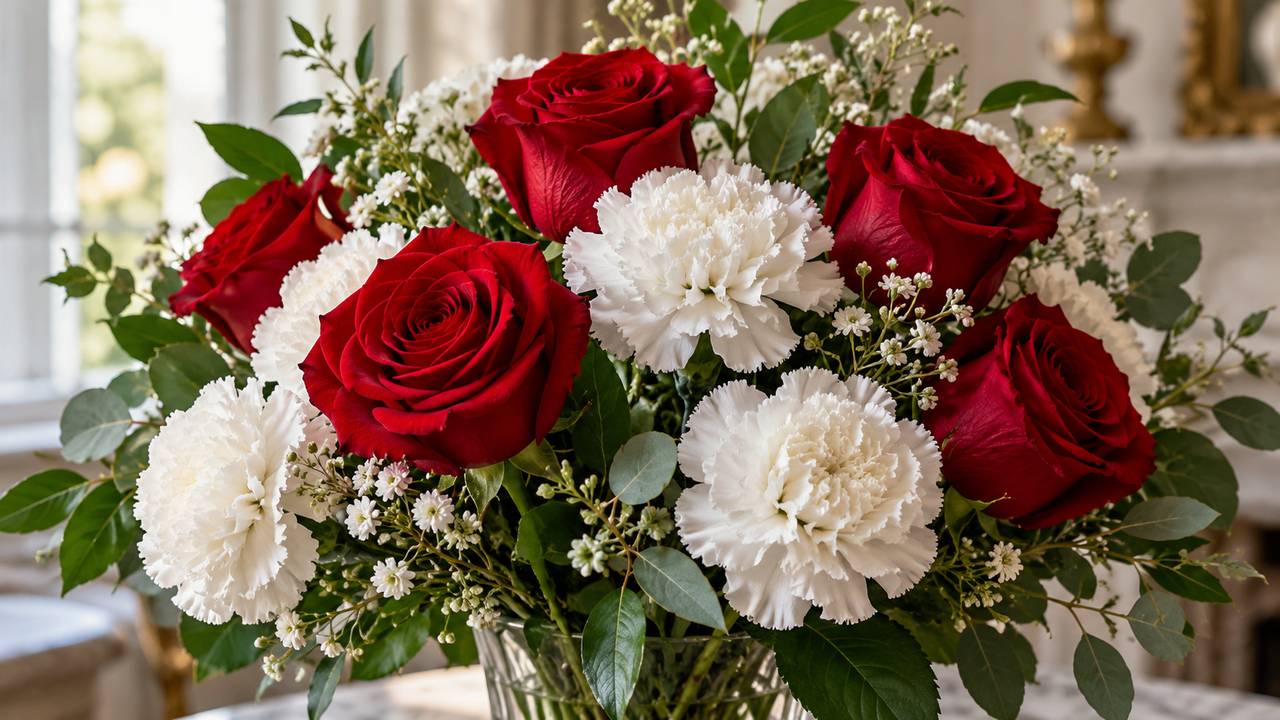
At its heart, a rose-and-white-carnation bouquet communicates admiration supported by durable affection. The rose usually supplies the arrangement’s dominant emotional tone. A red rose introduces passionate love; pink suggests gratitude or tender admiration; peach and apricot evoke warmth and sincerity; yellow may signify friendship and optimism. The white carnation acts almost like a symbolic foundation, adding constancy, innocence of intention, remembrance, and enduring care.
This combination is especially effective when the giver wants to express feeling without relying on romance alone. The roses say, “You are cherished or admired,” while the carnations add, “My regard is sincere, dependable, and lasting.” Because carnations remain fresh longer than many roses, their physical durability reinforces that message in a visible way.
Symbolism Through History
In classical and early European traditions, roses represented beauty, desire, transience, and divine love. Their tendency to bloom magnificently and then fade made them reminders that beauty and life should be treasured. White roses later became associated with purity, spiritual love, reverence, and new beginnings, while red roses remained powerful emblems of sacrifice and romantic passion.
Carnations developed meanings through religion, folklore, labor movements, national customs, and family observances. White carnations have often signified pure love, faithfulness, innocence, remembrance, and good luck. In the United States, carnations became closely connected with Mother’s Day through Anna Jarvis, who distributed white carnations in honor of her mother in 1908. Over time, customs varied: white carnations were sometimes worn to remember a deceased mother, while colored carnations honored a living mother. This distinction is historically significant but is not observed universally today.
Victorian flower-language books were never completely standardized. One volume might interpret a white carnation as “pure and ardent love,” while another emphasized sweetness, innocence, or good fortune. Roses were similarly nuanced, with color, number, maturity, and even the direction in which a flower was presented affecting the supposed message. Modern bouquets should therefore be read as thoughtful compositions rather than rigid codes.
| Rose Color | Meaning with White Carnations | Best Uses |
|---|---|---|
| Red | Passionate love grounded in loyalty | Anniversaries, romantic milestones, proposals |
| Pink | Admiration, gratitude, and gentle affection | Thank-you gifts, birthdays, mentors, mothers |
| White | Purity, reverence, remembrance, and unity | Weddings, memorials, spiritual ceremonies |
| Apricot or Peach | Warmth, hospitality, sincerity, and appreciation | Host gifts, congratulations, close friendships |
| Yellow | Cheerful friendship and dependable support | Get-well wishes, friendship, celebrations |
| Mauve | Enchantment, distinction, and refined affection | Elegant birthdays, artistic events, romantic gifts |
Shades, Variations, and Bouquet Context
Warm-toned roses make white carnations appear creamy and nostalgic. Apricot varieties are particularly welcoming; the traditional apricot rose meaning of hospitality, warmth, and affection makes them ideal for hosts, relatives, or cherished friends. Salmon roses intensify the palette without the declarative passion of deep red. Their blend of friendship and attraction, explored through the salmon rose meaning, suits an affectionate relationship that is emotionally rich but not necessarily formal.
Cooler colors produce a more unusual, editorial effect. Lavender or mauve roses paired with white carnations convey fascination and cultivated elegance; mauve rose symbolism can add notes of royalty, decadence, and distinctive affection. Mint-green roses—usually dyed, tinted, or selectively bred to appear greenish rather than naturally mint—create a fresh contemporary palette. The mint green rose significance introduces harmony, prosperity, and renewal, making the pairing suitable for a new home or business opening.
Flower form also changes the message. Tight rosebuds suggest anticipation or youthful affection; fully open garden roses feel generous and romantic. Standard carnations lend formal fullness, while spray carnations create airy movement and a more informal mood. In sympathy work, an all-white arrangement reads as restrained and reverent. In a bridal bouquet, the same flowers become symbols of unity, sincerity, and enduring commitment.
Occasion Guide and Modern Etiquette
- Romantic occasions: Pair red, blush, or mauve roses with white carnations for anniversaries and meaningful dates. Use more roses than carnations if romance should remain the unmistakable focus.
- Mother’s Day and family gifts: Pink or apricot roses soften the memorial history of white carnations and emphasize gratitude, warmth, and living affection.
- Weddings: White roses and carnations offer elegance, durability, and budget flexibility. Add blush roses or greenery to prevent the design from appearing overly formal or funereal.
- Sympathy and remembrance: White roses and carnations communicate peace and respect. Include a personal note, since white flowers can carry both celebratory and mourning associations.
- Congratulations and professional gifts: Yellow, peach, or mint-toned roses keep the bouquet friendly and avoid an unintended romantic message.
Modern etiquette favors personal context over inflexible floral dictionaries. Consider the recipient’s culture, preferences, allergies, and associations with color. In some communities, white flowers are strongly linked to funerals; in others, they are standard for weddings and religious celebrations. Avoid sending red roses in professional settings unless romantic intent is appropriate. A short card clarifying the sentiment—“With admiration for your achievement” or “In loving remembrance”—prevents ambiguity.
Companion Flowers and Styling
For vintage charm, combine roses and white carnations with waxflower, feverfew, sweet peas, or delicate limonium. Eucalyptus introduces cool gray-green movement, while rosemary adds fragrance and a traditional association with remembrance. For garden romance, use trailing jasmine, lisianthus, or airy stems of scabiosa. For a cleaner modern design, restrict the palette to two colors and add sculptural foliage such as ruscus, olive, or magnolia leaves.
Keep the roses visually dominant by using one carnation for every one or two roses. Carnations work best as textural bridges rather than a dense outer ring. Vary stem heights, turn several carnation faces sideways, and leave small pockets of space so the bouquet does not become a compact sphere. Antique vessels, footed bowls, ribbed glass, and matte ceramic containers reinforce the pairing’s old-world character.
Botanical Care and Vase Longevity
Roses and carnations have different drinking habits, but both benefit from meticulous hygiene. Begin with a clean vase and fresh, room-temperature water mixed with commercial flower food. Remove every leaf that would sit below the waterline, because submerged foliage encourages bacterial growth. Recut stems at an angle with a sharp knife or clean pruners before arranging them.
Change the water every two days, rinse the vase, and trim a small section from each stem. Keep the arrangement away from direct sun, radiators, drafts, and ripening fruit, which releases ethylene gas and accelerates aging. Roses often last five to ten days, depending on cultivar and freshness; carnations commonly last two weeks and may remain attractive longer. Remove fading roses promptly so the carnations can continue as a smaller second arrangement. If a rose neck bends, recut the stem and place it in deeper clean water for several hours, supporting the bloom while it rehydrates.
A Lasting Floral Message
Roses paired with white carnations unite beauty with endurance, emotional intensity with loyalty, and luxury with practical longevity. Their meaning can move from romance to gratitude, remembrance, friendship, or celebration simply by changing the rose color and surrounding foliage. Chosen with cultural awareness and arranged with breathing space, this pairing is neither old-fashioned nor ordinary. It is a richly historical floral statement: admiration made steadfast, affection made visible, and vintage charm designed to last.