Table of Contents
Pairing Roses with Myrtle Foliage: The Royal Bridal Tradition and Lasting Love
Few botanical pairings carry the emotional resonance of roses and myrtle. Roses express love in its many forms—romantic, joyful, loyal, passionate, or tender—while evergreen myrtle traditionally signifies fidelity, hope, marital harmony, and love that survives the passage of time. Together, they create a message more nuanced than either plant conveys alone: love in bloom, supported by enduring commitment.
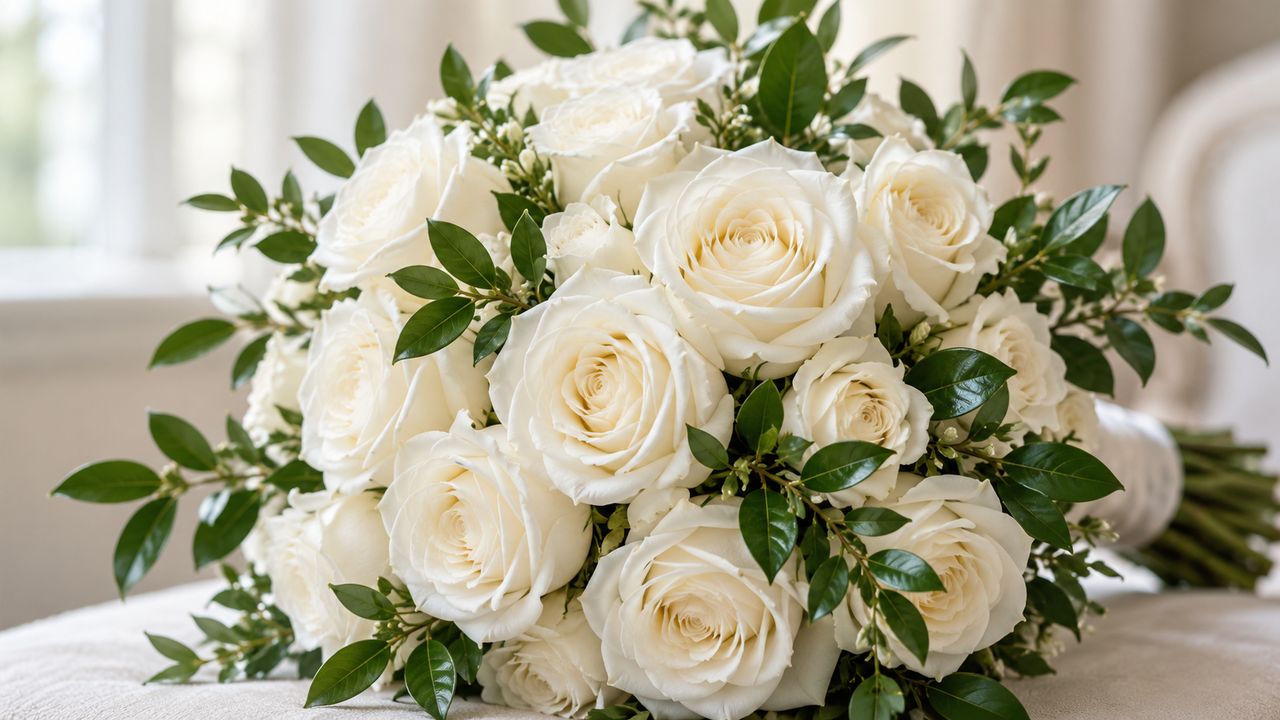
The association between roses and myrtle royal wedding bouquets is especially closely connected with Britain’s royal family. Queen Victoria helped establish the visual language of the white bridal bouquet when she married Prince Albert in 1840, carrying flowers that included myrtle. Yet the living source of the later royal custom developed more specifically at Osborne House on the Isle of Wight. In 1845, Prince Albert’s grandmother reportedly gave Queen Victoria a nosegay containing myrtle. A sprig was planted, flourished, and became part of the family’s horticultural heritage. Victoria and Albert’s eldest daughter, Princess Victoria, carried myrtle from this plant at her wedding in 1858, helping establish a tradition followed by generations of royal brides.
The Symbolic Language of Roses and Myrtle
In classical antiquity, myrtle was sacred to Aphrodite and her Roman counterpart, Venus. Because these goddesses governed love, beauty, fertility, and marriage, myrtle appeared in wedding garlands and ceremonial wreaths. Greek and Roman brides wore or carried it as a sign of auspicious union. Its small, star-like white flowers suggested purity, while its aromatic evergreen leaves represented constancy and regeneration.
Roses shared many of these associations, but their symbolism was more emotionally expansive. Their fragrance, petals, and thorns could evoke beauty, desire, secrecy, sacrifice, and the vulnerability inherent in love. In Roman culture, the rose was also linked with Venus. During the medieval and Renaissance periods, it acquired Christian meanings: the white rose could signify purity and the Virgin Mary, while the red rose suggested martyrdom, sacred love, or Christ’s blood.
Victorian floriography refined these ideas into a detailed social vocabulary. Red roses declared passionate love; white roses conveyed innocence and reverence; pink roses suggested grace and admiration. Myrtle became a direct emblem of love in marriage. A bouquet combining the two therefore communicated both present affection and future fidelity—an especially appropriate promise for a wedding.
| Flower or Foliage | Traditional Meaning | Bouquet Context | Best Emotional Message |
|---|---|---|---|
| White rose | Purity, reverence, new beginnings | Formal or traditional weddings | A sincere and sacred union |
| Red rose | Passion, courage, romantic devotion | Dramatic winter or evening bouquets | Enduring and ardent love |
| Blush-pink rose | Grace, admiration, gentle affection | Romantic garden-style arrangements | Tender love offered with gratitude |
| Myrtle | Fidelity, hope, marriage, prosperity | Bridal bouquets, wreaths, heirloom posies | Love rooted deeply enough to last |
| Rose and myrtle together | Romance joined with marital constancy | Weddings, anniversaries, vow renewals | Love that flowers and remains evergreen |
The Royal Bridal Tradition
The British royal custom is not merely decorative; it connects each marriage to a living plant and a family narrative. Myrtle propagated from the Osborne House plant has appeared in numerous royal wedding bouquets. Brides associated with the tradition include Queen Alexandra, Queen Mary, Queen Elizabeth (later the Queen Mother), Queen Elizabeth II, Diana, Princess of Wales, Catherine Middleton, Meghan Markle, and Princess Eugenie. Individual bouquets differed considerably, but the discreet sprig of myrtle supplied continuity.
This custom illustrates why botanical provenance matters. A plant descended from an earlier royal nosegay functions as a living heirloom rather than a static relic. It can grow, be cut, propagated, and handed forward. Modern couples can adapt the idea by taking myrtle from a family garden or rooting a cutting from the bridal bouquet, where local conditions and plant-health rules permit.
Rose Shades and Nuanced Interpretations
White or ivory roses create the most historically resonant pairing with myrtle. They are serene and ceremonial, although modern etiquette no longer treats white flowers as the exclusive language of innocence. Cream roses soften the effect and imply warmth, thoughtfulness, and mature affection. Blush roses introduce romance without overpowering myrtle’s refined leaves, while deep red roses produce a more passionate, theatrical statement.
For less conventional palettes, apricot roses communicate welcome and affectionate warmth; understanding the apricot rose meaning makes them particularly apt for intimate celebrations centered on family and hospitality. Dusty lilac flowers bring mystery and aristocratic elegance, qualities explored through mauve rose symbolism. Salmon roses balance friendly affection with romantic energy; the layered salmon rose meaning suits couples whose partnership grew from friendship.
Green roses are usually cultivated varieties with green-toned petals rather than mint-colored blooms. Symbolically, however, the mint green rose significance—harmony, renewal, prosperity, and good fortune—pairs naturally with myrtle’s evergreen promise. Florists can evoke this palette through pale green roses, myrtle, hellebores, and softly silvered foliage.
When to Give Roses and Myrtle
- Weddings: Give a hand-tied bouquet, boutonniere, or ceremonial posy to a bride, groom, or marrying couple. Explain the symbolism on a small card rather than assuming it is universally known.
- Anniversaries: Red or blush roses with myrtle honor both romance and fidelity, especially for milestone anniversaries or a renewal of vows.
- Engagements: Cream, apricot, or pink roses create a hopeful arrangement without competing with the future wedding bouquet.
- Family occasions: A potted myrtle with roses can welcome newlyweds into a home or celebrate an enduring marriage between parents or grandparents.
- Memorials: White roses and myrtle may express faithful remembrance, but confirm cultural and religious preferences before sending wedding-associated flowers to a funeral.
Modern etiquette favors intention over rigid rules. Avoid presenting flowers as a claim to royal status; describe them instead as inspired by a historic tradition. If gifting myrtle for planting, check climate suitability and invasive-species regulations. Couples should also avoid taking cuttings from protected gardens or historic plants without explicit permission.
Companion Flowers and Bouquet Styling
For a formal bouquet, combine white garden roses with myrtle, lily of the valley, and restrained sprays of stephanotis. A romantic English-garden design can include blush roses, sweet peas, scented stock, and trailing myrtle. For Mediterranean character, pair cream roses and common myrtle with olive foliage, jasmine, or aromatic herbs. Ranunculus adds intricate texture, while waxflower echoes myrtle’s small blossoms without visually overwhelming the roses.
Myrtle works best as structural greenery rather than dense filler. Its glossy leaves define the bouquet’s silhouette and provide dark contrast behind pale petals. Place several stems around the perimeter and one meaningful sprig near the bouquet’s center. A cascading arrangement suits flexible young shoots; a compact nosegay benefits from short, upright tips. Florists should test cultivated varieties because leaf size and stem flexibility vary.
Botanical Care and Vase Longevity
Common myrtle, Myrtus communis, is an evergreen Mediterranean shrub that prefers full sun, free-draining soil, and protection from severe frost. Once established, it tolerates dry conditions, but young plants need regular watering without waterlogging. Light pruning after flowering maintains a compact shape and supplies branching stems useful for floral work.
For cut arrangements, harvest myrtle when stems are hydrated, ideally in the cool morning. Remove leaves that would sit below the waterline, recut stems at an angle, and place them promptly in clean water with floral preservative. Roses should be conditioned separately, with damaged guard petals removed only when necessary. Use a thoroughly cleaned vase, refresh the water every two days, and keep the bouquet away from direct sun, radiators, drafts, and ripening fruit. Under good conditions, roses generally remain attractive for five to ten days, while myrtle may last longer.
A Living Emblem of Lasting Love
Roses and myrtle unite immediate beauty with botanical endurance. Their royal associations lend ceremony, but their deeper appeal is universal: the rose celebrates love’s unfolding emotion, while myrtle represents the fidelity that sustains it. Whether carried at a wedding, given for an anniversary, or planted as a living keepsake, the pairing transforms an arrangement into a promise—love cherished in the present and cultivated for the future.


