Table of Contents
Pairing Roses with Rosemary: Remembrance, Loyalty, and Herbaceous Warmth
The pairing of roses and rosemary brings together two of the oldest and most expressive plants in Western floral symbolism. Roses speak through color, suggesting love, friendship, admiration, grief, or gratitude. Rosemary contributes a steadier message: remembrance, fidelity, protection, and enduring attachment. Together, they can say, “I cherish you, I remain loyal to you, and I will not forget.”
The historical roots of this pairing reach far beyond the formal “language of flowers” popularized in nineteenth-century Europe. Roses were sacred to deities of love and beauty in the ancient Mediterranean, while rosemary was associated with memory, ritual purification, and the bonds between the living and the dead. In medieval and early modern households, both plants also had practical value. Roses supplied fragrance, medicine, and culinary flavor; rosemary warmed kitchens, sickrooms, chapels, weddings, and funerals with its resinous scent.
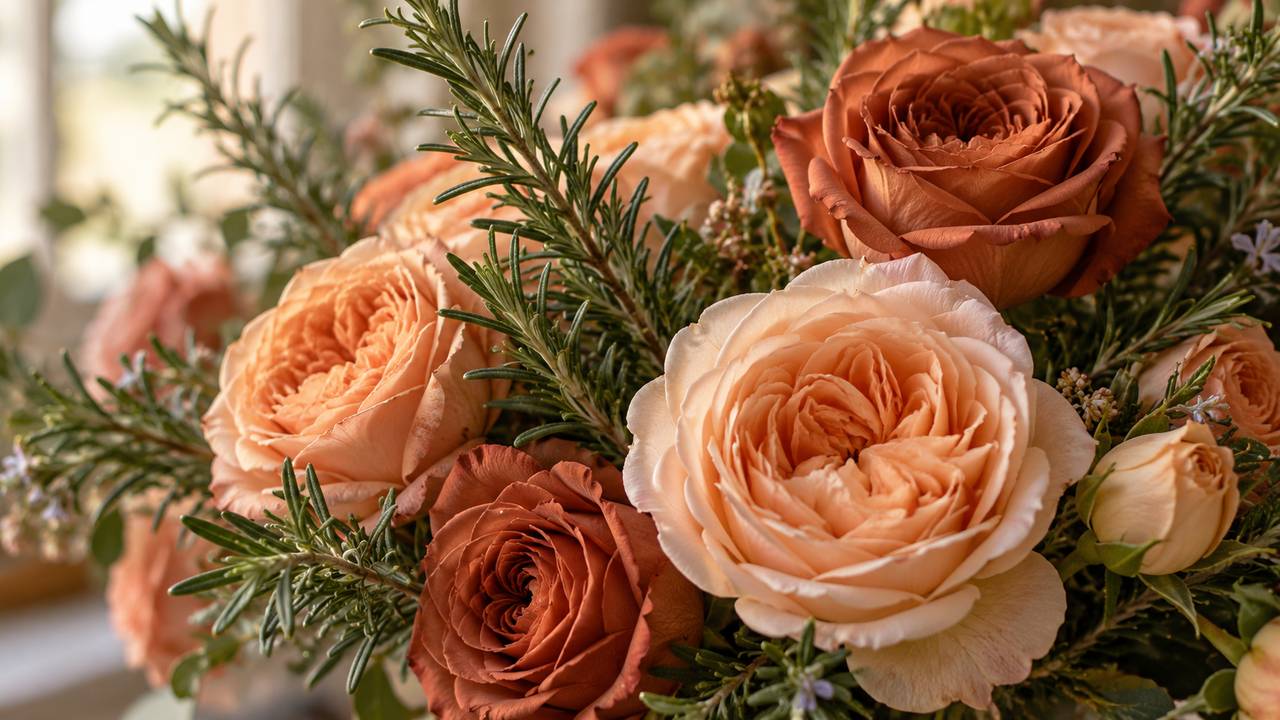
Botanically, the contrast is equally compelling. The rose belongs to the genus Rosa and offers layered petals, curved lines, and a spectrum of colors. Rosemary, botanically known as Salvia rosmarinus, is an evergreen Mediterranean shrub with narrow, aromatic leaves and small blue, violet, pink, or white flowers. A rose is visually sumptuous; rosemary is restrained and enduring. This contrast gives the combination its emotional depth.
What Is the Roses and Rosemary Meaning?
The central roses and rosemary meaning is affectionate remembrance. Roses identify the nature of the feeling, while rosemary promises that the feeling will be carried forward. In a romantic bouquet, the pairing can symbolize faithful love and memories shared by a couple. In a memorial arrangement, it expresses love that continues after death. Given to a friend, mentor, or relative, it may communicate gratitude, constancy, and appreciation for a lasting influence.
- Remembrance: Rosemary traditionally represents memory, making it appropriate for anniversaries, memorials, and farewells.
- Love and affection: Roses add emotional specificity, from romantic passion to familial tenderness.
- Loyalty: Evergreen rosemary suggests constancy through changing seasons.
- Protection and healing: Its historic use in cleansing, medicine, and domestic ritual gives rosemary a protective character.
- Warmth and hospitality: As a culinary herb, rosemary lends the arrangement a welcoming, generous, and grounded quality.
Historical and Cultural Interpretations
In ancient Greek and Roman traditions, rosemary became connected with mental clarity and recollection. Students were said to wear or carry it as an aid to memory, although many familiar anecdotes were recorded or embellished in later centuries. Roses, meanwhile, appeared in feasts, funerary observances, religious offerings, and poetry. Their beauty could represent both love’s pleasure and life’s brevity.
During the Middle Ages and Renaissance, rosemary was used at weddings as a sign of fidelity and at funerals as a token of remembrance. Mourners might carry or cast sprigs, while brides incorporated the herb into wreaths or bouquets. This dual use is important: rosemary does not belong exclusively to grief. It marks bonds intended to survive transition, whether that transition is marriage, departure, or death.
Victorian floriography strengthened the association between rosemary and remembrance. Yet flower dictionaries were never perfectly standardized; meanings varied among authors, regions, and social settings. A rose’s color therefore matters more than any supposedly universal floral code. Modern designers can use historical symbolism as a vocabulary rather than as an inflexible rulebook.
Across Mediterranean cultures, rosemary also evokes household abundance, food, sun-warmed gardens, and intergenerational knowledge. In contemporary weddings, it may be tucked into place settings or tied to favors. At funerals and remembrance ceremonies, loose sprigs allow guests to participate in a simple ritual. Combined with roses, these customs become both sensory and symbolic: the flower is seen, while the herb releases fragrance when touched.
How Rose Color Changes the Message
| Rose Color | Meaning with Rosemary | Best Context |
|---|---|---|
| Red | Passionate love, fidelity, and unforgettable devotion | Anniversaries, romantic milestones, intimate memorials |
| Pale pink | Gentle admiration, sweetness, and affectionate memory | Friendship, motherhood, thanks, recovery |
| White or cream | Reverence, peace, grace, and enduring remembrance | Weddings, condolences, spiritual ceremonies |
| Yellow | Faithful friendship, optimism, and shared memories | Reunions, congratulations, platonic gifts |
| Salmon or coral | Warm enthusiasm, desire, gratitude, and lively attachment | Celebrations, hosts, creative partnerships |
| Dusty rose | Nostalgia, mature romance, and treasured history | Vow renewals, heritage weddings, milestone birthdays |
Red roses and rosemary make the strongest declaration of devoted romantic memory, but the combination can feel solemn if presented without context. Pink softens the message. In particular, pale pink roses communicate admiration and sweetness without implying overwhelming passion.
For a warm, energetic gift, explore the salmon rose meaning, which bridges friendship, gratitude, and attraction. Muted palettes create a more reflective mood: dusty rose colors naturally suggest nostalgia and mature affection. Ivory blooms are especially versatile, and cream rose symbolism adds thoughtfulness and grace without the starkness sometimes associated with pure white.
When and to Whom Should You Give Them?
Roses and rosemary are particularly suitable when an occasion involves both affection and continuity. Give them to a spouse on an anniversary, a longtime friend before a move, a retiring colleague whose influence will remain, or a family member preserving an important tradition. They are also meaningful for weddings, vow renewals, reunions, remembrance services, and celebrations of life.
Modern etiquette depends on clarity. Red roses may be interpreted romantically, so choose yellow, blush, cream, or salmon when gifting a friend or professional contact. For bereavement, subdued white, cream, or dusty pink roses with rosemary are generally appropriate. Include a brief card explaining the symbolism, such as “With loving remembrance” or “Your kindness will always stay with me.” Avoid strongly perfumed arrangements in hospitals, care facilities, or fragrance-sensitive homes.
At a wedding, rosemary can honor absent relatives without turning the celebration into a memorial. A discreet sprig attached to a bouquet ribbon or placed beside a framed photograph is often enough. For funerals, consult the family’s faith, customs, and preferences; not every culture uses flowers in the same way, and some families prefer charitable donations.
Companion Flowers and Bouquet Styling
Rosemary gives arrangements linear movement, matte green texture, and a clean camphoraceous fragrance. Use it as a collar around a hand-tied bouquet, weave longer stems through a loose garden arrangement, or bind a single sprig beneath the ribbon. Because the foliage can appear stiff, vary stem heights rather than creating a dense, uniform ring.
- Lavender: Reinforces calm, devotion, fragrance, and a Mediterranean character.
- Forget-me-nots: Makes the remembrance theme explicit and adds delicate blue contrast.
- Lisianthus: Brings softness and elegance without competing with the roses.
- Olive foliage: Adds peace, reconciliation, and silvery tonal depth.
- Waxflower or thyme: Creates fine texture and an informal, herb-garden atmosphere.
For a romantic arrangement, combine dusty pink roses, rosemary, burgundy foliage, and trailing jasmine. For a memorial design, select cream roses, rosemary, olive, and white lisianthus. A cheerful kitchen-table bouquet can pair salmon roses with rosemary, mint, chamomile, and seasonal greenery. Never use florist-treated rosemary for cooking; decorative stems may carry preservatives or pesticides not approved for food.
Care, Vase Life, and Cultivation
Condition roses and rosemary separately before arranging them. Recut rose stems diagonally with a clean blade, remove foliage below the waterline, and hydrate them in a clean vase with commercial flower food. Strip the lower leaves from rosemary, recut its woody stems, and place them in water promptly. If stems are exceptionally hard, make a short vertical split at the base rather than crushing them, which damages tissue and encourages bacteria.
Refresh the water every one or two days, clean the vase, and recut stems as needed. Keep the arrangement away from direct sun, heating vents, and ripening fruit, which releases ethylene. Many cut roses last approximately five to ten days, depending on cultivar and freshness; rosemary often remains attractive longer and can be dried afterward as a keepsake.
In the garden, roses generally favor fertile, well-drained soil with consistent moisture, while rosemary prefers leaner, sharply drained conditions and dislikes wet roots. They can share a sunny design scheme, but they should not necessarily share identical irrigation. Plant rosemary in a raised or gravelly position and roses in richer soil nearby. Good airflow benefits both.
A Living Message of Affection and Memory
The enduring power of the roses and rosemary meaning lies in its balance. Roses acknowledge that love is vivid, tender, and sometimes fleeting; evergreen rosemary insists that memory can persist. By choosing the rose color carefully, respecting cultural context, and adding a few complementary flowers, the pairing can express romance, friendship, gratitude, condolence, or family continuity with unusual precision. It is not merely a beautiful bouquet, but a fragrant promise to cherish what matters and remember what endures.