Table of Contents
Pairing Roses with Sweet Peas: Delicate Departure, Bliss, and Pastel Wonder
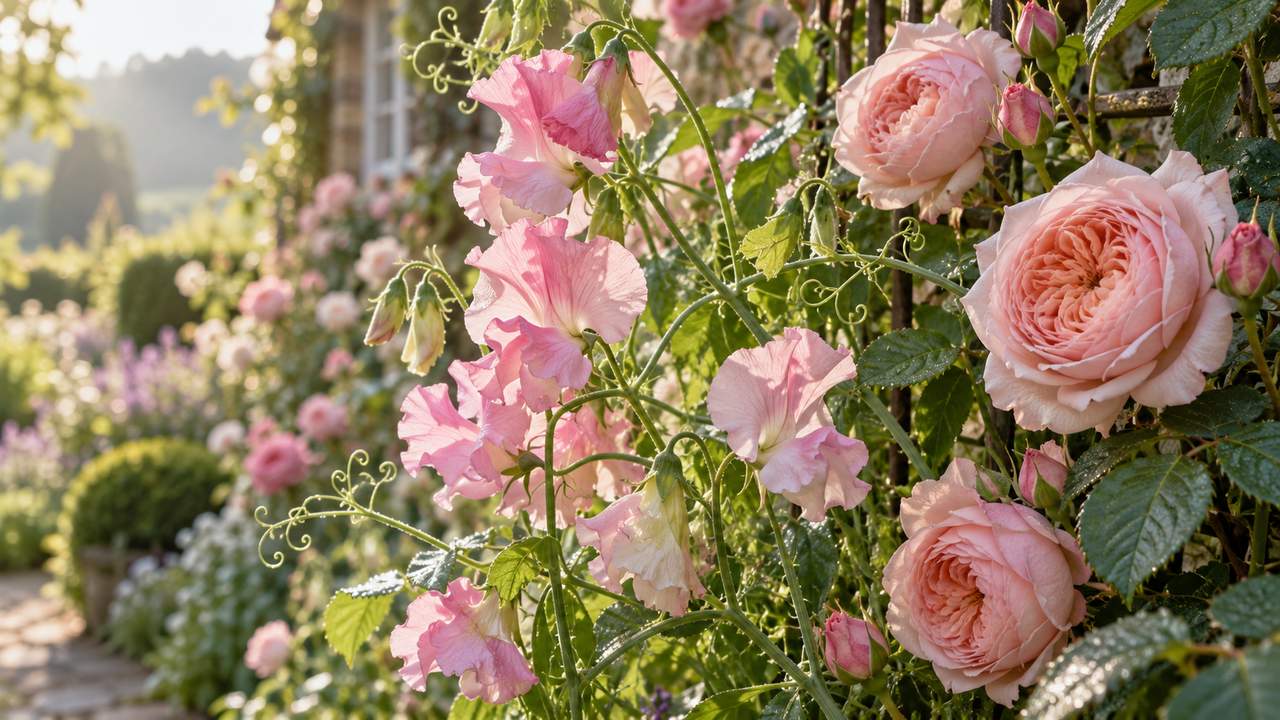
The pairing of roses and sweet peas creates a bouquet rich in contrast: the rose is sculptural, enduring, and historically associated with profound love, while the sweet pea is airy, fleeting, and touched by the sentiment of departure. Together, they can express affectionate gratitude, blissful memories, tender romance, or a graceful farewell. This layered roses and sweet peas meaning is especially compelling because it joins two flowers with distinct botanical personalities and complementary traditions in floriography.
Roses belong to the genus Rosa and range from tightly furled hybrid teas to relaxed, many-petaled garden varieties. Sweet peas, Lathyrus odoratus, are climbing annuals prized for winged petals, curling tendrils, and a fragrance that may suggest honey, orange blossom, or fresh grass. Although both plants favor sunny conditions, they behave very differently as cut flowers: roses provide visual weight and structure, while sweet peas lend fragrance, movement, and an almost translucent delicacy.
Historical Origins and the Language of Flowers
Roses carried symbolic importance long before formal flower dictionaries appeared. In Greek and Roman traditions they were associated with Aphrodite or Venus, beauty, desire, secrecy, and mortality. Christian art later gave roses devotional meanings, including purity, martyrdom, and heavenly love. By the nineteenth century, individual rose colors had acquired increasingly specific social messages.
Sweet peas entered European horticulture much later. The wild species is generally associated with southern Italy and Sicily, and was recorded in the late seventeenth century by the Sicilian friar and botanist Franciscus Cupani. Selective breeding transformed the modest wild flower into the large, ruffled cultivars beloved in Victorian and Edwardian gardens. Its brief season and delicate stems naturally encouraged associations with passing pleasure, grateful leave-taking, and cherished moments that cannot be held forever.
In the Victorian language of flowers, bouquets could communicate emotions that etiquette discouraged people from stating openly. Roses conveyed love in its many forms; sweet peas commonly suggested “delicate pleasures,” “blissful pleasure,” “thank you for a lovely time,” or “goodbye.” Their combination therefore did not necessarily announce heartbreak. More often, it transformed a farewell into an affectionate acknowledgment: the pleasure was real, the memory remains, and the bond deserves honor.
Primary Symbolism of Roses and Sweet Peas
The central meaning changes according to the relationship and setting. Romantic roses paired with sweet peas may say, “Our time together has been beautiful.” Friendship roses can turn the same bouquet into thanks for hospitality. At a wedding, sweet peas soften the rose’s intense symbolism and introduce happiness, tenderness, and anticipation. At a farewell, roses prevent the message from seeming casual, while sweet peas make separation feel gentle rather than final.
- Affectionate departure: A graceful goodbye offered with warmth, admiration, and gratitude.
- Bliss and delicate pleasure: Appreciation for joyful experiences, intimate celebrations, and fleeting beauty.
- Romantic tenderness: Love expressed softly, particularly through blush, cream, peach, or lavender palettes.
- Grateful hospitality: Thanks for a visit, dinner, holiday stay, or generous welcome.
- Memory and transition: Recognition that a meaningful season is ending while affection continues.
How Color Changes the Message
Because roses possess an especially developed color vocabulary, they usually establish the emotional tone, while sweet peas add nuance. A study of traditional rose color meanings helps avoid ambiguity. Red roses make the arrangement passionate; pink emphasizes admiration and sweetness; white suggests sincerity, remembrance, or new beginnings; yellow communicates friendship and cheer; and peach or apricot conveys appreciation, warmth, and sociability.
| Pairing | Combined Meaning | Best Occasion |
|---|---|---|
| Red roses and burgundy sweet peas | Passionate love enriched by precious memories | Anniversary or romantic farewell |
| Blush roses and pink sweet peas | Tender admiration, happiness, and gentle affection | Wedding, birthday, or new relationship |
| White roses and white sweet peas | Sincerity, peaceful transition, and remembrance | Wedding, condolence, or farewell |
| Yellow roses and lavender sweet peas | Joyful friendship with a note of enchantment | Thank-you or friendship gift |
| Apricot roses and peach sweet peas | Hospitality, gratitude, warmth, and shared pleasure | Hostess gift or housewarming |
Variegated sweet peas create a more playful, informal effect than monochromatic stems. Deep maroon cultivars bring drama and can support themes of mature devotion or dignified leave-taking. Pale blue and lavender varieties suggest dreams, nostalgia, and refinement, although blue sweet peas are typically mauve-blue rather than a true botanical blue. For a host, peach sweet peas beside warm-toned roses reinforce the traditional apricot rose meaning of welcome, affection, and appreciative warmth.
Cultural Interpretations and Seasonal Customs
In Britain, sweet peas became closely linked with cottage gardens, summer flower shows, and the refined informality of country-house arrangements. Their popularity during the late Victorian and Edwardian periods gave them nostalgic associations that remain strong in contemporary wedding floristry. In the United States, the sweet pea is commonly listed as an April birth flower, making the combination appropriate for April birthdays as well as spring celebrations.
Japanese floral appreciation often values seasonality, asymmetry, and the poignancy of impermanence. Although sweet peas do not carry one single universal Japanese message, their fragile form and short vase life can harmonize with an aesthetic appreciation of transient beauty. Roses, meanwhile, have acquired modern global meanings through commerce, cinema, and wedding traditions. Consequently, cultural context matters more than rigid dictionary definitions.
When and How to Give This Pairing
For a romantic partner, choose garden roses and fragrant sweet peas in related shades, adding a handwritten note so that “departure” is not misread. At weddings, blush, cream, and pale lavender create an airy bouquet associated with bliss and affectionate anticipation. For a colleague leaving a workplace, yellow or peach roses with multicolored sweet peas communicate gratitude without romantic overtones. White flowers can suit memorials, but consult the family’s religious and cultural customs before sending them.
Modern etiquette favors intention over secret codes. Tell the recipient why you selected the flowers, particularly when the occasion is emotionally complex. Avoid heavily perfumed arrangements for hospital rooms, scent-sensitive recipients, or small dining tables. Sweet peas are also toxic if eaten, especially their seeds, and should never be confused with edible garden peas. Keep arrangements away from children, pets, food preparation areas, and anyone likely to taste decorative flowers.
Companion Flowers and Styling
Roses and sweet peas look most convincing when their natural forms remain visible. Use roses as focal blooms, then thread sweet peas above and between them rather than compressing their slender stems. For a garden-style arrangement, add ranunculus, tulips, hellebores, scabious, or butterfly ranunculus. Delphinium provides height, while jasmine vine, mint, or flowering herbs add loose movement and fragrance.
For a romantic pastel palette, combine shell-pink roses, lilac sweet peas, cream ranunculus, and airy grasses. A modern design might place coral roses and raspberry sweet peas in a low ceramic bowl with generous negative space. Avoid too many competing focal flowers: peonies and large dahlias can overwhelm sweet peas unless used sparingly. Ribbon should support the mood—silk or velvet for formal symbolism, linen or raffia for rustic hospitality.
Care, Vase Life, and Cultivation
Sweet peas generally have a shorter vase life than roses, often lasting about four to seven days, while fresh roses may last a week or longer. Condition them separately before arranging. Remove foliage below the waterline, recut stems with clean shears, and place them promptly in a sanitized vase with fresh water and floral preservative. Check water daily because sweet pea stems are thin and dehydrate quickly. Keep the arrangement away from direct sun, radiators, drafts, and ripening fruit, which releases ethylene and accelerates aging.
Gardeners should sow sweet peas in cool conditions and provide support as vines climb. Regular picking encourages continued flowering, while removing seed pods directs energy toward new blooms. Roses require good air circulation, appropriate pruning, deep watering, and cultivar-specific disease care. Never eat ornamental sweet peas; unlike edible peas, Lathyrus odoratus is grown for beauty and fragrance, not consumption.
When the bouquet fades, roses can become keepsakes even though sweet peas are difficult to preserve intact. Air-drying, pressing, or silica gel can retain part of the original composition. A careful drying roses technique helps protect petal shape and color, allowing the enduring rose to preserve the memory represented by the more ephemeral sweet pea.
A Bouquet of Affection and Impermanence
The enduring appeal of this pairing lies in its emotional balance. Roses speak of love, admiration, friendship, or devotion; sweet peas answer with gratitude, bliss, and an elegant awareness that beautiful moments pass. Chosen thoughtfully, they can celebrate a wedding, thank a host, honor a friendship, or soften a farewell. Their message is not simply goodbye, but something more generous: this time was precious, your presence brought joy, and the memory will remain.