Table of Contents
1 Rose Meaning: What Giving a Single Stem Truly Signifies Across Different Colors
The meaning of one rose is powerful precisely because the gesture is so restrained. While a large bouquet can communicate celebration, abundance, or public romance, a single stem concentrates attention on one person, one emotion, and one moment. Its most widely recognized message is “you are the one,” but color, relationship, presentation, and cultural context can transform that message from passionate love into friendship, remembrance, gratitude, apology, or hope.
Understanding 1 rose meaning: what giving a single stem truly signifies across different colors requires more than consulting a simple color chart. A deep red rose presented on an anniversary does not carry the same implication as a yellow rose handed to a colleague, and a white rose placed at a memorial differs profoundly from one used in a proposal. Even the maturity of the bloom, the presence of thorns, and the words accompanying it can influence how the recipient interprets the gift.
Why a Single Rose Carries So Much Symbolic Weight
Roses have been associated with beauty, secrecy, desire, nobility, and mortality for centuries. They appeared in classical mythology, medieval heraldry, religious art, Persian poetry, and Victorian floral language. During the nineteenth century, Western “floriography” guides assigned detailed messages to flower species, colors, and arrangements. Although those guides were not always consistent, they helped establish many associations still recognized today.
The single rose became especially meaningful because the number one suggests singularity. In romantic circumstances, it can mean “my feelings are focused on you,” “you are unique,” or “I choose you.” Outside romance, the same numerical symbolism can express one sincere thank-you, one enduring memory, or one carefully considered act of support.
Restraint also affects perception. One premium rose may appear more deliberate than an inexpensive mixed bouquet because there is nowhere for poor quality or careless presentation to hide. The recipient notices the flower’s color, fragrance, stem length, freshness, and condition. This makes a single rose both emotionally direct and visually exacting.
Single-Rose Color Meaning at a Glance
| Rose Color | Core Single-Stem Meaning | Best-Suited Occasion | Possible Misinterpretation |
|---|---|---|---|
| Red | Love, desire, romantic commitment | Date, anniversary, proposal | May feel too intimate in a platonic setting |
| Pink | Admiration, affection, gratitude | Thank-you, early romance, congratulations | Dark pink can appear more emotionally intense |
| White | Purity, sincerity, remembrance | Wedding, sympathy, spiritual milestone | Can carry mourning associations |
| Yellow | Friendship, warmth, optimism | Cheering someone up, appreciation | Historically linked to jealousy in some traditions |
| Orange | Fascination, energy, growing attraction | New relationship, achievement | Can signal stronger desire than intended |
| Lavender | Enchantment, rarity, love at first sight | Distinctive romantic gesture | Its symbolism may be unfamiliar |
| Peach | Sincerity, modest gratitude, warmth | Professional thanks, hospitality | May seem understated for passionate romance |
| Black or very dark | Farewell, transformation, mystery | Theatrical events, endings, new chapters | Can suggest grief, rejection, or hostility |
What One Rose Means in Each Major Color
One Red Rose: Undivided Romantic Love
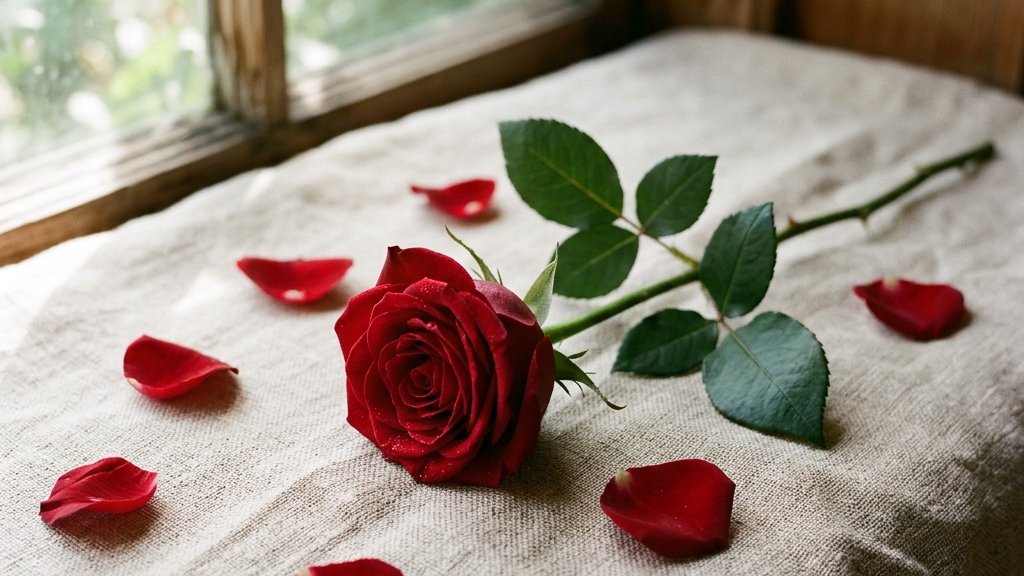
A single red rose is the clearest declaration of romantic focus. On a first date, it communicates attraction without the scale or pressure of a dozen roses. In an established relationship, it can reaffirm exclusivity: one flower for one beloved person. A long-stemmed, velvety red cultivar generally appears formal and passionate, while a garden-style red rose with an open, fragrant bloom can feel softer and more personal.
Darker shades add complexity. Burgundy, crimson, and wine tones often suggest mature devotion, depth, and cultivated elegance rather than youthful infatuation. Readers interested in these subtleties can explore Wine Red Rose Meaning: Sophistication, Devotion, and Timeless Elegance. Because red is strongly coded as romantic, it should be used cautiously between coworkers, casual acquaintances, or people whose boundaries are uncertain.
One Pink Rose: Admiration Without Overstatement
Pink is among the most versatile choices. Pale pink conveys tenderness, gentleness, and budding affection, making it suitable for a new relationship or a thoughtful family gesture. Medium pink commonly expresses admiration and happiness, while deep pink traditionally signals appreciation and gratitude. A single pink stem can therefore say “I admire you” or “thank you” without automatically declaring passionate love.
One White Rose: Sincerity, Reverence, or Remembrance
White roses represent innocence, truth, peace, and spiritual love. At a wedding, one white rose may signify a sincere new beginning or faithful intention. At a funeral or memorial, the same flower becomes a quiet emblem of remembrance, respect, and enduring connection. Context is crucial: presenting a white rose romantically may seem graceful and pure, but in cultures where white flowers are closely associated with death, the gesture can feel solemn.
One Yellow Rose: Friendship and Emotional Sunshine
Today, a single yellow rose most often communicates friendship, optimism, welcome, or encouragement. It works well when celebrating a friend’s success, visiting someone recovering from illness, or thanking a person whose support has brought happiness. Historically, however, yellow roses were sometimes linked with jealousy, fading affection, or infidelity. Those older meanings are less dominant now, but a short note can eliminate uncertainty, especially in a romantic relationship.
One Orange Rose: Enthusiasm and Magnetic Attraction
Orange sits symbolically between yellow friendship and red passion. One orange rose can indicate fascination, excitement, pride, or a relationship becoming more intense. Bright tangerine varieties feel energetic and celebratory; deeper copper or flame-colored roses can suggest desire. This is an effective choice for acknowledging ambition, creative achievement, or chemistry that is not yet expressed as committed love.
One Lavender, Purple, or Blue Rose: Enchantment and the Extraordinary
Lavender roses are associated with wonder, elegance, and love at first sight. A single lavender stem tells the recipient that they are captivating or unlike anyone else. Purple shades can also evoke royalty and dignity. Naturally blue roses do not exist because roses lack the genetic pathway needed to produce true blue pigment. Commercial blue stems are generally dyed or treated, so their meaning centers on mystery, impossibility, fantasy, and attaining the seemingly unattainable.
One Peach or Coral Rose: Genuine Warmth
Peach roses communicate modesty, sincerity, gratitude, and gentle warmth. They are particularly appropriate for hosts, mentors, clients, and friends because they feel gracious without being overtly romantic. Coral leans toward enthusiasm and attraction, making it slightly bolder. When emotional boundaries matter, peach is often safer than red while remaining warmer and more distinctive than white.
One Black Rose: An Ending or Transformation
Most so-called black roses are extremely dark red or purple cultivars, or they have been dyed. One black rose can mark grief, farewell, rebellion, mystery, or the end of a life chapter. It can also symbolize rebirth after difficulty: one identity ends so another can begin. Because the negative interpretation can be strong, this color is best reserved for recipients who understand the intention or appreciate gothic and theatrical aesthetics.
When Pattern Matters as Much as Color
Not every rose belongs to a single color category. A rose with contrasting margins, a pale center, or dramatically different inner and outer petals can suggest harmony between opposites or the meeting of two lives. The symbolism is examined more fully in Bi-Color Rose Meaning: Decoding the Symbolism of Petals with Two Distinct Hues. As a single-stem gift, a bi-color rose often feels individualistic and thoughtfully selected.
Striped and speckled cultivars create a more playful impression. Their irregular pigmentation can represent spontaneity, charm, creative personality, or delightful unpredictability. For horticultural context and symbolic interpretation, see Striped Rose Meaning: Playfulness, Caprice, and Unique Horticultural Artistry. Because no two patterned blooms look exactly alike, one such rose can literally reinforce the message “you are one of a kind.”
How Presentation Changes the Message
The flower is only part of the communication. A fully open bloom conveys emotional openness, confidence, and affection at its peak. A tight bud suggests youth, anticipation, potential, or feelings beginning to develop. Florists often select partially open roses because they combine immediate beauty with several days of vase life.
- Long stem: Creates a formal, dramatic, traditionally romantic impression.
- Short stem: Feels casual, intimate, and spontaneous.
- Thorns removed: Signals polished care and makes the rose easier to handle.
- Thorns retained: Can suggest natural beauty, vulnerability, or love that includes difficulty.
- Wrapped stem: Appears ceremonial, while an unwrapped garden-cut rose feels personal and immediate.
Quality also carries meaning. Choose a firm stem, healthy green sepals, unbruised guard petals, and foliage free from yellowing or black spots. Avoid blooms with a bent neck, translucent petal edges, or a loose center, all of which can indicate dehydration or age. Recutting the stem at an angle and placing it promptly in clean water shows that the gesture was considered rather than improvised carelessly.
Choosing the Right Single Rose for the Moment
Begin with the relationship, not merely your favorite color. Red is appropriate when romantic intent is welcome and unmistakable. Pink, peach, or yellow offers greater emotional flexibility for friends, relatives, colleagues, and new acquaintances. White suits formal, spiritual, and commemorative settings, while orange and lavender make expressive choices for someone who values originality.
Consider culture and personal history as well. Flower meanings are conventions, not universal laws. Yellow may represent joy to one recipient and betrayal to another; white may suggest marriage in one setting and mourning in another. The recipient’s preferences should outweigh any standardized guide. If ambiguity is possible, include a brief handwritten message such as “For everything you have done,” “You are unforgettable,” or “One rose for my one true love.”
The Lasting Message of a Single Stem
Ultimately, one rose signifies concentrated intention. It removes the distraction of abundance and asks the recipient to notice one carefully chosen symbol. Color provides the emotional vocabulary, but timing, relationship, flower quality, and accompanying words complete the sentence. Whether the stem is red for devotion, yellow for friendship, white for remembrance, or striped for individuality, its deepest message is simple: this flower was selected for you, and this moment matters.