Table of Contents
Bi-Color Rose Meaning: Decoding the Symbolism of Petals with Two Distinct Hues
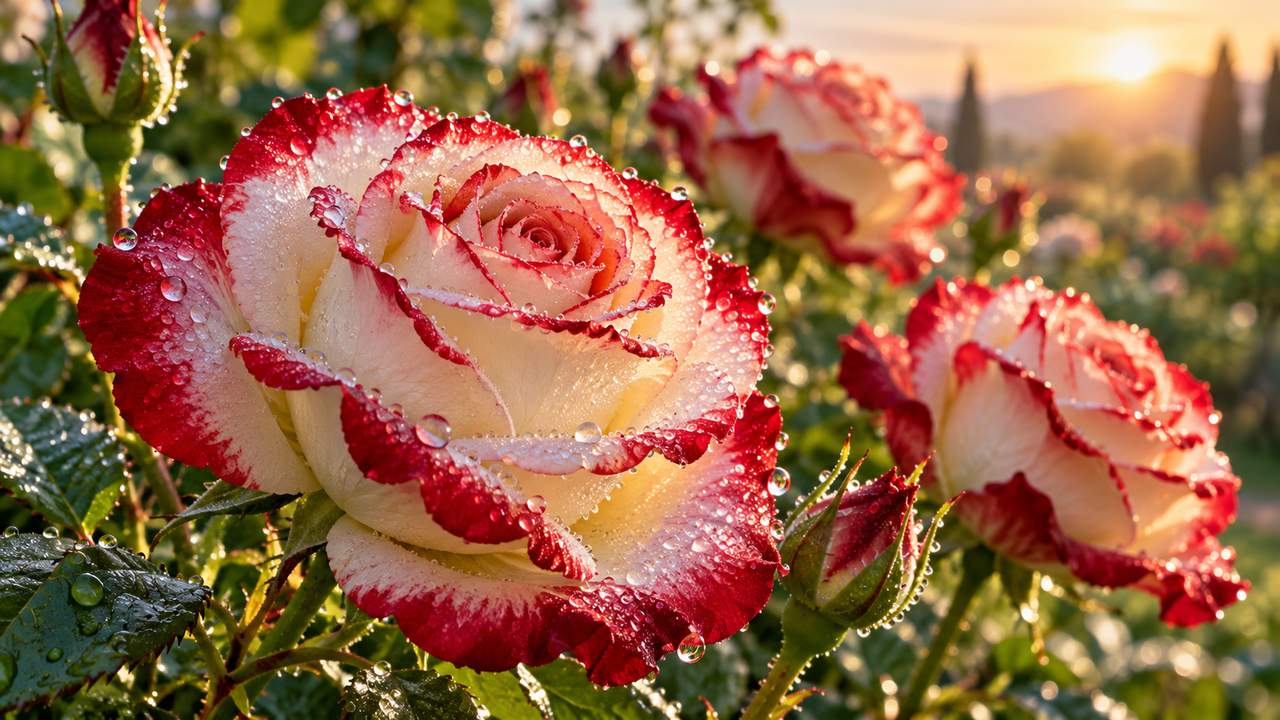
The bi-color rose meaning: decoding the symbolism of petals with two distinct hues begins with a simple but powerful idea: one flower can communicate two emotional messages at once. Unlike a solid-colored rose, a bi-color bloom displays contrasting or complementary shades on the same flower. One hue may dominate the center while another outlines the petal edges, forms stripes, or appears as a gradual blush. The result is a rose that symbolizes complexity, transition, unity, and the meeting of different feelings.
Bi-color roses are especially useful when a relationship or occasion cannot be described by a single traditional meaning. A red-and-white rose may express passionate love joined with loyalty, while a yellow rose edged in red can suggest friendship developing into romance. Cream petals with pink margins communicate tenderness and admiration without the intensity of an entirely red bouquet. Because the two colors interact visually, interpretation depends not only on the individual hues but also on their proportion, placement, and cultural context.
What Is a Bi-Color Rose?
In horticultural terms, a bi-color rose is a cultivar whose flowers consistently display two visibly distinct colors. The contrast may occur between the upper and reverse sides of each petal, between the petal base and edge, or across irregular stripes and splashes. Some cultivars open in one dominant shade and develop a second color as the bloom matures. Others change appearance in response to temperature, sunlight, soil conditions, or the age of the flower.
This distinction matters because not every rose that appears multicolored is genetically bi-color. Florists sometimes tint cut roses artificially, while naturally aging blooms can fade from strong pigments into pale secondary shades. True bi-color cultivars generally reproduce a recognizable two-tone pattern, although no two flowers are perfectly identical. That natural variation contributes to their symbolic appeal: they represent harmony without uniformity.
How Two-Tone Petals Develop
Rose coloration is primarily influenced by pigments called anthocyanins and carotenoids. Anthocyanins help produce red, crimson, pink, mauve, and violet tones, while carotenoids contribute yellow, gold, orange, and apricot. Differences in pigment concentration across the petal create margins, reverse coloring, gradients, and contrasting centers. Genetics determines the underlying pattern, but growing conditions can alter its intensity.
Cool nights often deepen red and pink pigmentation, whereas strong heat may cause certain cultivars to fade more quickly. Sun exposure can intensify one rose and bleach another, depending on its genetic makeup. As petals expand, their edges may accumulate or lose color at a different rate from the center. Consequently, catalogue photographs should be treated as representative rather than exact specifications.
The Core Symbolism of Bi-Color Roses
At their broadest level, bi-color roses represent duality brought into balance. Their two hues can stand for two people, two families, two stages of life, or two emotions that coexist. They are therefore appropriate for relationships characterized by depth rather than simplicity. A bi-color bouquet can acknowledge that affection includes friendship, desire includes respect, or a farewell can contain both sadness and hope.
These roses also symbolize transformation. When one color appears to flow into another, the flower visually evokes a changing relationship or an important personal transition. This makes two-tone varieties meaningful for engagements, graduations, reconciliations, career changes, and milestone anniversaries. In mixed-cultural weddings, they can represent distinct backgrounds joining without either identity being erased.
Bi-Color Rose Combinations and Their Meanings
| Color Combination | Principal Symbolism | Best-Suited Occasion |
|---|---|---|
| Red and white | Passion united with purity, loyalty, and mutual respect | Weddings, anniversaries, sincere romantic commitments |
| Yellow with red edges | Friendship warming into attraction or romantic excitement | New relationships, first dates, affectionate surprises |
| White with pink edges | Gentleness, admiration, innocence, and growing affection | Births, bridal events, thank-you gifts |
| Orange and yellow | Energy, optimism, achievement, and enthusiastic support | Graduations, promotions, congratulations |
| Pink and cream | Grace, gratitude, understated affection, and elegance | Hostess gifts, family celebrations, refined romance |
| Purple or mauve with white | Enchantment, mystery, dignity, and spiritual connection | Milestones, artistic occasions, distinctive courtship |
Red and White: Devotion in Balance
Red traditionally represents desire, courage, and romantic love, while white conveys sincerity, peace, and fidelity. Together, the colors create one of the strongest symbols of union. A single bloom can say that physical attraction is supported by honorable intentions. In bridal floristry, red-and-white roses may also signify two lives becoming one, although pure white remains associated with mourning in some cultures. The recipient’s traditions should always guide the final choice.
Yellow and Red: Friendship Becoming Passion
A yellow rose tipped or edged with red is widely interpreted as a transition from companionship to romantic interest. Yellow supplies joy and friendship; red introduces desire. It is an expressive choice for someone revealing deeper feelings, but its message may be too suggestive for a strictly professional gift. For a subtler emotional bridge, the nuanced symbolism explored in Salmon Rose Meaning: Bridging the Gap Between Warm Friendship and Fiery Passion offers a useful comparison.
Cream, Apricot, and Pink: Warmth Without Pressure
Soft bi-color combinations communicate affection in a gracious, non-demanding way. Cream indicates thoughtfulness and charm, apricot suggests warmth and appreciation, and pink adds admiration. These roses suit hosts, relatives, mentors, and emerging relationships. Readers seeking a deeper understanding of warm peach-toned flowers can consult Apricot Rose Meaning: Sincere Hospitality, Warmth, and Family Affection.
Mauve, Lavender, and White: Enchantment and Rarity
Mauve-edged or lavender-and-white roses feel unconventional and almost dreamlike. Lavender is commonly linked with enchantment or love at first sight, while white steadies the message with sincerity. Their theatrical coloring suits creative personalities and elegant evening events. The historical associations of these shades are considered more fully in Mauve Rose Meaning: Decadence, Victorian Royalty, and Enchanting Affection.
How Petal Pattern Changes the Message
Color alone does not tell the whole story. The architecture of the pattern determines which emotion appears dominant. A rose with a pale center and vivid red edge can suggest feelings intensifying or affection protected by passion. A dark center fading outward may convey deep emotion expressed with gentleness. Petals with different colors on their front and reverse surfaces symbolize a private self and a public self, making them suitable for recognizing hidden depth or personal growth.
- Defined margins: Suggest boundaries, protection, refinement, or one feeling surrounding another.
- Gradual blending: Represents transition, compromise, emotional development, and harmony.
- Stripes and splashes: Convey individuality, spontaneity, creativity, and joyful unpredictability.
- Contrasting petal reverses: Symbolize dual perspectives, concealed qualities, or inner complexity.
- Changing color with age: Evokes maturation, evolving affection, and the passage of time.
Choosing Bi-Color Roses for Real Occasions
For romance, consider the stage of the relationship. Bold red combinations communicate confidence and intensity, while blush, cream, or apricot pairings feel gentler. A yellow-and-red rose can declare changing emotions, but it should be accompanied by a note so the intended meaning is not mistaken for ordinary friendship. Flower symbolism is a language of suggestion, not a universal code.
For weddings, coordinate symbolic meaning with the visual environment. Red-and-white roses make a dramatic statement, while cream-and-pink blooms create a softer sense of union. Orange-and-yellow varieties work well for autumn ceremonies or energetic celebrations. Green-tinted combinations can evoke renewal and abundance; their wider associations are explained in Mint Green Rose Meaning: Harmony, Prosperity, and Floral Good Fortune.
For sympathy arrangements, use restrained contrasts such as white with blush, cream, or pale lavender. Highly saturated red-and-yellow flowers may feel celebratory unless they reflect the deceased person’s character or favorite colors. For congratulations, strong yellow, orange, and coral combinations convey momentum and success without necessarily implying romance.
Evaluating Quality and Caring for Cut Bi-Color Roses
Choose stems with firm, hydrated petals and buds that have begun to loosen without fully opening. Examine the petal edges carefully: a naturally dark margin is part of the cultivar, but brown, translucent, or papery areas can indicate dehydration, cold damage, or age. Outer guard petals may look rougher than the inner flower and can be removed, although florists often retain them during transport to protect the bloom.
Recut stems at an angle with a clean blade, place them promptly in fresh water with floral preservative, and remove foliage below the waterline. Keep the vase away from direct sunlight, heaters, ripening fruit, and strong drafts. Replace cloudy water and clean the vessel every two days. With attentive care, many cut roses remain presentable for five to ten days, though cultivar, shipping conditions, and maturity at harvest all influence vase life.
A Flower of Emotional Complexity
The enduring bi-color rose meaning lies in its capacity to hold two truths simultaneously. Its petals can speak of friendship and desire, innocence and passion, individuality and union, or remembrance and hope. Rather than reducing an occasion to one emotion, a two-tone rose acknowledges that meaningful relationships are layered.
When selecting one, read the flower as a complete composition: identify the dominant hue, consider what the secondary color adds, observe how the two shades meet, and account for the recipient’s culture and circumstances. Paired with a clear personal message, a bi-color rose becomes more than a decorative novelty. It is a precise, visually compelling emblem of connection, transformation, and harmony between distinct identities.