Table of Contents
Queen of Sweden Rose: Elegant Pale Pink Chalices Reaching for the Sky
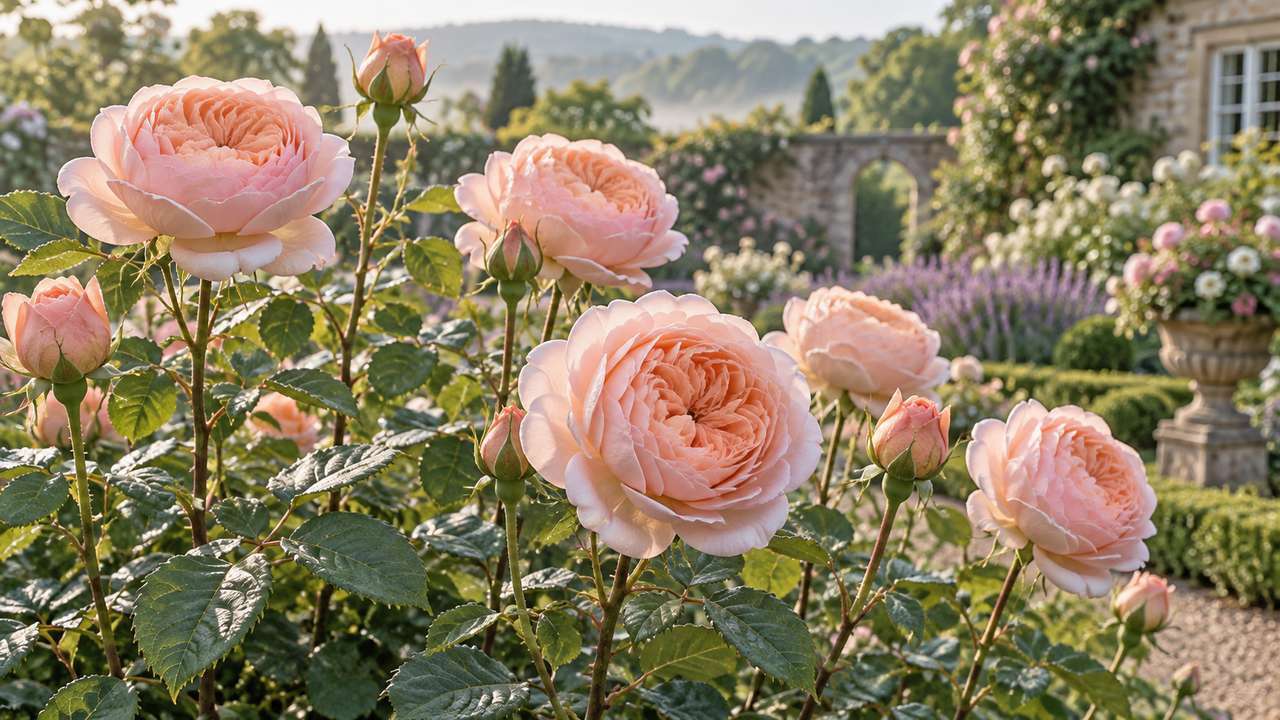
The Queen of Sweden rose is an English shrub rose of exceptional poise. Its flowers begin as small, rounded buds and open into luminous, pale pink cups, each held upright as though deliberately raised toward the light. Unlike roses whose heavy blooms bow or sprawl, this cultivar maintains a composed, almost ceremonial bearing. The effect is elegant rather than ostentatious: a garden rose that suggests dignity, sincerity, and restrained affection.
David Austin Roses introduced Queen of Sweden in 2004. Its name commemorates the 350th anniversary of the 1654 Treaty of Friendship and Commerce between Great Britain and Sweden. This diplomatic origin gives the flower an unusual historical dimension. Although the cultivar is too modern to appear in nineteenth-century flower dictionaries, its name, coloring, and growth habit allow it to participate naturally in the older traditions of floral symbolism. It can represent friendship between equals, peaceful alliance, feminine leadership, gratitude, and love expressed with grace rather than theatrical passion.
Botanical Character and Historical Origin
Queen of Sweden is generally classified as a modern English shrub rose. Its parentage combines the nostalgic flower form associated with old garden roses and the repeat-flowering performance expected from contemporary breeding. The blooms are densely petaled but not disorderly. They develop from neat, shallow cups into rounded rosettes, often with a subtle transition from warmer pink at the center to paler outer petals.
The shrub grows upright and relatively narrow, commonly reaching about 100 to 125 centimeters in height and approximately 75 to 90 centimeters in width, depending on climate and pruning. Its vertical habit makes it valuable in smaller gardens, formal borders, and positions where a broad, arching rose would overwhelm neighboring plants. The foliage is typically matte green, forming a quiet background for the refined flowers.
Its fragrance is usually described as light to moderate, with a myrrh character. This aromatic quality may suggest anise, sweet herbs, or warm spice rather than the intense damask perfume some gardeners expect from a pink rose. Fragrance strength can vary with temperature, humidity, flower age, and growing conditions.
Primary Meanings and Symbolism
The central meaning of the Queen of Sweden rose is dignified affection. Pale pink roses have long conveyed admiration, gentleness, happiness, and gratitude. In the broader system of rose color meanings, they occupy an expressive space between white roses, associated with innocence or reverence, and deeper pink roses, which communicate energetic appreciation.
- Grace and composure: Its symmetrical cups and upright stems evoke calm self-possession.
- Respectful admiration: Pale pink expresses esteem without implying the intensity of a red romantic rose.
- Friendship and alliance: The cultivar’s treaty-inspired name makes it especially appropriate for reconciliation, partnership, and enduring cooperation.
- Feminine authority: Its royal title can symbolize leadership tempered by kindness, diplomacy, and emotional intelligence.
- New beginnings: The fresh coloring and upward-facing blooms suit engagements, graduations, births, and hopeful transitions.
- Gratitude: A bouquet can offer a polished, heartfelt thank-you to a mentor, host, colleague, or family member.
Floriography Across Eras and Cultures
In ancient Greek and Roman traditions, roses were associated with love, beauty, secrecy, celebration, and the goddesses Aphrodite and Venus. Pink did not always function as a rigid symbolic category, but delicate roses readily suggested youth, delight, and cultivated beauty. Medieval Christian imagery later connected roses with sacred love, charity, martyrdom, and the Virgin Mary. Pale petals could therefore acquire meanings of purity, tenderness, and spiritual devotion.
During the nineteenth century, European and American flower books encouraged senders to construct messages through species, colors, and arrangements. There was never one perfectly universal code; definitions varied among authors and regions. Nevertheless, pink roses commonly communicated grace, pleasure, admiration, or dawning love. Readers exploring the Victorian language of flowers should therefore treat floral meanings as a flexible vocabulary rather than an infallible cipher.
In modern Western gifting, Queen of Sweden is appropriate wherever elegance and warmth are desired without an overt declaration of passion. In Sweden, its diplomatic name may add national or historical resonance, although it should not be mistaken for an official emblem of the monarchy. In many East Asian contexts, soft pink flowers are welcomed for their associations with sweetness, spring, happiness, and considerate affection. Customs still vary, and the recipient’s preferences should take precedence over generalized symbolism.
Meaning by Shade and Presentation
| Flower or Presentation | Suggested Meaning | Best Context |
|---|---|---|
| Blush-pink buds | Promise, modesty, affection beginning to unfold | New relationships, engagements, young graduates |
| Fully open pale pink rosettes | Grace, trust, gratitude, mature admiration | Anniversaries, thank-you bouquets, mentors |
| Queen of Sweden with white flowers | Sincerity, peace, honorable intentions | Weddings, reconciliations, memorial tributes |
| Queen of Sweden with apricot roses | Warm welcome balanced by refined affection | Hospitality, housewarmings, family celebrations |
| A living rose plant | A relationship intended to grow and return | Milestone birthdays, retirements, lasting friendships |
When and to Whom Should You Give It?
Queen of Sweden roses are particularly well suited to weddings. Their cupped form feels romantic, while their pale coloring remains serene enough for bridal bouquets, table arrangements, and ceremony flowers. They also make thoughtful anniversary flowers, especially for a couple whose relationship is founded on mutual respect and companionship.
Give them to a mother, grandmother, teacher, mentor, diplomatic colleague, or admired leader as an expression of gratitude. For a romantic recipient, include a personal note if you intend the flowers to communicate love rather than friendship; pale pink alone can be interpreted as affectionate but noncommittal. A potted specimen is often more meaningful to a gardener than cut stems because its repeated flowering symbolizes continuity.
Modern etiquette favors sensitivity over rigid rules. Confirm that the recipient enjoys roses and has no fragrance sensitivity. Avoid thorny, unconditioned stems in hand-tied gifts. For sympathy occasions, use restrained greenery and explain the choice with a brief message such as, “With admiration and gentle remembrance.” In a professional setting, a mixed arrangement or garden plant usually feels more appropriate than an intimate dozen-rose presentation.
Companion Flowers and Bouquet Styling
Queen of Sweden pairs beautifully with white sweet peas, jasmine, mock orange, or pale ranunculus for a romantic, airy design. Delphiniums and foxgloves echo its upward movement, while lady’s mantle provides a soft chartreuse contrast. Silver foliage, including lamb’s ear and dusty miller, enhances the rose’s cool, porcelain quality.
For greater warmth, combine it with peach or apricot roses. The symbolism becomes welcoming and affectionate; the cultural background of this pairing is explored through apricot rose meaning. Avoid crowding the blooms with too many dominant flowers. Their beauty depends upon visible space, rhythmic vertical lines, and a palette that allows subtle variations in pink to remain apparent.
Cultivation and Cut-Flower Care
Plant Queen of Sweden in fertile, moisture-retentive but well-drained soil. It performs best with at least six hours of sun, although light afternoon shade can protect pale petals in very hot climates. Provide good air circulation, water deeply at soil level, and mulch with compost or well-rotted organic matter. Feed after spring pruning and again following the first substantial flush, according to local conditions and product directions.
Prune in late winter or early spring, removing dead, damaged, crossing, or weak growth before shortening healthy stems to maintain a balanced framework. Deadheading encourages repeat bloom. Disease performance varies by region, so monitor for black spot, mildew, and aphids rather than assuming complete resistance.
For the vase, cut stems early in the morning when buds are colored but not fully open. Use clean shears, remove foliage below the waterline, recut stems at an angle, and place them promptly in a clean vase with floral preservative. Refresh the water every one or two days and keep the arrangement away from heat, direct sun, and ripening fruit. Individual blooms can also become keepsakes; a careful drying roses technique helps preserve their shape while reducing the browning that often affects pale petals.
A Rose of Diplomatic Grace
The Queen of Sweden rose unites horticultural refinement with an unusually meaningful name. Its upright chalices, soft pink coloring, and measured fragrance speak of affection governed by respect. Whether planted beside a path, carried in a bridal bouquet, offered to a trusted friend, or preserved after a milestone, it conveys grace without fragility and dignity without distance—a fitting floral emblem of friendship, thoughtful love, and peaceful alliance.