Table of Contents
Munstead Wood Rose: Deep Crimson-Black Velvet with Powerful Warm Damask
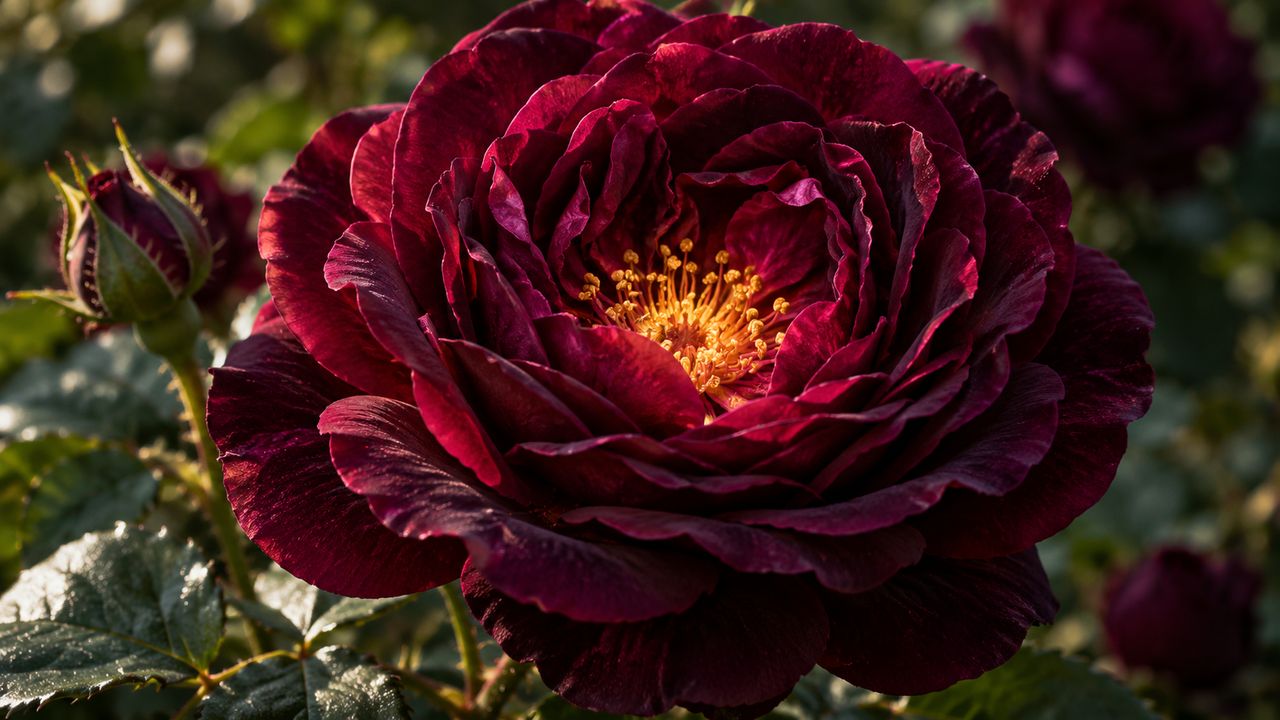
The Munstead Wood rose is one of the most dramatic English roses ever bred: a many-petalled bloom whose deep crimson gradually settles into velvety burgundy, wine, and near-black shadow. Its color suggests intimacy, courage, mature passion, and the beauty of emotions too profound for ordinary red. Yet its visual intensity is balanced by a sumptuous Old Rose fragrance—warm, fruity, and unmistakably damask in character.
British breeder David Austin introduced ‘Munstead Wood’ in 2007. The cultivar was named for Munstead Wood, the Surrey home and garden of the influential Arts and Crafts designer Gertrude Jekyll. This association gives the rose an additional historical resonance. Jekyll championed richly layered planting, painterly color harmonies, and gardens that changed expressively through the seasons. A dark rose bearing the name of her celebrated home therefore evokes both horticultural artistry and cultivated independence.
Although the cultivar itself is modern, its symbolism draws upon centuries of red-rose tradition. The Munstead Wood rose can communicate romantic love, but its dark coloring makes that message more complex: devotion tested by time, desire tempered by loyalty, remembrance infused with gratitude, or admiration for someone of unusual depth.
Primary Meaning and Emotional Symbolism
The central meaning of the Munstead Wood rose is profound, enduring passion. Bright scarlet roses often imply immediate desire or bold courtship; this darker bloom feels private, considered, and emotionally mature. It is especially appropriate when love has moved beyond infatuation into trust, shared history, and deliberate commitment.
- Deep romantic devotion: A declaration of love that is serious, intimate, and enduring.
- Sensuality and magnetism: The velvety petals and damask perfume suggest restrained but unmistakable desire.
- Courage and dignity: Crimson has long been associated with strength, sacrifice, and noble resolve.
- Remembrance: Burgundy tones can honor a bond that remains meaningful despite distance, change, or loss.
- Creative individuality: The connection with Gertrude Jekyll makes the rose a fitting emblem for artistic vision and independent taste.
- Transformation: Its progression from crimson bud to dark, open rosette can symbolize love or character deepening with experience.
Context remains essential. Dark roses are sometimes casually described as symbols of death or endings, but a naturally near-black rose is not automatically funereal. In most contemporary bouquets, Munstead Wood reads as luxurious, romantic, and sophisticated. It expresses farewell only when the accompanying flowers, card, or occasion establishes that meaning.
Historical and Cultural Interpretations
In classical Western tradition, the red rose belonged to Aphrodite or Venus and represented beauty, desire, and love. Christian symbolism later gave the red rose additional associations with sacred love, martyrdom, and sacrifice. Medieval and Renaissance art used crimson roses to convey both earthly passion and spiritual devotion, allowing the flower to occupy a compelling space between sensuality and reverence.
Victorian floriography refined this vocabulary. A red rose meant love, while deeper crimson could imply mourning, constancy, or a love marked by gravity. Munstead Wood did not exist during the Victorian period, so no authentic nineteenth-century flower dictionary names the cultivar. Nevertheless, its appearance fits naturally within that symbolic tradition. It communicates ardor without the youthful exuberance of a brilliant red rose.
In modern British garden culture, the name also recalls the Arts and Crafts ideal: beauty shaped through close attention to place, craftsmanship, texture, and season. For gardeners familiar with Jekyll, gifting this rose may honor design ability, horticultural knowledge, or a life lived with creative conviction.
Elsewhere, interpretation depends strongly upon custom. Red roses are widely understood as romantic across Europe and North America. In many East Asian settings, red is also auspicious, celebratory, and associated with happiness, although very dark arrangements may appear solemn unless lifted with brighter foliage or wrapping. In sympathy traditions, burgundy roses commonly signify respect, enduring affection, and dignified remembrance.
Shade, Stage, and Bouquet Context
Munstead Wood is not a flat, uniform red. Young flowers may open as rich crimson; mature blooms often develop blackberry, claret, plum, or purple-black depths, particularly in cooler weather. Golden stamens may appear when the rosette opens fully, adding warmth to the dark petals. Every stage subtly alters the message.
| Color or Presentation | Suggested Meaning | Best Context |
|---|---|---|
| Crimson buds | Desire awakening; a promise unfolding | Courtship, engagement, romantic anticipation |
| Open burgundy rosettes | Mature devotion, loyalty, emotional depth | Anniversaries and milestone celebrations |
| Near-black velvet tones | Mystery, transformation, dramatic individuality | Editorial arrangements and artistic gifts |
| With blush or apricot flowers | Passion softened by tenderness and welcome | Weddings, dinners, and gracious thank-you gifts |
| With white flowers | Sincere love, respect, and remembrance | Formal ceremonies or memorial tributes |
When to Give Munstead Wood Roses
Give Munstead Wood to a spouse or long-term partner for an anniversary, Valentine’s Day, or private declaration of commitment. It is particularly eloquent for milestone anniversaries because its mature coloring suggests love enriched by experience. A plant is often more meaningful than cut stems for a gardener: it becomes a recurring reminder of the relationship.
The rose also suits an artist, landscape designer, writer, or mentor whose work demonstrates originality and disciplined imagination. For birthdays, retirements, exhibitions, or professional achievements, explain the Gertrude Jekyll connection in the card so the tribute is understood as admiration rather than romance.
For sympathy, use one or three blooms with restrained greenery, cream flowers, or muted mauve companions. Include a clear message of remembrance; without one, a dark red bouquet can appear romantic. In modern etiquette, avoid sending an intensely red arrangement anonymously, especially in professional relationships. Dark roses make a strong statement, so the recipient’s preferences and the nature of the relationship should guide both quantity and presentation.
Companion Flowers and Styling
Munstead Wood is most effective when its darkness is given visual space. In a romantic arrangement, pair it with blush garden roses, burgundy dahlias, chocolate cosmos, scabious, or trailing amaranthus. Mauve sweet peas or lilac clematis produce a tonal, antique effect; the language of mauve rose symbolism likewise reinforces refinement, enchantment, and affectionate luxury.
For warmer hospitality, combine the rose with apricot ranunculus, peach stock, or copper chrysanthemums. The associations described in apricot rose meaning soften Munstead Wood’s intensity into generous welcome. Salmon roses or dahlias introduce friendliness and lively warmth; understanding salmon rose meaning can help create a bouquet that bridges affection and romance.
For contemporary contrast, use eucalyptus, mint-toned foliage, green hellebores, or pale celadon wrapping. The ideas associated with mint green rose significance bring balance, renewal, and prosperity to the composition. Avoid crowding the flower with too many competing colors. Matte paper, natural linen ribbon, antique brass vessels, or smoky glass best complement its velvety character.
Botanical Character and Cultivation
Munstead Wood is a repeat-flowering English shrub rose, generally forming a bushy plant approximately 90 centimeters to 1 meter high and wide, although climate and pruning affect its final size. The young foliage can show bronze-red tones before maturing to green. Its cupped flowers develop into full rosettes, and the fragrance is frequently described as strong Old Rose or damask, enriched by warm fruity notes reminiscent of blackberry or plum.
Plant it in fertile, moisture-retentive but well-drained soil with at least six hours of sun. In very hot climates, light afternoon shade can help preserve the dark color and reduce petal scorching. Provide good air circulation, water deeply at the base, mulch annually, and feed after the first flowering flush. As disease performance varies with climate, monitor foliage and select an open site rather than crowding the shrub.
For cutting, harvest when the outer petals have loosened but the center remains firm. Use clean shears, cut in the cool morning, remove foliage below the waterline, and recut stems at an angle before placing them in a clean vase. Refresh the water every one or two days and keep the arrangement away from heat, direct sun, and ripening fruit. Because garden roses can have a shorter vase life than commercial florist hybrids, enjoy their fragrance and unfolding form rather than expecting exceptional longevity.
A Rose of Mature Passion
The Munstead Wood rose is compelling because it holds apparent opposites together: darkness and warmth, sensuality and dignity, historical romance and modern breeding. Its crimson-black petals express passion, but not a shallow or impulsive passion. They speak more convincingly of devotion shaped by time, artistic courage, cherished memory, and emotions that deepen rather than fade. Whether grown in a layered garden, carried in an autumn wedding bouquet, or offered as a single fragrant bloom, Munstead Wood makes a message feel deliberate, intimate, and unforgettable.