Table of Contents
Ruby Red Rose Meaning: Enduring Commitment and Everlasting Adoration
The ruby red rose meaning is rooted in a love that has matured beyond passing attraction. Deep, jewel-toned petals suggest enduring commitment, emotional courage, fidelity, and an adoration intended to last. While brighter scarlet roses can communicate immediate passion, ruby red flowers usually feel richer and more deliberate. They speak of devotion tested by time, desire joined with loyalty, and affection that remains vivid through changing seasons.
This symbolism draws from several intertwined histories. Roses were associated with love and beauty in the ancient Mediterranean world, became emblems of sacred and courtly devotion in medieval Europe, and acquired an exceptionally detailed romantic vocabulary during the nineteenth-century enthusiasm for floriography. The word “ruby” adds another symbolic layer: the ruby gemstone has long represented vitality, protection, nobility, and an inextinguishable inner flame. When its color is expressed through a rose, the result is an especially powerful declaration—“My love is alive, steadfast, and precious.”
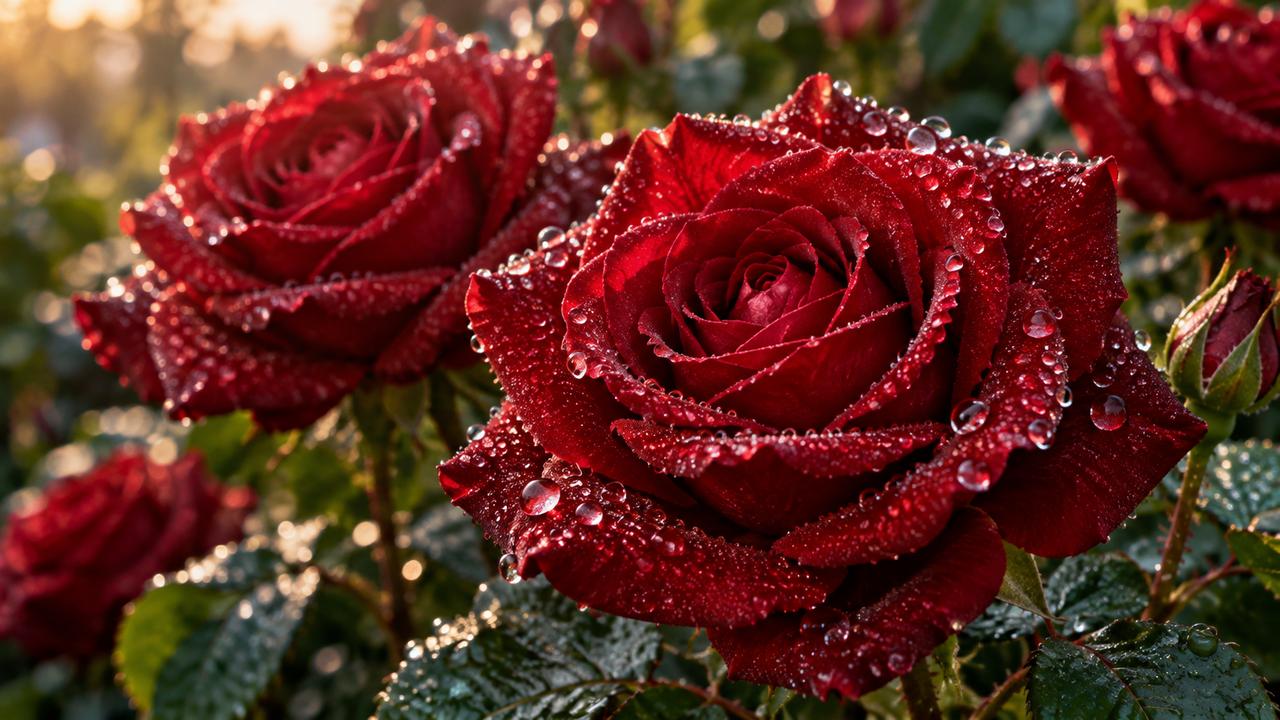
Botanically, “ruby red rose” is not one universal species or cultivar. Florists use the description for roses with saturated red petals and blue, wine, or crimson undertones. These may be hybrid tea roses, floribundas, grandifloras, garden roses, or spray roses. Their velvety texture and deep pigmentation intensify their visual gravity, making them particularly suited to ceremonial bouquets, anniversaries, proposals, and intimate declarations.
The Primary Meaning of Ruby Red Roses
At its heart, the ruby red rose symbolizes enduring romantic commitment. It represents love that is passionate but not impulsive, intense but not unstable. This is the rose of a person who knows the value of the bond being honored and chooses it wholeheartedly.
- Everlasting adoration: Ruby red roses convey love that continues through time rather than fading after an initial period of excitement.
- Deep commitment: Their solemn, saturated color suits promises of fidelity, exclusivity, and a shared future.
- Mature passion: They retain the sensual energy of red roses while adding emotional depth and constancy.
- Courageous love: Red has long been linked with blood, strength, and the heart, making ruby roses an emblem of love expressed without fear.
- Respect and esteem: In formal settings, their regal color can honor achievement, dignity, or a person held in profound regard.
- Remembrance: Dark ruby blooms may also represent a love that survives absence, separation, or death.
Context remains essential. A single ruby rose can feel private and focused; a dozen makes an unmistakable romantic declaration. A lavish arrangement communicates abundance and celebration, while ruby roses placed in a memorial design emphasize devotion that does not end with physical loss.
Historical and Cultural Interpretations
In ancient Greek and Roman traditions, roses were closely associated with Aphrodite and Venus, goddesses of love. Later legends connected the red rose to sacrifice and the blood of a beloved, reinforcing the idea that profound love carries vulnerability. Romans also used roses in feasts, rites, and private chambers. The phrase sub rosa, meaning “under the rose,” came to signify confidentiality, giving roses an additional association with intimate truths and trusted promises.
During the Middle Ages, red roses entered both religious and secular symbolism. Christian interpretation associated them with martyrdom, divine love, and the Virgin Mary in certain devotional contexts. Courtly poets, meanwhile, treated the rose as an image of beauty, desire, secrecy, and unattainable love. A dark red rose could therefore suggest not only attraction but reverence—the beloved elevated as someone worthy of service and lifelong loyalty.
By the Victorian era, floriography had transformed flowers into a nuanced social language. Although meanings varied between floral dictionaries, red roses consistently represented love, while deeper crimson tones suggested constancy, mourning, or profound attachment. A carefully assembled bouquet could communicate feelings that strict etiquette prevented people from speaking aloud. Ruby red roses fit naturally within this tradition as an eloquent symbol of ardent yet serious devotion.
In modern Western culture, red roses remain strongly associated with Valentine’s Day, marriage proposals, and romantic anniversaries. In China, red is an auspicious color of joy, prosperity, celebration, and good fortune, so ruby roses can work beautifully in weddings as well as romantic gifts. In many South Asian celebrations, red likewise carries associations with marriage, fertility, strength, and auspicious beginnings. Customs differ among families and faiths, however, so local traditions should guide ceremonial choices.
Elsewhere, the number and presentation of flowers may alter the message. In cultures where even-numbered bouquets are reserved for funerals, a romantic gift should contain an odd number of stems. Dark red roses can also appear in funeral arrangements across Europe and the Americas, where they represent enduring love and solemn remembrance. The flower itself is not inherently mournful; the surrounding flowers, card, occasion, and relationship establish its tone.
Ruby Red Rose Meanings at a Glance
| Presentation | Principal Meaning | Best Occasion | Suggested Message |
|---|---|---|---|
| One ruby red rose | Singular, undivided devotion | A first declaration or intimate date | “You are the one I cherish.” |
| Three stems | A classic expression of love | Romantic milestone | “I love you.” |
| Six stems | Desire and growing attachment | Established courtship | “I want to be yours.” |
| Twelve stems | Complete romantic commitment | Valentine’s Day or anniversary | “Be mine, now and always.” |
| Ruby and cream bouquet | Passion balanced by grace | Wedding or elegant anniversary | “Our love is both ardent and tender.” |
| Dark ruby memorial spray | Love beyond absence | Funeral or remembrance | “Your memory remains in my heart.” |
Shades, Forms, and Subtle Variations
Not every red rose speaks with the same emotional voice. A bright, true red suggests open passion, confidence, and direct romantic interest. Ruby red, with its jewel-like depth, communicates passion made durable by commitment. Burgundy and black-red roses feel more mysterious, dramatic, and introspective; they may imply unconscious beauty, transformation, farewell, or remembrance. Crimson sits between ceremonial grandeur and ardent desire.
The bloom form also changes the impression. A long-stemmed hybrid tea rose feels polished, iconic, and formal. A densely petaled garden rose looks romantic, historic, and sensuous. Spray roses create a softer, less imposing effect, making them useful when ruby color is desired without the weight of a grand romantic gesture. Velvet-textured petals intensify luxury, while open, ruffled flowers produce an intimate, abundant garden style.
Color combinations refine the message further. Ruby roses paired with pale pink roses combine committed love with sweetness and admiration. The muted character of dusty rose colors introduces memory, vintage romance, and gentle sophistication. For a warmer and more conversational arrangement, understanding salmon rose meaning helps balance affection, friendship, and emerging passion. Pairing ruby blooms with ivory flowers draws on cream rose symbolism, tempering intensity with charm, thoughtfulness, and grace.
When to Give Ruby Red Roses
Ruby red roses are most appropriate when the emotional message is serious and unmistakable. They are ideal for wedding anniversaries, especially milestone years, because their color suggests a passion that has survived and deepened. They are equally fitting for proposals, vow renewals, Valentine’s Day, romantic birthdays, reunions after a separation, or an apology grounded in genuine commitment.
They can also honor a spouse or partner’s achievement. In this context, the accompanying note should emphasize pride and admiration so the gesture is not interpreted solely as seduction. For memorials, ruby roses are especially meaningful when the deceased was a spouse, life partner, parent, or deeply loved family member. A restrained arrangement often carries greater dignity than an extravagant romantic-style bouquet.
Exercise care when giving ruby roses to a new acquaintance, colleague, or friend. Their romantic meaning is culturally powerful and can imply more intimacy than intended. If romance is not the message, mix one or two ruby stems into a broader seasonal arrangement and include a clear note of congratulations, gratitude, or respect. Avoid sending an anonymous red bouquet in professional settings, where it may cause discomfort or uncertainty.
Who Should Receive Them?
- A spouse or long-term partner: Ruby roses affirm that familiar love remains passionate and chosen.
- A fiancé or fiancée: They reinforce a promise of fidelity and shared life.
- A new romantic partner: Give a modest number only when mutual feelings are established.
- A loved one at a memorial: Use them to represent affection that continues beyond loss.
- A respected honoree: Present them within a mixed bouquet, with wording that makes admiration rather than romance explicit.
Modern Etiquette and Message Writing
Modern flower etiquette favors sincerity over rigid numerical codes. Stem counts can be meaningful, but recipients may not know traditional interpretations. A short handwritten message is therefore the best safeguard against ambiguity. Instead of relying on a dozen roses to communicate everything, write plainly: “After all these years, I still choose you,” or “My love for you grows deeper with every season.”
Consider timing and location. Sending flowers to a workplace creates a public moment, which some recipients enjoy and others find uncomfortable. For an intimate anniversary or apology, home delivery or a personal presentation is often more considerate. Remove pricing, choose recyclable or understated wrapping, and confirm whether the recipient has pets; rose flowers themselves are generally considered non-toxic to cats and dogs, but thorns, preservatives, decorative plants, and packaging may still present hazards.
An apology bouquet should never substitute for accountability. Ruby red roses can reinforce remorse and commitment only when accompanied by honest words and changed behavior. Similarly, an extravagant arrangement early in a relationship can feel disproportionate. Match the scale of the bouquet to the maturity of the bond.
Companion Flowers and Bouquet Styling
For timeless elegance, pair ruby red roses with cream garden roses, white lisianthus, or ivory ranunculus. These pale companions create visual space and prevent the design from becoming heavy. Seeded eucalyptus, olive foliage, or Italian ruscus adds movement and cool green contrast. Use greenery selectively; excessive filler can diminish the roses’ sculptural presence.
For a romantic garden arrangement, combine ruby roses with blush peonies, pale pink spray roses, burgundy scabiosa, and trailing jasmine. A tonal design using ruby, wine, raspberry, and dusty pink feels sumptuous and painterly. For modern minimalism, arrange five or seven ruby roses at varied heights in a low ceramic vessel, adding a single branch or a few dark leaves.
Seasonal choices make bouquets more distinctive. In spring, use tulips, hellebores, or sweet peas. In summer, add cosmos or clematis. Autumn arrangements benefit from amaranthus, copper foliage, rose hips, or chocolate cosmos. In winter, combine ruby roses with ilex berries, evergreen tips, or bare branches, taking care not to let strong holiday associations overpower an anniversary message.
Botanical Care and Vase Longevity
Fresh roses commonly last five to ten days in a vase, while robust cultivars may remain attractive longer. Select stems with firm petals and buds that have begun to loosen rather than tightly closed, hard buds that may never open. The green sepals should look fresh, and the stems should be unwrinkled and sturdy.
- Wash the vase thoroughly to reduce bacteria that can block water uptake.
- Cut 2 to 3 centimeters from each stem at a 45-degree angle with a clean, sharp knife or floral snips.
- Remove every leaf that would sit below the waterline, but retain healthy upper foliage.
- Use fresh room-temperature water and properly measured floral preservative.
- Refresh the water every one or two days and recut the stems if their ends become discolored.
- Keep the arrangement away from direct sun, radiators, drafts, and ripening fruit, which releases flower-aging ethylene gas.
If a rose bends just beneath the flower head, bacterial blockage or dehydration may be limiting water movement. Recut the stem, place it in clean water, and support the bloom loosely while it rehydrates. Avoid crushing stem ends or adding unmeasured household remedies; commercial flower food supplies a more reliable balance of sugar, acidifier, and antimicrobial ingredients.
Cultivating Deep Red Roses
Garden roses generally perform best with at least six hours of direct sunlight, fertile but well-drained soil, good air circulation, and deep watering at the root zone. Morning watering allows foliage to dry, helping discourage fungal diseases such as black spot. Mulch conserves moisture, but it should not be piled against the canes.
Dark flowers absorb heat readily, so ruby cultivars may scorch in extreme afternoon sun. In very hot climates, choose a site with bright morning light and limited late-day exposure. Color can also shift with temperature, soil conditions, bloom age, and sunlight; some cultivars open crimson and deepen toward wine, while others fade to magenta. Pruning practices depend on rose class and climate, but dead, diseased, crossing, and weak growth should be removed with clean tools.
A Lasting Emblem of Devotion
The ruby red rose meaning reaches beyond simple romance. It unites passion with permanence, desire with dignity, and beauty with conscious commitment. Its long cultural history—from classical love symbolism and medieval devotion to Victorian floral messages and contemporary anniversaries—has made it one of the clearest floral declarations of enduring affection.
Choose ruby red roses when the sentiment is deep enough to deserve clarity. Adjust their shade, stem count, companion flowers, and presentation to suit the relationship and occasion. Whether offered as one perfect bloom, carried in a wedding bouquet, or placed in remembrance, the ruby rose says that true adoration is not merely felt in a brilliant moment: it is protected, renewed, and carried forward through time.