Table of Contents
Cherry Red Rose Meaning: Youthful Excitement, Spontaneous Affection, and Joy
The cherry red rose occupies a lively place between the solemn intensity of a dark crimson rose and the playful sweetness of a pink bloom. Its bright, fruit-like color suggests affection in motion: a sudden spark, an enthusiastic invitation, a joyful reunion, or the exhilarating early stage of romance. While traditional scarlet and deep red roses often communicate established love and enduring passion, the central cherry red rose meaning is fresher and more spontaneous. It says, “You make me happy,” “I am excited about us,” or simply, “I could not resist bringing you flowers.”
Historically, roses have carried symbolic weight since antiquity. The ancient Greeks and Romans connected red roses with Aphrodite or Venus, love, beauty, and desire. Medieval religious art reinterpreted the red rose as a symbol of sacrifice, sacred love, and spiritual devotion. By the nineteenth century, European and American floriography transformed flowers into a sophisticated social vocabulary. Red roses broadly represented love, but period flower dictionaries did not always divide red into the precise commercial shades recognized by modern florists. “Cherry red” is therefore best understood as a modern chromatic refinement of older red-rose symbolism rather than a completely separate Victorian definition.
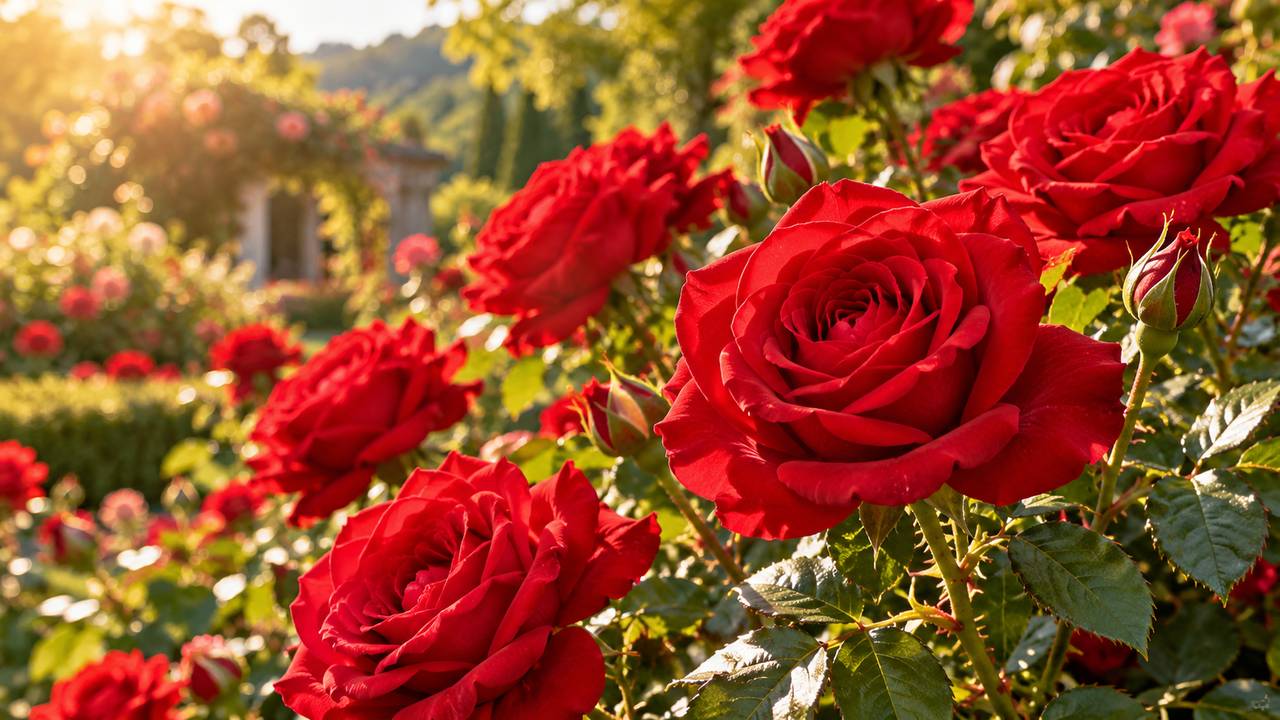
Botanically, cherry red is not a species or formal horticultural class. It is a descriptive color category found among hybrid tea roses, floribundas, spray roses, garden roses, and climbing cultivars. The shade is created primarily by anthocyanin pigments, whose visible character can be influenced by genetics, flower age, temperature, light, and growing conditions. A cherry red bloom may appear brilliant and almost scarlet in direct sun, cool and berry-toned indoors, or slightly deeper as its petals mature.
The Primary Meaning of Cherry Red Roses
Cherry red roses communicate romantic feeling without the full ceremonial gravity of the darkest red roses. Their color is vivid, clear, and energetic, giving them an emotional tone associated with youthfulness, confidence, pleasure, and immediacy. They are ideal when affection feels sincere but not overly formal.
- Youthful excitement: The bright color evokes anticipation, discovery, and the exhilaration of a new emotional connection.
- Spontaneous affection: Cherry red roses suit an unplanned gift, a surprise date, or a cheerful reminder that someone is loved.
- Romantic attraction: They express unmistakable interest, but generally feel more buoyant and approachable than wine-red or velvety crimson roses.
- Joy and celebration: Their saturated color brings festive warmth to birthdays, engagements, promotions, and reunions.
- Confidence and vitality: A clear cherry hue can symbolize courage, optimism, creative energy, and an appetite for life.
- Warm admiration: In mixed bouquets, cherry red roses can convey appreciation and emotional warmth without functioning as an absolute declaration of love.
The recipient, setting, and accompanying message determine which of these meanings comes forward. A dozen cherry red roses presented on an anniversary remain deeply romantic. Three stems handed to someone after a successful performance may emphasize admiration and excitement. A loose garden-style arrangement shared with a close friend can communicate affection and celebration rather than courtship.
Historical and Cultural Interpretations
In classical mythology, the red rose became inseparable from stories of love and beauty. Later traditions connected its color with blood, loyalty, martyrdom, and sacrifice, giving deep red roses an emotional seriousness that persists today. Cherry red inherits this long association with love but visually lightens it. Its brightness shifts the message toward pleasure, flirtation, and optimistic desire.
During the nineteenth-century enthusiasm for floriography, flowers allowed people to express feelings that social convention discouraged them from stating directly. The rose was one of the most recognizable emblems in this vocabulary. Red communicated love; pink could signify grace or admiration; white suggested innocence; and yellow acquired several meanings that changed over time. Historical flower dictionaries often contradicted one another, so no universal “official” code existed. Modern interpretations should therefore be treated as expressive conventions rather than rigid rules.
In much of contemporary Europe and North America, cherry red roses are read as romantic, festive, and affectionate. In China and many other East Asian contexts, bright red is additionally associated with happiness, good fortune, prosperity, and auspicious celebration. Cherry red flowers can consequently feel appropriate for joyful milestones, although local wedding and funeral customs should always be respected. In India, red is strongly connected with love, fertility, marriage, and ceremonial vitality. Across Latin American cultures, vivid red roses frequently express romance, devotion, and heartfelt celebration, especially around courtship, anniversaries, and family occasions.
Color symbolism is never completely universal. The same flowers can convey romance in one setting, congratulations in another, and remembrance in a third. A personal note is the most reliable way to clarify intent, especially when giving bright red roses outside an established romantic relationship.
How Cherry Red Compares with Other Rose Colors
| Rose Color | Core Meaning | Emotional Tone | Best Uses |
|---|---|---|---|
| Cherry red | Excitement, spontaneous affection, joyful attraction | Bright, youthful, confident | New romance, surprise gifts, birthdays, celebrations |
| Classic true red | Love, devotion, romantic commitment | Direct, timeless, passionate | Valentine’s Day, anniversaries, declarations of love |
| Burgundy | Profound passion, mature beauty, unconscious attraction | Luxurious, intimate, dramatic | Milestone anniversaries, evening events, formal romance |
| Coral | Desire, enthusiasm, modest romance | Warm, sociable, inviting | Early dating, thank-you gifts, summer events |
| Yellow | Friendship, optimism, welcome, joy | Sunny, openhearted, platonic | Friendship, congratulations, recovery wishes |
| Black or near-black | Mystery, endings, transformation, rebirth | Dramatic, unconventional, contemplative | Theatrical designs, memorial symbolism, new beginnings |
These distinctions become especially useful when designing a bouquet with a precise emotional register. The depth associated with burgundy rose passion makes burgundy blooms feel mature and intimate, whereas cherry red appears quick, sparkling, and socially energetic. A study of coral rose symbolism reveals a softer bridge between friendship and desire. Similarly, the modern yellow rose meaning emphasizes companionship and happiness, making yellow a useful partner when a red arrangement should feel less exclusively romantic.
At the opposite end of the visual spectrum, near-black roses introduce mystery and transformation. Understanding the black rose meaning helps explain why combining almost-black blooms with cherry red ones creates such a dramatic narrative: darkness and renewal, restraint and exuberance, or mature depth paired with youthful vitality.
Shade, Form, and Number: Nuances That Change the Message
Not every cherry red rose speaks in exactly the same voice. A clear, luminous red with a slight pink undertone feels playful and contemporary. A warmer cherry hue approaching scarlet suggests confidence, sensual energy, and celebration. A cooler berry-red rose can appear more sophisticated, especially beside mauve foliage or plum-colored flowers. Petal texture matters as well: sleek hybrid tea roses feel polished and intentional, while ruffled garden roses look generous, nostalgic, and emotionally relaxed.
Flower form also influences symbolism. A single long-stemmed cherry red rose makes a focused romantic statement. Spray roses, with several smaller blossoms on each stem, convey abundance and cheerful affection. Fully open blooms create an exuberant, immediate effect, while tight buds imply anticipation, unfolding feelings, or a relationship at its beginning.
- One rose: Focused affection, attraction, or “you are the one on my mind.”
- Three roses: A compact declaration of love or a reference to past, present, and future.
- Six roses: Infatuation, delight, and a desire to be close.
- Twelve roses: A classic, unmistakably romantic gesture.
- A loose mixed bunch: Joy, friendship, warmth, and spontaneous celebration.
Meanings assigned to specific stem counts vary by culture and florist tradition. In some countries, even-numbered bouquets are associated with mourning, while elsewhere a dozen roses is the romantic standard. If gifting internationally, confirm local customs rather than assuming that one numerical code applies everywhere.
When to Give Cherry Red Roses
Cherry red roses are especially suitable for the early stages of romance. They clearly signal attraction while retaining a lighter tone than dark crimson. They work beautifully for a first anniversary of dating, an impromptu dinner, a celebratory weekend away, or the moment when casual affection begins to feel more meaningful.
They are also excellent birthday flowers for a partner, sibling, close friend, or energetic personality who enjoys vivid color. For a platonic recipient, combine cherry red with yellow, peach, white, or abundant greenery and include a clear congratulatory message. This prevents a bright red bouquet from being interpreted as an unexpected romantic declaration.
Other appropriate occasions include engagements, graduations, promotions, performance nights, housewarmings, and reunions. Cherry red roses can enliven winter holidays and festive tables, particularly when paired with evergreen foliage or berries. For Valentine’s Day, they offer a spirited alternative to traditional dark red roses and are especially fitting for a new relationship.
Use greater sensitivity in professional, condolence, and hospital settings. A large all-red bouquet may feel too intimate for a colleague or business contact. For these recipients, use only a few cherry red stems within a broader seasonal arrangement. In sympathy flowers, cherry red can symbolize loving remembrance, but muted colors are often more conventional. Respect the beliefs and customs of the bereaved family.
Modern Gifting Etiquette
- Match the scale to the relationship: A modest hand-tied bunch often feels charming early in a relationship; an elaborate arrangement may imply a stronger commitment.
- Write a concise card: “You make every day brighter” supports a romantic reading, while “Congratulations on a brilliant achievement” establishes a celebratory one.
- Consider the delivery setting: Public workplace delivery can embarrass a private recipient. When uncertain, send flowers to the person’s home.
- Avoid creating obligation: Flowers should express kindness, not demand a date, reconciliation, or immediate response.
- Check practical needs: Ask about allergies, fragrance sensitivity, pets, and access to a vase when these factors may affect enjoyment.
- Respect stated boundaries: Romantic symbolism is meaningful only when the gesture is welcome.
Companion Flowers and Bouquet Styling
Cherry red roses are visually assertive, so companion flowers should either soften their intensity or intentionally amplify it. For youthful romance, pair them with blush ranunculus, pink tulips, sweet peas, or pale lisianthus. These rounded and delicate forms create movement while preserving the bouquet’s affectionate character.
For a friendship or congratulatory bouquet, combine cherry red roses with yellow roses, golden yarrow, chamomile, or bright seasonal tulips. The yellow notes shift the arrangement toward optimism and celebration. White freesia, white snapdragons, or airy baby’s breath add freshness and contrast, although an abundance of baby’s breath may create a deliberately nostalgic look.
For a sophisticated evening arrangement, mix cherry red roses with burgundy dahlias, chocolate cosmos, plum scabiosa, or deep red carnations. Use foliage such as smokebush, eucalyptus, olive branches, or glossy salal to provide structure. A small amount of near-black botanical material can make the cherry red color appear even more luminous.
The wrapping also affects the message. Kraft paper and garden foliage make the bouquet casual and spontaneous. Cream paper and silk ribbon lend romantic refinement. Red cellophane can overwhelm the natural flower color, so neutral, soft pink, warm gray, or botanical green packaging is usually more flattering. For table arrangements, choose a low, loose composition that allows conversation across the table rather than a rigid dome of identical stems.
Botanical Care and Vase Longevity
Fresh cut roses commonly last five to ten days, although careful conditioning can extend their decorative life. Choose stems with firm, hydrated foliage and buds that have begun to loosen without becoming fully open. The green sepals should generally turn downward naturally as the flower develops, but petals should not feel limp or show extensive bruising.
- Wash the vase thoroughly to remove bacteria, then fill it with fresh room-temperature water and properly measured floral preservative.
- Remove every leaf that would sit below the waterline, since submerged foliage decays rapidly and contaminates the water.
- Recut one to two centimeters from each stem at a sharp angle with a clean knife or floral shears.
- Keep the arrangement away from direct sunlight, radiators, drafts, and ripening fruit, which releases flower-aging ethylene gas.
- Refresh the water every one or two days, clean the vase if it becomes cloudy, and recut the stems as needed.
- Remove fading flowers promptly so that the remaining blooms stay attractive and hygienic.
Gardeners cultivating cherry red roses should select a cultivar suited to their climate rather than choosing on color alone. Disease resistance, mature size, repeat flowering, fragrance, thorn density, and vase performance all deserve consideration. Most roses perform best with at least six hours of direct sun, fertile but well-drained soil, consistent deep watering, and good airflow around the foliage. Water near the root zone instead of repeatedly wetting the leaves, as persistently damp foliage can encourage fungal disease.
Because soil chemistry, heat, and flower age can alter perceived color, inspect mature blooms in local gardens whenever possible before selecting a cultivar. Some roses sold as cherry red fade toward cerise or pink in strong sunlight, while others deepen in cool weather. Regular deadheading encourages repeat-flowering varieties, but gardeners who value wildlife can leave selected late-season hips to develop.
A Bright and Affectionate Final Message
The enduring cherry red rose meaning combines romantic attraction with youthfulness, spontaneity, confidence, and joy. These roses retain the ancient emotional power of red while replacing some of its solemn intensity with brightness and movement. They are passionate without being severe, celebratory without becoming impersonal, and romantic without always implying lifelong commitment.
Given at the right moment, a cherry red rose bouquet can express the thrill of a new connection, the happiness of reunion, admiration for an achievement, or delight in someone’s presence. Shade, flower form, stem count, companion blooms, cultural customs, and the wording of the card all refine that message. Above all, cherry red roses are flowers of living emotion: warm, immediate, generous, and impossible to overlook.