Table of Contents
Princess Alexandra of Kent Rose: Giant Luminous Warm Glowing Pink Flowers
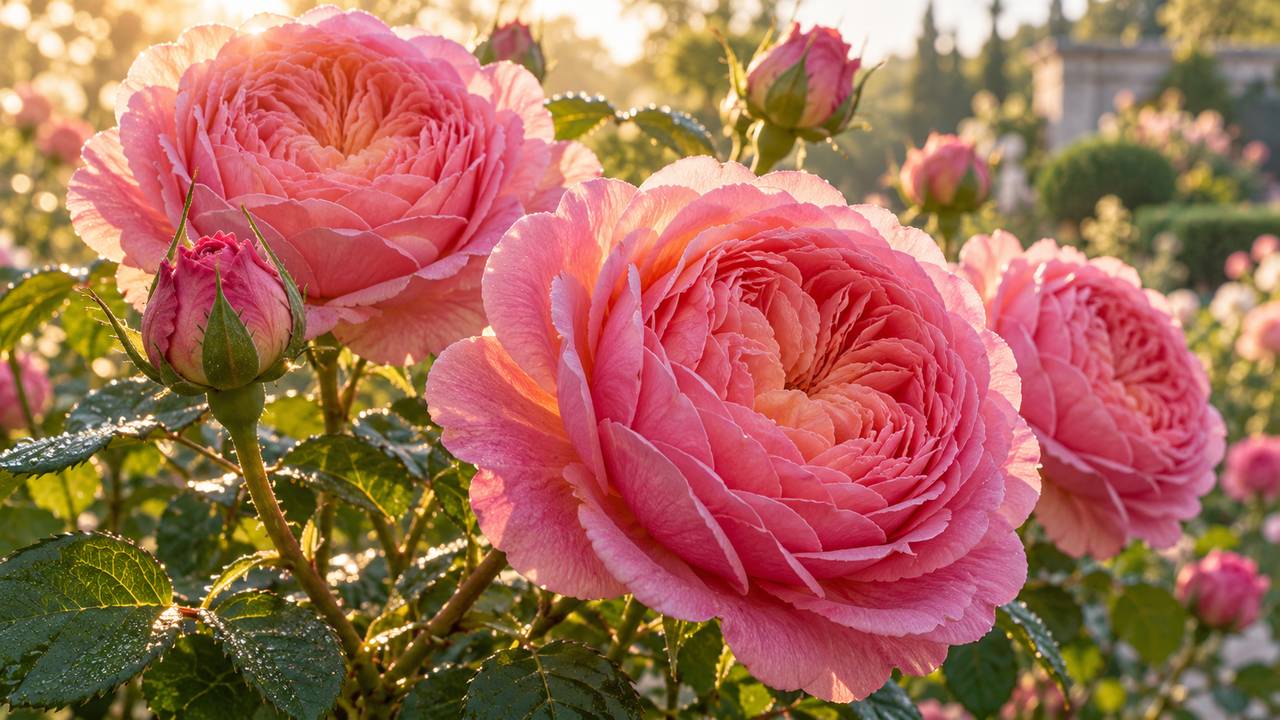
The Princess Alexandra of Kent rose is one of the most opulent modern English roses: a repeat-flowering shrub whose enormous, deeply cupped blooms glow in warm shades of clear pink. Its densely packed petals create an almost peony-like silhouette, while the outer petals gradually soften in color, giving each flower remarkable depth and luminosity. Despite its aristocratic appearance, it is not merely ornamental. Its generous flowering habit, rich fragrance, and comparatively practical garden performance make it a rose of substance as well as spectacle.
Introduced by David Austin Roses in 2007 under the registered cultivar name Rosa ‘AUSmerchant’, it honors Princess Alexandra, the Honourable Lady Ogilvy, a cousin of Queen Elizabeth II and a noted garden lover. The dedication connects the flower with royal service, dignity, graciousness, and enduring public affection. Because this is a modern cultivar, it has no entry in historical Victorian flower dictionaries. Its symbolic character instead emerges from traditional pink-rose meanings, its royal name, its fragrance, and the emotional impression made by its unusually large blossoms.
Appearance, Fragrance, and Botanical Character
Princess Alexandra of Kent produces exceptionally large flowers, frequently reaching approximately 10 to 12 centimeters across under favorable conditions. The blooms begin as rounded buds and unfold into deep cups filled with numerous incurving petals. Their color is often described as warm, luminous pink: richer at the center, softer toward the perimeter, and subtly altered by light, temperature, and flower age.
The fragrance is equally distinguished. It opens with the freshness associated with tea roses, then develops citrus-like lemon notes and, as the bloom matures, suggestions of blackcurrant. This changing scent gives the rose a living, unfolding quality. Botanically, it is a deciduous, repeat-flowering English shrub rose with a bushy, rounded habit and green foliage. In temperate gardens it commonly reaches about 1 to 1.25 meters in height and spread, although climate, pruning, soil, and rootstock can influence its final size.
Primary Meaning and Symbolism
The central meaning of the Princess Alexandra of Kent rose is magnificent admiration. Pink roses have long communicated affection without the overtly passionate declaration traditionally attached to deep red. Here, however, the bloom’s extraordinary scale intensifies that message. It does not whisper appreciation; it expresses admiration generously and confidently.
- Grace and dignity: Its royal dedication and composed flower form suggest elegance, poise, and honorable conduct.
- Gratitude: Warm pink roses are classic flowers of thanks, especially when appreciation is heartfelt rather than formal.
- Joyful affection: The radiant color conveys emotional warmth, happiness, and fond attachment.
- Generosity of spirit: Its abundance of petals and lavish size evoke openheartedness and hospitality.
- Mature admiration: The complex fragrance and full rosette form suit affection founded on respect, familiarity, and experience.
- Service and loyalty: Through its namesake, the cultivar can honor steadfast commitment to family, community, or public life.
Historical and Cultural Interpretations
In ancient Mediterranean culture, roses were associated with love, beauty, celebration, and divine favor. Greek and Roman traditions frequently connected them with Aphrodite or Venus, although pink roses did not yet possess the rigid color-specific vocabulary later popularized in Europe. A luxuriant pink flower could nevertheless suggest youth, pleasure, abundance, and refined beauty.
During the eighteenth and nineteenth centuries, European floriography turned flowers into a sophisticated social language. Pink roses generally signified grace, sweetness, happiness, admiration, or tender attachment. A full, richly colored bloom could imply gratitude or a strong but decorous affection. Princess Alexandra of Kent was bred long after the Victorian period, so claims that it carried a specific nineteenth-century definition would be historically inaccurate. Still, it naturally inherits this broader pink-rose tradition.
In contemporary Western settings, the rose communicates celebration and esteem. Its royal association lends it particular relevance to ceremonial gardens, milestone birthdays, charitable events, and tributes to respected women. In many East Asian contexts, pink flowers are also linked with happiness, gentleness, appreciation, and auspicious celebration. Customs vary, however, and local conventions concerning flower numbers, wrapping colors, and funeral flowers should be considered before presenting any bouquet internationally.
How Color and Context Change the Message
Freshly opened flowers may show a vivid, warm pink that suggests vitality, delight, and enthusiastic admiration. In warm weather or as the petals age, the edges can become lighter, introducing tenderness and serenity. Flowers photographed near sunset may appear almost coral, creating an emotional bridge to the friendship, desire, and warmth explored through salmon rose meaning.
As blooms mature, muted outer petals can recall dusty rose colors, adding associations of memory, vintage romance, and lasting affection. Pairing the cultivar with pale pink roses makes its stronger color feel protective and celebratory, while ivory flowers draw upon cream rose symbolism to introduce grace, sincerity, and quiet consideration.
| Presentation | Primary Message | Ideal Occasion | Styling Direction |
|---|---|---|---|
| Single perfect bloom | Singular admiration | Personal thank-you | Bud vase with minimal foliage |
| All-pink garden bouquet | Joy and generous affection | Birthday or anniversary | Loose, rounded, and fragrant |
| Pink with cream flowers | Graceful gratitude | Hostess gift or retirement | Soft ivory accents and greenery |
| Pink with burgundy accents | Deep, mature devotion | Romantic milestone | Dramatic foliage and restrained contrast |
| Living rose plant | Affection that continues to grow | New home or memorial garden | Present with planting and care notes |
Occasions, Recipients, and Modern Etiquette
This rose is especially suitable for milestone birthdays, wedding anniversaries, Mother’s Day, retirement celebrations, promotions, thank-you gifts, and recognition of charitable or community service. It can be given to a partner, parent, mentor, hostess, colleague, or admired friend. Its pink coloring is affectionate without automatically implying romantic intent, although a lavish bouquet presented privately may still be understood as courtship.
For romantic gifting, include a note that clarifies the relationship: “With admiration and lasting affection” feels warm and dignified, while “You make life more beautiful” is more intimate. In professional situations, choose a modest arrangement or a garden plant rather than an extravagant armful. Avoid sending strongly scented flowers to hospitals without checking fragrance policies and allergies. For bereavement, use subdued companions and a restrained message; the rose then signifies gratitude for a beautiful life rather than festivity.
Companion Flowers and Bouquet Styling
Because each bloom is large and visually dominant, Princess Alexandra of Kent needs breathing room. Combine it with airy flowers rather than many competing focal blooms. White sweet peas, astrantia, scabious, campanula, and delicate cosmos provide movement. Cream spray roses or lisianthus soften the palette, while burgundy dahlias create a richer late-summer arrangement. Silver foliage, eucalyptus, lady’s mantle, mint, or scented geranium leaves supply texture.
For an English-garden composition, arrange stems asymmetrically at varied heights and allow a few flowers to turn outward. For weddings, pair warm pink roses with ivory blooms, trailing jasmine, and restrained greenery. Avoid forcing every flower into a rigid dome: the cultivar’s deep cups are most beautiful when viewed from several angles. Since garden roses can open rapidly, include some buds and half-open flowers alongside mature blooms.
Cultivation and Cut-Flower Care
Plant this rose in a sunny, open position with rich, well-drained soil and good air circulation. Six or more hours of direct sun generally supports strong flowering, though light afternoon shade may preserve color in very hot climates. Water deeply at soil level, mulch to conserve moisture, and feed with a balanced rose fertilizer according to local conditions. Remove spent blooms to encourage repeat flowering, and prune in late winter or early spring by removing dead, weak, damaged, or crossing growth before shaping the shrub.
For vase use, cut stems in the cool morning when buds are partly open. Use clean, sharp secateurs, remove foliage below the waterline, and place stems promptly into a clean vase containing fresh water and floral preservative. Recut the stems at an angle, refresh the water every one or two days, and keep the arrangement away from direct sun, heaters, and ripening fruit. Vase life varies because heavily petaled garden roses are naturally delicate, but careful harvesting and cool placement can preserve their beauty for several memorable days.
A Rose of Splendid, Gracious Admiration
The Princess Alexandra of Kent rose unites horticultural grandeur with emotional warmth. Its giant glowing flowers speak of admiration, gratitude, dignity, and generous affection; its evolving fragrance adds complexity; and its royal dedication suggests loyalty and service. Whether planted as a garden centerpiece, offered as a living commemorative gift, or arranged in a fragrant bouquet, it makes an unmistakable statement: the recipient is cherished, respected, and worthy of something truly magnificent.