Table of Contents
Pairing Roses with Pampas Grass: Boho Chic Architecture and Whispering Feathers
Pairing roses with pampas grass creates a compelling dialogue between cultivated romance and untamed freedom. Roses bring centuries of emotional symbolism, from classical associations with Aphrodite and Venus to the carefully coded bouquets of Victorian floriography. Pampas grass, by contrast, contributes movement, spaciousness, and the romance of a wind-shaped landscape. Native to the temperate grasslands of southern South America, particularly Argentina, Uruguay, and southern Brazil, Cortaderia selloana became a fashionable ornamental in Europe and North America during the nineteenth century.
The central pampas grass and roses meaning is enduring love expressed without constraint. A rose communicates the heart’s particular message; pampas surrounds it with resilience, independence, abundance, and openness to change. Visually, the firm spiral of rose petals appears grounded and intentional, while feathery plumes soften the arrangement and suggest whispers, memories, or dreams. This contrast explains why the combination has become an emblem of bohemian weddings, modern courtship, and homes that balance elegance with natural ease.
Historical Roots and the Evolution of Meaning
Roses have carried symbolic weight for millennia. Ancient Greeks connected them with Aphrodite, while Romans used rose imagery in celebrations, funerary customs, and confidential gatherings—the expression sub rosa, “under the rose,” came to signify secrecy. In medieval Europe, roses acquired religious associations: red could evoke sacrifice and divine love, while white represented purity and the Virgin Mary. By the Victorian era, color, condition, and presentation allowed roses to communicate sentiments that social etiquette discouraged people from speaking aloud.
Pampas grass does not possess an equally extensive role in traditional European flower dictionaries. Its symbolism emerged through its botanical character and later decorative use. Towering stems suggest confidence and aspiration; masses of seed-bearing plumes imply fertility and abundance; their ability to sway without breaking evokes adaptability. When introduced into nineteenth-century conservatories and gardens, pampas was admired as an exotic architectural specimen. In contemporary design, it has become closely associated with freedom, earthy luxury, and unconventional beauty.
Accordingly, the combined meaning is a modern synthesis rather than a fixed Victorian code. Roses provide emotional specificity, while pampas amplifies the message into something atmospheric: love with room to breathe, beauty strengthened by resilience, and commitment that respects individuality.
Core Symbolism of the Pairing
- Romance and freedom: Roses declare affection, while airy plumes imply that healthy love does not possess or confine.
- Strength with softness: Pampas survives exposed, windy environments, yet looks delicate; roses combine tender petals with protective thorns.
- Abundance and aspiration: Full plumes and layered blooms create a generous silhouette associated with prosperity, confidence, and expansive hopes.
- Memory and permanence: Fresh roses are fleeting, but dried pampas can last for years, making the pairing a poetic image of a precious moment preserved.
- Reconciliation of opposites: Formal garden flowers meet wild grass, expressing harmony between refinement and spontaneity.
How Rose Color Changes the Message
Color determines the emotional register of the arrangement. Red roses among natural beige pampas offer a dramatic declaration of desire, whereas blush roses create gentler associations with tenderness and early romance. White roses and ivory plumes convey serenity, sincerity, and ceremonial purity, making them especially suitable for weddings or memorials.
| Rose and Pampas Combination | Principal Meaning | Best Context |
|---|---|---|
| Red roses with natural pampas | Passionate love grounded in strength | Anniversaries and romantic declarations |
| Blush roses with ivory pampas | Tenderness, admiration, and graceful beginnings | Engagements, weddings, and new romance |
| White roses with natural pampas | Peace, sincerity, remembrance, and spiritual love | Weddings, sympathy, and renewal |
| Yellow roses with golden pampas | Friendship, optimism, and shared success | Birthdays, congratulations, and thank-you gifts |
| Burgundy roses with bronze pampas | Mature devotion, magnetism, and luxurious beauty | Milestone anniversaries and autumn ceremonies |
| Black-toned roses with pale pampas | Farewell, transformation, and courageous rebirth | Memorial art and major life transitions |
For joyful platonic arrangements, understanding the yellow rose meaning helps prevent a bouquet from appearing unintentionally romantic. Coral blooms add warmth, enthusiasm, and understated desire; the nuances of coral rose symbolism make them ideal for affectionate congratulations. Deep wine-colored flowers communicate sophistication and enduring attraction, qualities central to burgundy rose passion.
So-called black roses are usually extremely dark crimson or purple cultivars rather than truly black flowers. Paired with pale pampas, they can be theatrical, introspective, or regenerative. Because interpretations vary, consult the fuller tradition of black rose meaning before presenting them for bereavement or romance.
Cultural Interpretations and Modern Customs
In Western weddings, pampas-and-rose installations often symbolize an independent partnership: two lives joined without erasing individual identity. Large arches and aisle arrangements also carry architectural meaning, visually framing a threshold into married life. In contemporary interiors, dried pampas signifies warmth, minimalism, and connection to nature, while roses introduce intimacy and color.
Meanings are not universal. White flowers signify bridal purity in many Western settings but may be connected with mourning in parts of East Asia. Red commonly communicates romance, yet it can also represent prosperity, celebration, or good fortune. Pampas itself lacks a standardized global ceremonial meaning, so the recipient’s culture and personal associations should take precedence over fashionable interpretations.
Occasion Guide and Gifting Etiquette
For a romantic partner, select red, blush, coral, or burgundy roses and keep the pampas soft enough that it supports rather than overwhelms the blooms. For a friend, colleague, or graduate, yellow, peach, and cream flowers communicate encouragement and achievement. White roses with restrained plumes suit sympathy gifts, but a compact arrangement is generally more considerate than a dramatic display when sent to a home or funeral venue.
At weddings, pampas works beautifully in bouquets, ceremony arches, table arrangements, and suspended installations. Nevertheless, scale matters: an oversized bridal bouquet can obscure clothing and become awkward to carry. For housewarmings, dried pampas paired with preserved or high-quality artificial roses offers a long-lasting gift, particularly when the recipient enjoys neutral, textural decor.
Modern etiquette favors clarity. Include a brief card explaining the intended message, especially when using dark roses or unconventional dyed pampas. Check for allergies and practical limitations, since dried grasses shed and may be unsuitable for recipients with respiratory sensitivities. Avoid harvesting wild pampas; it is invasive in several regions, and its serrated leaves can cut skin. Purchase responsibly cultivated, legally permitted material instead.
Companion Flowers and Boho Styling
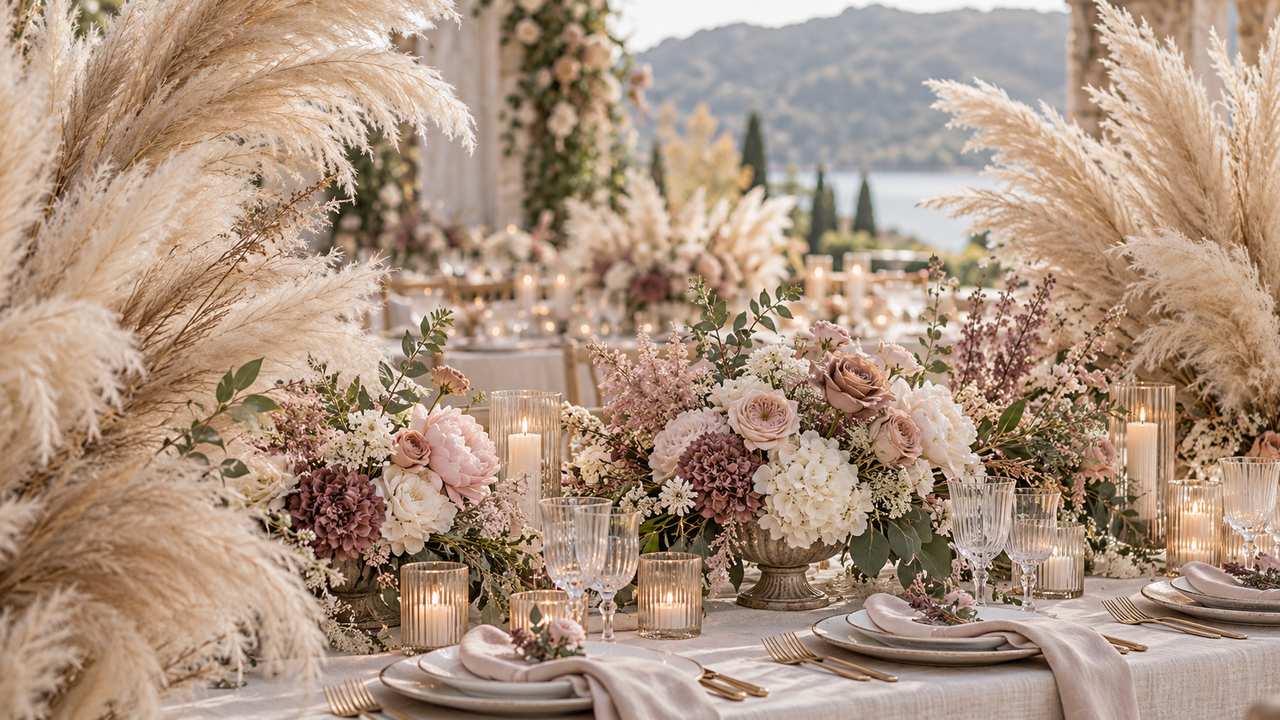
Successful arrangements depend on proportion. Roses should form the visual heart, pampas the airy framework. Use three to five plumes for a hand-tied bouquet, positioning them slightly above and behind the roses rather than creating an even halo. An asymmetrical crescent or loose triangular silhouette feels more naturally bohemian than a compact sphere.
- Eucalyptus: Adds silvery structure, fragrance, and a bridge between green stems and beige plumes.
- Lisianthus: Echoes the romance of roses while introducing lighter, fluttering forms.
- Ranunculus: Reinforces layered texture and works especially well in spring wedding palettes.
- Baby’s breath: Creates a mist-like transition between dense blooms and feathery grass.
- Protea or banksia: Adds sculptural drama to rust, terracotta, and desert-inspired arrangements.
Choose matte ceramic, smoked glass, aged brass, or earthenware vessels. Terracotta and caramel ribbons produce an earthy mood; silk in ivory or faded rose creates quiet luxury. Leave intentional negative space between stems. Pampas is visually expansive, and crowding it removes the movement that gives the pairing its character.
Care, Longevity, and Botanical Practicalities
Keep fresh rose stems in clean water while ensuring dried pampas remains above the waterline. Strip leaves that would sit below the surface, recut roses diagonally with a clean blade, and use floral preservative. Replace the water every two days and keep the arrangement away from direct sun, heaters, ripening fruit, and strong drafts. Roses generally remain attractive for five to ten days, depending on cultivar and freshness.
Before arranging pampas, take it outdoors and shake it gently. A light application of unscented hairspray can reduce shedding, although it should be tested first because sprays may darken delicate plumes. Dried stems prefer low humidity and should never be misted. Once the roses fade, remove them and retain the pampas as a lasting keepsake.
Gardeners should verify local regulations before cultivating pampas grass. Female plants usually produce the fullest plumes, but seed production contributes to invasive spread. Where pampas is restricted, use non-invasive alternatives such as feather reed grass, fountain grass where locally appropriate, or commercially dried reeds that cannot disperse viable seed.
A Living Emblem of Romantic Freedom
The enduring appeal of roses and pampas lies in their expressive contrast. Roses speak in color—of passion, friendship, gratitude, remembrance, or renewal—while pampas speaks through form, suggesting endurance, freedom, and abundance. Together they create more than a fashionable boho arrangement: they offer a portrait of affection that is intimate but spacious, refined but untamed, and beautiful precisely because strength and softness coexist.