Table of Contents
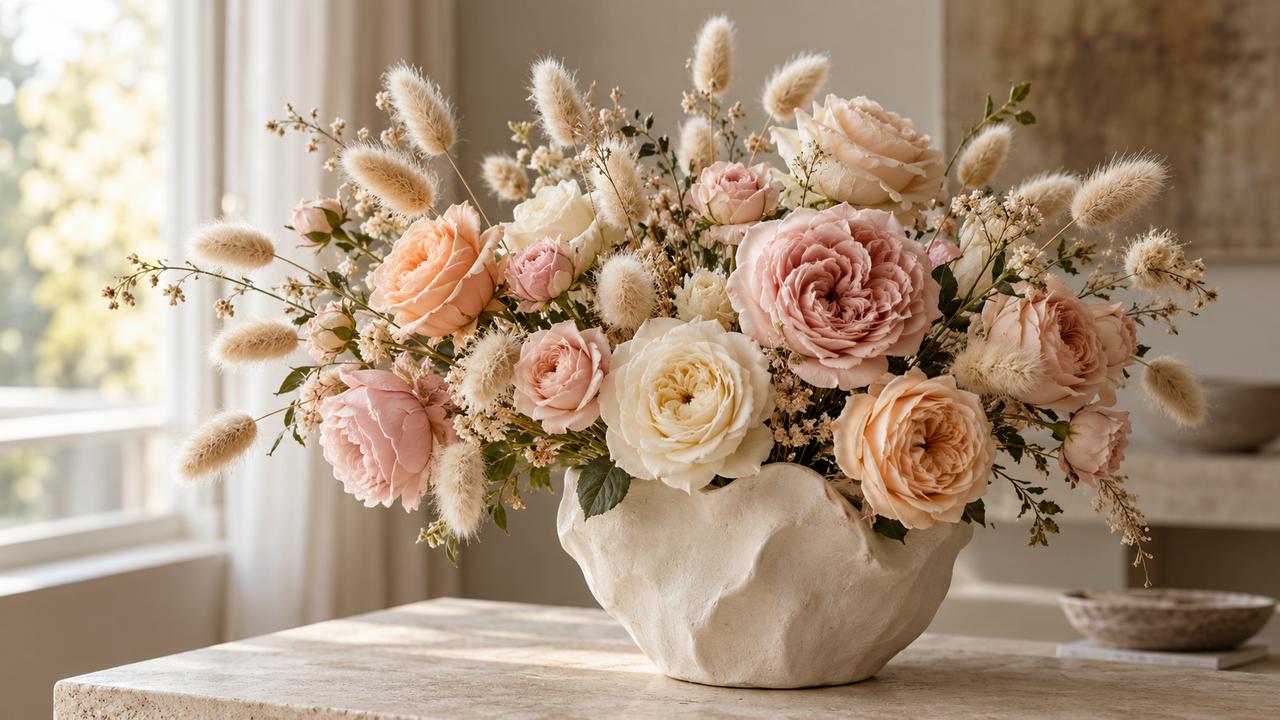
Pairing Roses with Dried Bunny Tails (Lagurus): Soft Playful Tactile Charm
Pairing roses with dried bunny tails creates a compelling conversation between classical romance and lighthearted texture. Roses bring centuries of ceremonial meaning, while the velvety seed heads of Lagurus ovatus introduce softness, movement, and an almost irresistible urge to touch. The result can feel nostalgic yet modern: refined enough for a wedding, gentle enough for a nursery, and relaxed enough for an informal gift.
Historically, roses were cultivated in ancient Persia, Greece, Rome, China, and across the Islamic world for beauty, fragrance, medicine, and ritual. Their symbolic vocabulary later became especially elaborate in nineteenth-century European and American floriography. Bunny tail grass has a less codified history. Native to the Mediterranean region and nearby Atlantic coasts, it is an ornamental annual grass whose compact flower panicles mature into pale, downy seed heads. Although Victorian flower dictionaries sometimes assigned broad ideas such as submission, utility, or constancy to grasses, Lagurus did not possess one universally recognized message. Its modern symbolism therefore grows chiefly from its appearance: tenderness, comfort, innocence, playfulness, and natural resilience.
The Combined Meaning of Roses and Bunny Tails
Roses usually provide the emotional statement, while bunny tails modify its tone. A red rose alone may declare ardent love; surrounded by airy, cream-colored Lagurus, it becomes warmer, softer, and less ceremonially intense. Blush roses paired with bunny tails suggest affectionate gentleness. Yellow roses make the composition cheerful and companionable, while white or champagne flowers create an understated, contemplative elegance.
This relationship is useful when exploring bunny tails with roses styling: think of the rose as the message and the grass as its emotional texture. The combination commonly conveys five closely related ideas:
- Tender affection: The plush seed heads temper the rose’s formality and sensuality.
- Joyful innocence: Their rounded silhouettes evoke childhood, springtime, and uncomplicated happiness.
- Enduring memory: Fresh roses are fleeting, but dried bunny tails remain, symbolizing a moment preserved.
- Comfort and reassurance: Neutral colors and tactile softness create a calm, consoling presence.
- Natural individuality: Every stem bends differently, celebrating imperfection and relaxed beauty.
Meanings Across Eras and Cultures
In classical Mediterranean mythology, the rose became associated with love, beauty, secrecy, death, and renewal. Roman banquets used roses lavishly, while the expression sub rosa connected the flower with confidentiality. In medieval Christian imagery, red roses could signify martyrdom and divine love, while white roses represented purity. Persian poetic traditions made the rose and nightingale an enduring image of beloved and lover, beauty and longing.
During the nineteenth-century enthusiasm for floriography, rose color, maturity, and presentation could all alter a bouquet’s supposed message. Yet these codes varied among books and communities; there was never one perfectly universal floral dictionary. Grasses generally contributed pastoral associations—humility, abundance, harvest, or steadfastness—rather than a precise romantic declaration.
Contemporary floristry is more visual and personal. Bunny tails now appear in Scandinavian-inspired interiors, bohemian weddings, sustainable dried arrangements, and Japanese-influenced minimalist displays. Their resemblance to small animal tails also gives them a cross-cultural sense of charm, though this is a modern interpretive association rather than an ancient botanical emblem. Dyed varieties broaden the vocabulary further, but natural ivory and straw tones remain the most versatile and culturally neutral.
Color and Context Reference
| Rose and Lagurus Pairing | Emotional Meaning | Best Context | Styling Direction |
|---|---|---|---|
| Red roses with natural ivory tails | Passion softened by tenderness | Anniversary or romantic declaration | Use sparingly with deep foliage |
| Blush roses with cream tails | Gentleness, admiration, graceful affection | Wedding, engagement, or new baby | Create an airy, rounded silhouette |
| Yellow roses with golden tails | Friendship, optimism, and warmth | Birthday, thanks, or congratulations | Add chamomile or pale foliage |
| White roses with undyed tails | Purity, peace, remembrance | Wedding, memorial, or quiet support | Keep the palette restrained |
| Champagne roses with beige tails | Sophistication, gratitude, quiet luxury | Milestone, host gift, or elegant wedding | Combine with taupe and muted gold |
| Lavender roses with dyed mauve tails | Enchantment, imagination, individuality | Creative celebration or distinctive romance | Balance with neutral dried grasses |
Choosing the Right Rose Shade
Yellow roses and natural bunny tails form one of the happiest combinations. Understanding the yellow rose meaning helps distinguish their modern message of friendship and joy from older Western associations with jealousy or fading affection. Today, this sunny pairing is especially suitable for colleagues, friends, and recovery gifts.
For weddings, baptisms, remembrance, or serene interiors, consult the nuances of white rose symbolism. Ivory bunny tails reinforce peace without making the arrangement rigid. Champagne roses offer a warmer alternative; the refined champagne rose meaning suits anniversaries, promotions, and tasteful celebrations where red might feel too intimate.
Occasions, Recipients, and Modern Etiquette
Gift blush or peach roses with bunny tails to a partner, close friend, new parent, or host. Yellow pairings are ideal for friendship, academic success, a new job, or a housewarming. Red roses remain most appropriate where romantic intent is already understood. For professional recipients, choose yellow, cream, peach, or champagne and avoid an overwhelmingly bridal or passionate design.
At a funeral or during bereavement, restrained white, cream, dusty pink, or muted mauve can communicate sympathy. Because dried material may imply permanence and memory, it can be deeply meaningful, but some recipients associate dried flowers with decay. Consider family preferences and religious custom, and review appropriate roses for sympathy before sending a conspicuous arrangement.
Modern etiquette favors clarity over secret codes. Include a brief card explaining why you chose the flowers, especially when colors might be misunderstood. Ask before sending dried grasses to hospitals or care settings, where dust, allergies, or cleaning policies may be concerns. For baby celebrations, keep shedding stems away from cribs and small hands.
Companion Flowers and Styling Principles
For romantic softness, add spray roses, waxflower, astrantia, or pale lisianthus. For a meadow effect, use chamomile, yarrow, scabiosa, statice, or delicate seed pods. Eucalyptus introduces cool structure, while olive foliage gives a Mediterranean character appropriate to Lagurus origins. Pampas grass can work in large installations, but its scale easily overwhelms the compact tails.
Build the bouquet in layers. Establish roses as focal points, place secondary flowers slightly lower, and add bunny tails last so their silhouettes remain visible. Cluster them in uneven groups of three or five rather than spacing them uniformly. For a contemporary design, leave purposeful negative space and let a few stems rise beyond the rose line. Natural tails suit garden-style arrangements; dyed tails work best when they echo, rather than exactly match, the rose color.
Botanical Care and Longevity
Lagurus ovatus is an annual grass that prefers full sun, light well-drained soil, and relatively dry conditions once established. Sow after frost, or start seed indoors several weeks earlier. Harvest when the heads are fully formed but before they become brittle and shed. Tie small bundles and hang them upside down in a dark, dry, ventilated room to preserve shape and color.
In mixed arrangements, never place dried bunny-tail stems directly in vase water; moisture may cause discoloration, mildew, or stem collapse. Use floral tubes for fresh roses, conceal separate water vessels within the design, or display professionally dried roses with the grass. Fresh cut roses last longer when stems are recut diagonally, submerged leaves are removed, water is changed every two days, and the vase is kept away from heat and ripening fruit.
Dried bunny tails can remain attractive for one to three years. Protect them from humidity, direct sunlight, and frequent handling. Remove dust with a cool, gentle hairdryer setting or a soft air blower held at a distance. A very light application of unscented floral sealant may reduce shedding, though heavy hairspray can create a sticky, artificial finish.
A Lasting Expression of Softness
Roses and dried bunny tails succeed together because they balance emotional depth with tactile ease. The rose contributes history, fragrance, color, and recognizable intention; Lagurus adds comfort, movement, and preserved beauty. Whether the bouquet expresses romance, friendship, celebration, or remembrance, thoughtful color selection and careful construction keep the pairing eloquent rather than merely fashionable. At its best, this combination feels both cultivated and wild—a formal sentiment spoken in a gentle, playful voice.