Table of Contents
Pairing Roses with Olive Branches: Mediterranean Peace, Honor, and Wisdom
Few botanical pairings carry as much historical and emotional depth as roses and olive branches. The rose contributes love, beauty, courage, discretion, and the fleeting sweetness of life; the olive adds peace, wisdom, endurance, reconciliation, and honorable victory. Together, they form a message more mature than romance alone: affection guided by good judgment, beauty protected by peace, or triumph tempered with mercy.
The historical roots of this pairing lie in the Mediterranean world, where both plants became inseparable from religion, ceremony, poetry, and daily life. Roses flourished in ancient Persian, Greek, and Roman gardens and were associated with deities of love, festive garlands, funerary remembrance, and confidential gatherings. The olive, Olea europaea, was cultivated for food, medicine, light, ritual anointing, and trade. Its extraordinary longevity made it a living emblem of continuity. Understanding the roses and olive branch meaning therefore requires attention not only to flower color, but also to history, relationship, occasion, and arrangement style.
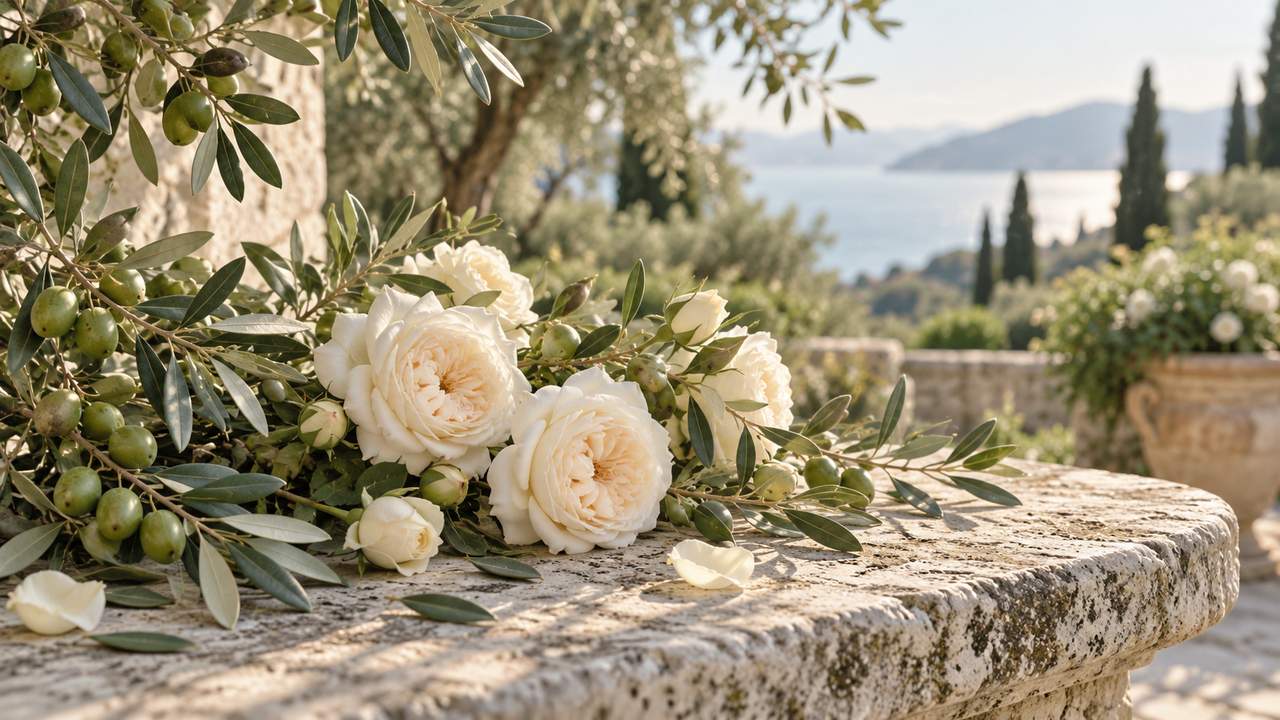
What Do Roses and Olive Branches Mean Together?
At their broadest, roses symbolize the heart while olive branches symbolize the disciplined mind and the peaceful social order. Their union can mean “I love and honor you,” “May peace return between us,” or “Your achievement deserves admiration.” Unlike a bouquet composed solely of roses, which may be read as intensely romantic, the addition of olive foliage introduces restraint, dignity, and permanence.
- Peace joined with love: An ideal message for reconciliation, marriage, diplomacy, or renewed friendship.
- Honor without arrogance: Roses celebrate accomplishment, while olive branches recall the ancient ideal of victory used for the common good.
- Wisdom in relationships: The pairing suggests patient, thoughtful affection rather than impulsive desire.
- Hope after hardship: Evergreen olive foliage expresses resilience; opening roses represent emotional renewal.
- Remembrance and continuity: Both plants have funerary associations and can honor a life whose influence endures.
Ancient Mediterranean Origins
In Greek tradition, the olive was sacred to Athena, goddess of wisdom, skilled work, and strategic defense. According to Athenian myth, she won the guardianship of Attica by offering the people an olive tree—a gift that supplied nourishment, oil, timber, and prosperity. Olive wreaths honored victors, especially at sacred athletic contests, making the plant a symbol of achievement blessed by civic virtue.
Roses were linked with Aphrodite, the goddess of love and beauty. Later poetic traditions connected red roses with passionate love and blood, while white roses suggested purity, innocence, or secrecy. Greek and Roman feasts were strewn with petals, and roses also appeared in tomb offerings, reminding observers that beauty and life are precious because they do not last.
Romans expanded both plants’ ceremonial vocabulary. Olive wreaths could signify peace, public service, or victory, whereas rose garlands accompanied banquets, weddings, religious rites, and memorials. The expression sub rosa, “under the rose,” eventually came to denote confidentiality. A rose-and-olive arrangement can consequently unite private trust with public honor.
Biblical, Christian, and Later Interpretations
The olive leaf carried by the dove in the account of Noah became one of the Western world’s most recognizable signs that destruction had ended and reconciliation with creation had begun. Strictly speaking, the biblical text describes an olive leaf rather than a full branch, but later art transformed it into the familiar olive branch of peace.
Within Christian symbolism, roses acquired associations with divine love, martyrdom, spiritual mystery, and the Virgin Mary. Paired with olive foliage, they may express grace after suffering, merciful peace, or prayerful remembrance. During the Renaissance and later European revival styles, both motifs appeared in painting, carved ornament, medals, wedding decoration, and civic allegory. Victorian floriography then encouraged increasingly precise floral messages, although meanings varied among dictionaries and were never a perfectly universal code.
Rose Colors and Their Nuances
| Rose Color | Meaning with Olive | Best Context |
|---|---|---|
| Red | Devoted love, courage, and passionate loyalty moderated by peace | Anniversaries, weddings, romantic reconciliation |
| White | Purity, reverence, remembrance, and spiritual calm | Weddings, memorials, sympathy gifts |
| Pink | Gratitude, gentle affection, admiration, and goodwill | Thank-you gifts, mentors, family celebrations |
| Yellow | Friendship, optimism, welcome, and restored harmony | Friendship, recovery, housewarmings |
| Apricot or Peach | Warm hospitality, sincerity, appreciation, and abundance | Host gifts, engagements, professional thanks |
| Mauve | Enchantment, distinction, refined affection, and wisdom | Milestones, artistic events, elegant romance |
Subtle shades deserve careful interpretation. The apricot rose meaning complements olive particularly well in welcoming arrangements, where it communicates warmth without the romantic intensity of red. For sophisticated celebrations, mauve rose symbolism adds rarity and cultivated elegance.
Salmon roses occupy the space between friendship and desire. Exploring the salmon rose meaning helps when designing a bouquet for a close companion, new partner, or joyful reunion. So-called green roses can suggest renewal and abundance; although naturally green cultivars differ from dyed mint blooms, the mint green rose significance harmonizes visually and symbolically with silvery olive leaves.
Occasions, Recipients, and Modern Etiquette
For weddings, white, cream, blush, or apricot roses with olive branches express peaceful partnership and enduring devotion. They are especially appropriate for Mediterranean, garden, or heritage-inspired ceremonies. In an anniversary bouquet, red roses and olive foliage communicate lasting passion strengthened by patience.
For reconciliation, choose pale pink, peach, or white roses rather than dramatic red unless the relationship is clearly romantic. Include a direct card message; flowers can open a conversation but should not replace an apology. Yellow roses are suitable for restoring friendship, though color meanings differ culturally and may sometimes include jealousy or separation.
Graduates, retiring colleagues, civic leaders, teachers, and mentors can receive pink, yellow, or apricot roses with olive. The arrangement conveys earned honor without implying romance. For condolences, white or muted blush roses with restrained olive foliage signify peaceful remembrance. Confirm religious and family customs before sending funeral flowers, as some communities prefer charitable gifts, specific colors, or no flowers.
Odd numbers of roses often look natural in informal European-style bouquets, while a dozen remains a recognizable romantic statement. Avoid treating flower symbolism as rigid law. A recipient’s favorite color, allergies, cultural background, and personal associations take precedence over historical formulas.
Companion Flowers and Styling
Olive branches have narrow, matte leaves with green upper surfaces and silvery undersides. Their linear movement contrasts beautifully with the rounded, layered form of roses. For a loose Mediterranean arrangement, allow a few olive tips to rise beyond the roses rather than trimming everything into a compact dome.
- For weddings: Add white ranunculus, lisianthus, jasmine vine, or delicate waxflower.
- For rustic warmth: Combine apricot roses with rosemary, lavender, terracotta-toned carnations, or wheat.
- For formal honor: Pair white roses and olive with laurel, restrained greenery, and architectural calla lilies.
- For romance: Use red or salmon roses, burgundy scabiosa, and trailing olive branches.
- For memorials: Choose white roses, stocks, lilies, or seasonal branches in a quiet, asymmetrical design.
Use olive generously enough to establish its symbolism, but do not bury the roses. Three to five visible branch tips usually balance a medium hand-tied bouquet. Linen ribbon, raw silk, stoneware, aged brass, and clear glass reinforce the plant’s Mediterranean character better than glossy plastic wrapping.
Botanical Care and Vase Longevity
Roses and olive branches have compatible vase requirements. Recut stems with clean, sharp shears, removing roughly 2 to 3 centimeters at an angle. Strip all foliage that would sit below the waterline; submerged olive leaves and rose foliage encourage bacterial growth. Place the stems promptly in a scrubbed vase filled with fresh water and properly measured floral preservative.
Keep the arrangement away from direct sun, heaters, drafts, and ripening fruit, which releases ethylene gas and accelerates aging. Refresh the water every one or two days and recut stems when possible. Roses commonly last five to ten days depending on cultivar and freshness, while olive foliage may remain attractive longer. Remove fading blooms individually so the branches can continue as a simple foliage display.
Gardeners should remember that roses generally prefer fertile, well-drained soil with regular moisture, whereas olives thrive in strong sun and sharply drained soil and tolerate drought once established. They can share a Mediterranean-style garden visually, but irrigation should be zoned so roses receive more consistent water and olive roots do not remain wet.
A Living Message of Peaceful Devotion
The enduring roses and olive branch meaning rests on balance: passion with wisdom, celebration with humility, and beauty with resilience. From Athena’s sacred tree and ancient rose garlands to biblical peace imagery and modern wedding bouquets, the combination has continually expressed humanity’s hope that love can be both tender and just. Chosen with attention to color, culture, and occasion, roses and olive branches become more than an attractive arrangement—they offer a graceful declaration of affection, honor, reconciliation, and lasting peace.


