Table of Contents
Pairing Roses with Snapdragons: Gracious Deception and Tall Vibrant Drama
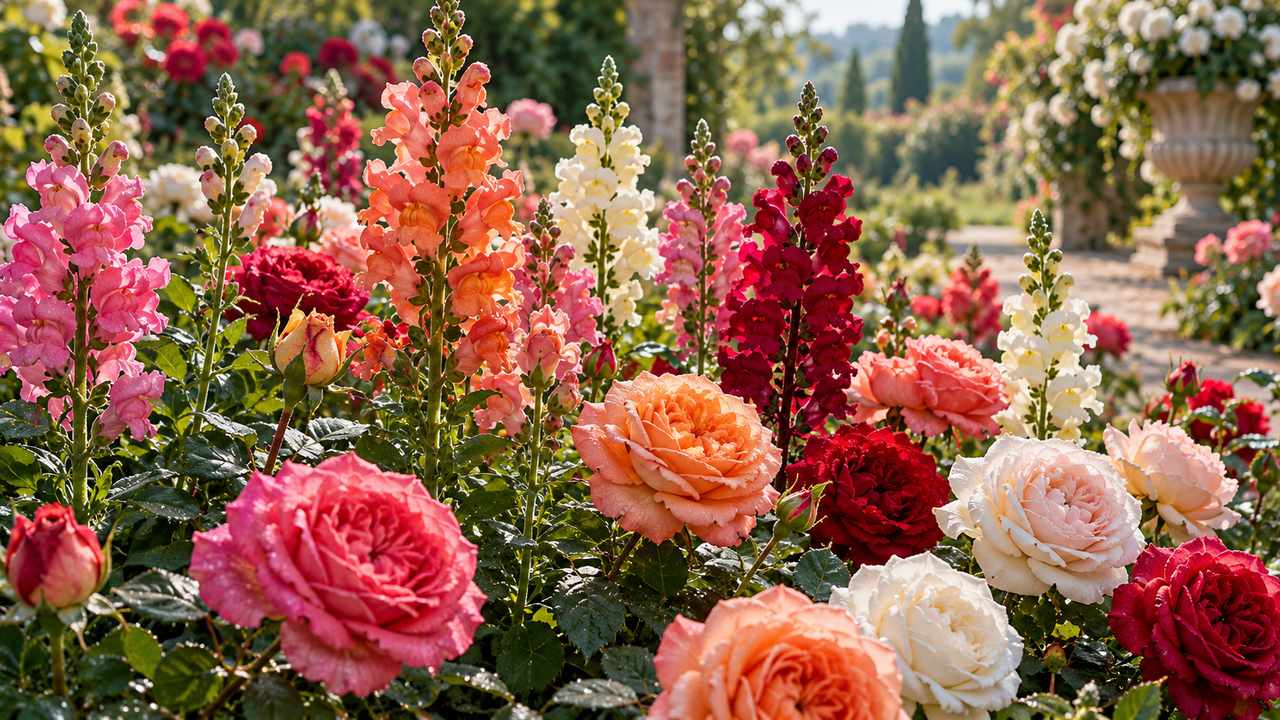
The pairing of roses and snapdragons brings together two flowers with remarkably different personalities. Roses offer rounded forms, layered petals, and centuries of associations with love, beauty, secrecy, and devotion. Snapdragons rise above them in colorful spires, lending movement, confidence, and a hint of theatrical mischief. In traditional floriography, this combination can suggest graciousness joined with deception—a message that sounds contradictory until one understands the history behind it.
The symbolic language of roses developed across ancient Persia, Greece, Rome, medieval Europe, and the courtly cultures of later centuries. Snapdragons, native primarily to the Mediterranean region, acquired meanings from their unusual “mouths,” which open when the sides of the bloom are pressed. By the Victorian era, when flowers could communicate feelings considered too delicate to speak aloud, snapdragons represented both graciousness and concealment or deception. Thus, the central roses and snapdragons meaning is richly nuanced: sincere affection presented with poise, private feelings protected behind charm, or romantic beauty enlivened by boldness and complexity.
The Historical Language of Roses
Roses have never carried only one meaning. In Greek and Roman traditions, they were associated with Aphrodite or Venus and therefore with love, desire, and beauty. The rose also became a symbol of confidentiality. The Latin expression sub rosa—“under the rose”—referred to matters spoken in confidence, adding secrecy to the flower’s romantic vocabulary.
Christian symbolism later connected red roses with sacrifice and sacred love, while white roses represented purity and spiritual devotion. During the nineteenth-century enthusiasm for floriography, rose meanings became increasingly specific according to color, maturity, and presentation. A red rose declared passionate love; a white rose suggested innocence; a pink rose conveyed admiration or gratitude; and a yellow rose could indicate friendship, jealousy, or changing affection, depending on the period and source.
This flexibility makes roses ideal partners for snapdragons. A florist can soften the latter’s implication of deception by selecting gentle rose shades, or deliberately intensify the mysterious message with dark red blooms and dramatic foliage.
Snapdragons: Grace, Strength, and Concealed Intentions
Snapdragons belong to the genus Antirrhinum, a name derived from Greek words commonly interpreted as “like a nose” or “nose-like,” referring to the flower’s distinctive shape. Their common name comes from the blossom’s resemblance to a dragon’s jaws. This playful botanical feature made the flower especially memorable in folklore.
In parts of Europe, snapdragons were planted near gates, walls, or castles and were believed to offer protection from misfortune or harmful magic. Their ability to grow in rocky crevices also encouraged associations with resilience, strength, and grace under pressure. Yet the mask-like flower simultaneously suggested hidden motives. Victorian flower dictionaries consequently assigned snapdragons seemingly opposing meanings: graciousness, presumption, and deception.
“Deception” should not always be read as betrayal. In a sympathetic interpretation, it can mean discretion, guarded emotion, cleverness, or the composed exterior someone maintains while concealing vulnerability. Paired with roses, snapdragons may say, “My affection is sincere, although not everything can yet be spoken.”
What Roses and Snapdragons Mean Together
The combination balances emotional fullness with vertical energy. Roses speak from the heart; snapdragons introduce wit, reserve, and determination. Their shared message changes according to color, occasion, and the relationship between giver and recipient.
| Pairing | Combined Meaning | Best Occasion |
|---|---|---|
| Red roses and burgundy snapdragons | Passion, courage, and intense feelings kept private | Anniversary or dramatic romantic gesture |
| Pink roses and pink snapdragons | Admiration, kindness, graceful affection, and gentle confidence | Birthday, thank-you, or new romance |
| White roses and white snapdragons | Purity, remembrance, protection, and dignified reserve | Wedding, memorial, or sympathy gift |
| Yellow roses and yellow snapdragons | Cheerful friendship, optimism, and spirited encouragement | Congratulations or recovery wishes |
| Peach roses and coral snapdragons | Warm gratitude, sociability, enthusiasm, and subtle desire | Hostess gift or professional celebration |
| Lavender roses and purple snapdragons | Enchantment, mystery, dignity, and fascination | Creative milestone or unconventional romance |
Color Nuance and Bouquet Context
Warm palettes create the most sociable interpretation. Peach, coral, and salmon blooms communicate energy without the solemn intensity of crimson. The layered associations explored through salmon rose meaning make salmon roses especially effective when a relationship falls somewhere between friendship and passion. Coral or apricot snapdragons reinforce enthusiasm and attraction.
Muted palettes feel nostalgic and cultivated. Roses in dusty rose colors, paired with mauve snapdragons, suggest mature romance, cherished memories, and emotions expressed with restraint. For tenderness, pale pink roses and blush snapdragons convey sweetness, admiration, and gracious support without implying overwhelming passion.
Ivory and cream combinations are elegant choices for weddings or formal gratitude. Understanding cream rose symbolism helps distinguish these blooms from stark white roses: cream generally feels warmer, expressing charm, thoughtfulness, and refined affection. With white snapdragons, the result is ceremonial and serene.
Context also governs interpretation. A loose garden bouquet reads as affectionate and natural; a tightly structured arrangement appears formal and deliberate. One or two tall snapdragons add confidence, while many spires create commanding drama. Because modern recipients rarely consult Victorian dictionaries, include a short card if the intended meaning is unusually specific.
When and How to Give Them
- Romantic occasions: Choose red, burgundy, lavender, or deep pink. Give them to a partner who appreciates expressive, unconventional arrangements.
- Birthdays and congratulations: Use yellow, coral, peach, or hot pink to celebrate confidence, achievement, and an energetic personality.
- Weddings: Cream, blush, and white create graceful ceremony arrangements; ensure the couple welcomes traditional symbolism before emphasizing “secrecy.”
- Sympathy and remembrance: White roses with white or pale lavender snapdragons express reverence, endurance, and dignified care.
- Professional gifts: Peach or cream roses with restrained snapdragons communicate appreciation without appearing overtly romantic.
Modern etiquette favors intention over rigid symbolism. Avoid sending red roses in professional situations, and do not frame snapdragons as symbols of dishonesty unless the recipient enjoys historical floriography. Remove strongly scented additions when sending flowers to hospitals, verify institutional restrictions, and consider cultural preferences: white flowers signify purity and weddings in many Western settings but are connected with mourning in several East Asian traditions.
Companion Flowers and Styling
Roses provide the focal mass, while snapdragons establish height and silhouette. For a balanced hand-tied bouquet, group roses low and centrally, then place snapdragons at staggered heights rather than forming a rigid fence. Allow the tallest stems to rise roughly one-third above the main floral body.
Delphiniums enhance vertical drama, lisianthus adds romantic softness, and ranunculus echoes the rose’s layered form. Sweet peas contribute fragrance and delicate movement; stock offers fuller spires for a lush garden style. For greenery, use Italian ruscus, olive branches, eucalyptus, or airy ferns. Avoid too many competing spike-shaped flowers, which can make the composition visually restless.
Care and Botanical Longevity
Both flowers perform best in a scrupulously clean vase. Recut stems at an angle with a sharp knife or floral snips, remove every leaf that would sit below the waterline, and use commercial flower food. Roses can develop bent necks when water uptake is blocked, so hydrate them promptly in deep, fresh water. Snapdragons are sensitive to ethylene gas; keep them away from ripening fruit, cigarette smoke, and exhausted blossoms.
Change the water every two days, rinse the vase, and trim the stems again. Keep the arrangement away from direct sun, heaters, and drafts. Remove fading rose guard petals only when they are bruised, and pinch off spent snapdragon florets from the lower stalk. With good care, roses commonly last five to ten days, while snapdragons may remain attractive for seven to fourteen days.
In the garden, roses generally require abundant sun, fertile well-drained soil, airflow, and attentive pruning. Snapdragons prefer sun and moderate temperatures; although often grown as annuals, they are short-lived perennials in suitable climates. Regular deadheading prolongs flowering and encourages branching.
A Message of Beauty with Depth
Ultimately, the roses and snapdragons meaning is not a warning against affection but a portrait of affection’s complexity. Roses declare beauty, love, gratitude, or devotion; snapdragons add graciousness, resilience, mystery, and the possibility of feelings held behind a composed face. Together they create bouquets that are visually architectural and emotionally layered—equally capable of celebrating romance, honoring endurance, or expressing admiration with unforgettable dramatic flair.