Table of Contents
Pairing Roses with Lush Peonies: The Ultimate Romantic Bridal Combination
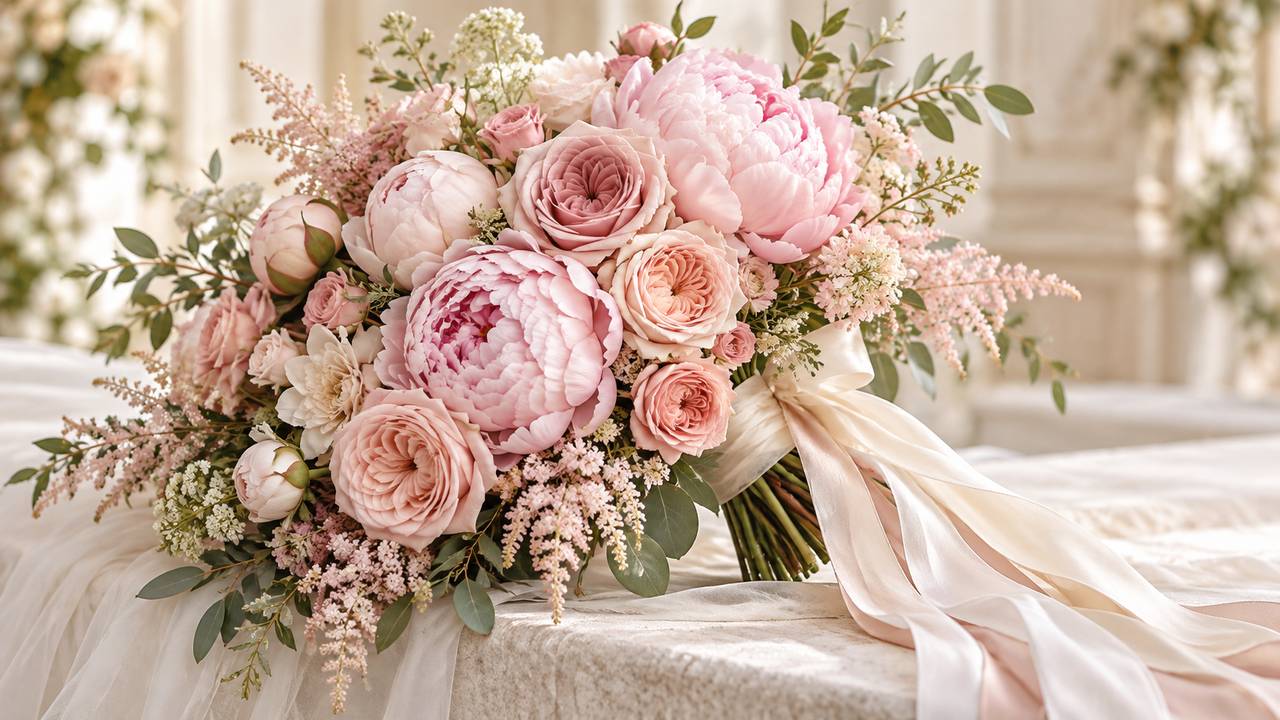
Few floral pairings express romance as eloquently as roses and peonies. Roses bring centuries of poetic association with love, devotion, beauty, and secrecy; peonies contribute abundance, tenderness, prosperity, and the promise of a happy marriage. Together, their layered petals create an almost painterly sense of luxury. The essential roses and peonies bouquet meaning is therefore romantic love unfolding into a generous, fortunate, and enduring partnership—an especially fitting message for a bridal bouquet.
The pairing is compelling botanically as well as symbolically. Roses belong to the genus Rosa and range from refined hybrid teas to fragrant, many-petalled garden forms. Peonies belong primarily to the genus Paeonia; their broad, soft petals open from compact buds into sumptuous bowls or globes. Although unrelated, both flowers possess layered forms and strong visual presence. A florist can blend them into a harmonious arrangement or use their contrasting silhouettes to create movement and depth.
Historical Roots of the Pairing
Roses have carried symbolic weight since antiquity. In Greek and Roman traditions, they were associated with Aphrodite or Venus, love, beauty, and desire. The Latin phrase sub rosa, “under the rose,” connected the flower with confidentiality. Christian imagery later gave roses devotional meanings, while Persian poetry celebrated them as emblems of longing and the beloved. By the Victorian era, color, number, and presentation could turn a rose bouquet into a carefully coded message.
Peonies developed an equally rich but distinct symbolic history. Native to parts of Europe, Asia, and western North America, they were cultivated medicinally and ornamentally for centuries. Their name is traditionally linked to Paeon, a healer in Greek mythology. In imperial China, the tree peony became a prestigious flower associated with honor, wealth, feminine beauty, and high social standing. In Japan, peonies came to represent prosperity, bravery, and good fortune, although interpretations varied by period and artistic context.
Victorian flower dictionaries commonly associated peonies with bashfulness, possibly inspired by the way their buds conceal abundant petals before opening. Modern wedding culture has softened that reserved meaning. Today, peonies more often suggest happy marriage, romance, compassion, prosperity, and affectionate good wishes. Combined with roses, their historical bashfulness can add a charming emotional progression: private feeling opening into confident love.
The Core Meaning of Roses and Peonies
A bridal bouquet of roses and peonies does not carry one rigid definition. Its message depends on color, quantity, style, season, and cultural setting. Nevertheless, several themes consistently shape its interpretation:
- Romantic devotion: Roses establish the language of love, while peonies make that love appear full, warm, and flourishing.
- A happy marriage: Peonies are widely regarded as auspicious wedding flowers, particularly in Chinese-influenced traditions.
- Prosperity and abundance: Their generous forms evoke richness—not merely financial wealth, but an abundant shared life.
- Beauty with emotional depth: Layer upon layer of petals suggests feelings that reveal themselves gradually.
- Gratitude and admiration: Pink combinations can honor the affection and support surrounding a couple.
Meanings by Color
| Color Pairing | Principal Meaning | Best Bridal Context |
|---|---|---|
| White roses and white peonies | Sincerity, unity, reverence, and new beginnings | Formal, chapel, minimalist, or black-tie weddings |
| Blush roses and pale pink peonies | Tender love, sweetness, grace, and marital happiness | Garden, romantic, spring, or vintage celebrations |
| Red roses and burgundy peonies | Passion, fidelity, courage, and profound commitment | Evening, autumn, winter, or dramatic weddings |
| Coral peonies and peach roses | Joy, enthusiasm, friendship, and a vibrant future | Destination, summer, or contemporary weddings |
| Dark pink roses and pink peonies | Appreciation, admiration, gratitude, and generosity | Bridal-party flowers or bouquets honoring family |
Red remains the clearest declaration of passionate love, but an entirely red rose-and-peony bouquet can feel intense. Cream, blush, or foliage introduces visual breathing room. White symbolizes sincerity and beginnings in many Western weddings, yet white flowers may also have funerary associations in some East Asian and European contexts. This does not make them inappropriate; it simply makes cultural awareness important.
Pink is especially nuanced. Pale pink conveys gentleness and affection, while deeper tones express thanks and admiration. Understanding the dark pink rose meaning can help couples acknowledge parents, attendants, or mentors through coordinated bouquets. Yellow roses, once associated with jealousy in some Victorian sources, now commonly communicate friendship, optimism, and warmth. Paired with cream peonies, they create a cheerful rather than overtly passionate message.
Bouquet Form, Number, and Context
Presentation alters meaning. A compact, symmetrical bouquet suggests polish, constancy, and ceremony. A loose garden-style arrangement feels spontaneous and intimate, as though gathered during a romantic walk. Cascading stems convey drama and abundance, while a restrained posy emphasizes tenderness. Fully open peonies create opulence; tighter buds suggest anticipation and a future still unfolding.
Flower numbers can also add a private layer of symbolism. Three roses traditionally communicate “I love you,” making the three roses meaning useful in a small civil-ceremony bouquet or anniversary arrangement. Florists need not force an exact count in a large bridal design, but three focal roses nestled among peonies can serve as a discreet personal message.
When to Give Roses and Peonies
This combination is ideal for engagements, bridal showers, weddings, vow renewals, anniversaries, and romantic milestone birthdays. It also makes a gracious gift from one partner to another on the wedding morning. Blush or dark pink arrangements are appropriate for mothers of the couple, hosts, and treasured friends because they emphasize gratitude alongside affection.
Modern etiquette favors personal knowledge over rigid symbolism. Consider the recipient’s culture, fragrance sensitivity, color preferences, and relationship to the giver. Include a note explaining the intended meaning when a color could be ambiguous. For condolences, peonies may be chosen to honor compassion or a full life, but the conventions differ from celebratory bouquets; consult guidance on roses for sympathy before sending a strongly romantic combination to a bereaved family.
Companion Flowers and Styling Advice
For an heirloom garden effect, combine peonies with fragrant David Austin English roses, whose cupped, densely petalled forms echo the peony’s softness. Because both are visually substantial, vary bloom size and stage rather than using only fully open flowers. Several buds, half-open roses, and one or two expansive peonies will produce rhythm without heaviness.
- Sweet peas: Add fragrance, delicacy, and associations with pleasure and grateful farewells.
- Ranunculus: Provide smaller layered forms and a refined transition between large focal blooms.
- Lisianthus: Introduce graceful buds and soft movement without competing for attention.
- Delphinium: Adds height and a touch of blue, traditionally linked with an open heart.
- Mock orange or jasmine: Supplies airy white accents and a romantic fragrance.
- Olive, myrtle, or trailing greenery: Suggests peace, love, continuity, and natural structure.
Limit the palette to two or three principal colors for a sophisticated result. Ivory, shell pink, and muted apricot photograph beautifully; burgundy, dusty rose, and cream suit cooler seasons. Ribbon also changes the mood: raw silk feels organic, velvet adds winter richness, and a neatly wrapped satin handle looks formal. If symbolic accuracy matters, avoid artificial dyeing and choose naturally colored cultivars.
Botanical Care and Vase Longevity
Peonies are seasonal, typically flowering from late spring into early summer in temperate regions, although florist availability can be extended through imports and cold storage. Roses are available year-round, but garden varieties may be more delicate than standard commercial cultivars. Couples planning outside peony season should discuss cost, provenance, and substitutes such as garden roses, ranunculus, or double tulips.
For maximum vase life, recut stems at an angle with clean tools, remove all foliage below the waterline, and place the bouquet in a sanitized vase filled with fresh water and floral preservative. Keep it away from direct sun, heaters, ripening fruit, and drafts. Change the water every one or two days. Peony buds covered with natural nectar may be gently wiped with a damp cloth if they are slow to open; never force the petals apart. Bridal bouquets should remain in water until shortly before photographs or the ceremony.
In the garden, peonies prefer good drainage, winter chill, and a planting position where herbaceous crowns are not buried too deeply. Roses generally require generous light, airflow, fertile soil, and cultivar-specific pruning. Both reward patience: established peonies can flower for decades, while a well-tended rose becomes more structurally beautiful over time—a fitting horticultural parallel to marriage.
A Lasting Emblem of Romantic Abundance
The enduring roses and peonies bouquet meaning lies in the union of two complementary floral languages. Roses voice love, admiration, and commitment; peonies answer with happiness, prosperity, compassion, and abundance. Color and composition can make that message innocent, passionate, grateful, regal, or joyfully modern. Chosen with cultural sensitivity and cared for properly, this pairing is more than a luxurious bridal accessory: it is a living portrait of love opening generously into a shared future.