Table of Contents
Pairing Roses with Blue Hydrangeas: Volume, Gratitude, and Striking Contrast
Few floral pairings balance intimacy and grandeur as effectively as roses with blue hydrangeas. Roses contribute recognizable messages of love, admiration, friendship, or desire, while hydrangeas provide cloudlike volume and a more complex emotional vocabulary: gratitude, heartfelt understanding, apology, abundance, and, in some traditions, reserve. Together, they create a bouquet that feels generous without sacrificing personal meaning.
Understanding the roses and hydrangeas meaning requires attention to history as well as color. Roses have carried sacred, romantic, and political associations since antiquity. Hydrangeas entered European floriography much later, after Asian species became increasingly familiar to Western botanists and gardeners during the eighteenth and nineteenth centuries. Their pairing is therefore not an ancient fixed emblem but a modern floral sentence, assembled from two distinct symbolic traditions and refined through contemporary wedding, sympathy, and gift customs.
Historical Roots of the Pairing
In classical Greece and Rome, roses were associated with love, beauty, secrecy, celebration, and mortality. Aphrodite and Venus helped establish the flower’s romantic identity, while the Latin phrase sub rosa linked roses with confidential speech. Christian imagery later gave red and white roses additional meanings connected with sacrifice, purity, divine love, and the Virgin Mary.
By the nineteenth century, European and American flower dictionaries turned these associations into an elaborate social vocabulary. The Victorian language of flowers assigned significance not only to species and colors but also to combinations, quantities, presentation, and even the direction in which a flower was offered. Meanings varied from one published dictionary to another, so floriography was never entirely standardized.
Hydrangeas presented an especially intriguing contradiction. Their enormous flower heads suggested abundance, magnificence, and boastfulness, yet many of the conspicuous “petals” are botanically sepals surrounding relatively small fertile flowers. Some Victorian writers interpreted that contrast as vanity, frigidity, or heartlessness: an impressive display that produced comparatively little seed. In Japan, however, hydrangeas—particularly Hydrangea macrophylla, known as ajisai—became associated with the rainy season, emotional change, patience, and sincere feeling. A frequently repeated Japanese legend connects hydrangeas with an emperor’s apology and gratitude, although modern retellings often simplify or embellish its historical basis.
The Core Meaning of Roses and Blue Hydrangeas
In present-day floral design, blue hydrangeas commonly express gratitude, serenity, reconciliation, and deep understanding. Their many small florets gathered into one rounded head can also represent numerous memories, blessings, or acts of kindness forming a unified whole. Roses make that expansive sentiment more specific. The combined message is often: “My feelings are sincere, abundant, and centered on you.”
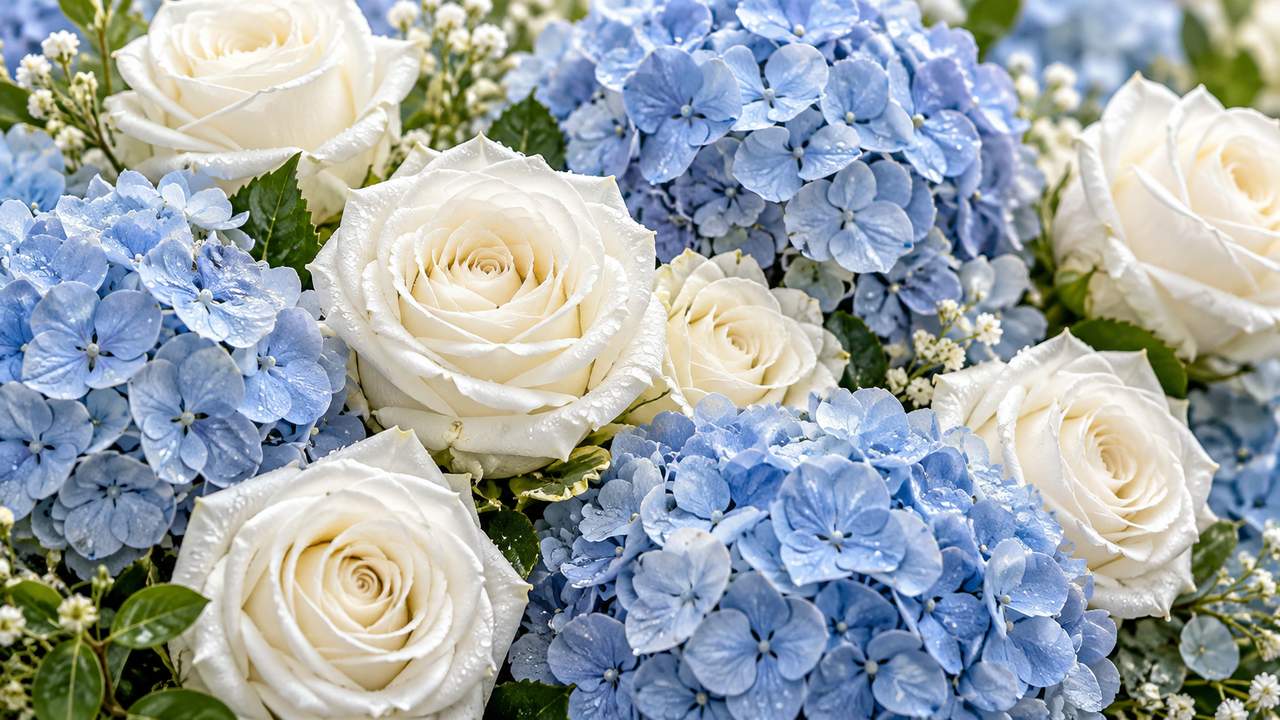
The rose color determines the emotional tone. White roses with blue hydrangeas suggest grace, loyalty, remembrance, or peaceful devotion. Blush roses soften the arrangement into gentle affection and appreciation. Pink roses emphasize admiration and gratitude, making them particularly harmonious with the hydrangea’s modern symbolism. Red roses introduce unmistakable passion, while yellow roses create a brighter message of friendship and shared happiness.
Lavender roses add enchantment and romantic fascination; anyone choosing this palette may wish to consider the nuances of lavender rose meaning. Peach or orange roses provide warmth against cool blue. Peach implies sincerity and thanks, while the energy described in orange rose symbolism can transform the bouquet into a statement of enthusiasm, attraction, or confident celebration.
| Rose Pairing | Combined Meaning | Best Occasion | Overall Mood |
|---|---|---|---|
| White roses and blue hydrangeas | Loyalty, peace, remembrance, enduring grace | Weddings, sympathy, memorials | Serene and timeless |
| Pink roses and blue hydrangeas | Gratitude, admiration, affectionate understanding | Thank-you gifts, birthdays, Mother’s Day | Warm and gracious |
| Red roses and blue hydrangeas | Passionate love supported by trust and depth | Anniversaries, romantic milestones | Dramatic and intimate |
| Yellow roses and blue hydrangeas | Friendship, optimism, appreciation | Congratulations, friendship gifts | Cheerful and fresh |
| Peach or orange roses and blue hydrangeas | Sincere thanks, enthusiasm, confident affection | Achievements, hosts, professional thanks | Bold and contemporary |
Shade, Number, and Presentation
Hydrangea blue ranges from pale powder and silvery slate to saturated cobalt. Pale blue feels tender, nostalgic, and peaceful; darker blue appears formal, introspective, and luxurious. Green-tinged blue hydrangeas suggest renewal and natural abundance, while antique heads mottled with mauve, green, and burgundy evoke maturity, changing seasons, and enduring affection.
Rose quantity can sharpen the message. Three roses traditionally communicate a concise declaration of love, although interpretations depend on color and context. A compact arrangement built around the three roses meaning, framed by one or two generous hydrangea heads, creates an intentional gift rather than an extravagant display. Larger rose counts feel celebratory, while a single focal rose surrounded by hydrangea can symbolize one treasured person held within abundant gratitude.
Presentation matters as much as number. A hand-tied bouquet feels personal and spontaneous. A low ceramic bowl suits a host, family member, or dining table. A structured hatbox or compact vase appears formal and luxurious, while a loose garden-style arrangement communicates sincerity and natural ease. Include a short card because contemporary recipients may not know historical flower symbolism—and because hydrangea meanings have sometimes been contradictory.
Occasions and Modern Etiquette
- Romantic gifts: Choose red, blush, or lavender roses when the relationship is clearly romantic. Blue hydrangeas temper passion with trust, patience, and emotional depth.
- Gratitude: Pink or peach roses are ideal for parents, mentors, hosts, caregivers, and close friends. Their message is appreciative without necessarily implying romance.
- Apologies and reconciliation: Use pale blue hydrangeas with white, blush, or peach roses. The flowers should accompany a direct, accountable apology, not replace one.
- Weddings: White and blue arrangements convey fidelity, composure, and gracious abundance. Confirm that blue suits the couple’s palette and any cultural traditions governing wedding colors.
- Sympathy: White roses with muted blue hydrangeas offer a calm expression of remembrance. Avoid highly saturated red unless it reflects the deceased’s personality or the family’s preference.
- Professional gifts: Favor white, yellow, or peach roses over red. Keep the design polished and include a neutral message of congratulations or thanks.
When gifting across cultures, treat symbolic interpretations as guidance rather than universal law. White flowers can signify purity and weddings in some communities but mourning in others. Hydrangeas may be treasured as seasonal Japanese flowers, yet older Western recipients familiar with Victorian symbolism may associate them with vanity. Personal taste, family custom, and occasion should take precedence over a rigid dictionary definition.
Companion Flowers and Styling
Because hydrangeas already provide substantial mass, companion flowers should add line, texture, or movement rather than more bulk. Delphinium reinforces the blue vertical rhythm; lisianthus introduces soft, rose-like refinement; ranunculus supplies intricate round forms; and sweet peas bring fragrance and delicate motion. White stock, snapdragons, or foxgloves create height in garden-style designs.
For foliage, silver eucalyptus produces a cool contemporary palette, while Italian ruscus offers cleaner lines. Ferns create woodland softness, and glossy salal leaves support formal arrangements. Limit the palette to two or three principal colors so the contrast remains deliberate. Coral or orange roses against blue hydrangeas benefit from restrained greenery, whereas white-and-blue designs can accommodate silver foliage and airy white filler flowers.
Botanical Care and Vase Longevity
Hydrangeas are notably thirsty. Their name derives from Greek roots associated with water and a vessel, an apt clue to their needs. Select firm flower heads with vivid florets and sturdy stems. Recut stems at a sharp angle with clean shears, remove all foliage below the waterline, and place the flowers promptly in a thoroughly cleaned vase filled with fresh water and commercial floral preservative.
Roses and hydrangeas usually perform best in a cool room away from direct sun, heating vents, ripening fruit, and drafts. Change the water every one to two days and recut the stems when possible. If a hydrangea wilts prematurely, recut its stem and immerse the flower head in cool water for approximately 20 to 30 minutes; hydrangea sepals can absorb moisture, and this treatment often revives a fresh but dehydrated bloom.
In the garden, blue color is most reliable in suitable H. macrophylla and H. serrata cultivars grown in acidic soil where aluminum is available to the plant. Soil chemistry does not turn every hydrangea species blue, and abrupt amendments can damage roots. Test the soil before adjusting pH, provide morning sun with afternoon shade in hot climates, and maintain consistent moisture without waterlogging.
A Floral Message of Generous Feeling
Roses and blue hydrangeas unite precision with abundance: the rose articulates the kind of affection, while the hydrangea enlarges it into gratitude, memory, patience, or heartfelt understanding. Their contrast is visual as well as symbolic—defined rose petals set against expansive blue clusters, warm emotion held within cool serenity. Chosen with attention to color, recipient, culture, and occasion, this pairing becomes more than an impressive bouquet. It becomes a nuanced message: love made generous, gratitude made visible, and strong feeling expressed with grace.