Table of Contents
Pairing Roses with French Lavender: Aromatherapy, Devotion, and Rustic Chic
Roses and French lavender bring together two distinct floral traditions: the rose, long associated with love, secrecy, beauty, and devotion, and lavender, an ancient emblem of purity, calm, healing, and faithful remembrance. Their pairing feels romantic without being excessively formal. Visually, velvety rose petals soften lavender’s upright flower spikes; aromatically, the rose’s honeyed richness meets lavender’s clean, herbaceous fragrance. The result is equally suited to a Provençal wedding, a comforting bedside arrangement, or a rustic bouquet gathered from the garden.
The history of this combination reaches beyond modern cottage-style floristry. Roses were sacred to Aphrodite and Venus in the classical world, while lavender was used by Greeks and Romans in bathing, perfumery, household cleansing, and medicine. During the medieval and early modern periods, both plants appeared in physic gardens and domestic preparations. By the nineteenth century, their emotional associations could be read through the elaborate Victorian language of flowers. Although flower dictionaries did not always agree, roses generally communicated forms of love, while lavender suggested devotion, constancy, distrust, silence, or remembrance depending on the source and context.
What Is the Roses and Lavender Meaning?
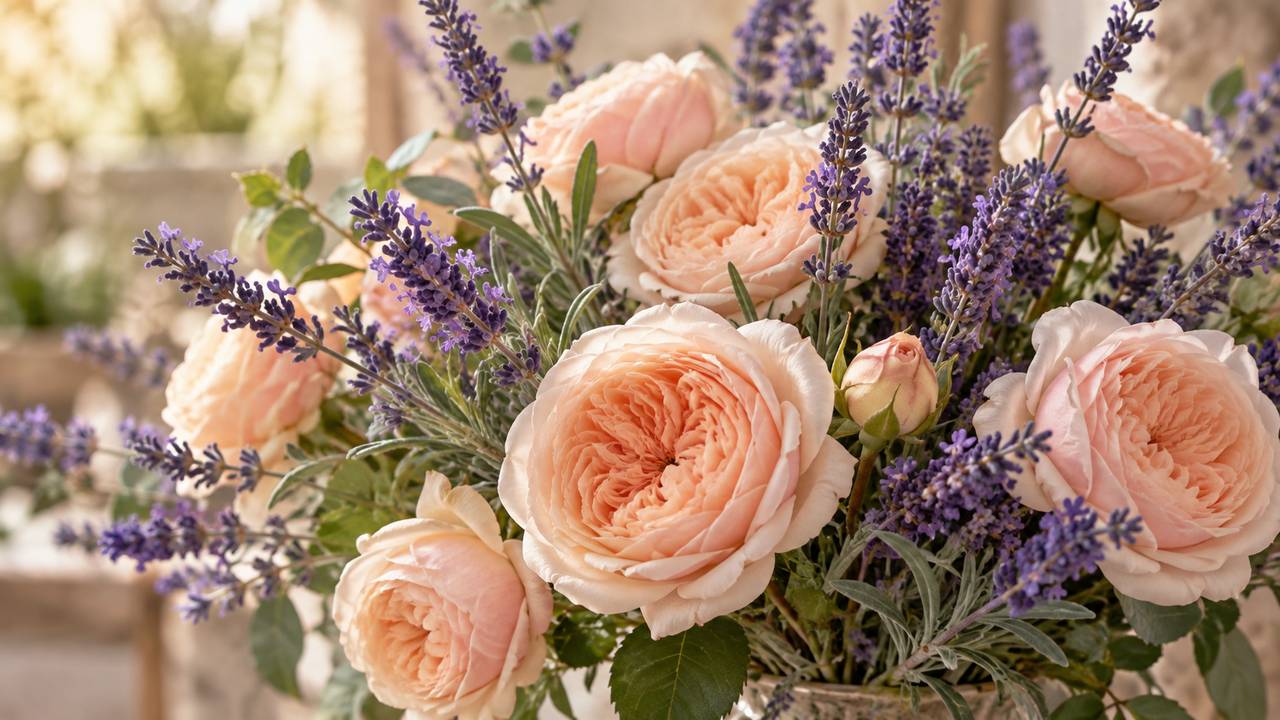
The central roses and lavender meaning is loving devotion tempered by serenity. Roses express affection and emotional intimacy; lavender adds loyalty, grace, healing, and composure. Together they can say, “My love is steadfast,” “You bring me peace,” or “I cherish and remember you.” This layered message makes the pairing more nuanced than roses alone.
- Devoted love: Lavender gives the rose’s passion a sense of patience, constancy, and emotional endurance.
- Peaceful affection: The soothing reputation of lavender transforms romance into something gentle, safe, and restorative.
- Remembrance: Both flowers have memorial associations, making them appropriate for honoring a lasting bond.
- Purity and grace: Lavender’s historic links with cleansing complement the rose as an emblem of refined beauty.
- Rustic elegance: Their contrasting forms evoke country gardens, handmade hospitality, and unforced sophistication.
Aromatherapy reinforces these interpretations. Rose fragrance is often described as emotionally warming and comforting, while lavender is widely used to encourage relaxation. A bouquet should not be presented as medical treatment, but its scent may support a restful atmosphere and evoke reassuring sensory memories. For scent-sensitive recipients, choose lightly fragrant garden roses and use lavender sparingly.
Botanical Context: What “French Lavender” Means
Botanically, roses belong to the genus Rosa, a diverse group of shrubs and climbers with thousands of cultivated varieties. “French lavender” most precisely refers to Lavandula dentata, recognizable by its softly toothed, gray-green leaves and narrow purple flower spikes. It prefers warmth and generally lacks the winter hardiness of English lavender, Lavandula angustifolia.
Common names vary by region. In some nurseries, Lavandula stoechas—with showy, flag-like bracts—is sold as French or Spanish lavender. Meanwhile, the sweeping violet fields associated with Provence often contain lavandin, Lavandula × intermedia. For floristry, true L. dentata offers silvery foliage and an aromatic, slightly camphoraceous character; English lavender and lavandin usually provide straighter stems and better drying performance.
Color and Cultural Interpretations
The rose color determines the emotional register of the arrangement. Consulting traditional rose color meanings is especially useful because lavender’s symbolism remains comparatively consistent while the rose changes the message.
| Rose Pairing | Combined Meaning | Best Context |
|---|---|---|
| Red roses and lavender | Passionate yet faithful love | Anniversaries, partners, intimate declarations |
| Pink roses and lavender | Tender affection, gratitude, gentle support | Birthdays, thanks, friendship, recovery |
| White roses and lavender | Purity, peace, reverence, remembrance | Weddings, sympathy, spiritual ceremonies |
| Yellow roses and lavender | Cheerful friendship and encouraging calm | Housewarmings, congratulations, friendship gifts |
| Apricot roses and lavender | Warm welcome, sincerity, gracious affection | Hosts, family gatherings, autumn weddings |
| Lavender roses and French lavender | Enchantment, wonder, refined devotion | New romance, creative milestones, dramatic events |
Apricot blooms are particularly harmonious because their warm undertones complement lavender-purple. The traditional apricot rose meaning centers on warmth, gratitude, and gracious hospitality, making this combination ideal for hosts or welcoming someone into a new home.
In Mediterranean traditions, lavender suggests cleanliness, protection, and domestic well-being. Christian art and folklore sometimes connect the rose with divine love or martyrdom, while lavender may signify purity and humble devotion. In contemporary Western weddings, the pairing more often conveys pastoral romance and relaxed elegance. Cultural meanings are not universal, however, so the recipient’s personal associations should take priority over any dictionary definition.
When and How to Give Roses with Lavender
For a romantic partner, red, blush, or mauve roses communicate intimacy, while lavender prevents the gift from feeling predictable. For a friend, relative, teacher, or host, use yellow, peach, apricot, or soft pink roses. White roses with lavender are suitable for condolences, but the arrangement should be restrained and accompanied by a direct, sincere note.
The pairing also works beautifully for engagements, anniversaries, bridal showers, housewarmings, new-baby celebrations, and wellness gifts. At weddings, it can represent calm commitment rather than fleeting passion. For someone recovering from illness, avoid implying that fragrance has curative powers, and first confirm that scented flowers are permitted. Hospitals, care facilities, pet owners, and people with migraines or respiratory sensitivities may prefer an unscented alternative.
Modern etiquette favors intention over rigid symbolism. Include a card explaining the chosen meaning, especially if the bouquet marks remembrance or reconciliation. Avoid red roses for professional recipients unless romance is clearly intended. Lavender can shed pollen and dried florets, so present it neatly wrapped rather than loose when gifting in an office or formal setting.
Companion Flowers and Rustic Styling
For a romantic garden arrangement, combine roses and lavender with sweet peas, lisianthus, scabiosa, or delphinium. Chamomile, feverfew, yarrow, and Queen Anne’s lace create a meadow-like effect, while olive branches and eucalyptus add silvery structure. Use rosemary for remembrance and culinary warmth, or white stock for height and additional fragrance.
Keep the design loose rather than perfectly symmetrical. Cluster roses at varied depths, allowing lavender stems to rise through and beyond the rounded blooms. A weathered ceramic pitcher, stoneware urn, or clear apothecary jar reinforces rustic chic. Natural linen ribbon, raffia, or velvet in sage, faded blue, or ochre completes the arrangement. Limit competing aromatic herbs: too much rosemary, mint, or eucalyptus can overwhelm the roses.
Care, Vase Life, and Preservation
Roses generally last five to ten days in a vase, while lavender may dry attractively as the arrangement ages. Recut rose stems at a 45-degree angle with clean shears and remove all foliage below the waterline. Lavender stems can be more vulnerable to decay, so strip submerged leaves carefully. Place both in a thoroughly cleaned vase with fresh water and commercial flower food.
Refresh the water every one or two days, recut the stems, and keep the bouquet away from direct sun, heating vents, ripening fruit, and hot kitchens. Because lavender prefers drier conditions as a living plant but cut roses drink heavily, their cultivation needs differ even though they share a vase successfully. In the garden, roses usually appreciate richer soil and regular moisture; French lavender requires excellent drainage, leaner soil, abundant sun, and protection from hard frost.
To preserve the bouquet, remove fading roses before moisture encourages mold. Bundle small groups of lavender and hang them upside down in a dark, dry, ventilated room. Roses can be air-dried or preserved with silica gel; a careful drying roses technique helps retain their color and form. Dried together, the flowers become a lasting symbol of affection remembered in tranquility.
A Lasting Floral Message
The enduring roses and lavender meaning lies in balance: ardor with peace, beauty with usefulness, and romance with constancy. Roses supply emotional depth, while French lavender contributes fragrance, resilience, and an unmistakable countryside character. Whether arranged for a wedding, offered in sympathy, or placed quietly at home, this pairing communicates that genuine affection can be both passionate and calming. Chosen with attention to rose color, cultural context, scent sensitivity, and botanical care, it becomes far more than a fashionable bouquet—it becomes a thoughtful expression of devotion, grace, and enduring memory.