Table of Contents
Eden Climber Rose (Pierre de Ronsard): The Quintessential Romantic Arch Climber
The Eden climber rose seems to have stepped from an illuminated manuscript or an old French garden painting. Its immense, deeply cupped flowers open from rounded buds into layers of cream, ivory, and blush pink, often with a richer rose-pink heart. Draped over an arch, pergola, pillar, or stone wall, it creates one of horticulture’s most convincing visions of romantic abundance.
Yet this rose is not an antique. The French house of Meilland introduced it in 1985 as ‘Pierre de Ronsard,’ naming it for the 16th-century poet celebrated for lyrical verses about love, beauty, youth, and roses. In some markets it is sold as Eden Rose 85 or Eden Climber. Its old-fashioned flower form, combined with the repeat-flowering habits expected of a modern garden rose, helped make it internationally beloved. The World Federation of Rose Societies named it the World’s Best Rose in 2006.
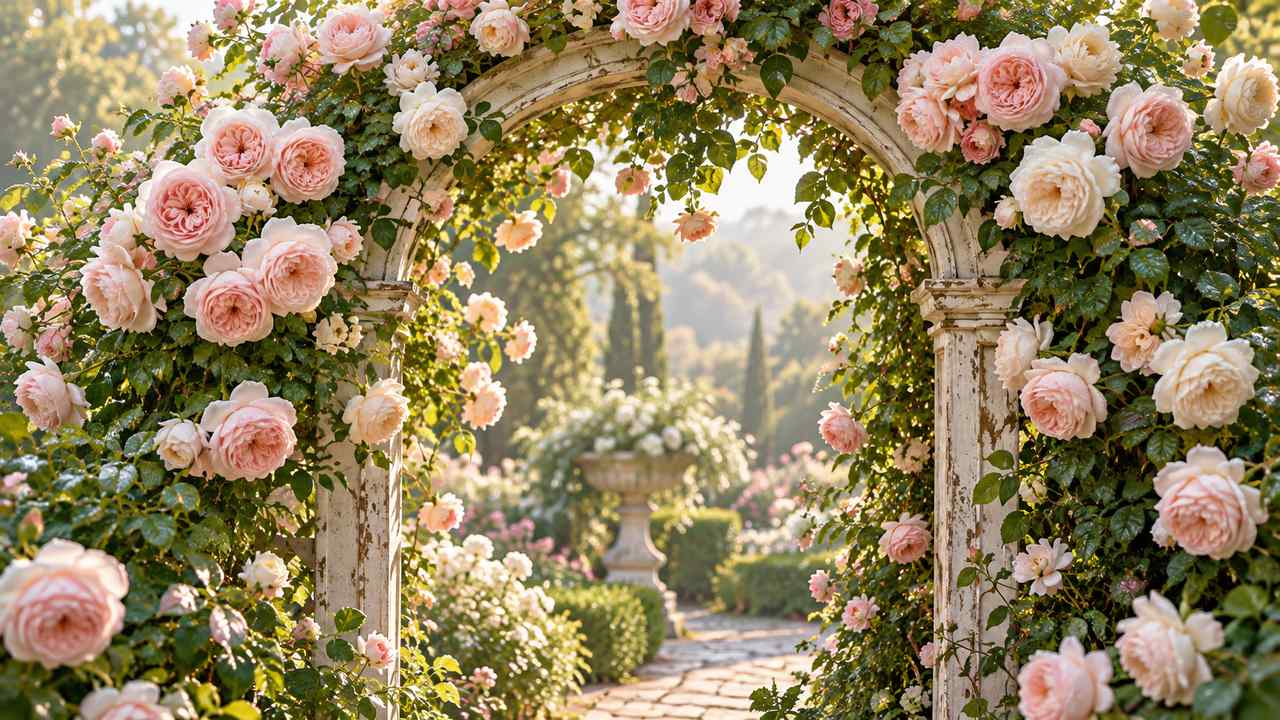
Botanically, this vigorous large-flowered climber belongs to the genus Rosa in the family Rosaceae. It typically reaches approximately 8 to 12 feet, and sometimes higher in favorable climates, producing glossy foliage and heavy blooms that require support. Its symbolism arises from both its coloring and its evocative identity: paradise regained, enduring courtship, poetic devotion, and beauty protected within a private garden.
Primary Meanings and Symbolism
- Romantic devotion: Its many petals suggest love that has deepened layer by layer rather than a fleeting attraction.
- A private paradise: The name “Eden” associates the rose with sanctuary, innocence, harmony, and an ideal place shared with someone cherished.
- Poetry and courtship: The Pierre de Ronsard name gives it a literary character, making it an emblem of eloquent affection and love expressed thoughtfully.
- Graceful maturity: Cream outer petals surrounding a pink center can symbolize composure sheltering a warm and affectionate heart.
- Enduring beauty: A climbing rose returns and expands over time, making it a persuasive symbol of relationships cultivated through patience.
- Nostalgia: Although modern, its globular, densely quartered flowers recall historic centifolia and Bourbon roses, evoking heirloom gardens and remembered romance.
From Renaissance Poetry to Modern Floriography
Pierre de Ronsard belonged to the French Renaissance literary circle known as La Pléiade. His poetry frequently treated the rose as an image of youth and transient beauty, encouraging the beloved to value life before the flower faded. Naming this cultivar for him therefore links it to the classical idea of carpe diem, but the living plant adds another dimension: while each blossom passes, the established climber flowers again.
In Victorian floriography, roses carried meanings according to color, maturity, and presentation. Pink generally conveyed grace, happiness, admiration, or tender affection, while white suggested innocence and reverence. The Eden climber rose did not exist in that era, so claims that it possessed a fixed Victorian definition are historically inaccurate. Its modern meaning is better understood as a synthesis of traditional color associations, romantic form, literary naming, and garden habit.
Contemporary Western weddings often interpret it as cultivated love and timeless romance. In French-inspired settings, it suggests refinement, poetry, and the charm of a walled château garden. Across many East Asian floral aesthetics, its soft gradation, rounded form, and moment of full opening may also be appreciated as expressions of harmony and beautiful impermanence. These are contextual interpretations rather than universal codes; personal and regional associations should always take precedence.
How Color Changes the Message
No two flowers are entirely identical. Cool conditions may intensify the pink center, while heat can fade flowers toward cream. A pink-dominant bloom communicates admiration and romantic sweetness, closely echoing the traditional language of pale pink roses. Blossoms with warm coral or peach undertones can borrow the friendliness and animated affection associated with salmon rose meaning.
More muted, antique-looking flowers create an atmosphere related to dusty rose colors: memory, mature tenderness, and understated romance. Cream-dominant blooms emphasize consideration, elegance, and gentle esteem, complementing the nuances found in cream rose symbolism. Gardeners should expect this variability rather than regarding it as a fault; the shifting palette is central to the cultivar’s charm.
Meaning and Occasion Reference
| Occasion | Suggested Meaning | Best Presentation | Etiquette Note |
|---|---|---|---|
| Wedding | Enduring, poetic love | Garden-style bouquet or flowering arch | Confirm locally grown cut stems are available |
| Anniversary | Love strengthened over time | A planted rose with a handwritten note | Ensure the recipient has sun and support space |
| Engagement | A shared future and private paradise | Cream-and-blush arrangement | Avoid presenting a thorny, unprepared stem |
| Housewarming | A beautiful sanctuary | Container-grown plant or nursery voucher | Ask before gifting a permanent climber |
| Birthday | Admiration, grace, and joy | Loose seasonal bouquet | Keep the accompanying message warm, not romantic, for friends |
| Memorial | Tender memory and continuing love | Cream-led arrangement with quiet greenery | Respect religious and family preferences |
Who Should Receive It?
An established plant is especially meaningful for a spouse, partner, gardening parent, close friend, or couple creating a new home. It can become a living anniversary marker, but it is also a substantial responsibility. Modern etiquette favors asking whether the recipient wants a vigorous climber before delivering one. Where space is limited, give a bouquet inspired by its palette, a botanical illustration, or a visit to a rose garden instead.
The rose’s romantic reputation does not make every gift a declaration of passion. Context matters. To a partner, it can say, “Our love is my garden.” To a mentor or parent, emphasize gratitude and admiration in the card. Odd-numbered stems often look natural in informal European-style arrangements, but stem count has no dependable universal meaning. A clear written message prevents accidental ambiguity.
Companion Flowers and Bouquet Styling
The Eden climber rose is visually commanding, so companions should support rather than smother its sculptural cups. For a refined wedding arrangement, combine blush blooms with ivory garden roses, white sweet peas, restrained jasmine vine, and silvery olive foliage. For a French-country effect, add lavender, feverfew, airy grasses, and soft green herbs. A more nostalgic composition can include peonies, ranunculus, foxglove, or delphinium in faded pink, cream, and misty blue.
Keep the silhouette loose and asymmetrical, allowing several blooms to face outward while others remain in profile. Avoid forcing every flower into a uniform dome. Because the rose heads are heavy, florists should reinforce weak stems where necessary and transport arrangements upright. Garden-cut flowers are best harvested when the sepals have lowered and the outer petals are beginning to loosen.
Cultivation and Cut-Flower Care
Plant the Eden climber rose in fertile, well-drained soil with at least six hours of direct sun. In very hot regions, light afternoon shade helps preserve petal color and reduces scorching. Provide good airflow, mulch the root zone without burying the crown, and water deeply at soil level. Its disease performance is generally respected, but local pressure from black spot, mildew, or pests still warrants regular inspection.
This rose climbs by producing long canes rather than tendrils, so it must be tied to a strong support. Train major canes as horizontally as possible across an arch, wall wires, or trellis; lateral shoots arising from those canes usually carry more flowers. Use soft ties and leave room for thickening. Prune lightly while young, removing dead, damaged, or crossing growth. Once established, renew the framework gradually instead of cutting every main cane back severely.
For indoor display, cut in the cool morning with clean tools. Choose partially open flowers, recut stems at an angle, and remove foliage that would sit below the waterline. Place them promptly in a clean vase with floral preservative, change the water frequently, and keep the arrangement away from direct sun, ripening fruit, and heating vents. Vase life varies because Pierre de Ronsard is primarily a landscape rose, but careful conditioning can preserve its beauty for several memorable days.
A Living Emblem of Romantic Patience
The Eden climber rose unites seeming opposites: Renaissance associations and modern breeding, delicacy and vigor, nostalgia and renewal. Its cream petals express grace, its blush center conveys affection, and its climbing habit transforms those sentiments into a story of love that grows through care. Whether flowering above a wedding arch, trained beside a doorway, or offered as a few garden-cut blooms, Pierre de Ronsard speaks most eloquently of beauty cultivated over time—a romantic paradise not merely discovered, but patiently made.