Table of Contents
Abraham Darby Rose: David Austin’s Magnificent Apricot-Pink English Shrub
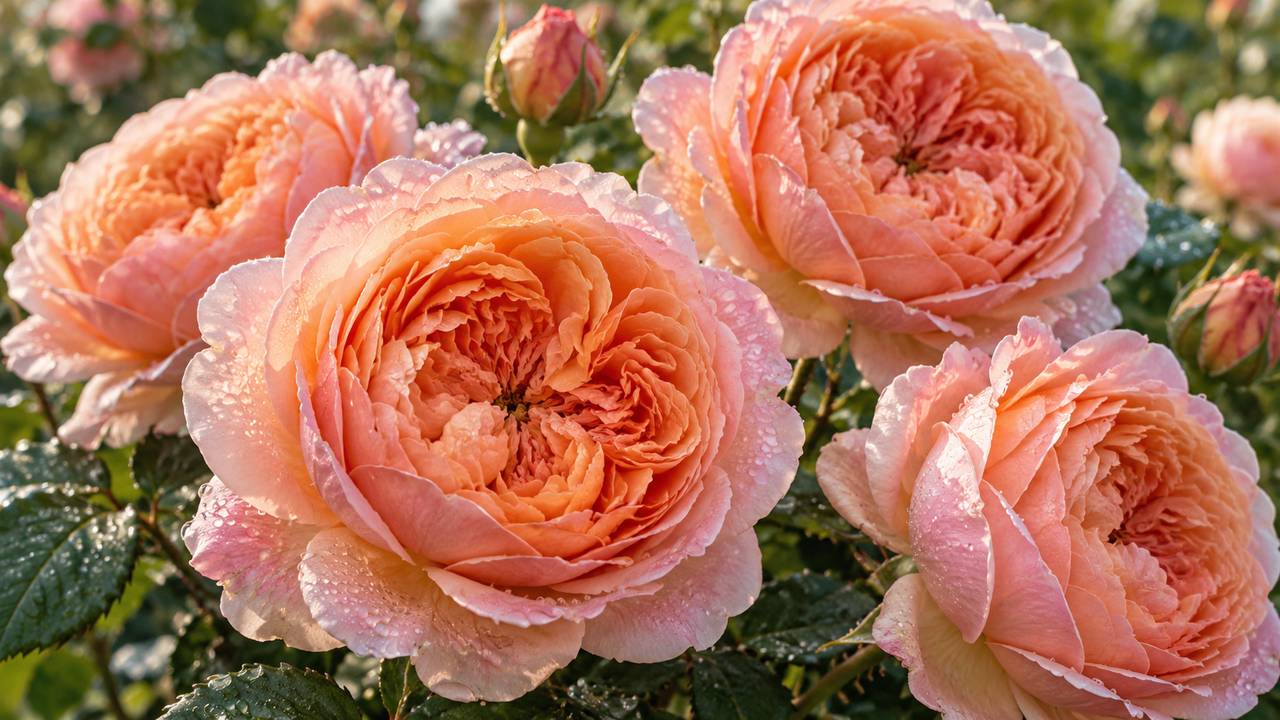
The Abraham Darby rose is one of the most recognizable English shrub roses created by breeder David Austin. Introduced in 1985, it unites the opulent, many-petalled form of an antique rose with the repeat-flowering character expected from a modern garden cultivar. Its immense, deeply cupped blooms mingle apricot, peach, warm yellow, and shell pink, often changing visibly as they open. A powerful fruity fragrance, frequently described as having strawberry-like warmth, completes its romantic character.
Historically, the cultivar occupies an intriguing place between horticulture and industry. It was named for Abraham Darby, a leading figure in the family of ironmasters associated with Coalbrookdale and the development of the Iron Bridge in Shropshire, England. Its parentage—‘Aloha’ crossed with ‘Yellow Cushion’—helped produce a vigorous shrub with unusually large flowers. Although the rose itself has no inherited Victorian dictionary definition, its coloring, name, and growth habit allow it to carry a rich modern language: affectionate admiration, creative achievement, generous love, and beauty shaped through perseverance.
Meaning and Symbolism of the Abraham Darby Rose
The primary meaning of the Abraham Darby rose is warm, mature affection. Red roses traditionally suggest ardent romantic passion, while pale pink roses convey gentleness and admiration. Abraham Darby’s blended apricot-pink coloring sits between those messages. It communicates love with warmth and emotional depth, yet without the dramatic intensity of scarlet. It is therefore especially appropriate when affection is sincere, established, and joyful.
Generosity and Emotional Abundance
The bloom’s extravagant petal count gives it a sense of abundance. Its petals turn inward around a glowing center, creating the impression of affection gathered and protected. In contemporary floriography, such a full rose can represent a generous heart, hospitality, or a relationship that has deepened through shared experience. A bouquet of Abraham Darby roses says, “Your presence enriches my life,” rather than merely, “I desire you.”
Ingenuity, Heritage, and Achievement
Because the cultivar commemorates Abraham Darby and the industrial heritage of Coalbrookdale, it can also symbolize invention, craftsmanship, and constructive ambition. This association makes the rose suitable for graduations, professional milestones, creative launches, or retirement celebrations. Its old-fashioned appearance paired with modern repeat flowering reinforces a compelling theme: honoring tradition while improving upon it.
Transformation and Layered Feeling
An Abraham Darby bloom does not remain one color. A bud may begin with warm yellow-apricot tones, develop stronger pink edges as it expands, and soften toward blush or cream with age. This evolution makes the flower a natural emblem of transformation, emotional complexity, and the passage from enthusiasm into enduring tenderness. Its fading outer petals may also echo cream rose symbolism, particularly grace, consideration, and quiet charm.
Color Variations and Their Messages
Color varies with climate, season, soil, flower age, and temperature. Cooler weather often produces richer pink tones, while warmth may encourage softer peach and yellow. These changes are not separate named forms, but they can subtly alter the message of a bouquet.
| Dominant Appearance | Symbolic Emphasis | Best Occasion | Ideal Companions |
|---|---|---|---|
| Apricot and peach | Warmth, gratitude, enthusiasm | Thank-you gift or celebration | Cream roses, chamomile, mint |
| Blush pink | Admiration, tenderness, refined love | Anniversary or romantic gift | Sweet peas, stock, pale pink roses |
| Golden center with pink edges | Optimism joined with affection | Wedding, engagement, new home | Ranunculus, honeysuckle, jasmine |
| Faded cream-apricot | Grace, remembrance, lasting regard | Retirement or gentle tribute | Lavender, rosemary, white cosmos |
Cultural and Historical Interpretation
In nineteenth-century European floriography, roses were usually interpreted by color, condition, and presentation rather than by modern cultivar name. Pink suggested admiration or happiness; yellow could indicate friendship, jealousy, or fading affection depending on the source; and peach was not consistently categorized. Applying a single “Victorian meaning” to Abraham Darby would therefore be historically inaccurate. A period-inspired interpretation would instead read its blended coloring as a conversation between affection, pleasure, gratitude, and changing emotion.
Modern Western gifting culture generally treats apricot and peach roses as expressions of appreciation, sincerity, and sociability. In wedding floristry, their warm coloring feels romantic without appearing overly formal. In many East Asian contexts, peach hues can evoke spring, vitality, good fortune, and longevity, although meanings differ among communities and should never be treated as universal.
Its naturally blended palette should not be confused with artificially multicolored roses. The celebratory rainbow rose meaning emphasizes exuberance and diversity, whereas Abraham Darby expresses organic harmony and gradual change. It also stands far from the elusive fantasy represented by the blue rose mystery or the themes of farewell and renewal associated with black rose meaning. Abraham Darby’s emotional register is warmer: hopeful, affectionate, cultivated, and abundant.
When and to Whom Should You Give It?
- Romantic partners: Give it for anniversaries, birthdays, engagements, or an intimate declaration of affectionate devotion. Its message is softer and more nuanced than that of a red rose.
- Parents and grandparents: Its heritage character and abundant form suit expressions of gratitude, family continuity, and admiration.
- Friends and hosts: Apricot-dominant blooms make an elegant thank-you gift, particularly when arranged informally with herbs or garden flowers.
- Graduates and creators: The name’s associations with ingenuity make it meaningful for designers, engineers, craftspeople, entrepreneurs, and gardeners celebrating an achievement.
- Newlyweds or new homeowners: A healthy potted plant can represent a shared life that will establish, mature, and flower repeatedly.
Modern etiquette favors a short note explaining the intended meaning, especially because blended roses can be interpreted differently. For a romantic recipient, mention warmth or enduring affection. For a professional gift, emphasize achievement and creativity rather than love. Avoid giving a demanding bare-root plant unless the recipient enjoys gardening and has suitable space. At funerals, use subdued cream-apricot blooms sparingly and confirm that their warm, celebratory tone accords with the family’s customs.
Companion Flowers and Bouquet Styling
Abraham Darby flowers are large, fragrant, and visually dominant, so supporting materials should frame rather than compete with them. Cream spray roses, ivory stock, white sweet peas, or pale ranunculus create a romantic tonal arrangement. Lavender, blue delphinium, or catmint provide cool contrast, while rosemary, mint, and jasmine reinforce the sensory garden quality.
For an English-garden bouquet, combine partially open blooms with foxglove, astrantia, sweet peas, and airy grasses. For a more contemporary arrangement, use only three or five roses with arching foliage in an asymmetrical ceramic vessel. Their nodding heads benefit from a low, loose design. Avoid crowding them with many equally large focal flowers, and use fragrance thoughtfully: heavily scented lilies or tuberose can overwhelm the rose’s distinctive fruity perfume.
Cultivation and Cut-Flower Care
Grow the Abraham Darby rose in fertile, moisture-retentive but well-drained soil, ideally with at least six hours of sun. In very hot climates, light afternoon shade can protect flower color and reduce scorching. Allow good air circulation, water deeply at soil level, and mulch in spring. Feed after pruning and again following the first major flush, according to the fertilizer manufacturer’s directions.
The plant develops into a substantial, arching shrub and may be trained as a short climber in favorable conditions. Support long canes before heavy flowers pull them downward. Prune in late winter or early spring according to local climate, removing dead, damaged, crossing, or weak wood before shortening the remaining framework. Disease performance can vary by region, so monitor for black spot and mildew, remove fallen infected foliage, and avoid routine overhead watering.
For the vase, cut stems in the cool morning when the outer petals have loosened but the centers remain firm. Use clean tools, remove foliage below the waterline, recut stems at an angle, and place them promptly in fresh water with flower food. Change the water every one or two days and keep the arrangement away from direct sun, heaters, and ripening fruit. Because the blooms are densely petalled and heavy, vase life may be moderate rather than exceptionally long, but careful harvesting and cool placement help preserve their form and fragrance.
A Rose of Warmth, Craft, and Continuity
The Abraham Darby rose is more than a celebrated garden cultivar. Its antique form speaks of inheritance, its repeat flowering suggests renewal, and its shifting apricot-pink palette expresses affection too layered for a single color. Whether planted to mark a milestone, carried in a wedding bouquet, or given as a fragrant gesture of gratitude, it communicates generous love, creative achievement, and beauty that deepens through change.