Table of Contents
Cecile Brunner Rose: The Sweetheart Climber with Buttonhole Perfection
The Cecile Brunner rose is a study in contrasts: dainty enough for a buttonhole, yet, in its climbing form, vigorous enough to mantle an arbor, soften a wall, or ascend into a small tree. Its miniature, high-centered buds open from deeper pink tips into pale blush rosettes, giving the impression of perfectly formed tea roses reduced to fairy-tale scale. A light, sweet fragrance completes its refined character.
Introduced in France in 1881 by the Ducher nursery, the original shrub is generally classed as a Polyantha rose and is associated with breeder Marie Ducher. It was named for Cécile Brünner, reportedly the daughter of Swiss rosarian Ulrich Brünner. Its ancestry is commonly given as a cross involving the Tea rose ‘Madame de Tartas’ and a Polyantha derived from Rosa multiflora. The famous climbing sport appeared later, during the 1890s. Both forms became beloved as the “Sweetheart Rose” and “Buttonhole Rose,” names inspired by blossoms that could be worn neatly on a lapel.
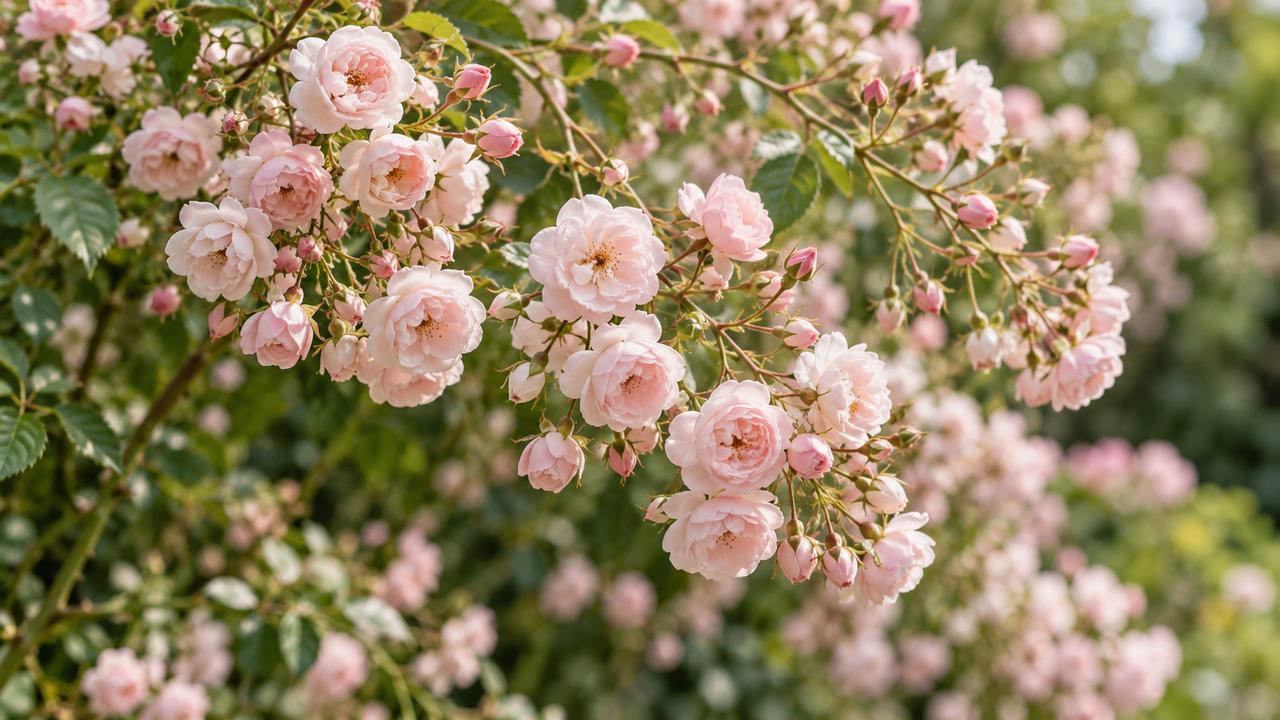
That history gives the Cecile Brunner rose an emotional language of affectionate elegance rather than theatrical passion. It suggests love expressed through attentiveness: a flower pinned carefully to a coat, tucked into a bridal posy, or gathered from a garden planted for future generations.
Meaning and Symbolism
Sweet Affection and Tender Romance
The primary meaning of the Cecile Brunner rose is sweet, sincere affection. Its pink coloring places it within the traditional symbolism of admiration, grace, happiness, and gentle love. Unlike a scarlet rose, it does not make an overt declaration of consuming desire. Instead, it communicates, “You are dear to me,” making it especially appropriate for young romance, enduring companionship, and loving gestures that should feel intimate but not extravagant.
In historical floriography, meanings could shift according to color, condition, presentation, and local custom. Readers exploring the wider Victorian language of flowers should therefore distinguish between documented rose symbolism and later associations attached to individual cultivars. No universally recognized Victorian dictionary assigned Cecile Brunner its own fixed sentence. Its modern meaning is a thoughtful synthesis of pink-rose tradition, its “Sweetheart” nickname, and its long use in personal adornment.
Grace, Modesty, and Youthful Beauty
The small flowers embody refinement without ostentation. Their exquisite proportions suggest that beauty need not be large or loud, while the buds’ delicate coloring evokes innocence, bashfulness, and early love. For this reason, Cecile Brunner is often associated with youthful beauty, daughters and granddaughters, first dances, spring weddings, and affectionate remembrance of childhood.
Its symbolism should not be reduced to youth alone, however. A mature climbing specimen can survive for decades and cover an imposing structure with bloom. That habit adds meanings of constancy, resilience, shelter, and love that grows beyond its modest beginning. A tiny flower borne by an immense old climber becomes a persuasive emblem of tenderness strengthened by time.
Gratitude and Cultivated Courtesy
Pink roses have long conveyed thanks and admiration. Cecile Brunner refines that message into gracious appreciation: ideal for a considerate host, mentor, teacher, caregiver, or friend. Its buttonhole history also links it to social polish and courteous remembrance. Giving it can acknowledge not merely what someone has done, but the tact and kindness with which it was done.
Shades, Forms, and Changing Nuance
Cecile Brunner usually opens in clear shell pink, with the strongest color concentrated in the pointed bud and central petals. As the bloom expands, the outer petals soften toward pearl, blush, or near-white. These natural transitions matter symbolically. A deep pink bud emphasizes admiration and budding romance; a pale open flower suggests serenity, trust, and established affection. General guides to rose color meanings can help refine the message when it is combined with other roses.
Several related forms circulate in gardens and commerce. The compact shrub is suited to smaller beds and informal hedging, while ‘Climbing Cécile Brünner’ sends out long canes and often produces a magnificent spring flush. ‘Spray Cécile Brünner’ is valued for clustered stems, and white or deeper-pink sports may occasionally be encountered. Creamy-white forms feel more bridal and commemorative; richer pink flowers read as more celebratory and openly affectionate.
| Form or Context | Symbolic Emphasis | Best Use |
|---|---|---|
| Tight pink buds | Promise, bashful affection, beginnings | Buttonholes, first dates, small posies |
| Open blush blooms | Trust, grace, settled tenderness | Anniversaries, friendship bouquets |
| Flowering climbing rose | Enduring love, welcome, continuity | Arbors, entrances, memorial gardens |
| Cream and apricot companions | Warmth, generosity, hospitality | Hostess gifts, welcoming arrangements |
| Dried flowers | Memory, devotion, affection preserved | Keepsakes, framed wedding flowers |
Occasions, Recipients, and Modern Etiquette
- Romantic gifts: Choose budded stems for a new relationship or an understated anniversary. Include a note so their gentle message is not mistaken for a grand declaration.
- Weddings: Use them in bridal posies, flower crowns, cake flowers, or buttonholes for a romantic garden atmosphere. Florist-grown, food-safe flowers should be used near edible surfaces.
- Family milestones: Their sweetness suits birthdays, graduations, christenings, and gifts for daughters, mothers, grandparents, or cherished family friends.
- Thanks and hospitality: Present a small vase arrangement to a host, neighbor, teacher, or caregiver. Pairing blush roses with warm peach flowers reinforces welcome; compare the traditional apricot rose meaning.
- Sympathy and remembrance: Pale, fully opened blooms express gentle recollection. They are suitable when the deceased loved cottage gardens or when a softer alternative to formal funeral flowers feels more personal.
Modern etiquette favors clarity over rigid floral codes. Do not assume every recipient knows the cultivar’s history; explain its significance in a brief card. For hospitals or care facilities, confirm fragrance and flower restrictions. When taking garden roses as a host gift, arrange them in a container so the recipient need not search for a vase. Never cut blooms from a heritage plant without the owner’s permission.
Companion Flowers and Bouquet Styling
Cecile Brunner’s scale can be overwhelmed by oversized focal flowers, so preserve its character with airy companions. Sweet peas echo its nostalgic fragrance and romantic movement; lily of the valley and white violas enhance innocence; forget-me-nots introduce constancy and remembrance. Feverfew, waxflower, or delicate spirea can add meadow-like texture, while lady’s mantle provides a fresh green veil beneath the pink.
For a period-inspired buttonhole, select one firm bud and a small leaf, bind the short stem neatly, and keep the design restrained. For a bridal bouquet, gather several flowering sprays with sweet peas and trailing jasmine, allowing the rose stems to arch naturally rather than forcing them into a tight sphere. A modern arrangement can combine blush Cecile Brunner roses with apricot garden roses, copper foliage, and a low stoneware vessel.
Garden-cut blooms also make meaningful keepsakes. Harvest flowers before they are fully open and follow a careful drying roses technique, keeping them away from direct sunlight to reduce fading. Individual button-like blooms are particularly attractive in framed botanical compositions.
Growing and Caring for Cecile Brunner
Plant the rose in fertile, well-drained soil with at least six hours of sun; in very hot climates, light afternoon shade can protect the petals. Water deeply at soil level, mulch without piling material against the canes, and provide good airflow. Feed after growth begins and again after the main flowering flush, following local guidance for repeat-blooming roses.
The climber needs a strong arbor, fence, or wall system capable of supporting mature canes. Tie new growth horizontally or in broad fans to encourage flowering laterals. Avoid severe routine pruning: after bloom, remove dead or weak wood and shorten unruly side shoots while retaining the structural framework. Gloves are advisable, as long canes can be awkward even when prickles are relatively sparse.
For vase use, cut during the cool morning when buds show color but remain firm. Use clean shears, remove foliage below the waterline, recut stems at an angle, and place them promptly in fresh water with floral preservative. Change the water every day or two and keep the arrangement away from heat, fruit, and strong sunlight. Because these small garden roses may have a shorter vase life than commercial hybrids, their freshest beauty is best enjoyed immediately.
A Small Rose with an Expansive Story
The Cecile Brunner rose unites botanical vigor with exquisite restraint. Historically admired for buttonholes and intimate bouquets, it speaks most naturally of sweetheart affection, gratitude, grace, and tender constancy. In its climbing form, it adds a deeper lesson: enduring love may begin as a small bud, then grow patiently until it transforms the structure around it. Whether given as one perfect flower, woven into a wedding bouquet, or trained over a garden gate, Cecile Brunner offers a message both modest and memorable.