Table of Contents
Burnt Orange Rose Meaning: Fierce Loyalty, Transition, and Autumn Romance
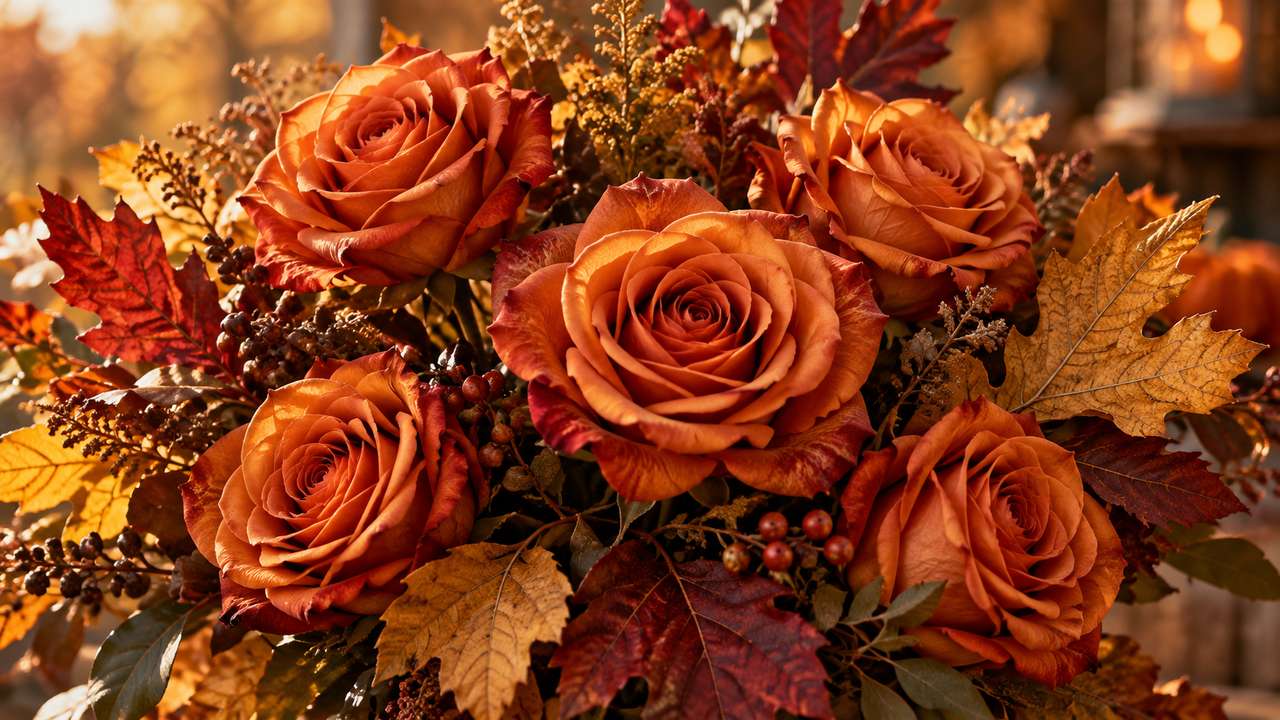
The burnt orange rose occupies a compelling place between flame and earth. Less exuberant than a bright tangerine bloom and more intense than a soft apricot rose, it combines orange’s energy with the maturity of russet, copper, terracotta, and amber. Its message is therefore layered: passionate interest tempered by loyalty, change accepted with courage, and romance deepened by experience.
Unlike red, white, and pink roses, orange roses were not prominent in the earliest European systems of floral symbolism. Vivid orange cultivars became widely available only after breeders crossed increasingly diverse yellow and red roses during the late nineteenth and early twentieth centuries. Consequently, burnt orange does not possess a single, universally fixed Victorian definition. Its modern symbolism draws from the historic meanings of orange, red, yellow, and brown, interpreted through contemporary color psychology and seasonal associations. Readers exploring the broader Victorian language of flowers should regard burnt orange as an evolved floral message rather than a rigid antique code.
What Is the Primary Burnt Orange Rose Meaning?
The central burnt orange rose meaning is fierce, enduring devotion during a period of change. Orange contributes enthusiasm, attraction, confidence, and creative fire. The brown or rust undertone adds stability, humility, resilience, and a connection to the earth. Together, these qualities create a rose that says, “My feelings are strong, but they are not fleeting.”
This makes burnt orange roses particularly expressive when a relationship is becoming more serious, when someone is entering a new chapter, or when loyalty has been tested and proven. They can be romantic without repeating the conventional declaration of a red rose. They also suit friendships, professional milestones, and family celebrations because their warmth need not imply romantic love.
- Fierce loyalty: steadfast affection, protective devotion, and trust earned over time.
- Transition: graceful change, maturity, reinvention, and confidence at a turning point.
- Autumn romance: sensual warmth, harvest abundance, candlelit intimacy, and seasoned love.
- Fascination: magnetic interest and admiration for someone’s distinctive character.
- Courage: emotional bravery, perseverance, and the determination to move forward.
- Creative vitality: ambition, inspiration, originality, and pleasure in making something new.
Historical and Cultural Interpretations
In nineteenth-century floriography, individual flower dictionaries often disagreed, and bouquet composition mattered as much as color. Yellow roses could suggest jealousy in one source and friendship or diminished love in another; red signified ardent love, while pink conveyed grace and admiration. Because true orange roses were uncommon, burnt orange was not consistently catalogued. Modern floristry effectively places it between yellow’s warmth and red’s desire, then grounds both in earthy brown.
During the twentieth century, orange roses came to represent enthusiasm, fascination, and desire. Darker copper and russet cultivars later gained popularity in fashion-led floral design, especially for autumn weddings. Their association with changing leaves introduced themes of harvest, completion, and beautiful impermanence. In contemporary Western gifting, they can acknowledge a relationship that has moved beyond first attraction into something more resilient.
Cultural context remains important. Orange is auspicious, sacred, or celebratory in several South and Southeast Asian traditions, although customs vary greatly by community and occasion. In parts of East Asia, warm red-orange shades may evoke prosperity, happiness, and good fortune. In Europe and North America, rust tones are especially associated with autumn, homecoming, and Thanksgiving-style abundance. No color has an identical meaning everywhere, so personal knowledge of the recipient should outweigh generalized symbolism.
How Shade Changes the Message
“Burnt orange” is a florist’s descriptive category rather than a precise botanical classification. The apparent color may change with cultivar, maturity, temperature, growing conditions, and light. Petals can open with a deep terracotta center and fade toward cinnamon, apricot, or antique peach at the edges. Understanding neighboring rose color meanings helps refine the intended message.
| Shade or Combination | Principal Meaning | Best Context |
|---|---|---|
| Copper orange | Confidence, achievement, valuable experience | Promotions, graduations, milestone birthdays |
| Rust or terracotta | Loyalty, resilience, grounded affection | Long partnerships, reconciliations, housewarmings |
| Amber orange | Warmth, optimism, generous friendship | Thank-you gifts and autumn gatherings |
| Orange with red edges | Intensifying desire and romantic fascination | Dates, anniversaries, passionate declarations |
| Orange with peach or apricot | Gratitude, welcome, gentle affection | Hosts, family members, new relationships |
A pale, peach-led arrangement feels gracious and approachable; the traditional apricot rose meaning emphasizes hospitality, warmth, and affection. A deeper arrangement containing burgundy or crimson appears more sensual and committed. Cream roses soften burnt orange into an elegant expression of appreciation, while yellow accents make it friendlier and more celebratory.
When and to Whom Should You Give Burnt Orange Roses?
For a romantic partner, give burnt orange roses when you want to communicate attraction with substance. They are excellent for autumn anniversaries, engagements, intimate weddings, or a relationship entering a more committed phase. A handwritten note should clarify the message: “For every season we have weathered together” is more meaningful than relying on color symbolism alone.
For a close friend, sibling, mentor, or colleague, these roses recognize courage, originality, and determined achievement. They are especially suitable for a new job, relocation, graduation, creative launch, retirement, or recovery after difficulty. For a host, combine them with apricot, cream, or golden flowers to emphasize gratitude rather than desire.
Modern etiquette favors intention over rigid rules. Avoid sending an intensely red-and-orange bouquet anonymously, since it may appear romantic or create uncertainty. In professional settings, choose a modest arrangement with foliage and include a clear congratulatory card. For sympathy occasions, burnt orange can honor a person known for warmth or an autumnal spirit, but muted copper blooms mixed with cream flowers are generally more tactful than vivid flame-colored roses. Respect religious, family, and regional funeral customs.
Companion Flowers and Bouquet Styling
Burnt orange roses are visually dominant, so companion flowers should either deepen their drama or provide deliberate relief. Burgundy dahlias, chocolate cosmos, amaranthus, and smoke bush produce a moody, abundant autumn composition. Cream garden roses, lisianthus, ranunculus, or ivory chrysanthemums create contrast suitable for weddings. Golden yarrow, bronze chrysanthemums, rose hips, and dried grasses strengthen the harvest character.
For a contemporary arrangement, pair sculptural burnt orange roses with anthuriums, copper beech, or minimal olive foliage, leaving generous negative space. For a romantic garden style, use trailing jasmine, eucalyptus, and airy seed heads. Blue delphiniums or dusty blue eryngium create a striking complementary contrast, but should be used sparingly. Terracotta ceramic vessels, amber glass, aged brass, linen ribbon, and dark wood all reinforce the color’s grounded warmth.
Care, Vase Life, and Preservation
Fresh roses commonly last five to ten days, depending on cultivar and handling. Choose stems with firm petals and buds that have begun to loosen rather than tightly closed buds that may never open. Remove foliage below the waterline, trim one to two centimeters from each stem at a diagonal with clean shears, and place the roses promptly in a disinfected vase containing fresh water and floral preservative.
Keep the arrangement away from direct sun, heaters, drafts, and ripening fruit, which releases ethylene gas and accelerates aging. Refresh the water every one or two days, wash the vase if it becomes cloudy, and recut the stems. Remove fading blooms before decay affects neighboring flowers.
Copper and rust roses can dry beautifully, although their tones usually deepen. Begin while blooms remain structurally sound. Air-drying produces a romantic antique finish, while silica gel generally retains shape and color more faithfully. A careful drying roses technique can transform an anniversary or wedding bouquet into a lasting keepsake.
A Rose for Love That Embraces Change
Burnt orange roses speak with warmth, confidence, and emotional depth. They celebrate attraction without impulsiveness, loyalty without complacency, and transition without fear. Whether arranged for an autumn wedding, offered to mark a courageous new beginning, or preserved after a meaningful anniversary, they carry a mature message: change can enrich devotion rather than diminish it. Their beauty lies in this balance of fire and earth—a fitting emblem for relationships, achievements, and lives strengthened by every season they have passed through.