Table of Contents
Terracotta Rose Meaning: Earthy Grounding, Warm Comfort, and Enduring Warmth
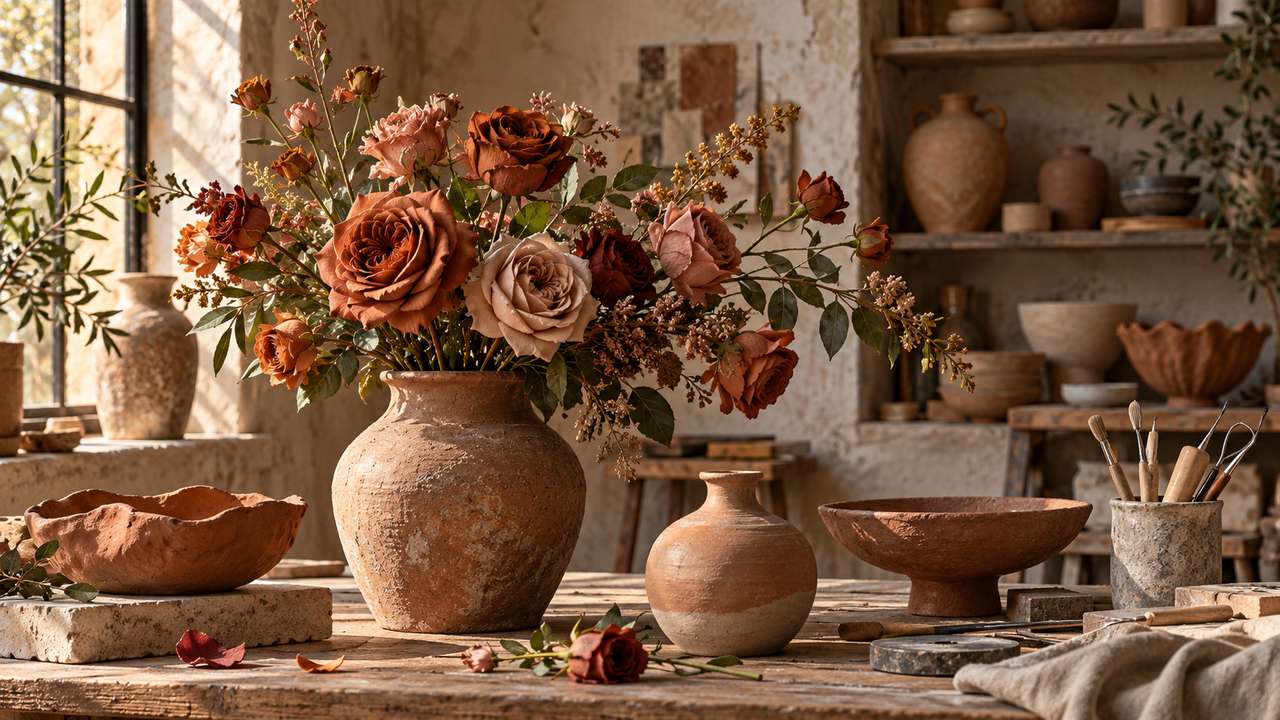
Terracotta roses evoke sun-warmed clay, autumn leaves, old brick, and the muted glow of late-afternoon light. Their distinctive color—usually a nuanced blend of burnt orange, cinnamon, copper, rust, and dusty brown—gives them a character unlike the bright passion of red roses or the sweetness of pink. The central terracotta rose meaning is grounded, enduring warmth: affection that feels mature, reassuring, and deeply rooted rather than impulsive.
Terracotta is a modern floral color category rather than a single botanical classification. Roses do not possess a true brown pigment; breeders and florists create the effect through layered red, yellow, orange, and mauve tones. Cultivars sold as terracotta may therefore range from warm apricot-copper to smoky brick. Although historical flower dictionaries rarely named “terracotta roses” specifically, their symbolism draws from older associations attached to roses, earth colors, autumn, and fire. This makes them especially expressive in contemporary floriography, where color palettes often communicate as much as individual species.
Primary Meanings of Terracotta Roses
The strongest symbolism of terracotta roses comes from the balance between orange warmth and earthen restraint. Orange suggests energy, attraction, confidence, and celebration, while brown and clay tones imply stability, home, craftsmanship, and connection to the natural world. Together, they create a message that is affectionate without being overly sentimental and romantic without necessarily declaring all-consuming passion.
- Grounded love: Terracotta roses represent a relationship built on trust, shared experience, and emotional steadiness.
- Warm comfort: Their fireside color conveys hospitality, reassurance, and the feeling of being safe in another person’s company.
- Enduring affection: Muted, weathered tones suggest love that has matured gracefully rather than faded.
- Quiet attraction: Their copper-orange undertones can express desire in a sophisticated, understated form.
- Resilience and renewal: Associations with fired clay, autumn, and fertile soil make them apt symbols of transformation and strength.
- Authenticity: Terracotta’s natural appearance communicates sincerity, simplicity, and appreciation for beauty without excess.
Historical and Cultural Interpretations
In ancient Mediterranean societies, roses were associated with beauty, love, celebration, secrecy, and mortality. Terracotta itself was fundamental to daily life: clay vessels stored food, carried water, held perfumes, and served as funerary and devotional objects. While there is no evidence that ancient people assigned a formal meaning to terracotta-colored roses, the modern pairing of rose and fired earth naturally suggests beauty made durable—a tender feeling given form and permanence.
During the nineteenth century, European and American flower symbolism became increasingly codified through illustrated gift books. The Victorian language of flowers distinguished roses largely by recognized colors, species, and stages of bloom. Red signified passionate love, white innocence, yellow meanings varied, and pink conveyed grace or admiration. Terracotta was not a standard entry, partly because today’s brownish-orange florist roses emerged through later breeding. Consequently, any claim that terracotta roses had one fixed Victorian definition should be treated cautiously.
In contemporary Western floristry, terracotta roses often symbolize autumnal romance, bohemian elegance, and emotional maturity. Across many East Asian design traditions, their restrained color can harmonize with an appreciation for seasonality and natural imperfection, though meanings vary by country and occasion. In Mediterranean, Southwestern, and Latin-inspired celebrations, their sun-baked palette may evoke architecture, landscape, warmth, and communal hospitality. These are aesthetic associations rather than universal cultural rules, so the recipient’s personal background should always guide interpretation.
Shade Variations and Their Nuance
| Terracotta Variation | Principal Meaning | Best Bouquet Context |
|---|---|---|
| Soft apricot-clay | Gentleness, gratitude, approachable warmth | Friendship, thank-you, or new-home flowers |
| Classic burnt orange | Enthusiasm, attraction, confidence | Dating, anniversaries, and celebrations |
| Copper or cinnamon | Loyalty, enduring affection, sophistication | Milestones and mature relationships |
| Dusty rose-brown | Nostalgia, tenderness, reflective love | Remembrance or heritage-inspired designs |
| Deep brick or russet | Strength, commitment, smoldering passion | Romantic declarations and autumn weddings |
Color changes with light, surrounding flowers, and photography. A rose that appears cinnamon indoors may look orange in sunlight or mauve beside burgundy blooms. When ordering, request a current photograph or describe the desired undertone. If your intended message is energetic attraction, explore the stronger associations of orange rose symbolism. For enchantment, mystery, or love at first sight, the lavender rose meaning provides a cooler, more ethereal alternative.
When and to Whom Should You Give Terracotta Roses?
Terracotta roses suit recipients who appreciate natural colors, understated luxury, or unconventional flowers. Give them to a romantic partner to say, “My affection is warm, steady, and still growing.” They are particularly meaningful for long-term partners because their mellow coloration suggests intimacy shaped by time. A small arrangement can also thank a friend, host, mentor, or family member without automatically implying romance.
They are excellent for autumn birthdays, engagements, anniversaries, Thanksgiving gatherings, housewarmings, promotions, and retirement celebrations. In weddings, they complement rustic, desert, vineyard, woodland, and vintage settings. For condolences, choose subdued clay or dusty brown roses with cream flowers and restrained greenery; avoid a highly fiery orange arrangement unless the family welcomes bold color.
Modern etiquette favors clarity over rigid floral codes. Include a short card explaining your intention, especially when sending an unusual rose color. “For the warmth and strength you bring to my life” makes the symbolism unmistakable. Stem count can add another layer: a trio often communicates a concise declaration of affection, as explained in this guide to three roses meaning. Even so, composition and personal context matter more than numerology.
Companion Flowers and Bouquet Styling
Terracotta roses are highly versatile because they bridge warm and neutral palettes. Pair them with cream garden roses, ivory lisianthus, champagne carnations, or white ranunculus for a refined wedding arrangement. Burgundy dahlias, chocolate cosmos, amaranthus, and copper chrysanthemums deepen their autumnal drama. Peach stock or apricot sweet peas draw out their softer warmth, while plum scabiosa and muted lavender add controlled contrast.
For texture, florists may add eucalyptus, olive foliage, smoke bush, dried grasses, rose hips, or seed heads. Blue-green leaves cool the palette; bronze foliage intensifies its earthiness. Use unbleached linen, matte ceramic vessels, aged brass, or clear glass rather than bright plastic wrapping. A loose, asymmetrical shape feels meadow-like and romantic, while a compact arrangement in a low clay vessel appears abundant and hospitable.
Avoid combining too many competing orange shades without a visual pause. Cream flowers, airy foliage, or negative space allow terracotta blooms to remain distinctive. Because terracotta is a color family rather than a standardized hue, review all varieties together before designing a large event installation.
Care, Longevity, and Garden Notes
Fresh-cut terracotta roses generally last five to ten days, depending on cultivar, freshness, and care. Recut one to two centimeters from each stem at a sharp angle with clean shears, remove every leaf that would sit below water, and place the roses promptly in a scrubbed vase containing fresh water and commercial flower food. Change the water every two days and recut the stems if uptake slows.
Keep arrangements away from direct sun, heating vents, fireplaces, and ripening fruit. Fruit releases ethylene, which accelerates floral aging. If outer petals appear bruised or greenish, they may be protective guard petals; remove only those that are damaged. Drooping heads can indicate dehydration or a blocked stem, although severely bent necks may not fully recover.
Gardeners seeking terracotta tones should select named cultivars from reputable regional nurseries, since catalog photographs vary with soil, temperature, and light. Roses require strong sunlight, fertile well-drained soil, consistent deep watering, and good air circulation. Cooler weather often deepens russet or mauve undertones, while heat may produce brighter orange flowers. Verify disease resistance and hardiness for the local climate rather than choosing solely by color.
A Lasting Message of Earth and Fire
Terracotta roses unite two elemental impressions: the steadiness of earth and the warmth of flame. Their meaning encompasses grounded love, comfort, resilience, gratitude, and mature attraction. They can feel romantic, familial, celebratory, or consoling depending on shade and presentation. More than a fashionable neutral, the terracotta rose offers a compelling modern message: affection need not be loud to be powerful, and warmth that endures is among the most meaningful gifts of all.