Table of Contents
Pairing Roses with Stock (Matthiola): Spicy Clove Perfume and Lasting Beauty
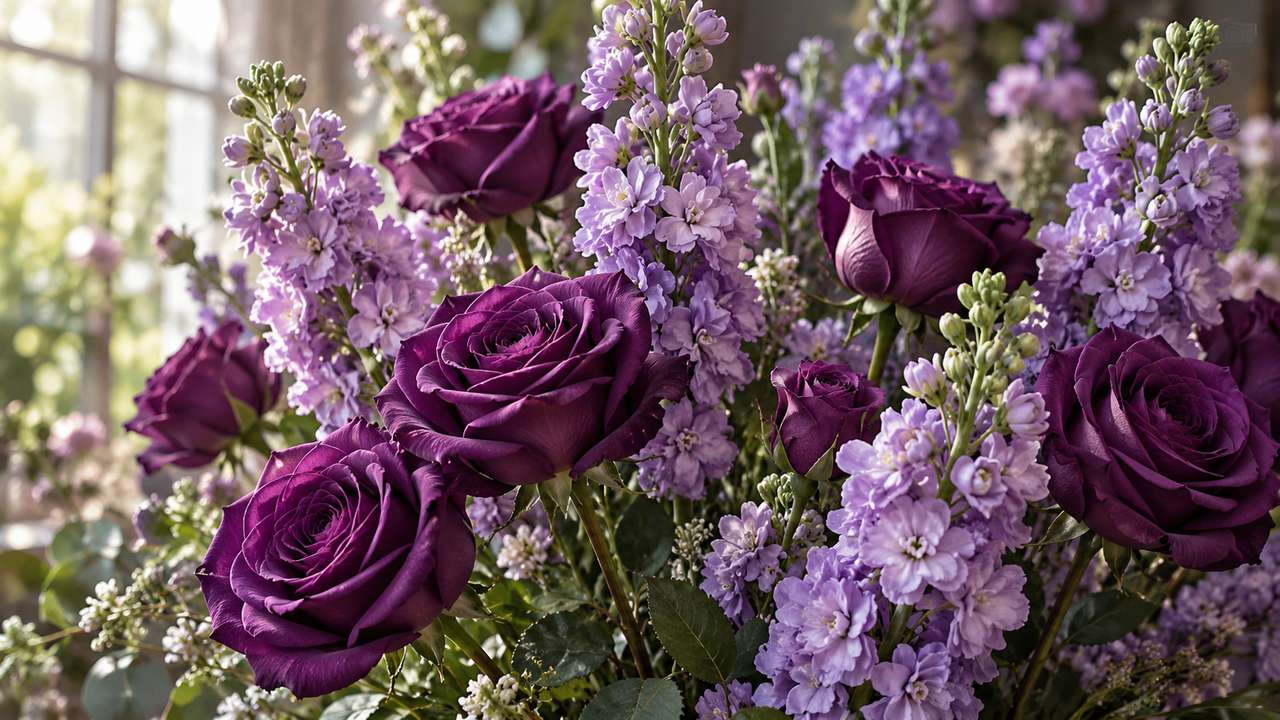
Few floral pairings balance romance, fragrance, and endurance as gracefully as roses and stock. Roses bring centuries of association with love, secrecy, honor, beauty, and devotion. Stock, known botanically as Matthiola incana, contributes cloudlike flower spikes and a warm perfume often compared with cloves. Together, they create a bouquet that feels both sumptuous and reassuring: passionate enough for courtship, yet steadfast enough for anniversaries, family milestones, and remembrance.
The essential roses and stock flower meaning is enduring affection joined with lasting beauty. The rose expresses the nature of the emotion—romantic, grateful, innocent, joyful, or reverent—while stock adds constancy, contentment, and the promise that beauty will not be quickly forgotten. Botanically, the contrast is equally compelling. Roses belong to the Rosaceae family and usually present rounded, layered blooms; stock belongs to the mustard family, Brassicaceae, and bears upright racemes crowded with four-petaled single or densely ruffled double flowers.
Historical Roots of the Pairing
Roses acquired symbolic importance in the ancient Mediterranean world. Greeks associated them with Aphrodite, while Romans used them in celebrations, funerals, banquets, and confidential meetings. The expression sub rosa, “under the rose,” developed from the flower’s connection with secrecy. Medieval Christianity later interpreted red roses as sacrifice and white roses as purity, while Persian poetry made the rose a central image of beauty, longing, and divine love.
Stock is native to Mediterranean coastal regions and takes its botanical name from Pietro Andrea Mattioli, the sixteenth-century Italian physician and botanist. Cultivated European stocks became valued for their fragrance and generous double flowers. By the Victorian era, when published flower dictionaries allowed bouquets to function as coded messages, stock commonly represented lasting beauty, bonds of affection, contentment, and a happy life. A rose paired with stock therefore communicated more than admiration: it suggested affection worthy of preservation.
Primary Meanings and Emotional Nuance
- Enduring romantic love: Red or deep pink roses provide passion, while stock transforms the message from immediate desire into faithful attachment.
- Lasting beauty: Stock traditionally praises beauty that survives changing fashions, age, or circumstance; roses add elegance and emotional warmth.
- Contentment and domestic happiness: Pale stock softens the grandeur of roses, making the combination suitable for settled love, marriage, and a welcoming home.
- Admiration with sincerity: Pink roses and mauve stock convey appreciation without the intensity of an unequivocal declaration of passion.
- Remembrance: White roses with white, lavender, or blush stock can honor a life remembered with tenderness and enduring respect.
The pairing is emotionally flexible because each flower performs a different symbolic role. A rose often names the feeling, whereas stock describes its duration and character. For example, yellow roses may communicate friendship or delight; surrounded by stock, they suggest a friendship that remains dependable. White roses signify innocence, reverence, or new beginnings, and white stock reinforces fidelity and peaceful constancy.
How Color Changes the Message
Red roses with burgundy, purple, or white stock create the strongest romantic statement. Blush roses and pale pink stock feel tender and affectionate, making them ideal for new relationships, mothers, or close friends. Peach roses express gratitude and sincerity; with apricot or cream stock, they become a gracious thank-you bouquet. The refined warmth described in cream rose symbolism works especially well with ivory stock for weddings, hosts, and elegant professional gifts.
Lavender roses suggest enchantment or love at first sight, while lilac stock adds dreamy constancy. Yellow roses with white or butter-yellow stock favor friendship and optimism. Orange roses communicate enthusiasm and attraction; paired with peach stock, they produce an energetic bouquet suited to congratulations. Dyed multicolored roses can evoke the exuberance explored in rainbow rose meaning, although their theatrical appearance is best reserved for birthdays, Pride celebrations, and playful recipients.
Unnaturally blue roses symbolize rarity and the impossible, a theme central to the blue rose mystery. Pair them with violet stock for fantasy and intrigue, but disclose that the roses are dyed. Very dark crimson roses can appear nearly black; because black rose meaning includes mourning, farewell, transformation, and rebirth, combine them carefully with white stock when marking remembrance or a major life transition.
| Rose and Stock Combination | Core Meaning | Best Occasion |
|---|---|---|
| Red roses and white stock | Passionate, faithful love | Anniversary or romantic proposal |
| Blush roses and pink stock | Tenderness and affectionate admiration | New romance, birthday, or Mother’s Day |
| Cream roses and ivory stock | Grace, thoughtfulness, and lasting beauty | Wedding, thank-you, or housewarming |
| Yellow roses and white stock | Joyful, dependable friendship | Congratulations or friendship gift |
| White roses and lavender stock | Reverence, peace, and remembrance | Memorial or sympathy tribute |
Occasions, Recipients, and Modern Etiquette
For a romantic partner, choose red, coral, or blush roses and let stock communicate commitment rather than fleeting attraction. For a spouse, include a note that connects “lasting beauty” to shared years; this avoids reducing the message to physical appearance. Parents and grandparents may appreciate peach, cream, or pink combinations that signify gratitude and abiding family affection. Yellow, apricot, and white palettes suit friends, colleagues, teachers, and hosts.
At weddings, stock provides fragrance, height, and an old-world garden character. White roses and stock imply purity and steadfast partnership, while blush and mauve palettes feel softer and more contemporary. For sympathy, avoid interpreting dark colors too literally unless the recipient understands floral symbolism. White and muted lavender are generally safer, expressing peace and remembrance without romantic ambiguity.
Modern etiquette favors intention over rigid Victorian codes. Include a short card explaining the symbolism, especially when using unusual colors. Avoid highly perfumed stock in hospital rooms, small offices, or homes where fragrance sensitivity is known. Confirm pet safety as well: roses are generally considered non-toxic to cats and dogs, but thorns can injure, and any pesticides or decorative additives may present hazards.
Companion Flowers and Styling
For a garden-style arrangement, combine roses and stock with sweet peas, ranunculus, lisianthus, or tulips. Delphinium adds vertical movement; hydrangea creates mass; waxflower or astrantia supplies fine texture. Fragrant pairings require restraint: freesia complements stock, but lilies may compete with its clove-like perfume. Eucalyptus, olive, or ruscus gives structure, although foliage should never overwhelm the flowers’ symbolic conversation.
Use stock as the architectural line and roses as focal blooms. In a hand-tied bouquet, place stock at varied heights rather than forming a rigid outer ring. An airy asymmetrical composition feels natural and modern; a compact dome appears formal and bridal. Monochromatic palettes emphasize texture, while analogous colors—peach, coral, and blush, for example—create warmth. For strong contrast, pair burgundy roses with ivory stock and minimal greenery.
Care, Vase Life, and Cultivation
Fresh roses commonly last five to ten days, while stock often lasts seven to ten days under good conditions. Choose roses with firm petals and buds beginning to loosen. Stock should have several open florets at the base and unopened buds above; avoid stems with yellowing leaves or transparent, collapsing petals.
- Wash the vase thoroughly and fill it with fresh, cool-to-lukewarm water mixed with commercial flower food.
- Remove every leaf that would sit below the waterline, then recut stems with a clean, sharp blade.
- Change the water every one or two days, cleaning the vase and trimming the stems again when possible.
- Keep the bouquet away from direct sun, heaters, drafts, and ripening fruit, which releases bloom-aging ethylene.
- Remove fading stock florets and bruised rose guard petals promptly to discourage microbial growth.
In the garden, roses generally need generous sun, fertile well-drained soil, airflow, and consistent deep watering. Stock prefers cool weather, full sun to light shade, and well-drained neutral-to-alkaline soil. It is commonly grown as a cool-season annual or biennial because heat shortens flowering. Staggered sowing extends the harvest, and cutting stems when roughly one-third of the florets are open gives an effective balance of immediate display and vase longevity.
A Message Designed to Last
The most resonant interpretation of roses and stock is love made durable. Roses supply emotional specificity, from passion and gratitude to friendship and reverence; stock answers with constancy, contentment, fragrance, and lasting beauty. By choosing colors thoughtfully, respecting cultural and personal sensitivities, and caring for the stems properly, a florist or giver can create more than an attractive bouquet. The result is a layered message: beauty is cherished, affection is sincere, and the bond being honored is intended to endure.