Table of Contents
Pairing Roses with Freesia: Innocence, Friendship, and Citrus-Peppery Scent
The pairing of roses and freesia brings together two distinct floral traditions: the rose, cultivated and mythologized for thousands of years, and freesia, a comparatively recent arrival in European floriography. Roses appear in ancient Persian gardens, Greek and Roman mythology, medieval devotional art, and the elaborate flower language of the Victorian era. Freesia, native to southern Africa, entered European horticulture in the nineteenth century and became associated with trust, innocence, and lasting friendship.
Botanically, the combination is equally compelling. Roses belong to the Rosaceae family and contribute layered petals, visual depth, and scents ranging from tea and fruit to myrrh. Freesias are corm-grown members of the iris family, Iridaceae. Their slender, arching stems carry funnel-shaped flowers with a bright fragrance often described as citrusy, peppery, green, or lightly soapy. Together, they create a bouquet that feels romantic without being excessively formal and affectionate without necessarily implying passionate love.
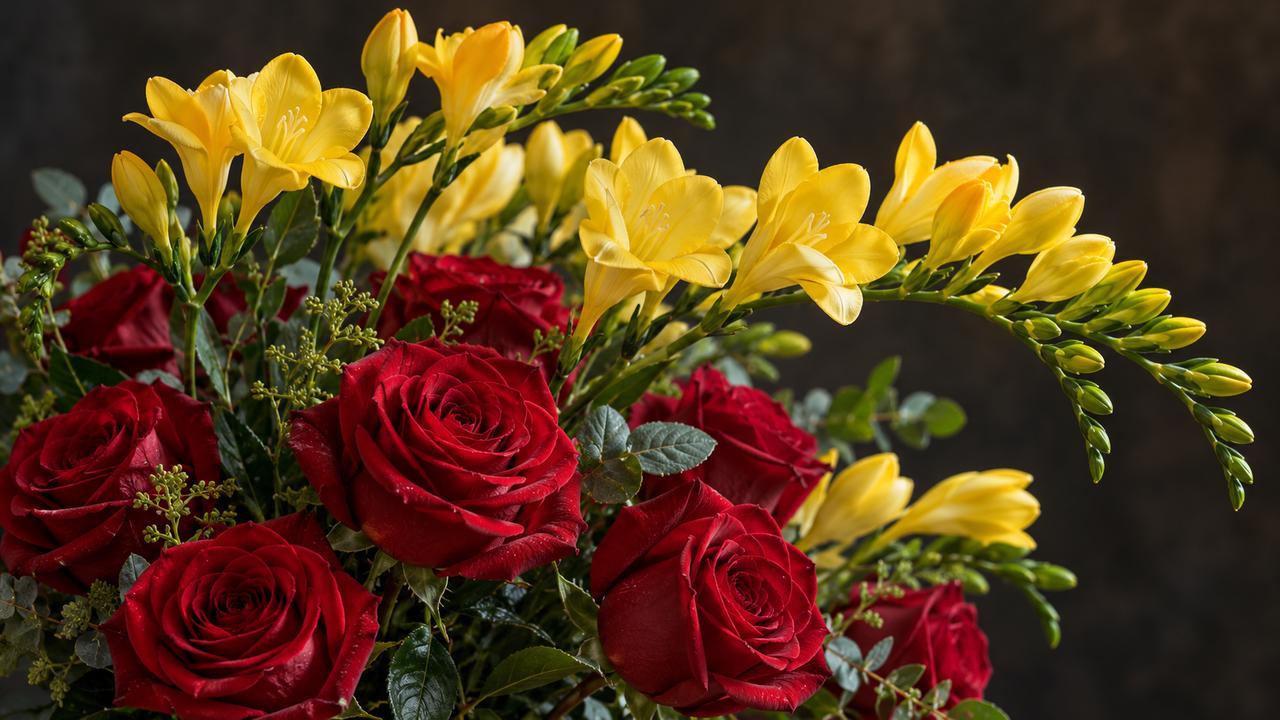
The central roses and freesia meaning is therefore one of sincere affection founded on trust. It may express innocent love, loyal friendship, thoughtful admiration, or the wish that a relationship will continue to unfold gracefully.
The Historical Language of Roses and Freesia
The symbolic vocabulary of roses is ancient and remarkably varied. In Greek and Roman traditions, the rose was connected with Aphrodite or Venus and with beauty, desire, secrecy, and mortality. Christian art later gave white and red roses devotional meanings, including purity, sacrifice, heavenly love, and the Virgin Mary. By the nineteenth century, European and American flower dictionaries assigned increasingly precise messages to rose colors, stages of bloom, and presentation styles.
Freesia has a shorter recorded history in Western floriography. The genus was named by botanist Christian Friedrich Ecklon in honor of his friend and fellow botanist Friedrich Heinrich Theodor Freese. Although the exact intention behind the dedication is interpreted cautiously by historians, the story helped establish freesia as an emblem of friendship and trust. Its delicate appearance encouraged additional associations with innocence, sensitivity, and sweetness of character.
Victorian flower language was never governed by one universal dictionary; meanings differed among authors, regions, and decades. Even so, a bouquet combining roses and freesia would have been legible as a tender composition: the rose supplied the emotional declaration, while freesia softened and refined it with loyalty, purity, and gentle confidence.
Primary Meanings of Roses and Freesia
- Trusting affection: Freesia’s association with trust makes a rose bouquet feel emotionally secure and sincere.
- Innocent or emerging love: Pale roses and freesia suit affection that is new, hopeful, and not yet intensely passionate.
- Enduring friendship: Yellow, peach, or cream roses paired with freesia celebrate companionship, gratitude, and shared happiness.
- Refined admiration: The rose conveys esteem, while freesia adds delicacy rather than grandeur or display.
- New beginnings: Both flowers are popular for weddings, engagements, housewarmings, and other optimistic transitions.
Context determines which meaning comes forward. Red roses retain a strong romantic charge even when softened by white freesia. Yellow roses move the arrangement toward friendship and cheerfulness; readers exploring the deeper yellow rose meaning will find that modern interpretations emphasize warmth, joy, and platonic devotion. White roses make the pairing more ceremonial, spiritual, or bridal, reflecting the purity and reverence associated with white rose symbolism.
Color Combinations and Their Messages
| Rose and Freesia Pairing | Principal Meaning | Best Occasion |
|---|---|---|
| Red roses with white freesia | Passionate love supported by trust and sincerity | Anniversary, romantic commitment, engagement |
| Pink roses with pink freesia | Tender affection, admiration, and happiness | Birthday, thank-you, new relationship |
| Yellow roses with white or yellow freesia | Joyful friendship, optimism, and loyalty | Friendship gift, congratulations, recovery |
| White roses with white freesia | Purity, remembrance, reverence, and new beginnings | Wedding, christening, memorial |
| Peach roses with cream freesia | Gratitude, warmth, modesty, and appreciation | Hostess gift, professional thanks, family celebration |
| Champagne roses with white freesia | Elegant affection, understated luxury, and sincere celebration | Wedding, milestone, sophisticated congratulations |
Champagne-colored roses deserve special attention because their warm ivory-beige tone sits beautifully beside cream or white freesia. The champagne rose meaning centers on graceful celebration, elegance, and quiet luxury, making this combination particularly appropriate when red roses would feel too emphatic.
Cultural Interpretations and Customs
In contemporary Western floristry, roses and freesia commonly appear in bridal bouquets because they unite romance, innocence, and fragrance. White combinations can suggest a fresh beginning, while blush and peach palettes communicate gentleness and gratitude. In the United Kingdom, freesia is also traditionally associated with a seventh wedding anniversary, though anniversary lists vary by source and region.
Color customs should be considered when sending flowers internationally. White flowers may signify bridal purity in one setting and mourning in another. Yellow roses are warmly platonic in many modern English-speaking contexts, yet historical or regional traditions may connect yellow with jealousy, infidelity, or separation. Red roses are widely understood as romantic, so they can create confusion when sent to a colleague or casual friend.
For bereavement, white, cream, or muted pink roses with restrained white freesia can express peaceful remembrance and compassionate support. Funeral traditions vary by faith and family, however, so review local conventions and guidance on roses for sympathy before sending an elaborate tribute.
When to Give a Rose and Freesia Bouquet
This pairing is especially suitable for engagements, weddings, anniversaries, birthdays, graduations, housewarmings, thank-you gestures, and reconciliation. It can be given to a romantic partner, close friend, parent, mentor, host, or colleague when the color palette matches the relationship.
- Choose red or deep pink roses for a spouse or established partner, and include a personal note clarifying the bond of trust.
- Select yellow, peach, or soft pink roses for friends, siblings, teachers, and hosts.
- Use white, champagne, or blush flowers for weddings and elegant milestone celebrations.
- Keep workplace bouquets compact, lightly romantic in color, and free from suggestive wording.
- For hospitals or scent-sensitive recipients, ask permission first; freesia is fragrant, and some facilities restrict flowers.
Modern etiquette favors intention over rigid symbolism. A short card prevents ambiguity: “Thank you for your friendship” clearly frames yellow roses and freesia as platonic, while “With love and complete trust” reinforces their romantic interpretation. Avoid assuming that every recipient knows traditional floriography, and account for fragrance sensitivities, pets, cultural practices, and venue restrictions.
Companion Flowers and Bouquet Styling
Freesia naturally provides airy movement around the rounder mass of rose blooms. For a garden-style bouquet, combine them with sweet peas, ranunculus, scabiosa, or delicate spray roses. Lisianthus reinforces softness and appreciation; waxflower adds texture and patient love; eucalyptus introduces a cool aromatic contrast. In bridal work, lily of the valley offers refined symbolism, but its seasonality, cost, and toxicity require consideration.
For balanced proportions, use roses as focal flowers and place freesia in small, uneven clusters so its curved stems remain visible. A tonal palette of ivory, cream, and champagne looks formal and luminous. Peach, apricot, and yellow produce a cheerful citrus-inspired arrangement, while burgundy roses with white freesia create dramatic contrast. Because both flowers are fragrant, avoid adding many strongly scented companions such as oriental lilies or hyacinths.
Care, Vase Life, and Cultivation
Fresh roses generally last five to ten days in a vase, while freesia often lasts seven to twelve days and continues opening along its stem. Choose roses with firm outer petals and freesia stems showing at least one open flower with several colored buds. Completely green, immature freesia buds may not open reliably.
- Wash the vase thoroughly and fill it with fresh water and commercial flower food.
- Remove all foliage that would sit below the waterline.
- Recut stems at an angle with a clean, sharp knife or shears before arranging.
- Refresh the water every one or two days and remove fading blooms promptly.
- Keep the bouquet away from radiators, direct sun, drafts, and ripening fruit, which releases aging-inducing ethylene.
In the garden, roses prefer abundant sun, fertile well-drained soil, airflow, and deep watering at the root zone. Freesias grow from corms and favor excellent drainage, bright light, and mild conditions; they are typically planted in autumn in warm climates or spring in colder regions. Their stems may need discreet support, especially in exposed positions.
A Partnership of Beauty and Trust
The enduring appeal of roses and freesia lies in their emotional balance. Roses supply history, richness, and a clear declaration of affection; freesia contributes innocence, fidelity, and an unmistakable citrus-peppery fragrance. Color determines whether the bouquet speaks primarily of romance, friendship, gratitude, celebration, or remembrance. Chosen thoughtfully and accompanied by a sincere message, this pairing becomes more than an attractive arrangement: it is a nuanced expression of affection strengthened by trust.