Table of Contents
Pairing Roses with Deep Blue Delphinium: Stately Height and Dreamy Contrasts
Few floral pairings unite romance and grandeur as convincingly as roses and deep blue delphinium. Roses bring sculptural petals, fragrance, and centuries of associations with love, secrecy, devotion, and remembrance. Delphiniums rise above them in tapering spires, introducing height, cool color, and a sense of aspiration. Together, they create a bouquet that feels both grounded in affection and lifted toward hope.
The historical roses and delphinium meaning is not a single fixed message. It depends on rose color, delphinium shade, occasion, and cultural context. In its most characteristic form, the combination expresses heartfelt love elevated by dignity, optimism, and an open spirit. Deep blue delphinium can also evoke dreams, noble purpose, remembrance, and the vastness of sea or sky. This makes the pairing especially useful when ordinary romantic flowers seem too simple for the emotion being conveyed.
Botanical Character and Visual Harmony
Roses belong to the genus Rosa, a diverse group of woody perennials cultivated for thousands of years. Their rounded, layered blooms create visual weight and an intimate focal point. Delphiniums belong primarily to the genus Delphinium in the buttercup family, Ranunculaceae. Their densely flowered vertical racemes may reach impressive heights, particularly among Pacific Giant and New Millennium hybrids.
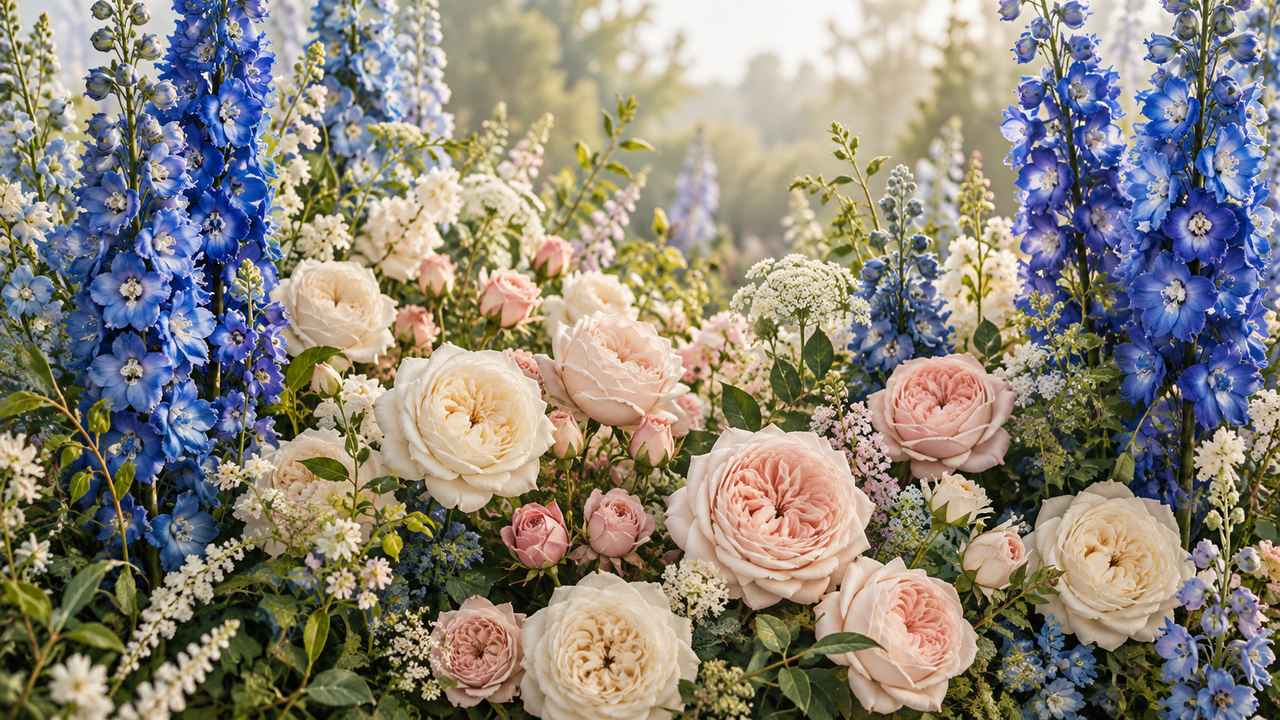
The flowers differ in almost every structural respect, which explains their success together. A rose appears lush, enclosed, and concentrated; a delphinium spire appears open, rhythmic, and ascending. Florists use roses as the bouquet’s emotional center and delphiniums as its architectural framework. Deep blue also acts as a complementary counterpoint to warm blush, peach, yellow, coral, and cream roses, while giving red or burgundy roses a dramatic, ceremonial character.
Historical Roots of the Symbolism
Roses carried symbolic importance in ancient Persia, Greece, and Rome. They were associated with beauty, love, pleasure, mortality, and divine figures such as Aphrodite and Venus. The Latin expression sub rosa, or “under the rose,” later connected the flower with secrecy and confidential speech. Christian art reinterpreted roses through ideas of purity, sacrifice, heavenly love, and the Virgin Mary.
Delphinium takes its name from the Greek delphinion, traditionally understood as “little dolphin,” because the developing bud or floral spur was thought to resemble a dolphin. Folkloric interpretations varied, but the flower became associated with protection, lightness, generosity, and an open heart. By the Victorian era, when published flower dictionaries helped popularize floriography, larkspur and delphinium conveyed qualities such as levity, ardent attachment, noble bearing, and openness to new experiences.
Victorian flower messages were never completely standardized. Meanings differed among books, regions, and varieties, and delphinium was frequently discussed under the related common name larkspur. Nevertheless, pairing roses with blue delphinium would have been legible as an emotionally rich gesture: affection or love joined with elevated intentions, graciousness, and hopeful aspiration.
Primary Roses and Delphinium Meaning
At the broadest level, roses symbolize the heart, while delphiniums symbolize uplift. Their combined message can be read as “my affection inspires me,” “I honor your generous spirit,” or “may love and hope carry you forward.” The balance is important: delphinium prevents roses from appearing overly sentimental, while roses soften the formality of tall blue spires.
| Rose and Delphinium Pairing | Principal Message | Best Context |
|---|---|---|
| Red roses with deep blue delphinium | Passionate love, loyalty, and majestic commitment | Anniversaries, proposals, formal romance |
| Blush roses with deep blue delphinium | Tender admiration, grace, and dreamy affection | Weddings, new relationships, birthdays |
| White roses with deep blue delphinium | Reverence, peace, sincerity, and remembrance | Memorials, condolences, ceremonies |
| Yellow roses with deep blue delphinium | Joyful friendship, encouragement, and possibility | Graduations, congratulations, recovery |
| Dark pink roses with deep blue delphinium | Gratitude, recognition, and heartfelt esteem | Thank-you gifts, mentors, professional milestones |
| Peach roses with deep blue delphinium | Warm sincerity, appreciation, and hopeful transition | Housewarmings, farewells, new ventures |
How Color and Quantity Refine the Message
Deep navy or indigo delphinium makes a bouquet feel stately, intellectual, and formal. Clear cobalt blue is more energetic and contemporary, while pale blue suggests serenity and gentle remembrance. Purple-blue cultivars introduce enchantment and creativity. Because naturally blue flowers are relatively unusual, delphinium can also symbolize rarity or admiration for someone with an exceptional character.
Rose shades sharpen the message further. Crimson signals passion; white suggests innocence, reverence, or peace; pale pink conveys sweetness; yellow emphasizes friendship; and peach communicates sincerity. Dark pink is especially eloquent when romance is not intended. Understanding the dark pink rose meaning helps distinguish a gracious thank-you bouquet from a declaration of love.
Quantity may contribute another layer. A single rose among delphinium spires creates a poetic statement of singular devotion. Three roses traditionally communicate “I love you,” although personal and regional interpretations vary; the symbolism behind the three roses meaning can help shape a more deliberate romantic arrangement. Larger numbers generally emphasize abundance rather than carrying a universally recognized code.
Occasions, Recipients, and Modern Etiquette
- Romantic milestones: Choose red, burgundy, blush, or garden roses with deep blue delphinium for anniversaries, engagements, or intimate celebrations. Include a card so the less familiar delphinium symbolism is understood.
- Weddings: White or blush roses produce an elegant “garden under the evening sky” effect. Fragrant David Austin English roses are particularly effective in romantic, painterly designs.
- Congratulations: Yellow, peach, or coral roses with blue delphinium suit graduates, colleagues, performers, and anyone beginning an ambitious new chapter.
- Gratitude: Dark pink roses make a thoughtful gift for teachers, hosts, mentors, parents, or supportive friends, while delphinium adds respect and distinction.
- Sympathy: White roses and restrained blue delphinium can express peace, honor, and enduring remembrance. Review customary etiquette for roses for sympathy, especially when faith traditions or family preferences affect color choices.
Modern etiquette favors intention over rigid floral codes. Avoid assuming red roses are suitable in professional relationships, and consider allergies, fragrance sensitivity, pets, and the recipient’s cultural traditions. Delphinium is toxic if ingested, so arrangements should remain beyond the reach of children and animals. It should never be used as an edible garnish, even when decorating a dining table or cake display.
Companion Flowers and Styling Advice
For an English-garden arrangement, combine roses and delphinium with foxglove-like snapdragons, airy nigella, scabiosa, astrantia, and trailing jasmine. For a cleaner modern design, use fewer varieties: deep blue delphinium, ivory roses, and sculptural eucalyptus or olive foliage. White lisianthus smooths the transition between the dense roses and open delphinium florets, while hydrangea creates a generous, cloudlike foundation.
Preserve the delphinium’s natural height rather than cutting every stem to the level of the roses. A pleasing hand-tied bouquet often uses graduated spires at the back or through the center, with roses clustered lower and slightly forward. Repeat the blue in several positions instead of isolating it in one block. Soft apricot, antique blush, and cream create dreamy contrast; red, plum, and navy produce a more theatrical palette.
Vase Care and Garden Considerations
Condition both flowers promptly. Use a clean vase, remove all foliage below the waterline, and recut stems with a sharp knife or snips. Delphinium stems are hollow and can dehydrate quickly, so place them in water immediately and support very tall stems with an appropriately proportioned vessel. Commercial flower food helps control bacteria and supplies carbohydrates; refresh the solution every two days.
Keep the arrangement away from direct sun, heaters, drafts, and ripening fruit, which releases ethylene. Remove fading rose petals and spent delphinium florets as needed. Roses commonly last about five to ten days in a vase, while well-conditioned delphinium may last roughly five to seven days, sometimes longer under cool conditions.
In the garden, roses generally need abundant sun, fertile well-drained soil, airflow, and consistent deep watering. Delphiniums prefer rich, moisture-retentive but freely draining soil and shelter from strong wind. Tall cultivars require staking before the flower spikes become heavy. Their shared preference for sun and fertile soil makes them attractive companions, although adequate spacing is essential for disease prevention.
A Bouquet of Affection and Aspiration
The enduring roses and delphinium meaning lies in the meeting of intimacy and elevation. Roses speak from the heart; deep blue delphiniums direct that feeling upward, toward loyalty, possibility, dignity, and hope. Whether arranged for romance, gratitude, celebration, or remembrance, the pairing becomes most eloquent when rose color, flower quantity, scale, and written message all support the occasion. Its beauty is more than decorative: it is a carefully composed conversation between earthly tenderness and the dreamlike blue of an open sky.