Table of Contents
108 Roses Meaning: The Ultimate Marriage Proposal and Will You Marry Me
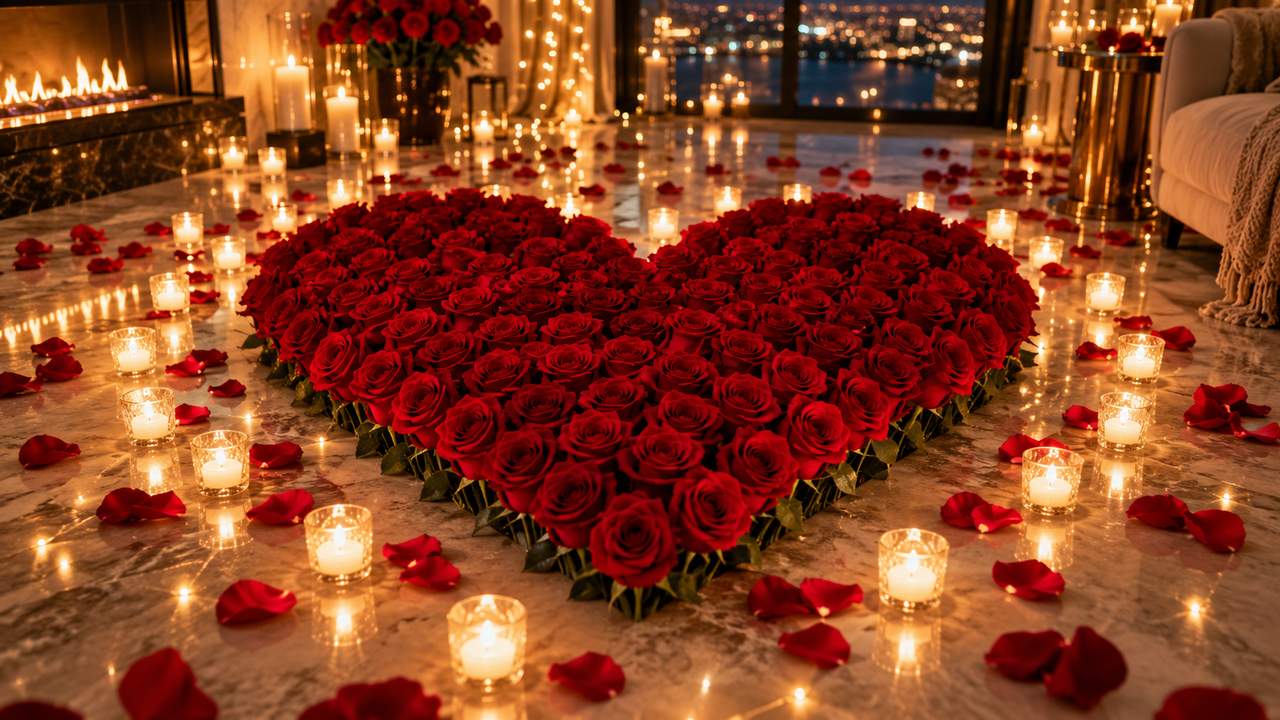
The 108 roses meaning is one of the most decisive messages in modern floriography: “Will you marry me?” A bouquet of 108 roses represents wholehearted commitment, enduring love, and the desire to transform a romantic relationship into a lifelong union. Its extraordinary scale makes the message unmistakable. This is not a casual declaration of attraction, but a ceremonial expression of devotion.
The symbolism combines several traditions rather than descending from one ancient floral dictionary. Roses have represented love since classical antiquity, when they were associated with Aphrodite and Venus. During the Victorian era, carefully chosen flowers allowed admirers to communicate feelings that social convention discouraged them from speaking aloud. However, Victorian flower books generally focused on species and colors, not a universally standardized system of stem counts. The specific proposal meaning of 108 roses developed more recently, particularly through East Asian bouquet customs and the modern floral trade.
Botanically, the cultivated rose belongs to the genus Rosa, a diverse group containing shrubs, climbers, ramblers, and thousands of hybrids. Offering 108 blooms therefore unites natural abundance with human craftsmanship: every stem must be selected, conditioned, arranged, and protected to create a bouquet worthy of a marriage proposal.
What Do 108 Roses Mean?
The primary interpretation is “Will you marry me?” The number expresses love that seeks permanence rather than a passing romantic moment. It may also convey “I want to grow old with you,” “My love is complete,” or “I give you my whole heart.” Because 108 roses create such a spectacular visual statement, the bouquet suggests generosity, certainty, and emotional courage.
Individual elements reinforce that message. The number one can symbolize a single chosen partner or two lives beginning one shared path. Zero evokes wholeness, continuity, and the circular form of a wedding ring. Eight is widely associated in Chinese culture with prosperity and good fortune. Read together, these associations make 108 an auspicious number for entering married life, although interpretations vary among cultures and individuals.
The number 108 also has sacred importance in Hindu, Buddhist, and yogic traditions, appearing in prayer beads, spiritual recitations, and cosmological systems. In those settings it can suggest completeness, disciplined devotion, and the relationship between earthly and spiritual life. These traditions should be treated respectfully rather than used as proof that the proposal custom has one ancient religious origin. In contemporary floristry, 108 roses primarily function as a romantic code.
Historical and Cultural Interpretations
In ancient Greek and Roman imagery, roses belonged to the realms of beauty, desire, secrecy, and mortality. Medieval Christian art later associated roses with divine love, sacrifice, purity, and the Virgin Mary. By the nineteenth century, European and American floriography assigned increasingly detailed meanings to rose colors: red for passionate love, white for innocence, pink for admiration, and yellow for feelings that changed according to period and source.
Modern East Asian floristry expanded this symbolic vocabulary through numbered bouquets. Certain quantities came to represent spoken phrases, anniversaries, promises, or proposals. Within this system, 108 roses became strongly associated with asking for someone’s hand in marriage. In Japan, large rose proposals are also prized for their theatrical beauty and photographic impact, while in Chinese-speaking communities the fortunate symbolism of eight can add hopes for prosperity.
Western recipients may not immediately recognize the numerical code, but they will understand the grandeur of the gesture. For that reason, a proposal card or spoken question remains important. Flowers should intensify the proposal, not require the recipient to solve it.
Meanings by Rose Color
| Rose Color | Meaning in a 108-Rose Bouquet | Best Context |
|---|---|---|
| Red | Deep love, desire, courage, and lifelong romantic commitment | Classic marriage proposal |
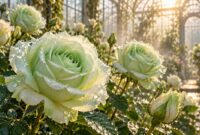
| White | Sincerity, unity, peace, and a new beginning | Engagement or wedding setting |
| Pink | Tender love, gratitude, admiration, and emotional sweetness | Gentle or private proposal |
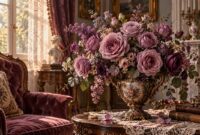
| Burgundy | Profound passion, mature beauty, and magnetic attraction | Formal evening proposal |
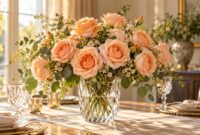
| Coral or Peach | Warm desire, appreciation, optimism, and affectionate excitement | Joyful modern proposal |
| Yellow | Friendship, happiness, warmth, and shared optimism | A romance founded on friendship |
| Mixed | A layered relationship embracing passion, friendship, and partnership | Personalized proposal story |
Red remains the clearest choice, but shade matters. Crimson communicates established passion, while brighter scarlet feels bold and energetic. Deep wine-colored blooms emphasize burgundy rose passion and create a luxurious, dramatic arrangement. Coral varieties are livelier and less solemn; understanding coral rose symbolism helps couples express desire with warmth and playfulness.
Yellow roses can celebrate a partnership rooted in companionship, although historical associations once included jealousy or fading affection. The modern yellow rose meaning is overwhelmingly joyful, friendly, and optimistic. So-called black roses are usually extremely dark crimson or purple cultivars rather than truly black flowers. Their associations with endings, transformation, and renewal can be meaningful in alternative arrangements, but review the black rose meaning before using them in a proposal.
When and How to Give 108 Roses
The most appropriate occasion is a planned marriage proposal, especially when both partners have already discussed marriage. The bouquet can also mark an engagement anniversary, a vow renewal, or reconciliation between committed partners, provided its proposal symbolism will not create confusion.
- Give them to: A long-term partner who welcomes grand romantic gestures and is comfortable with public or highly visual displays.
- Choose the setting: A private home, garden, hotel suite, restaurant room, or meaningful outdoor location with enough space for the arrangement.
- Plan the handoff: A 108-stem bouquet can be heavy and difficult to hold. Place it in a vessel, basket, floral box, or freestanding installation before the recipient arrives.
- Include clear words: Ask the question aloud or attach a card reading, “108 roses, one question: Will you marry me?”
- Respect boundaries: Avoid using an extravagant bouquet to pressure someone into accepting. The surprise should concern the presentation, not whether marriage is mutually desired.
Order well in advance, particularly around Valentine’s Day or major holidays. Tell the florist the bouquet is for a proposal, confirm the exact stem count, discuss access to the venue, and arrange discreet delivery. If the recipient has fragrance sensitivities, request lightly scented hybrid tea roses or garden roses with moderate perfume.
Companion Flowers and Styling
Although 108 roses need no filler, companion flowers can shape the mood. White lisianthus adds softness and sincerity; ranunculus contributes layered romance; orchids introduce sculptural elegance; and baby’s breath creates a cloudlike setting without competing with the roses. Italian ruscus, eucalyptus, or salal can broaden the silhouette, but excessive greenery may obscure the symbolic stem count.
For a classic design, arrange red roses in a dense dome with minimal foliage and a satin ribbon. For modern luxury, use a low architectural container with roses grouped by tonal gradient, from blush to crimson. A hand-tied spiral bouquet is beautiful but exceptionally heavy at this scale, so multiple internal bindings and moisture protection are essential. If exact symbolism matters, ensure filler roses are not accidentally added to the count.
Care and Vase Longevity
Roses are vascular stems that must draw water efficiently through their xylem. A bouquet this large requires generous hydration and a stable, sanitized container. Use a vessel wide enough to prevent crushing and heavy enough not to tip.
- Recut 2–3 centimeters from each stem at a diagonal with a clean, sharp knife or pruners.
- Remove every leaf that would sit below the waterline, where it could decay and encourage bacteria.
- Use fresh, room-temperature water with commercial floral preservative, following the measured dilution.
- Top up the water daily; 108 roses can consume a surprising amount, especially during the first 24 hours.
- Keep the arrangement away from direct sunlight, heaters, drafts, and ripening fruit, which releases aging-promoting ethylene gas.
- Replace cloudy water, wash the vessel, and recut the stems every two or three days.
With proper conditioning, quality cut roses commonly remain attractive for five to ten days, while some varieties last longer. Garden-grown roses should be harvested in the cool morning when the sepals have loosened and the buds are beginning to open. Place cut stems in water immediately and allow them to hydrate in a cool, dim location before arranging.
A Promise Made Visible
The enduring power of 108 roses lies in the union of number, flower, and intention. Roses carry centuries of associations with love, beauty, secrecy, sacrifice, and renewal; the modern stem count turns those associations into a direct marriage proposal. Whether rendered in traditional red, tender blush, auspicious mixed colors, or dramatic burgundy, the arrangement says that affection has matured into a deliberate promise.
The finest 108-rose proposal is not necessarily the most expensive or public. It is the one tailored to the recipient’s tastes, cultural understanding, and comfort. Supported by honest conversation, thoughtful styling, and careful botanical preparation, 108 roses become more than an extravagant bouquet: they become a living, fragrant question about sharing a future.