Table of Contents
Moss Rose: The Secret Glandular Resins and Victorian Botanical Craze
The moss rose looks as though it has been gathered from an enchanted ruin. Around its bud, sepals, and flower stalk lies a curious green-brown growth resembling damp woodland moss. Touch it gently and the secret becomes apparent: this “moss” is not a separate plant but a dense covering of branching, resin-bearing glands. Rubbed between the fingers, the glands may release a balsamic, pine-like fragrance that contrasts beautifully with the flower’s sweeter perfume.
Historically, moss roses are mutations or “sports” associated chiefly with the cabbage rose, Rosa × centifolia, and later with Damask and other garden roses. They appeared in European cultivation by the late seventeenth or early eighteenth century, although their exact point of origin remains debated. By the nineteenth century, nurseries offered scores of cultivars, and their botanical oddity made them coveted objects during the Victorian passion for collecting unusual plants.
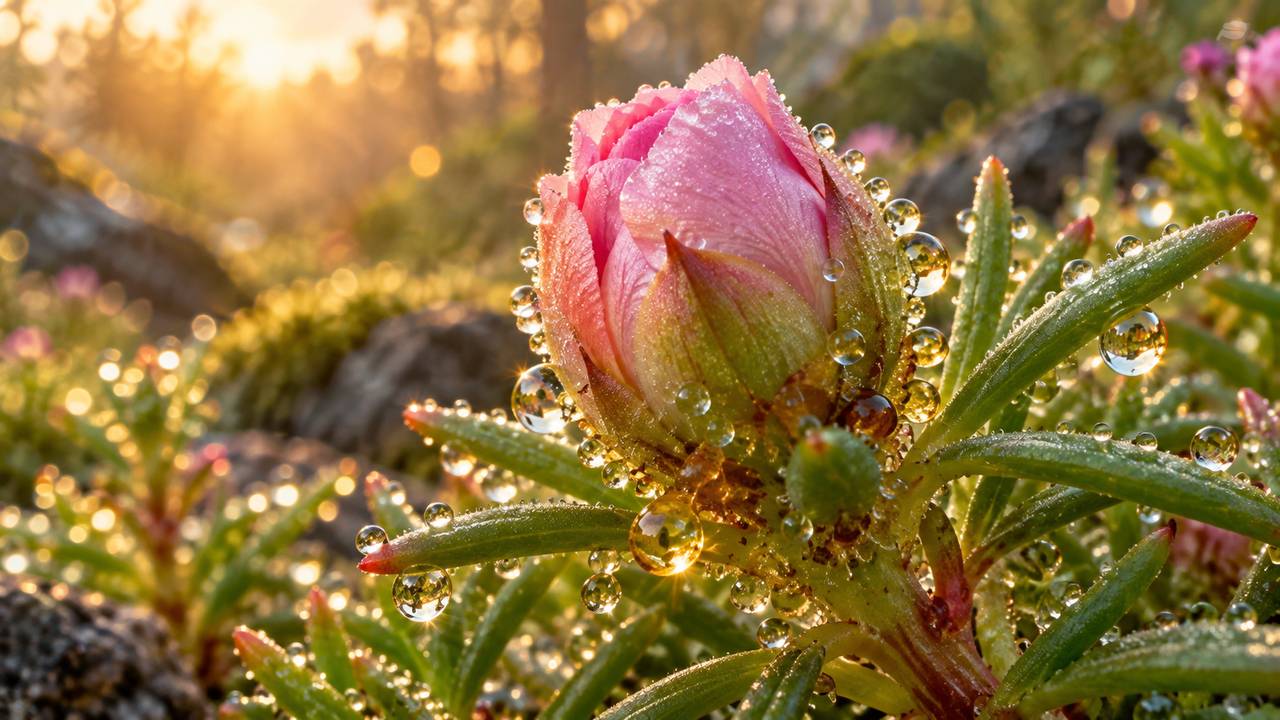
The central moss rose meaning combines romantic fascination, sensory pleasure, rarity, and beauty protected by mystery. In floriography, however, no flower had one universally fixed translation. Meanings varied among dictionaries, countries, colors, and presentation styles. A moss rose could suggest voluptuous love, superior merit, admiration, or a confession concealed within a richly textured bud.
What Makes a Moss Rose “Mossy”?
The traditional moss rose belongs to the genus Rosa and should not be confused with Portulaca grandiflora, the low-growing succulent also commonly called moss rose. Portulaca symbolizes endurance and sunny resilience in some modern interpretations, but it is botanically and historically separate from the Victorian moss roses discussed here.
On a true moss rose, the unusual growth consists of modified glandular structures concentrated on the calyx and pedicel. Botanists regard the trait as a mutation that exaggerates glandular development already present in related roses. These glands produce aromatic, sticky resin rather than actual moss. Their scent is variously described as balsamic, spicy, coniferous, or incense-like, especially when warmed by sunlight.
Early moss roses were generally once-flowering shrubs, blooming magnificently in late spring or early summer. Hybridization later produced repeat-flowering forms. Cultivars such as ‘Old Pink Moss’, ‘Common Moss’, ‘William Lobb’, ‘Henri Martin’, ‘Salet’, and the dramatically crested ‘Chapeau de Napoléon’ preserve different expressions of the trait.
Primary Meanings and Symbolism
- Voluptuous love: The sumptuous, densely petaled flower and aromatic resin evoke love experienced through beauty, perfume, and touch.
- Confession of love: A moss-covered bud was interpreted in several nineteenth-century flower-language traditions as an intimate admission of affection.
- Superior merit: Some Victorian dictionaries connected the moss rose with excellence or distinction, reflecting its rarity and horticultural prestige.
- Mystery and secrecy: The bud appears veiled by moss, making it an apt emblem of feelings protected, hidden, or not yet fully revealed.
- Old-world remembrance: Today, antique moss roses suggest heritage gardens, ancestral stories, enduring perfume, and affection that survives changing fashions.
These interpretations should be read as overlapping possibilities rather than rigid definitions. Victorian correspondents often consulted different floral dictionaries, and authors freely copied, revised, or contradicted one another. Context mattered: an unopened bud could communicate secrecy or dawning affection, while a fully open bloom emphasized abundance and mature passion.
From Garden Curiosity to Victorian Craze
During the eighteenth and nineteenth centuries, unusual rose mutations carried real prestige. Moss roses offered collectors something immediately recognizable: familiar centifolia blooms framed by an almost fantastical botanical texture. Nurserymen selected plants for heavier mossing, richer colors, stronger fragrance, repeat bloom, and distinctive crests.
Their popularity coincided with the growth of commercial nurseries, botanical illustration, specimen collecting, and the Victorian language-of-flowers fashion. A moss rose could therefore signal cultivated taste as well as emotion. It was simultaneously a lover’s emblem, a gardener’s treasure, and a living curiosity worthy of discussion in the conservatory.
Interest eventually shifted toward repeat-flowering Hybrid Perpetuals, Tea roses, and modern hybrids. Yet antique-rose enthusiasts continued to value moss roses for precisely the qualities mass-market flowers often lack: seasonal drama, eccentric form, historical identity, and complex fragrance. Their romantic informality also anticipates the densely petaled appeal now associated with David Austin English roses, although the two groups are botanically and historically distinct.
Meanings by Color and Presentation
| Color or Form | Suggested Meaning | Best Context |
|---|---|---|
| Blush pink | Tender admiration, poetic affection, gentleness | New romance, birthdays, garden weddings |
| Deep pink or crimson | Gratitude, fervent admiration, mature passion | Anniversaries, mentors, devoted partners |
| White | Reverence, secrecy, innocence, remembrance | Bridal work, memorial arrangements, quiet thanks |
| Mossy bud | A concealed or emerging confession of love | Courtship, handwritten messages, intimate gifts |
| Fully open bloom | Generous affection, sensual beauty, fulfillment | Milestone celebrations and romantic interiors |
Dark pink cultivars naturally strengthen themes of appreciation and recognition. The symbolism overlaps with the broader dark pink rose meaning, making these flowers particularly suitable for thanking someone whose generosity or skill deserves more than a casual gesture.
Occasions, Recipients, and Modern Etiquette
Moss roses are ideal for an antique-rose enthusiast, gardener, historian, fragrance lover, romantic partner, or anyone who values uncommon flowers. They suit anniversaries, engagements, garden weddings, milestone birthdays, housewarmings, and thank-you gifts. A rooted plant is often more meaningful than a short-lived bouquet because it turns the symbolism into a continuing garden legacy.
For courtship, one mossy bud offers subtlety; three stems can create a clearer declaration of affection. If stem count matters to the recipient, consider the traditional three roses meaning and explain your intention in a card rather than assuming the symbolism will be understood.
White, blush, or muted mauve moss roses can also express remembrance. For funerals, confirm family preferences and religious customs, avoid imposing romantic language, and emphasize enduring memory or a beloved garden. Broader guidance on roses for sympathy can help with color, timing, and respectful wording.
Modern etiquette favors clarity. Include a brief note such as, “For your rare spirit and enduring kindness.” Mention that the resinous growth is natural, especially if the recipient might mistake it for disease. When gifting a plant, provide its mature size, flowering habit, and pruning needs.
Companion Flowers and Bouquet Styling
Let the textured calyx remain visible rather than burying it among foliage. Pair blush moss roses with sweet peas, lady’s mantle, flowering mint, or airy grasses for a romantic cottage-garden arrangement. Crimson cultivars gain depth beside burgundy scabiosa, dark heuchera leaves, and restrained sprigs of rosemary. White flowers, silver foliage, and seed heads create a quieter memorial composition.
Avoid highly polished tropical flowers or heavily dyed materials, which can fight the rose’s historical character. Choose hand-tied, asymmetrical forms and vessels of aged silver, stoneware, clear glass, or softly colored ceramic. Because the stems may be thorny and the glands sticky, florists should wear gloves and clean tools after conditioning.
Cultivation and Vase Care
Plant moss roses in fertile, well-drained soil with at least six hours of sun and good air circulation. Water deeply at the base, mulch without crowding the crown, and avoid excessive nitrogen, which encourages soft growth. Most old forms flower on established wood, so prune lightly after blooming rather than cutting hard in late winter. Remove dead or crossing branches and preserve the shrub’s naturally arching framework.
For arrangements, harvest when outer petals loosen but the center remains firm. Cut during the cool morning, place stems immediately in clean water, and remove foliage below the waterline without stripping away the decorative mossing. Recut stems, use floral preservative, and keep the vase away from heat, direct sun, and ripening fruit. Antique roses may last only four to seven days, but daily water changes and cool nights can extend their beauty.
A Living Emblem of Rare Affection
The moss rose meaning is richest when its botany and history are considered together. Its resinous glands transform an ordinary floral structure into something fragrant, tactile, and strange; its luxuriant petals speak of romance; and its brief seasonal display reminds us that rarity intensifies attention. Whether given as a bud of secret affection, a deep pink tribute of gratitude, or a living plant for a heritage garden, the moss rose communicates admiration for beauty that is distinctive, layered, and impossible to imitate.