Table of Contents
Bourbon Rose: Victorian Opulence Born on the Tropical Isle of Reunion
The Bourbon rose carries a story as sumptuous as its flowers. Its densely layered petals, rich perfume, and romantic habit of blooming more than once made it one of the great horticultural sensations of the nineteenth century. Yet this aristocratic-looking rose did not originate in a European palace garden. It emerged on a volcanic island in the Indian Ocean: Île Bourbon, now Réunion, an overseas department of France east of Madagascar.
In floriography, the Bourbon rose meaning centers on mature love, luxuriant beauty, emotional generosity, and the renewal of affection. Unlike the urgent passion associated with a single scarlet rose, Bourbon roses suggest love that has deepened through experience. Their abundant petals convey fullness of feeling, while their capacity for repeat flowering makes them a natural emblem of devotion that returns, revives, and continues.
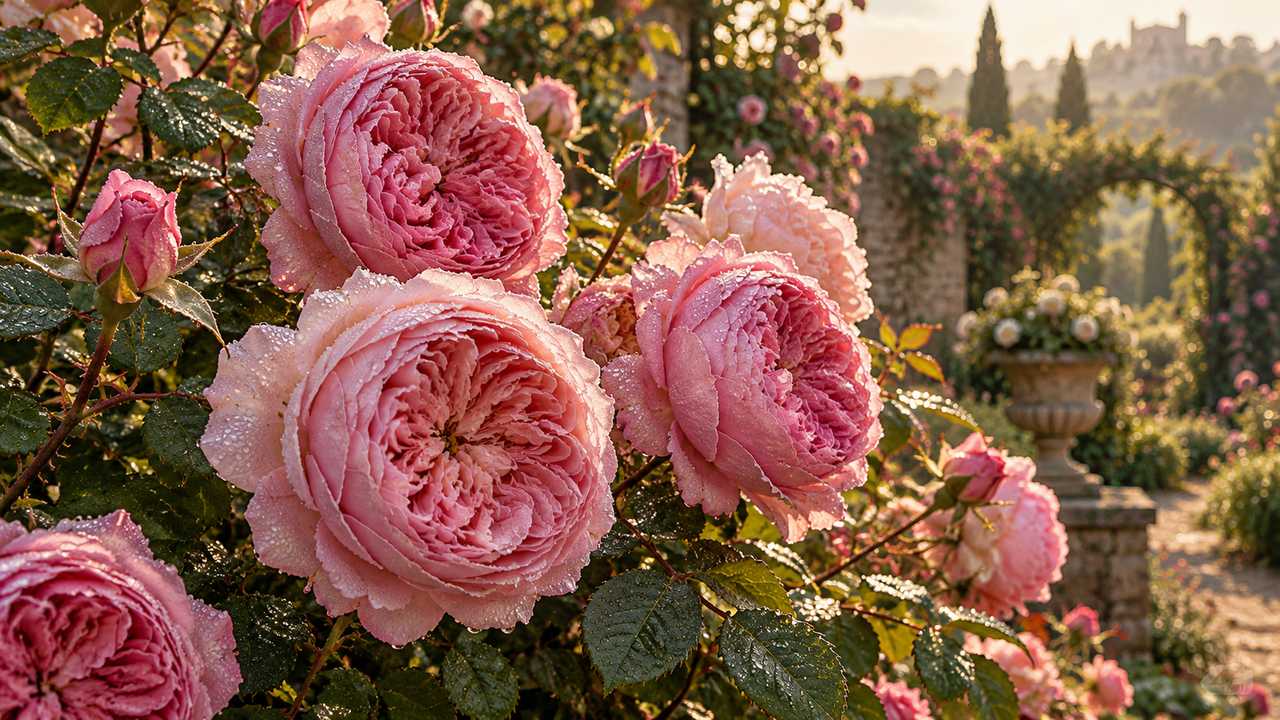
From a Tropical Hedge to the Gardens of Europe
The traditional origin story places the first Bourbon rose in the early nineteenth century among hedges on Île Bourbon. Settlers commonly planted China roses and autumn-flowering Damask roses together as field boundaries. A naturally occurring seedling, apparently combining characteristics of both groups, was noticed for its unusual beauty and recurring bloom. Seeds or plants reached France, where the rose was propagated and helped establish a new horticultural class during the 1820s.
Botanically, Bourbon roses are generally understood to descend from a chance union between a China rose and an autumn Damask. From their China rose ancestry they inherited remontancy—the ability to flower again after the first seasonal display. From the Damask line came fragrance, petal richness, and old-rose character. Later breeding broadened the group, producing vigorous shrubs and climbers in shades ranging from pale blush to deep crimson.
The rose therefore embodies a meeting of regions and traditions: Asian remontancy, Middle Eastern and European Damask heritage, tropical island cultivation, and French nineteenth-century breeding. Its history makes it an evocative symbol of fruitful encounters, unexpected beauty, and identities enriched by more than one cultural source.
Primary Bourbon Rose Meanings
- Renewed love: Repeat flowering symbolizes affection that returns after hardship, distance, or the passage of time.
- Mature romance: The many-petaled blooms express emotional depth rather than fleeting infatuation.
- Abundance and generosity: Their full form and powerful fragrance evoke openhearted affection, prosperity, and hospitality.
- Beauty born from union: Their hybrid ancestry makes them meaningful for partnerships, blended families, and intercultural relationships.
- Nostalgia and remembrance: The old-fashioned form recalls heritage gardens, treasured memories, and continuity between generations.
- Resilience: Their journey from an island hedge to international renown suggests unexpected potential and flourishing under change.
Victorian Floriography and Cultural Interpretation
Victorian flower dictionaries were never completely standardized; meanings differed among authors, countries, and editions. The Bourbon rose did not always receive a separate definition, and its message was often interpreted through the established symbolism of rose color, fragrance, and presentation. Nevertheless, its voluptuous appearance fitted Victorian ideals of cultivated beauty, refined affection, and romantic abundance.
A fully open Bourbon rose could imply confidence and love brought to fruition, while a bud suggested feelings still unfolding. A fragrant cluster communicated generosity more strongly than a solitary stem. In courtship, a deep pink or crimson Bourbon could speak of admiration ripening into enduring passion. In a family garden, the same plant might represent lineage, domestic continuity, or memories renewed with every flowering cycle.
Modern interpretation is broader. Gardeners prize Bourbon roses as living links to horticultural history, while florists use them—or similarly shaped garden roses—to communicate heritage luxury. Their association with Réunion also invites a more thoughtful historical perspective. The rose arose within a colonial island landscape shaped by migration, trade, plantation agriculture, and unequal systems of labor. Celebrating its beauty need not erase that complicated setting.
Meanings by Color and Presentation
| Color or Form | Symbolic Message | Best Context |
|---|---|---|
| Blush pink | Tender admiration, grace, and affectionate nostalgia | Anniversaries, birthdays, or gratitude |
| Deep pink | Appreciation, confidence, and generous love | Milestones, hosts, or mentors |
| Crimson | Deep passion, fidelity, and emotionally mature romance | Partners, engagements, or vow renewals |
| White or near-white | Sincerity, reverence, and enduring memory | Weddings, memorials, or reconciliations |
| Open garden cluster | Abundance, hospitality, and shared happiness | Housewarmings or family celebrations |
Color modifies the central message. Pink remains the most characteristic Bourbon expression, balancing romance with gratitude. Crimson intensifies passion, while pale blooms feel contemplative and ceremonial. When comparing rose traditions, the yellow rose meaning is more closely associated with friendship and joy, and white rose symbolism emphasizes purity, new beginnings, and remembrance. Creamy apricot arrangements may echo the refinement described in champagne rose meaning.
When and How to Give Bourbon Roses
Bourbon roses are especially appropriate for anniversaries, vow renewals, engagements, significant birthdays, and romantic reconciliations. They also suit a history enthusiast, heritage gardener, beloved grandparent, gracious host, or anyone beginning a hopeful new chapter after upheaval. A living plant is more enduring than cut stems and makes a meaningful gift for a new home or commemorative garden.
Modern etiquette favors clarity over secret floral codes. Include a short note explaining why you selected the flower, particularly when the recipient may not know its history. For a romantic partner, mention “love renewed” or “affection that grows richer with time.” For a friend or mentor, emphasize gratitude, resilience, or generosity rather than passion.
For bereavement, choose pale pink, soft white, or muted mauve and keep the arrangement restrained. Because red roses can imply romance, they may be unsuitable unless the relationship warrants them. Regional and religious customs should always take priority; consult a florist or the family’s guidance when selecting roses for sympathy.
Companion Flowers and Bouquet Styling
Bourbon roses look most convincing in loose, garden-inspired arrangements rather than rigidly symmetrical designs. Pair blush blooms with sweet peas, jasmine, or pale delphiniums for romantic delicacy. Add lavender, rosemary, or scented geranium to reinforce memory and fidelity. White clematis and airy Queen Anne’s lace create movement, while ranunculus mirrors the rose’s layered texture without overwhelming it.
For a historically inspired bouquet, combine deep pink roses with burgundy dahlias, trailing amaranthus, and dark foliage in a footed urn. For weddings, soften pale Bourbon roses with white flowers, olive branches, and silvery greenery. Limit the palette to three dominant colors so the intricate roses remain the focal point. Their perfume can be powerful, so avoid crowding dining tables with large arrangements where scent may compete with food.
Cultivation and Vase Care
Most Bourbon roses prefer fertile, well-drained soil, generous organic matter, and at least six hours of sun. In very hot climates, light afternoon shade helps preserve color and petals. Provide good air circulation, because some cultivars are susceptible to black spot or mildew. Water deeply at soil level, mulch around the root zone, and avoid continually wetting the foliage.
Prune with restraint. Many Bourbon roses bloom on established canes, and severe winter pruning can sacrifice flowers. Remove dead or crossing wood, shorten laterals as appropriate, and train climbing forms horizontally to encourage flowering shoots. Deadheading usually promotes repeat bloom, although gardeners wishing to support wildlife can leave late flowers to form hips.
For cut stems, harvest in the cool morning when outer petals have loosened but the center remains firm. Use clean shears, remove leaves below the waterline, and recut stems at an angle before placing them in a clean vase with floral preservative. Refresh the water every one or two days and keep the arrangement away from direct sun, heat, and ripening fruit. Delicate old-rose blooms may last only four to seven days, but cool conditions and excellent hygiene improve their display.
A Living Emblem of Love Renewed
The Bourbon rose unites botanical innovation, island history, Victorian taste, and enduring emotional symbolism. Its fullest message is not merely luxury, but richness earned through time: affection renewed, beauty emerging from unlikely encounters, and memory returning season after season. Whether planted beside a doorway, carried in a bridal bouquet, or offered to honor a lasting relationship, it speaks with warmth and maturity. Few flowers express so elegantly the idea that true devotion does not simply survive—it blooms again.