Table of Contents
Gallica Rose (Rosa gallica): The Ancient Red Rose of the Apothecaries and Rome
The Gallica rose is not merely an old garden rose; it is a living link to classical temples, medieval physic gardens, Renaissance perfumeries, and the coded bouquets of the Victorian era. Native to parts of central and southern Europe and western Asia, Rosa gallica has been cultivated for so many centuries that its earliest garden history is difficult to separate from legend. Its fragrant, crimson-to-pink flowers became associated with Rome, sacred devotion, medicine, royal identity, and ardent human love.
At the heart of Gallica rose meaning lies a compelling emotional duality. This rose signifies passionate love, yet its age gives that passion gravity: it is desire tested by memory, sacrifice, and endurance. Unlike the polished uniformity of many modern roses, Gallicas often open into richly layered, informal rosettes. Their petals may be striped, mottled, quartered, or darkened toward purple. These variations make the flower an especially eloquent emblem of love that is intense, historically rooted, and beautifully imperfect.
Botanical Identity and Ancient Origins
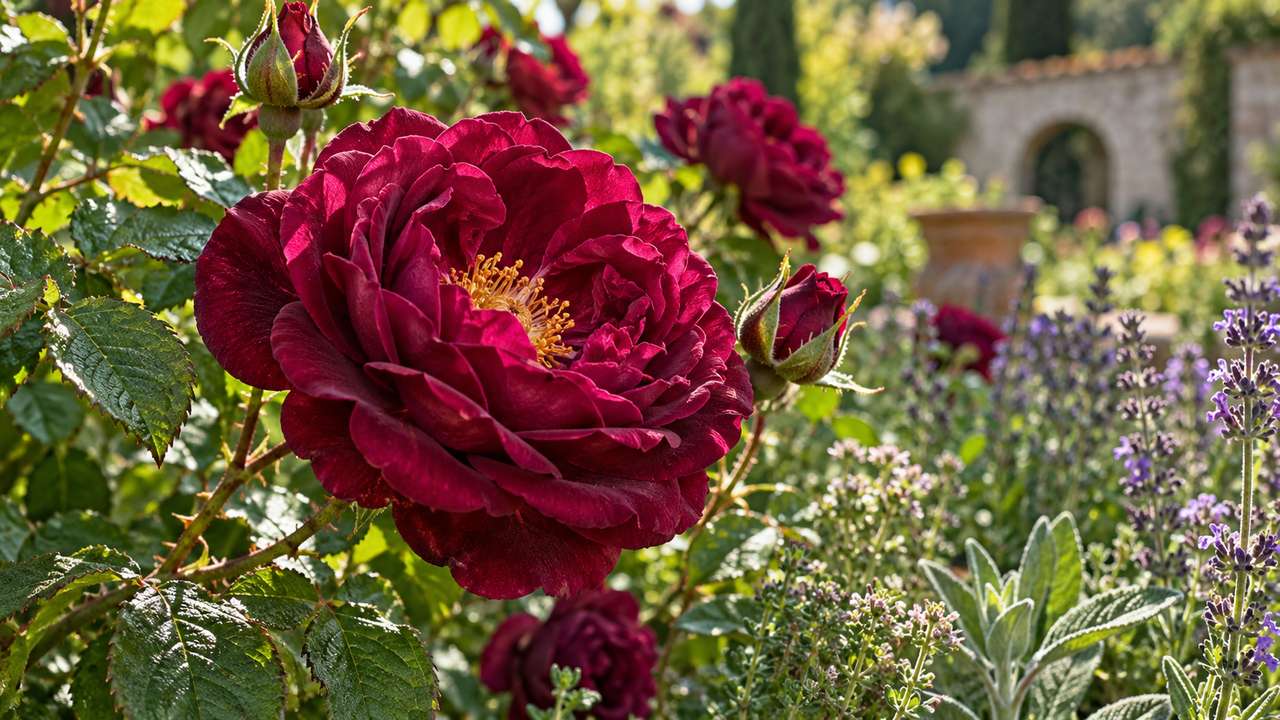
Rosa gallica, commonly called the French rose, Gallic rose, or Provins rose, is a compact deciduous shrub generally reaching about 90 to 150 centimeters in height. It usually flowers once, in late spring or early summer, producing exceptionally fragrant blooms followed, when flowers are not removed, by red-orange hips. The species spreads gradually through underground suckers and is notably hardier than its delicate appearance suggests.
The rose was known in the ancient Mediterranean world, although claims that every red rose depicted or described by Greek and Roman writers was specifically Rosa gallica should be treated cautiously. It was nevertheless among the ancestral roses cultivated across Europe. Romans associated roses broadly with Venus, feasting, luxury, victory, secrecy, and funerary remembrance. Gallica roses later flourished in monastic and medicinal gardens, where beauty and usefulness were inseparable.
The best-known medicinal form is Rosa gallica ‘Officinalis’, the Apothecary’s Rose. Its name reflects its former place in the officina, or storeroom, of medieval pharmacies. Petals were prepared in conserves, syrups, waters, powders, and soothing compounds. The famous striped cultivar ‘Versicolor’, often called Rosa Mundi, is traditionally connected with Rosamund Clifford, although the romantic story surrounding its name is more folklore than documented botanical fact.
Primary Gallica Rose Meaning
- Enduring passion: Deep red and crimson Gallicas express powerful romantic attachment, but with greater historical weight than the conventional modern red rose.
- Ancient love and remembrance: As one of Europe’s oldest cultivated rose groups, the flower represents affection preserved across years, generations, or separation.
- Healing and protection: The Apothecary’s Rose carries associations with restoration, herbal wisdom, compassionate care, and the protective traditions of physic gardens.
- Courage and sacrifice: Blood-red petals may suggest bravery, honorable struggle, and devotion maintained despite hardship.
- Dignity and heritage: Gallicas evoke ancestry, old houses, historic gardens, and respect for traditions worth preserving.
- Sacred devotion: In Christian Europe, red roses could signify martyrdom and divine love, while their fragrance suggested prayer and spiritual grace.
Symbolism Through the Ages
In classical culture, the rose belonged especially to Aphrodite and Venus. Red petals acquired associations with beauty, sensuality, fertility, and the cost of love. Roses also appeared at Roman banquets and funerals, joining pleasure to mortality. The expression sub rosa, “under the rose,” came to denote confidentiality, giving old red roses an additional meaning of discretion and trusted intimacy.
During the medieval period, Gallica roses moved into castle gardens, monasteries, and apothecary plots. Their symbolism became more devotional and medicinal. A red rose might represent Christ’s wounds, the courage of martyrs, or charitable love. At the same time, courtly literature treated it as a sign of desire, beauty, and the beloved. Thus, the Gallica could speak both of earthly romance and spiritual commitment.
From the Renaissance into the nineteenth century, collectors treasured named Gallica cultivars for their saturated colors and intricate forms. In floriography, red roses conventionally declared love, while dark crimson could imply mourning, constancy, or love shadowed by sorrow. A Gallica therefore communicated something more complex than flirtation: “My feeling is profound, remembered, and not lightly given.”
| Gallica Form or Color | Principal Meaning | Best Bouquet Context |
|---|---|---|
| Crimson or blood red | Passion, courage, sacrifice | Anniversaries and solemn declarations |
| Dark red-purple | Mystery, mature love, remembrance | Milestones and memorial arrangements |
| Clear or deep pink | Admiration, gratitude, affectionate loyalty | Thank-you and family bouquets |
| Striped ‘Versicolor’ | Complex love, individuality, intertwined memories | Artistic gifts and historical weddings |
| Apothecary’s Rose | Healing, resilience, benevolent care | Recovery gifts and herb-garden displays |
Shades, Variations, and Bouquet Nuance
Color changes the message. Crimson emphasizes desire and courage, while wine and purple-red shades feel contemplative, aristocratic, or elegiac. Pink Gallicas soften the symbolism toward gratitude and familial affection. Striped flowers suggest that love contains contrast: joy and grief, constancy and change, or two lives joined without losing their individuality.
Neighboring colors can refine the message further. Pairing Gallicas with pale pink roses tempers passion with sweetness and admiration. The antique mood of dusty rose colors strengthens themes of nostalgia and mature romance. For a warmer, more sociable arrangement, the ideas behind salmon rose meaning bridge friendship and attraction. Adding ivory flowers draws on cream rose symbolism, bringing grace, consideration, and quiet elegance to the composition.
When and to Whom Should You Give Gallica Roses?
Gallica roses are especially appropriate for anniversaries, vow renewals, historically styled weddings, milestone birthdays, housewarmings for heritage homes, and gifts honoring gardeners, herbalists, historians, or devoted caregivers. A dark red bouquet suits a long-term partner better than a casual new acquaintance because its symbolism is intense. Pink forms are safer for a parent, mentor, close friend, or host.
For bereavement, use deep Gallicas thoughtfully and combine them with restrained foliage or pale companion flowers. Their message should be framed as enduring remembrance rather than romantic desire. A note such as “In honor of a love and influence that endure” prevents ambiguity. For someone recovering from illness, the Apothecary’s Rose is meaningful, but it should be presented as a historical symbol of healing—not as a medical remedy.
Modern etiquette favors clarity over rigid flower codes. Mention the cultivar or its story on a handwritten card, particularly if the recipient may interpret every red rose as romantic. Avoid heavily fragrant arrangements in hospitals, offices, or fragrance-sensitive homes. Because true Gallicas bloom only once annually and are uncommon in ordinary florist supply, a potted plant can be more authentic and lasting than cut stems.
Companion Flowers and Styling
For an old-world arrangement, combine Gallicas with rosemary for remembrance, lavender for calm devotion, lady’s mantle for a soft green haze, and small sprays of honeysuckle for affectionate bonds. Peonies reinforce prosperity and romance, while foxglove spires create a dramatic cottage-garden silhouette but should be handled cautiously because all parts are toxic.
Use pewter, weathered silver, stoneware, or dark glass rather than a highly polished contemporary vase. Arrange stems loosely, allowing the flowers’ irregular faces and arching growth to remain visible. For weddings, cream flowers and airy herbs keep crimson Gallicas from appearing too somber. For memorials, burgundy foliage, rosemary, and muted pink blooms create depth without theatrical excess.
Cultivation and Vase Care
Plant Gallica roses in full sun, or light afternoon shade in hot climates, in fertile, well-drained soil. Give them good air circulation and water deeply at the base rather than wetting the foliage. Since they flower on older wood, prune lightly after flowering; severe winter pruning may remove the coming season’s blooms. Remove weak or damaged stems, and control suckers where space is limited. Their once-blooming habit is compensated by cold hardiness, fragrance, hips, and comparatively undemanding growth.
For cutting, harvest in the cool morning when buds are beginning to open. Use clean shears, strip leaves that would sit below water, and recut stems at an angle before placing them in a clean vase with floral preservative. Refresh the water every one or two days and keep the arrangement away from direct sun, heaters, and ripening fruit. Antique roses often have a shorter vase life than commercial hybrids, commonly around three to six days, so their fleeting beauty is part of their character.
An Ancient Rose with a Living Message
The Gallica rose represents far more than romantic passion. It carries the memory of Roman ceremony, medieval devotion, apothecary craft, courtly love, and generations of gardeners who preserved its fragrance. Whether given as a crimson declaration, a pink gesture of gratitude, or a striped emblem of complex affection, its message is one of feeling deepened by time. To offer a Gallica is to say that love, courage, healing, and remembrance belong not only to history, but to the relationships we continue to cultivate.