Table of Contents
Meaning of 4 Roses: Stand Firm Against Misfortune and Reassurance
The 4 roses meaning is a promise of constancy: “Nothing will come between us.” A bouquet of four roses can also express reassurance, stability, and the determination to stand firm against misfortune. It is less extravagant than a dozen roses, yet more deliberate than a single bloom. That measured quality makes four roses especially suitable for relationships in which trust, loyalty, or emotional security matters more than spectacle.
This symbolism draws from several traditions rather than one universal floral code. In European numerology, four represents firm foundations: the four directions, four seasons, four classical elements, and four corners of a house. Roses contribute their own long history of love, beauty, secrecy, sacrifice, and devotion. Together, the number and the flower suggest affection protected by a stable structure. However, the message changes across cultures, particularly in parts of East Asia where the number four may be associated with misfortune. Color, presentation, and personal context therefore deserve careful consideration.
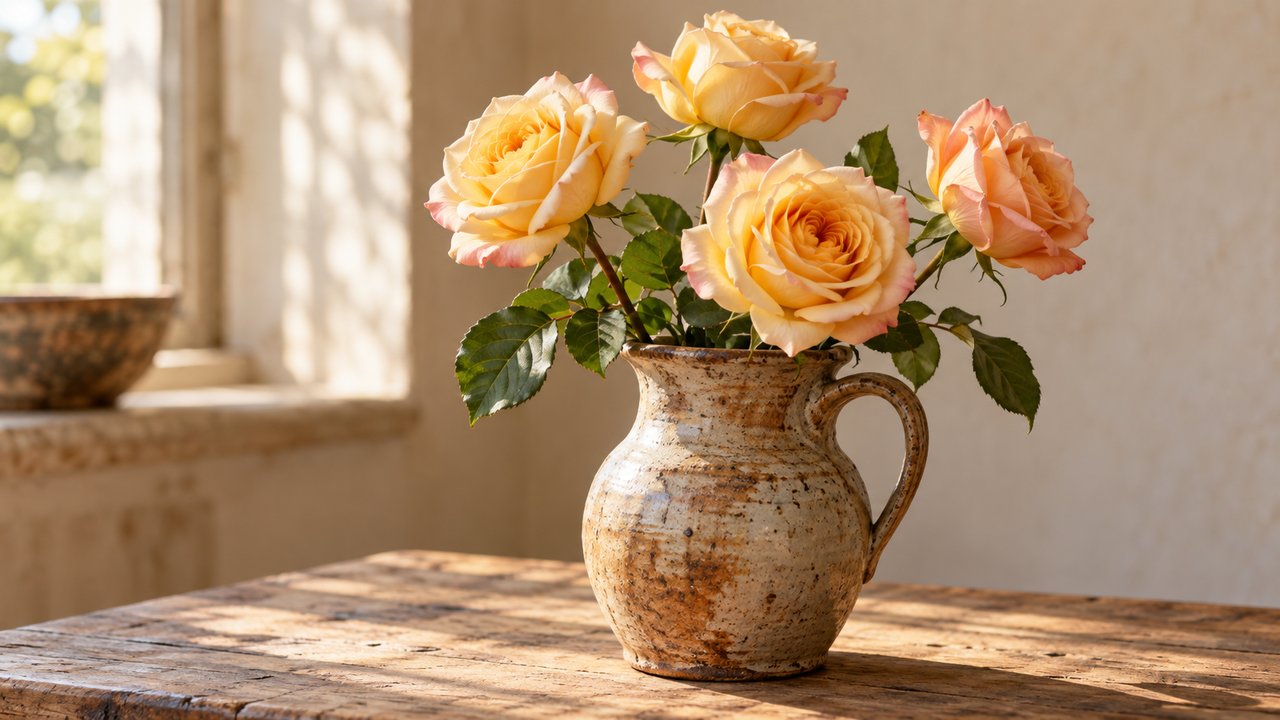
The Primary Meaning of Four Roses
In modern romantic floristry, four roses most commonly communicate, “Nothing will come between us.” The phrase does not necessarily imply defiance toward other people. More often, it reassures the recipient that distance, hardship, disagreement, or changing circumstances will not weaken the bond.
Four is also the number of structure. A table with four legs stands securely; a compass uses four cardinal directions; and the year progresses through four seasons. A gift of four roses can consequently mean, “Our relationship has a firm foundation,” or, “I will remain beside you through every season.” This makes the arrangement appropriate not only for lovers, but also for family members, close friends, and anyone facing uncertainty.
- Unwavering commitment: A declaration that outside pressures will not divide the relationship.
- Reassurance: A quiet promise of presence, reliability, and emotional safety.
- Stability: Recognition of a bond built on trust rather than passing excitement.
- Resilience: Encouragement to remain steadfast during illness, grief, distance, or adversity.
- Completeness in the material world: A symbolic connection with the seasons, elements, directions, and foundations.
Historical and Cultural Interpretations
Ancient societies did not generally assign standardized messages to exact rose quantities in the way modern florists do. Roses nevertheless carried powerful associations. In Greek and Roman traditions, they were connected with Aphrodite or Venus, love, beauty, mortality, and secrecy. Medieval and Renaissance imagery expanded their meanings to include heavenly love, martyrdom, dynastic identity, and the turning wheel of fortune.
Number-based bouquet messages became more familiar through later European courtship customs and commercial floristry. During the nineteenth century, flowers could support subtle social communication, although historical dictionaries often disagreed with one another. The broader Victorian language of flowers is therefore best understood as a varied literary and social tradition, not a single rigid code. Today’s “nothing will come between us” interpretation is a modern convention built upon the rose’s romantic symbolism and the number four’s association with solidity.
In Chinese, Japanese, Korean, and some Vietnamese contexts, four can sound similar to the word for death. This linguistic association has produced forms of tetraphobia, including the omission of fourth floors or avoidance of gifts arranged in fours. A four-rose bouquet may consequently seem unlucky rather than reassuring. Customs vary by family, region, and generation, but culturally considerate gifting requires knowing the recipient’s perspective. When uncertain, choose three, five, or another locally favorable number.
| Context | Meaning of Four Roses | Best Use |
|---|---|---|
| Romantic | Nothing will come between us | Anniversary, reconciliation, or long-distance love |
| Supportive | Stand firm; you are not alone | Recovery, grief, or a difficult transition |
| Family or Friendship | A dependable, enduring bond | Thank-you, encouragement, or reunion |
| East Asian Custom | Potential association with bad luck or death | Avoid unless the recipient welcomes the number |
How Rose Color Changes the Message
The number establishes the structure of the message, while color supplies its emotional tone. Understanding established rose color meanings helps prevent ambiguity.
- Four red roses: Steadfast romantic love, fidelity, and passionate commitment.
- Four pink roses: Affection, admiration, gratitude, and gentle reassurance.
- Four white roses: Sincerity, remembrance, peace, or a loyal new beginning.
- Four yellow roses: Friendship, optimism, and dependable emotional support; modern usage is usually cheerful rather than jealous.
- Four orange roses: Enthusiasm, courage, attraction, and confidence in a shared future.
- Four apricot roses: Warmth, gratitude, and gracious affection. The nuanced apricot rose meaning works particularly well for hosts, mentors, and cherished friends.
Mixed colors can tell a more layered story. Two red and two white roses may unite passion with sincerity, while four graduated pink shades suggest affection deepening over time. For the clearest visual symbolism, keep all four blooms similar in size and arrange them so each remains visible. Buds imply promise and beginnings; fully open flowers communicate mature feeling; garden roses add softness and nostalgia.
When and How to Give Four Roses
Four roses suit an anniversary, a reunion after separation, a difficult apology, or a moment when a partner needs reassurance. They can also encourage a friend beginning treatment, changing careers, grieving a loss, or rebuilding after disappointment. For a family member, they may represent dependable love through all four seasons.
Modern etiquette favors explanation over mystery. Include a brief card such as, “Four roses for a bond that stands firm,” or, “Through every season, I am here.” This prevents the bouquet from appearing accidental and allows the intended symbolism to outweigh competing interpretations. Avoid using romantic red roses for a colleague unless that intimacy is clearly appropriate; pink, apricot, cream, or yellow is usually more tactful.
Presentation matters. Four premium roses with clean stems and restrained wrapping can look intentional and luxurious. Uneven, damaged, or heavily opened blooms may instead resemble leftovers from a larger bunch. In cultures where four is inauspicious, respect the custom rather than attempting to explain it away. A symbolic gift succeeds only when its recipient feels understood.
Companion Flowers and Bouquet Styling
A minimalist hand-tied bouquet lets the number remain obvious. Frame the roses with eucalyptus, olive, ruscus, or fern without adding other dominant flowers. Olive foliage strengthens themes of peace and endurance, while rosemary suggests remembrance. For romantic softness, add delicate waxflower or pale astrantia; for consolation, use white lisianthus; for cheerful friendship, pair yellow roses with chamomile or feverfew.
If exact rose count carries the message, ask the florist not to include rose-like focal blooms that confuse the design. A square vase subtly echoes the symbolism of four, while stems positioned toward the four compass points create an elegant, architectural arrangement. Natural linen ribbon, handmade paper, or a simple ceramic vessel suits the bouquet’s grounded character better than excessive glitter or ornament.
Botanical Care and Vase Longevity
Roses are woody-stemmed members of the genus Rosa. Their vase life is commonly five to ten days, depending on cultivar, freshness, temperature, and care. Choose flowers with firm petals, hydrated green sepals, and buds that yield slightly when gently pressed. Extremely hard buds may never open, while loose outer petals indicate advanced maturity.
Use a clean vase and fresh, room-temperature water mixed with commercial flower food. Remove foliage that would sit below the waterline, then recut one to two centimeters from each stem at a 45-degree angle with a sharp, clean blade. Keep the arrangement away from direct sun, radiators, drafts, and ripening fruit, which releases ethylene gas and hastens aging. Refresh the water every two days, clean the vase, and trim the stems again.
When the bouquet begins to fade, preserving it can extend the sentiment. Air-drying works for darker cultivars, while silica gel often retains shape and color more effectively. Following a careful drying roses technique turns the four blooms into a lasting keepsake without losing their symbolic unity.
A Steady Message in Four Blooms
The meaning of four roses is quiet but powerful: loyalty with a foundation, affection that withstands difficulty, and reassurance when life feels uncertain. Red makes the promise romantic; pink softens it with gratitude; white lends sincerity; yellow celebrates friendship; and apricot offers welcoming warmth. Because four can signify misfortune in some cultures, thoughtful knowledge of the recipient remains essential. Chosen carefully, styled intentionally, and accompanied by a few honest words, four roses become an eloquent promise to stand firm together through every season.