Table of Contents
Meaning of 8 Roses: Supportive Care, Comfort in Illness, and Gratitude
The 8 roses meaning is most closely associated with support, thoughtful care, encouragement, and gratitude. An arrangement of eight roses says, “I am here for you,” making it especially appropriate when someone is ill, recovering from surgery, grieving, managing a difficult transition, or simply deserving heartfelt thanks. Unlike the dramatic romantic declaration conveyed by a dozen red roses, eight blooms create a gentler impression: abundant enough to feel generous, yet intimate enough to remain personal.
This symbolism draws from several traditions rather than one definitive historical code. Roses have carried emotional and ceremonial meanings since antiquity, while numbered bouquets became increasingly popular through European courtship customs, Victorian floriography, and modern floristry. Nineteenth-century flower dictionaries concentrated primarily on species and colors—not universally fixed stem counts—so the present interpretation of eight roses is best understood as an evolving convention. It combines the rose’s ancient symbolism of affection with the number eight’s associations with balance, continuity, renewal, and good fortune.
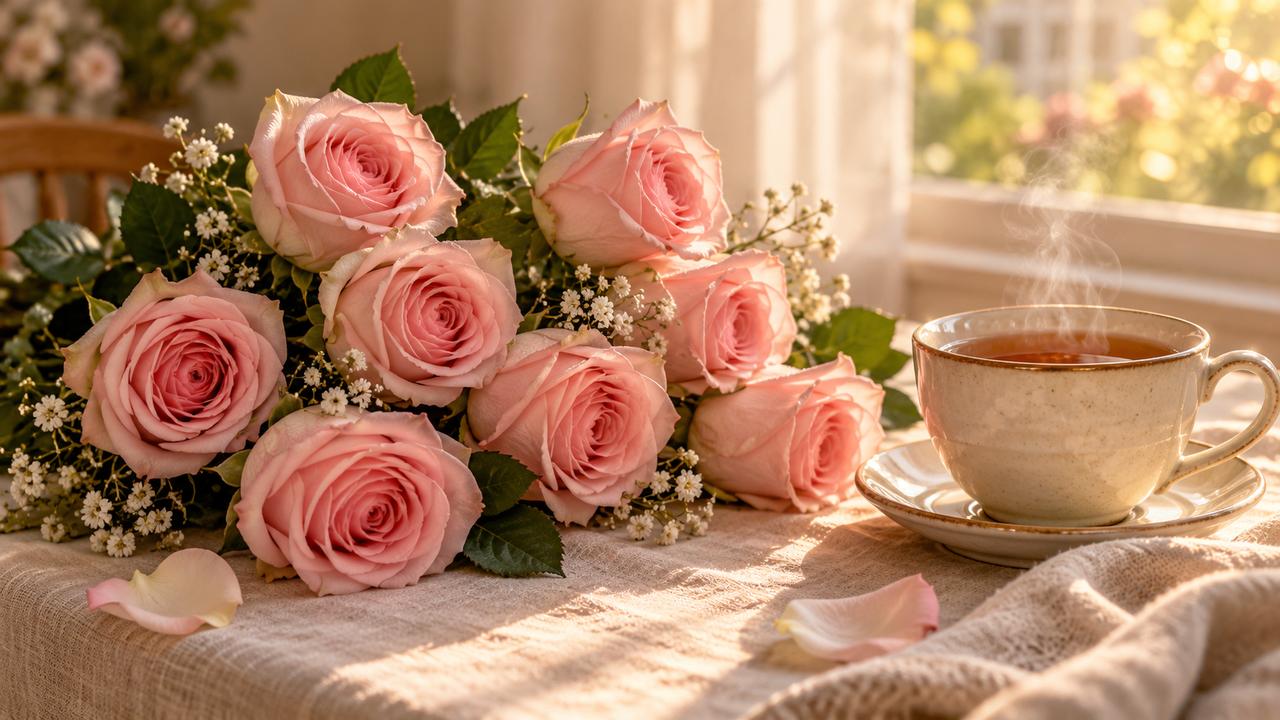
Botanically, roses belong to the genus Rosa, a diverse group of woody perennials celebrated for layered petals, fragrance, and remarkable variation. Eight carefully selected stems therefore offer more than numerical symbolism: their unfolding flowers provide a living image of resilience, restoration, and beauty returning after hardship.
The Primary Meaning of Eight Roses
The clearest message expressed by eight roses is supportive affection. They acknowledge that care is shown not only through grand declarations, but also through presence, patience, and practical kindness. Depending on the relationship and flower color, the bouquet can communicate several closely related sentiments:
- Support: “You do not have to face this alone.”
- Comfort: “I hope these flowers bring peace during a difficult time.”
- Gratitude: “Your help, generosity, or friendship means more than I can say.”
- Encouragement: “Keep going; I believe in your strength.”
- Steady affection: “My care for you is sincere, dependable, and lasting.”
- Renewal: “May this be the beginning of a healthier or happier chapter.”
Eight can also suggest equilibrium because its form appears balanced, while the horizontal figure eight resembles the infinity symbol. This visual relationship gives the bouquet an additional modern meaning: continuing care. It is particularly moving when sent during a long recovery, when a recipient may need sustained encouragement rather than a single celebratory gesture.
Historical and Cultural Interpretations
In ancient Greek and Roman culture, the rose was associated with love, beauty, secrecy, mortality, and divine favor. Medieval Christian imagery later connected roses with spiritual devotion, charity, sacrifice, and the Virgin Mary. During the Victorian era, flowers became tools of coded social communication. A rose’s color, maturity, presentation, and combination with other plants could alter its message, although meanings varied among published dictionaries and communities.
The specific symbolism of eight stems is largely a product of later bouquet etiquette and numerological interpretation. In many Western settings, even-numbered arrangements appear symmetrical and polished, making eight roses suitable for gratitude, recovery, anniversaries, and supportive friendship. Contemporary florists frequently interpret them as a message of encouragement or appreciation.
In Chinese culture, eight is considered especially auspicious because its pronunciation is associated with prosperity and good fortune. Eight roses may consequently convey blessings for success, health, or a favorable new beginning. They can be an excellent choice for a business opening, housewarming, graduation, or recovery gift. Cultural context still matters, however: in parts of Eastern Europe and elsewhere, even numbers of flowers are traditionally connected with funerals or memorial observances. When gifting internationally, consult local custom or an experienced florist.
How Rose Color Changes the Message
Stem count establishes the structure of the message, but color supplies its emotional tone. Eight red roses can feel romantic, whereas eight yellow or peach roses usually emphasize friendship and appreciation. Mixed shades allow the giver to express layered feelings without relying on words alone.
| Rose color | Meaning in an eight-rose bouquet | Best context |
|---|---|---|
| Red | Devoted love and steadfast romantic support | Partner, spouse, or anniversary |
| Pink | Tender care, admiration, and thanks | Recovery, gratitude, or family |
| White | Peace, sincerity, remembrance, and hope | Sympathy or spiritual comfort |
| Yellow | Cheerfulness, friendship, and optimism | Friend or colleague |
| Peach or apricot | Warm gratitude, hospitality, and gentle affection | Thank-you or host gift |
| Lavender or mauve | Enchantment, distinction, and refined admiration | Mentor or sophisticated recipient |
Warm apricot varieties feel welcoming and reassuring; a closer look at apricot rose meaning helps explain why they suit caregivers and generous hosts. Salmon roses blend friendship with energetic affection, and the nuances of salmon rose meaning make them useful when plain pink seems too delicate.
For an elegant, unusual gift, explore mauve rose symbolism. Green roses—usually naturally pale green cultivars rather than artificially dyed blooms—suggest renewal and harmony. The mint green rose significance is especially compatible with eight’s associations with prosperity and restoration.
When and to Whom Should You Give Eight Roses?
Eight roses are exceptionally versatile. Send soft pink, cream, apricot, or yellow blooms to someone in hospital or recovering at home. Choose low-fragrance cultivars if the recipient experiences nausea, migraines, respiratory sensitivity, or scent intolerance. Before arranging a hospital delivery, confirm that flowers are permitted; intensive-care units and some immunocompromised wards may prohibit them.
The bouquet also suits a nurse, physician, teacher, mentor, neighbor, host, or friend who has offered meaningful help. For professional thanks, avoid red roses, which may imply romance. Yellow, peach, white, or mixed garden roses communicate appreciation more clearly. Red or deep pink is appropriate for a partner who has provided emotional support, particularly when accompanied by a note explaining the eight stems.
Modern etiquette favors clarity over secret codes. A short card such as “Eight roses for your strength, kindness, and constant support” prevents ambiguity. For bereavement, muted white, blush, or cream roses are tactful, but local religious and cultural customs should guide the choice. Avoid heavily glittered, strongly dyed, or extravagantly wrapped arrangements in medical and solemn settings.
Companion Flowers and Bouquet Styling
Preserve the symbolic prominence of the eight roses by treating them as the bouquet’s focal flowers. For comfort, combine them with lisianthus, chamomile, feverfew, or soft greenery. Eucalyptus creates a silvery, contemporary silhouette, though its aroma may be unsuitable in hospitals. White stock or sweet peas add fragrance and softness; use them only when scent is welcome.
For gratitude, pair apricot roses with cream spray roses, alstroemeria, and olive foliage. A cheerful recovery bouquet can combine yellow roses with asters or snapdragons, while white roses with rosemary suggest remembrance and faithful care. Arrange the stems asymmetrically for a natural garden style, or in an even circular formation to emphasize balance. Recyclable paper, linen ribbon, and a simple glass vase feel more considerate than excessive plastic packaging.
Botanical Care and Vase Longevity
Fresh cut roses commonly last five to ten days, depending on cultivar, harvest stage, temperature, and care. Begin with a thoroughly cleaned vase. Remove every leaf that would sit below the waterline, since submerged foliage encourages bacterial growth. Using clean, sharp pruners, recut one to two centimeters from each stem at a diagonal before placing the roses promptly in water.
- Use fresh, room-temperature water with correctly measured commercial flower food.
- Top up the vase daily and replace the water completely every two days.
- Keep roses away from direct sun, radiators, drafts, and ripening fruit.
- Remove fading petals and flowers before decay affects neighboring stems.
- Place the arrangement in a cool room overnight when practical.
Drooping often occurs when air or debris obstructs water uptake. Recut the stem with a clean blade and return it to fresh conditioned water. Do not routinely add aspirin, coins, or excessive sugar; improperly balanced home remedies can promote microbes or damage stem tissue.
A Bouquet of Steady Reassurance
Ultimately, the 8 roses meaning is one of reliable, compassionate presence. It bridges the rose’s long history as an emblem of love with eight’s modern associations with balance, continuity, renewal, and fortune. Whether offered during illness, after an act of kindness, or at the start of a hopeful new chapter, eight roses communicate care without excess. Chosen in a thoughtful color, adapted to the recipient’s culture, and accompanied by sincere words, they become a graceful promise: “You are valued, and my support remains with you.”