Table of Contents
Meaning of 18 Roses: Youth, Vitality, and Celebrating a Golden 18th Birthday
The 18 roses meaning is closely associated with youth, vitality, sincere affection, and the joyful passage into adulthood. An arrangement of eighteen roses is especially meaningful for an eighteenth birthday, when the number and the recipient’s age form a perfect symbolic match. It can say, “Celebrate who you have become,” while also expressing hope for the opportunities, relationships, and adventures still ahead.
This meaning draws on several traditions rather than one fixed ancient rule. Roses have carried emotional significance since classical antiquity, appearing in Greek and Roman stories of Aphrodite or Venus, beauty, desire, secrecy, and renewal. During the nineteenth-century enthusiasm for floriography, flowers became an elaborate vocabulary through which color, condition, placement, and presentation could communicate feelings. Bouquet numerology developed alongside these customs, giving the number of stems an additional layer of intention.
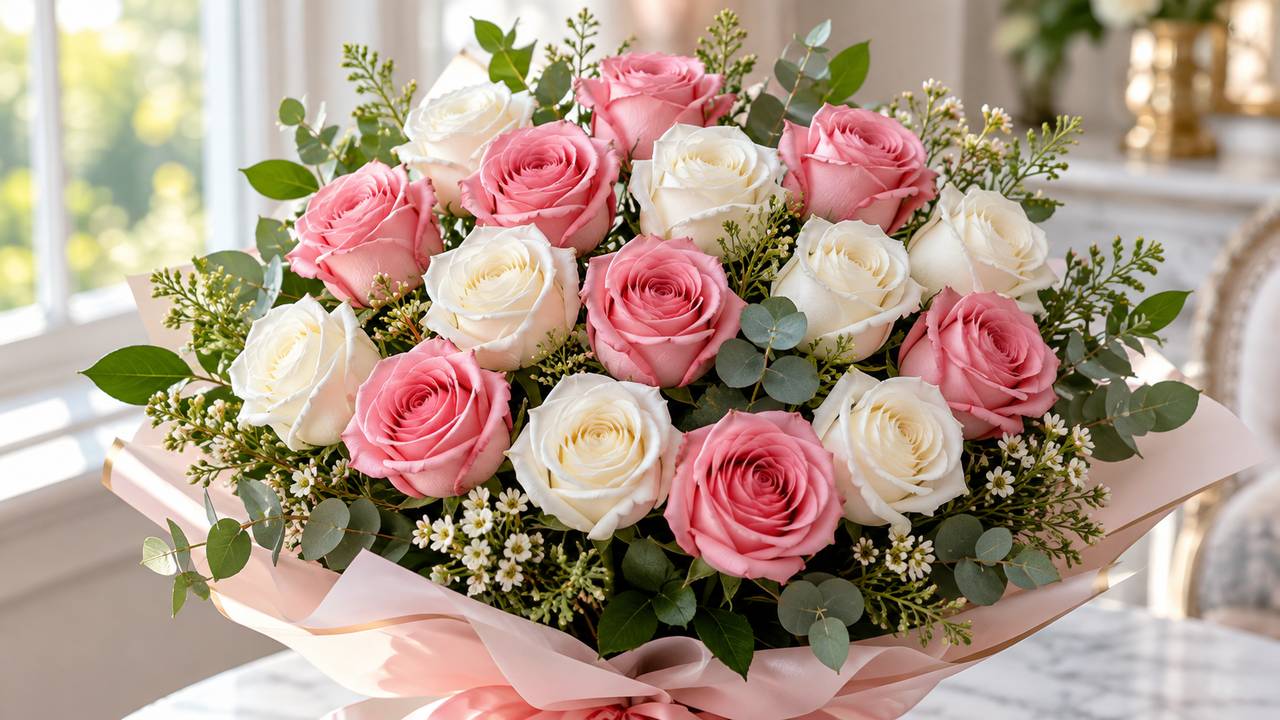
Botanically, roses belong to the genus Rosa, a diverse group of shrubs and climbers prized for layered petals, fragrance, hips, and remarkable variation in color. That combination of delicacy and resilience makes the rose particularly suitable for an eighteenth birthday: its unfolding bloom suggests emerging maturity, while its thorn-bearing stem represents strength, boundaries, and the wisdom gained while growing.
What Do 18 Roses Mean?
At its heart, a bouquet of eighteen roses celebrates a milestone. Eighteen is widely recognized as the threshold of legal adulthood, although the rights and responsibilities attached to that age vary by country. Consequently, eighteen roses can honor independence, possibility, confidence, and the transition from adolescence into adult life.
Its principal interpretations include:
- Youth and vitality: Fresh roses reflect energy, beauty, optimism, and a life beginning to open into new possibilities.
- Coming of age: Eighteen stems mark the completion of childhood and welcome a new phase of personal responsibility.
- Sincere affection: The generous stem count conveys deliberate care without necessarily implying the extravagance of a very large bouquet.
- Prosperity and good fortune: In some modern interpretations influenced by Chinese numerology, eight is auspicious because of its association with wealth and success, adding a fortunate undertone to eighteen.
- Romantic devotion: When composed of red roses and presented by a partner, eighteen blooms can communicate mature, wholehearted love.
- Public recognition: In coming-of-age ceremonies, each rose may represent a person, memory, lesson, or wish that helped shape the celebrant.
The number does not have a single universal definition in historical floriography. Victorian flower dictionaries focused more consistently on species and colors than on exact stem counts. Therefore, context matters: the card, rose color, relationship, and occasion should work together to make the intended message unmistakable.
Historical and Cultural Interpretations
In European courtship traditions, roses communicated feelings that social convention sometimes made difficult to state directly. Red suggested passionate love; white conveyed innocence or reverence; pink expressed admiration and gentleness. An abundant bouquet also demonstrated effort and generosity, so eighteen stems would have appeared substantial and ceremonially impressive.
In contemporary Western cultures, eighteen roses are strongly linked to eighteenth birthdays, graduations, debut celebrations, and romantic anniversaries. The bouquet honors both achievement and potential. Parents may give it as a blessing, friends as an enthusiastic tribute, and romantic partners as a declaration of affection.
A particularly notable custom appears in Filipino debut celebrations. At a young woman’s eighteenth-birthday debut, an “18 Roses” ceremony traditionally involves eighteen significant men or male relatives, each presenting a rose and often sharing a dance with the debutante. Fathers, brothers, relatives, friends, and mentors may participate. Modern families frequently adapt the custom to be more inclusive, choosing participants according to emotional significance rather than gender or rigid convention.
Elsewhere, the number eighteen can emphasize luck and forward movement. In Jewish tradition, eighteen is associated with chai, meaning “life,” because the Hebrew letters forming the word have a numerical value of eighteen. Although roses are not a prescribed part of that tradition, an eighteen-rose gift may thoughtfully evoke life, blessing, and well-being when this symbolism is relevant to the recipient.
Color Meanings for an 18-Rose Bouquet
| Rose Color | Meaning in a Bouquet of 18 | Best Recipient or Occasion |
|---|---|---|
| Red | Passionate love, courage, and commitment | Romantic partner or anniversary |
| Pink | Admiration, sweetness, gratitude, and youthful joy | Daughter, friend, sibling, or debutante |
| White | New beginnings, sincerity, peace, and respect | Coming-of-age event or graduation |
| Yellow | Friendship, optimism, warmth, and celebration | Best friend, classmate, or teammate |
| Orange or Salmon | Enthusiasm, fascination, confidence, and warm affection | A vibrant milestone celebration |
| Cream | Thoughtfulness, grace, charm, and understated affection | Elegant family or formal presentation |
Color can fine-tune the emotional register. A bouquet of pale pink roses feels tender, encouraging, and age-appropriate, while deeper pinks express gratitude and confident admiration. Muted dusty rose colors introduce nostalgia, making them ideal when the gift reflects on childhood memories as well as future hopes.
Salmon roses bridge friendship and attraction, offering energy without the unequivocal romantic declaration of scarlet. Understanding the salmon rose meaning is useful when designing a bouquet for a close friend or new partner. For a refined arrangement, cream rose symbolism brings warmth and elegance while remaining less bridal than pure white.
When and to Whom Should You Give 18 Roses?
An eighteenth birthday is the clearest occasion, but it is not the only one. Eighteen roses can celebrate graduation, admission to a university, a first major performance, an engagement, a personal achievement, or the eighteenth anniversary of a relationship or business. They can also offer encouragement at the beginning of a new chapter.
For a daughter, son, sibling, godchild, or grandchild, choose pink, yellow, white, peach, or a joyful mixed palette. Red is best reserved for an established romantic relationship, since eighteen red roses can feel like a serious declaration. For a friend, yellow, salmon, or mixed garden roses communicate warmth without ambiguity. In professional settings, select restrained cream, white, or soft peach and avoid intensely romantic presentation.
Modern etiquette favors clarity and personal sensitivity. Include a short note explaining why there are exactly eighteen stems. Confirm that the recipient enjoys flowers, consider fragrance sensitivities, and arrange pet-safe placement: roses themselves are generally considered non-toxic to cats and dogs, but thorns, pesticides, floral preservatives, and companion plants may still present hazards. At a formal debut, coordinate with the family or organizer rather than arriving with an unplanned ceremonial bouquet.
Companion Flowers and Styling
For a youthful, airy design, pair eighteen roses with lisianthus, waxflower, chamomile, or delicate foliage such as eucalyptus. Baby’s breath creates a cloudlike traditional look, while delphinium adds height and a sense of aspiration. Alstroemeria emphasizes friendship and lasting bonds; freesias contribute fragrance and innocence; ranunculus adds intricate texture and celebratory abundance.
Keep the eighteen roses visually countable if the number is central to the message. A spiral hand-tied bouquet allows each bloom room to open, while a low, rounded arrangement feels formal and luxurious. Satin ribbon suits a debut ceremony; natural linen ribbon and garden foliage create a relaxed contemporary style. Avoid overcrowding with large companion flowers that obscure the symbolic stem count.
Care and Vase Longevity
Fresh-cut roses commonly remain attractive for about five to seven days, and sometimes longer with excellent care. Choose stems with firm green sepals and buds that have begun to loosen rather than tightly closed or fully flattened blooms. Recut one to two centimeters from each stem at a 45-degree angle using clean, sharp shears. Remove every leaf that would sit below the waterline.
- Use a thoroughly cleaned vase and fresh lukewarm water mixed with commercial flower food.
- Change the water every one to two days and rinse the vase before refilling it.
- Recut the stems periodically to restore efficient water uptake.
- Keep the bouquet away from direct sunlight, radiators, drafts, and ripening fruit, which releases bloom-aging ethylene.
- Remove faded petals or stems promptly to reduce microbial growth and preserve the arrangement’s appearance.
For garden-grown roses, harvesting in the cool morning helps preserve hydration. Cut flowers from healthy, well-watered plants, use sanitized tools, and place the stems into water immediately. Roses perform best as cut flowers when they have strong stems, healthy foliage, and suitable post-harvest conditioning.
A Living Emblem of the Future
The meaning of eighteen roses combines the ancient emotional power of the rose with the modern significance of becoming eighteen. It celebrates youthful vitality, honors growth, and offers an elegant blessing for the future. Whether presented during a Filipino debut, sent by a proud parent, or chosen by a romantic partner, the bouquet becomes most meaningful when its colors, companions, and written message reflect the recipient’s personality.
Ultimately, eighteen roses do more than mark an age. They recognize eighteen years of memories while welcoming adulthood with beauty, courage, affection, and hope—one bloom for every year, and an entire bouquet for the life still unfolding.