Table of Contents
Black Baccara Rose: The Deepest Velvet Burgundy Near-Black Modern Rose
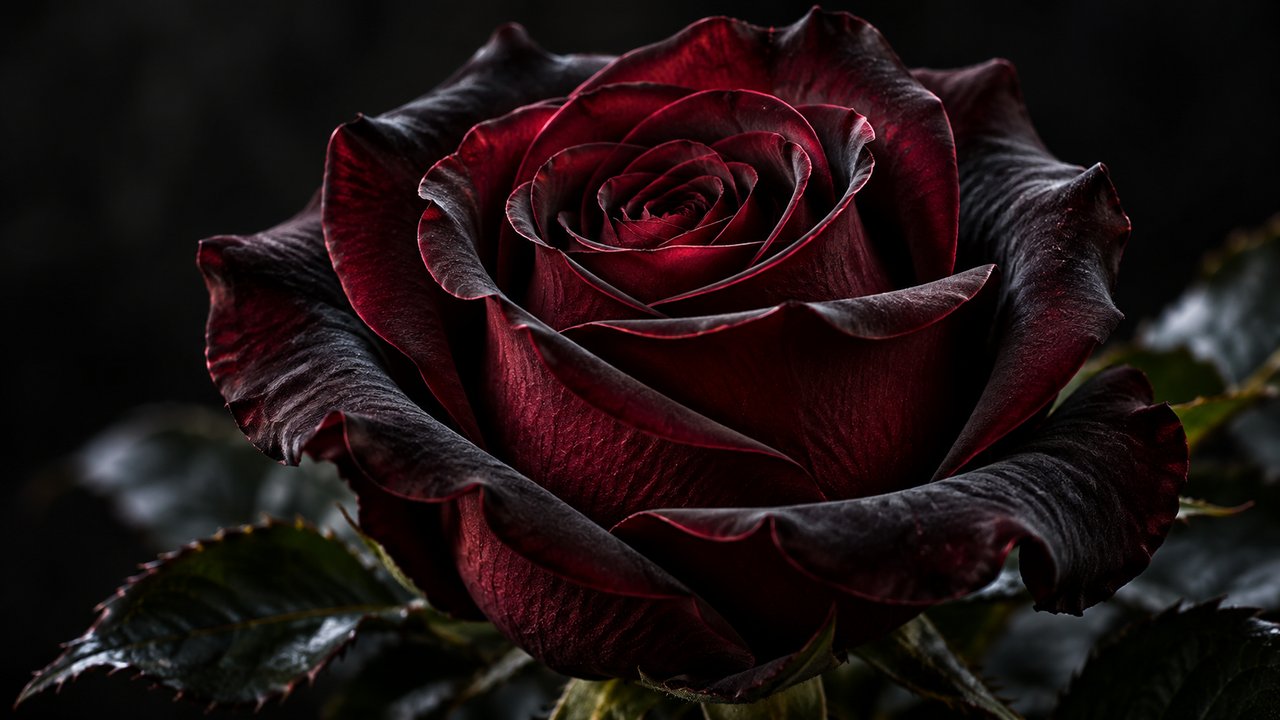
The Black Baccara rose is one of floristry’s most dramatic illusions: a flower that appears black at first glance but reveals layers of wine, garnet, and deep burgundy as its petals unfold. Introduced by the French rose house Meilland around the turn of the twenty-first century and commonly attributed to breeder Jacques Mouchotte, this modern hybrid tea rose was developed primarily for the cut-flower trade. Its high-centered form, long stems, restrained fragrance, and unusually dark petals quickly made it a favorite for luxurious, Gothic, and unconventional arrangements.
Emotionally, the Black Baccara rose occupies a fascinating space between passion and mystery. It carries the romantic vocabulary of a red rose, yet its shadowed color adds gravity, secrecy, power, and transformation. It can suggest love that is profound rather than playful, beauty discovered in darkness, or the dignified closing of one chapter before another begins. Because those meanings are intense and sometimes ambiguous, context matters greatly when giving this extraordinary rose.
Is the Black Baccara Rose Truly Black?
No naturally occurring rose produces genuinely black petals. Roses do not possess the pigments needed to create botanical black. Black Baccara achieves its near-black appearance through an exceptionally dense concentration of red anthocyanin pigments, combined with velvety petal surfaces that absorb light. The darkest impression is usually seen in tightly closed buds, along the outer petals, and under cool or subdued lighting.
As the flower opens, its color becomes more recognizably burgundy or oxblood. Cool growing conditions can encourage richer pigmentation, while strong heat and bright sunlight may bring forward crimson or dark cherry tones. This responsiveness gives each stem a slightly different character: one may look almost charcoal at the edges, while another glows like red wine when illuminated.
Primary Meanings and Symbolism
- Mysterious love: The near-black bloom suggests attraction that is private, complex, magnetic, or not easily explained.
- Deep passion: Beneath its dark exterior, Black Baccara remains a red rose and therefore retains associations with desire, devotion, and romantic intensity.
- Transformation: Its threshold between red and black makes it an evocative emblem of endings, rebirth, and courageous personal change.
- Elegance and power: The sculptural hybrid tea form and rare coloration communicate confidence, sophistication, and commanding beauty.
- Farewell or remembrance: In memorial settings, the flower can express solemn love, enduring respect, and grief without sentimentality.
- Individuality: For recipients drawn to unusual beauty, it celebrates independence, nonconformity, and refusal to be ordinary.
Historical and Cultural Interpretations
Although Black Baccara itself is modern, the dream of a black rose is centuries old. European flower lore associated dark blossoms with secrecy, fatal beauty, forbidden affection, and mourning. During the Victorian era, when coded floral messages became fashionable, very dark red roses could imply bashful shame, consuming passion, or a love shadowed by sorrow. A true Black Baccara could not have appeared in a Victorian bouquet, but its modern symbolism inherits much from that taste for emotionally charged botanical messages.
In twentieth-century literature, film, fashion, and Gothic subcultures, the imaginary black rose became an emblem of rebellion and tragic romance. Contemporary floristry has broadened that vocabulary. Black Baccara roses now appear in editorial weddings, autumn ceremonies, milestone celebrations, and minimalist luxury arrangements. They need not signify death; increasingly, they represent reinvention, resilience, and beauty outside convention.
Cultural customs still shape interpretation. In many Western settings, dark red roses are read primarily as romantic. In memorial work, however, their solemn color can communicate reverence. Some recipients may perceive an almost-black bouquet as ominous, particularly where black is strongly reserved for mourning. A card explaining the intended message—“for your strength,” “to a remarkable new beginning,” or “with enduring love”—prevents misunderstanding.
| Bouquet Context | Likely Message | Best Companion Colors | Etiquette Note |
|---|---|---|---|
| Given alone | Rare beauty, intense fascination, mystery | None or restrained greenery | Add a personal note to clarify intent |
| Romantic bouquet | Profound, mature, passionate love | Burgundy, blush, cream | Best for an established relationship |
| Wedding flowers | Devotion, drama, individuality | Ivory, antique pink, copper | Coordinate with the ceremony’s visual language |
| Milestone or new beginning | Transformation, courage, authority | Gold, rust, salmon | Frame the gift as celebratory, not mournful |
| Memorial arrangement | Enduring love, dignity, solemn remembrance | White, cream, deep green | Confirm cultural and family preferences |
Shades, Variations, and Bouquet Nuance
A closed Black Baccara bud communicates secrecy, anticipation, and tightly held emotion. A half-open bloom feels polished and formal, while a fully open rose becomes softer, richer, and more openly romantic. Florists should inspect stems in the lighting where the arrangement will be displayed: candlelight emphasizes blackened edges, daylight reveals red undertones, and harsh cool LEDs can flatten the velvet effect.
Color pairings substantially alter the message. Alongside pale pink roses, Black Baccara becomes tender and protective rather than severe. The muted vintage character of dusty rose colors creates an atmosphere of memory and mature romance. Ivory blooms informed by cream rose symbolism introduce grace, sincerity, and visual light. For a warmer, more energetic composition, explore the affectionate enthusiasm associated with salmon rose meaning.
When and to Whom Should You Give Black Baccara Roses?
These roses are especially appropriate for anniversaries, sophisticated Valentine’s gifts, engagements with a dramatic aesthetic, October weddings, theatrical celebrations, major career achievements, and moments of personal reinvention. They suit a partner who appreciates symbolism, a creative friend with unconventional taste, or a mentor whose strength and distinction deserve recognition.
Exercise care with new relationships, apologies, hospital visits, and casual workplace gifts. A dozen near-black roses can feel intensely intimate or emotionally heavy. In these situations, use one or three stems within a lighter mixed bouquet. They are also unsuitable for someone known to dislike dark colors or to interpret black flowers exclusively as symbols of death.
Modern etiquette favors intention over rigid numerical codes. One rose makes a striking statement of singular admiration; three can signify a concise declaration of love; six or twelve create unmistakable romantic drama. For sympathy flowers, avoid theatrical black wrapping and use natural greenery, cream accents, and a restrained vessel. Whatever the occasion, a short written message is more valuable than relying on color symbolism alone.
Companion Flowers and Styling Advice
For romantic depth, combine Black Baccara with burgundy dahlias, chocolate cosmos, scabiosa, ranunculus, or dark calla lilies. For contrast, pair it with cream garden roses, white lisianthus, blush spray roses, or delicate sweet peas. Copper beech, smoke bush, eucalyptus, and trailing jasmine add movement without competing with the focal bloom.
Use matte vessels in charcoal, aged brass, smoked glass, or weathered stone to reinforce its velvety character. Avoid overcrowding: the rose’s silhouette is most effective when each bloom has breathing room. A monochromatic hand-tied bouquet feels opulent and nocturnal, while a loose garden composition with apricot, salmon, and cream flowers makes the same rose appear warm, artistic, and celebratory.
Botanical Care and Vase Longevity
Black Baccara is a hybrid tea rose with long, upright stems and typically one shapely bloom per stem. Garden plants favor full sun, fertile well-drained soil, steady moisture, and good air circulation. In very hot climates, protection from fierce afternoon sun may help preserve the darkest petal color. Water at soil level, feed during active growth, remove spent blooms, and monitor for common rose problems such as black spot, powdery mildew, aphids, and spider mites.
Cut roses commonly last about seven to ten days with attentive care. Choose firm blooms whose sepals have begun to relax. Recut one to two centimeters from each stem at an angle with clean tools, remove foliage below the waterline, and place the stems promptly in a sanitized vase containing fresh water and floral preservative. Change the water every two days, recut stems as needed, and keep the arrangement away from direct sun, radiators, drafts, and ripening fruit, whose ethylene gas accelerates aging.
A Rose of Shadowed Splendor
The Black Baccara rose is not literally black, and its symbolic power is stronger for that complexity. Its petals move between darkness and red, allowing it to express passionate love, mystery, dignity, farewell, resilience, or transformation according to its companions and setting. Chosen thoughtfully, styled with restraint, and accompanied by a clear personal message, it becomes more than a dramatic flower: it is an eloquent tribute to emotions too deep for ordinary red.