Table of Contents
Pairing Roses with Statice: Everlasting Color, Remembrance, and Texture
The pairing of roses and statice brings together two remarkably different flowers: the rose, lush and emotionally immediate, and statice, papery, airy, and famous for retaining its color after drying. In floral symbolism, this contrast creates a compelling message about feelings that remain vivid long after a particular moment has passed. The central roses and statice meaning is enduring affection: love, gratitude, or remembrance preserved through time.
Roses have carried ceremonial and romantic associations since antiquity. They appeared in Greek and Roman mythology, medieval religious imagery, Persian poetry, and later the elaborate floral codes of nineteenth-century Europe. Statice entered symbolic bouquets more quietly. Its durable calyces and association with coastal landscapes encouraged meanings such as constancy, memory, success, and “I miss you.” Together, the flowers can express both the beauty of an emotion and the determination not to forget it.
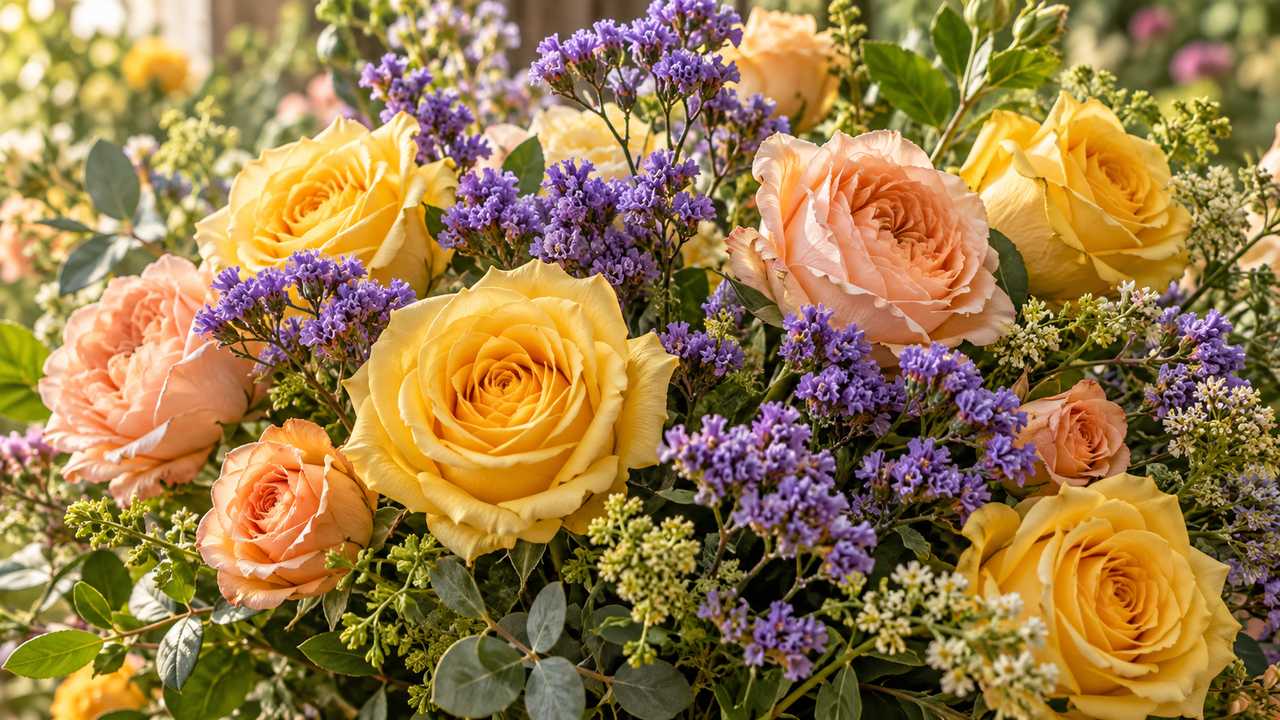
Botanical Character and Symbolic Contrast
Florists commonly use the name statice for species and cultivars of Limonium, especially Limonium sinuatum. Although it is sometimes called sea lavender, it is not true lavender and belongs to the Plumbaginaceae family rather than the mint family. Its branching stems bear clusters of stiff, funnel-shaped calyces in purple, blue, pink, yellow, peach, or white. The small true flowers, often white or cream, emerge from within these colorful structures.
Roses belong to the genus Rosa and are valued for layered petals, fragrance, and extraordinary diversity. Their soft blooms are comparatively transient, while statice remains crisp and colorful for months when dried. This botanical difference explains much of the pairing’s emotional force: roses embody living passion and beauty; statice suggests permanence, resilience, and faithful recollection.
Historical Meanings and Floriographic Traditions
Ancient roses were associated with love, beauty, secrecy, celebration, and mortality. Aphrodite and Venus linked the flower to desire, while Roman banquets used roses as emblems of pleasure and confidentiality. Christian traditions later gave roses devotional meanings, including purity, martyrdom, and sacred love. By the nineteenth century, color and presentation had become especially important within the Victorian language of flowers.
Historical flower dictionaries were never fully standardized; meanings varied by author, region, and edition. Nevertheless, statice was frequently connected with remembrance, sympathy, or lasting beauty. Modern floristry has expanded those associations to include perseverance and enduring success. A bouquet of roses and statice therefore does not have one rigid translation. It typically communicates, “My affection endures,” “I remember you,” or “This beautiful achievement deserves to be remembered.”
In contemporary Western weddings, statice may symbolize a relationship intended to last beyond the wedding day. In memorial arrangements, it reinforces continuity of memory without overwhelming the design with solemnity. Around the Mediterranean, where several Limonium species grow naturally in saline coastal habitats, the plant can also evoke endurance under difficult conditions. These are broad cultural tendencies rather than universal rules, so the recipient’s personal associations should always take precedence.
How Rose and Statice Colors Change the Message
The rose usually supplies the bouquet’s primary emotional statement, while statice modifies it with remembrance, longevity, or textural lightness. Understanding traditional rose color meanings helps refine the message.
| Pairing | Combined Meaning | Best Contexts |
|---|---|---|
| Red roses and purple statice | Passionate love that remains steadfast | Anniversaries, romantic milestones |
| Pink roses and lavender statice | Tender admiration and fond memories | Birthdays, friendship, thank-you gifts |
| White roses and white statice | Reverence, peace, and enduring remembrance | Weddings, condolences, commemorations |
| Yellow roses and blue statice | Loyal friendship and cheerful constancy | Reunions, congratulations, recovery wishes |
| Apricot roses and peach statice | Warm welcome, gratitude, and lasting affection | Hostess gifts, housewarmings, family occasions |
| Orange roses and yellow statice | Enthusiasm, optimism, and enduring achievement | Graduations, promotions, creative launches |
Red and purple make the most dramatic declaration, combining desire with fidelity and memory. Blush pink and pale lavender feel gentler, making them suitable for affection that is intimate but not necessarily romantic. White-on-white can represent spiritual constancy, although white flowers have different funerary or ceremonial associations across cultures. For a warmer message, the symbolism described in apricot rose meaning pairs naturally with peach, cream, or soft yellow statice.
Occasions, Recipients, and Modern Etiquette
- Romantic occasions: Give red, burgundy, or deep pink roses with purple statice for anniversaries, engagements, or long-distance relationships. Include a note explaining that the statice represents love remembered across time or distance.
- Friendship and gratitude: Yellow, pink, or apricot roses with blue or lavender statice suit close friends, mentors, hosts, and supportive colleagues. These combinations communicate appreciation without automatically implying romance.
- Weddings: White, blush, and champagne roses gain movement and permanence from pale statice. Because statice dries well, stems from the bouquet can become meaningful keepsakes.
- Memorials and sympathy: White roses with white, lavender, or blue statice express peace and continuing remembrance. Select restrained colors unless the deceased was known for loving vivid arrangements.
- Achievements: Orange or yellow roses with bright statice celebrate graduations, promotions, retirements, and completed projects. Here, statice signifies lasting success rather than nostalgia.
Modern etiquette favors clarity over secret codes. If symbolism matters, state it briefly on the enclosure card: “For a love that remains vivid,” or “In lasting remembrance.” Consider allergies, fragrance sensitivity, cultural expectations, and the recipient’s color preferences. Avoid intensely romantic red roses for professional gifts unless the relationship clearly supports that message. For hospital deliveries, first confirm the facility’s rules concerning flowers.
Companion Flowers and Bouquet Styling
Statice works best as a supporting flower rather than an evenly distributed filler. Use small branching clouds around focal roses, allowing negative space so the arrangement remains graceful. For an English-garden effect, add lisianthus, sweet peas, spray roses, and trailing jasmine. Eucalyptus, olive foliage, and rosemary create an aromatic Mediterranean composition, while waxflower reinforces the themes of patience and lasting affection.
For memorial work, pair white roses and lavender statice with delphinium, iris, or restrained greenery. Wedding bouquets benefit from tonal layering: blush garden roses, pale pink statice, cream ranunculus, and silvery dusty miller. Rustic arrangements can combine apricot roses, peach statice, yarrow, and seed heads. Avoid crowding statice with too many other tiny fillers; competing textures can make the bouquet appear visually busy.
Care, Vase Life, and Drying
Choose roses with firm outer petals and buds beginning to open. Fresh statice should have vivid, crisp calyces and upright stems; slight papery dryness is natural. Remove foliage that would sit below the waterline, recut stems at an angle with clean shears, and place them promptly in a sanitized vase containing fresh water and floral preservative.
Change the water every two days, rinse the vase, and recut the stems as needed. Keep the arrangement away from direct sun, radiators, drafts, and ripening fruit, which releases ethylene gas and accelerates aging. Roses commonly last about five to ten days depending on cultivar and handling, while statice may remain decorative considerably longer.
To preserve the bouquet, remove failing rose petals and dry healthy stems before discoloration begins. Statice is particularly easy to air-dry: gather it loosely and hang it upside down in a dark, dry, well-ventilated space. Roses require more careful timing and spacing; a reliable drying roses technique helps reduce browning and preserve form. Once dry, display the flowers away from humidity and strong sunlight, and dust them gently rather than washing them.
A Lasting Floral Message
The enduring appeal of roses and statice lies in their balance. Roses offer fragrance, softness, and a rich inheritance of love symbolism; statice contributes resilience, remembrance, and a color that seems to resist time. Their combined meaning can be romantic, commemorative, congratulatory, or warmly affectionate depending on color and context. Chosen thoughtfully and accompanied by a clear personal message, this pairing says more than “you are loved.” It says, “What you mean to me will be remembered.”