Table of Contents
Double Delight Rose Meaning: Playful Contrasts, Joyous Harmony, and Romance
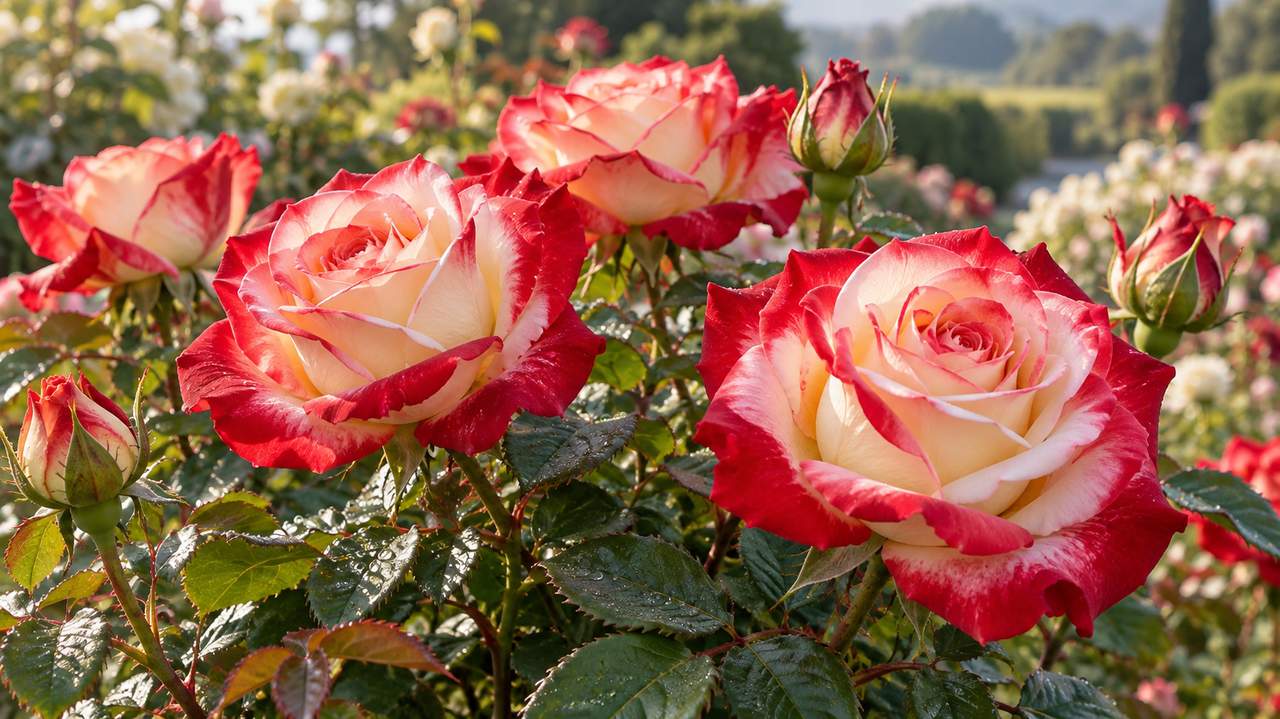
The Double Delight rose is a flower of captivating opposites. Its creamy petals suggest innocence, sincerity, and tenderness, while its strawberry-red margins introduce passion, confidence, and romantic excitement. As the blossom opens and sunlight intensifies its crimson coloring, the rose appears to transform before the viewer’s eyes. This interplay gives the Double Delight rose meaning unusual emotional depth: it represents two pleasures joined in harmony, love that grows richer with time, and the exhilarating balance between affection and desire.
Botanically, Double Delight is a strongly fragrant hybrid tea rose introduced in the United States by rose breeders Herbert C. Swim and Arnold W. Ellis in 1977. Celebrated for its high-centered flowers, long stems, and spicy-sweet perfume, it quickly became one of the world’s best-known modern roses. It was named an All-America Rose Selections winner in the year of its introduction and later entered the World Federation of Rose Societies Hall of Fame. Although it is too recent to possess a fixed Victorian definition, its distinctive coloration can be interpreted through centuries of floral symbolism.
The Primary Meaning of the Double Delight Rose
The central symbolism of Double Delight is joyous duality. The name itself may refer to the combination of spectacular color and exceptional fragrance, although admirers also associate it with the two contrasting colors held within a single bloom. In emotional terms, it says, “You bring me more than one kind of happiness.” It can recognize a relationship that is both comforting and exciting, playful and sincere, familiar and continually surprising.
- Romantic harmony: White or cream conveys sincerity, while red expresses passionate love. Together, they suggest devotion in which tenderness and desire coexist.
- Double happiness: The bloom is associated with shared pleasure, fortunate partnerships, and occasions that unite two reasons for celebration.
- Transformation: Because the red margins develop through light exposure, the flower can symbolize feelings that deepen and become more visible over time.
- Playful contrast: Its dramatic coloring represents complementary personalities, affectionate teasing, and the idea that differences can strengthen a bond.
- Admiration and delight: Its perfume and theatrical appearance communicate fascination, appreciation, and the joy of being in someone’s company.
From Traditional Floriography to Modern Interpretation
In nineteenth-century European and American floriography, red roses were strongly connected with ardent love, while white roses signified purity, truth, reverence, or youthful innocence. Variegated roses could convey charm, fascination, or mixed emotional messages, depending on the guidebook consulted. Floral dictionaries were never completely standardized, so it would be historically inaccurate to assign Double Delight a single Victorian definition. Nevertheless, its red-and-cream composition creates a convincing modern synthesis of established rose meanings.
During the twentieth century, hybrid tea roses became emblems of elegance, courtship, and horticultural achievement. Double Delight added a sense of spectacle: every flower develops somewhat differently according to temperature, maturity, and ultraviolet light. Contemporary floristry therefore reads it as a symbol of individuality and evolving affection. In weddings, it may represent two lives retaining their distinct characters while forming a harmonious union.
Cultural context also matters. In many Western settings, red-edged roses are romantic, but their pale centers soften the intensity of a conventional red bouquet. In parts of East Asia, red is associated with celebration, vitality, and good fortune, making the cultivar suitable for joyful milestones. White can signify purity and refinement, yet in some cultures it is also connected with mourning. For international recipients, a warm card explaining the intended message prevents ambiguity.
| Feature or Context | Symbolic Interpretation | Best Use |
|---|---|---|
| Cream-white center | Sincerity, tenderness, honesty, and emotional safety | New romance, reconciliation, or heartfelt thanks |
| Crimson-red edges | Desire, vitality, confidence, and passionate admiration | Anniversaries, dates, and romantic declarations |
| Changing coloration | Growth, discovery, and love deepening with time | Milestone birthdays, engagements, and renewed vows |
| Powerful fragrance | Sensual memory, enchantment, and lingering affection | Intimate dinners and meaningful home arrangements |
| A pair of blooms | Partnership, reciprocity, and two joys shared | Couples, engagements, or dual celebrations |
Shades, Variations, and Bouquet Messages
No two Double Delight blooms are colored identically. A flower cut early or grown under protected conditions may remain largely ivory, emphasizing gentleness and understated affection. A mature, sun-exposed bloom may develop broad red areas, making its message more passionate and celebratory. Cooler conditions can also influence color development. Florists should therefore select individual stems according to the intended emotional tone rather than expecting complete uniformity.
The number and arrangement of roses further refine the message. A single stem expresses distinctive admiration: “You delight me.” Two blooms reinforce companionship and mutual joy. A compact bouquet feels intimate and romantic, while a dozen stems creates a confident declaration of love. In bridal work, combining open flowers with tighter buds can represent a relationship continuing to unfold.
When to Give Double Delight Roses
Double Delight is particularly appropriate for anniversaries because its changing colors evoke love strengthened by shared experience. It is equally effective for engagements, Valentine’s Day, romantic birthdays, first-date milestones, and vow renewals. Its cheerful dual coloring can also mark two happy events occurring together, such as a graduation and new job or a birthday and retirement.
The rose need not be restricted to romantic partners. Give it to a close friend whose personality balances warmth with spirited humor, a parent who combines strength and gentleness, or a mentor who has brought both inspiration and reassurance. For a non-romantic recipient, use an airy mixed arrangement and write a clear note focused on gratitude, admiration, or shared happiness.
Modern etiquette favors meaning over rigid numerical rules. Choose fresh, locally available stems when possible, avoid heavily thorned presentation bouquets, and include a card whenever the relationship could make red coloring seem ambiguous. Consider fragrance sensitivity as well: Double Delight’s perfume is one of its glories, but it may be overwhelming in hospitals, offices, or small dining spaces.
Companion Flowers and Styling
For an elegant romantic bouquet, pair Double Delight with white lisianthus, ivory spray roses, sweet peas, or pale ranunculus. These companions echo the creamy center without competing with the red margins. Seeded eucalyptus, olive foliage, or delicate jasmine vine introduces movement while allowing the roses to remain the focal point.
Warm peach and coral companions make the arrangement friendlier and less formal. Understanding apricot rose meaning helps create a bouquet centered on welcome and affectionate hospitality, while the salmon rose meaning bridges friendship and romantic energy. For an opulent, unusual palette, consult mauve rose symbolism and add muted mauve lisianthus or scabiosa.
Greenery can alter the mood as effectively as flowers. Sage foliage produces a garden-inspired arrangement, glossy ruscus feels polished, and mint-toned accents suggest freshness and equilibrium. The mint green rose significance is especially relevant when styling Double Delight for housewarmings, business milestones, or prosperous new beginnings. Avoid combining too many saturated red flowers, which can obscure the cultivar’s beautiful edging.
Care, Vase Life, and Cultivation
For cut roses, begin with a spotless vase and fresh, room-temperature water mixed with commercial flower food. Remove all foliage below the waterline, then recut one to two centimeters from each stem at a sharp angle using clean shears. Display the arrangement away from direct sun, heaters, ripening fruit, and strong drafts. Refresh the water every one or two days, clean the vase, and recut the stems if uptake slows. With good handling, quality stems commonly remain attractive for about five to seven days.
In the garden, Double Delight performs best in fertile, well-drained soil with generous sunlight and good air circulation. Morning sun helps dry foliage, while strong light encourages the characteristic red pigment. Water deeply at soil level rather than wetting the leaves, mulch to stabilize moisture, and feed according to local rose-growing recommendations. Like many hybrid teas, it can be vulnerable to fungal diseases such as black spot and powdery mildew, so spacing, sanitation, and climate-appropriate preventive care are important. Regular deadheading encourages repeat flowering throughout the growing season.
A Rose of Twofold Happiness
The enduring Double Delight rose meaning lies in the beauty of contrast made harmonious. Cream and crimson, tenderness and passion, fragrance and visual drama all coexist within one flower. Whether offered to a beloved partner, an admired friend, or someone celebrating a richly deserved milestone, it communicates layered joy rather than a single, simple sentiment. Chosen thoughtfully and accompanied by a clear personal message, Double Delight becomes more than an exquisite rose: it is a living emblem of affection that grows bolder in the light.