Table of Contents
Deep Plum Rose Meaning: Opulent Mystery, Regal Splendor, and Seduction
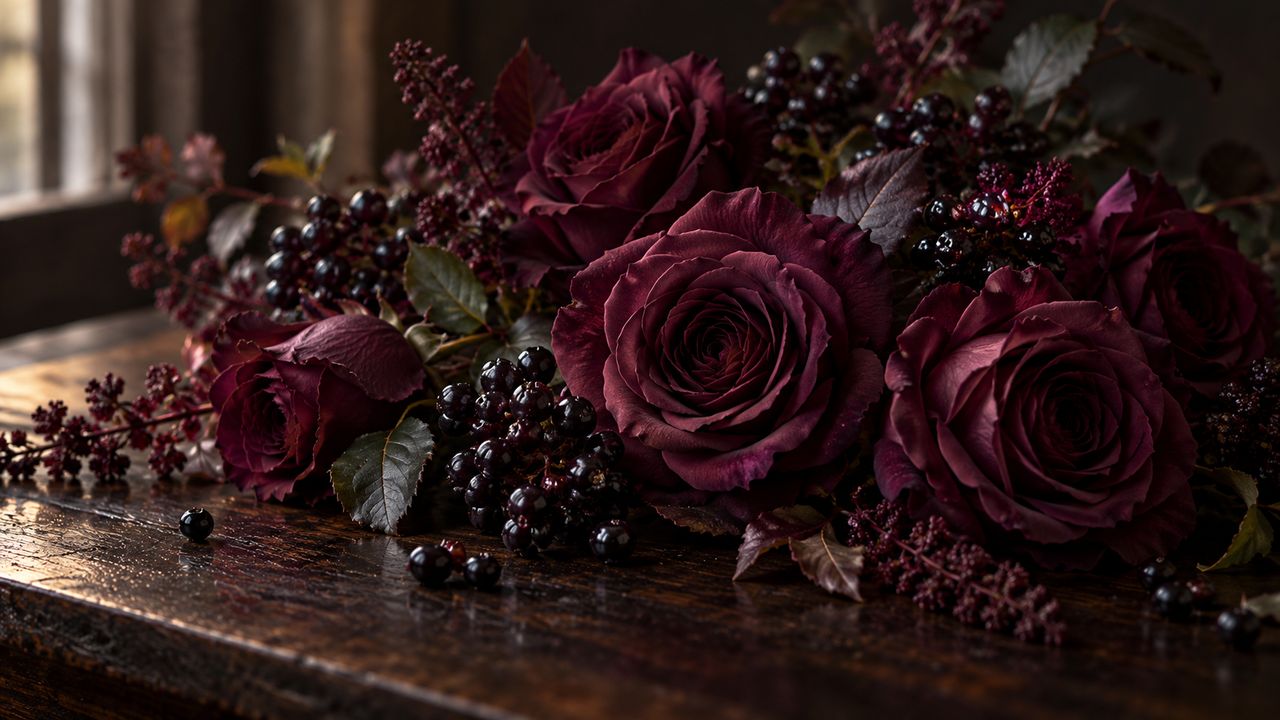
The deep plum rose occupies a compelling place in modern floriography. Its petals—somewhere between burgundy, aubergine, mulberry, and midnight violet—suggest velvet chambers, antique jewels, and secrets shared after dusk. The central deep plum rose meaning combines opulent mystery, regal splendor, mature romance, and controlled seduction. It is less openly passionate than a scarlet rose and more earthly than a violet bloom, making it an eloquent choice when feelings are intense but sophisticated.
Historically, Victorian flower dictionaries did not consistently list “plum” as a separate rose color. The category emerged gradually as hybridizers produced increasingly complex mauve, purple, and wine-toned cultivars. Nevertheless, its symbolism draws from older associations: purple dyes once signified wealth and sovereignty, dark red represented profound love, and richly colored roses conveyed refinement. Botanically, plum is not a single pigment but a visual effect created by concentrations and combinations of anthocyanins, petal structure, growing conditions, and light.
Core Meanings of Deep Plum Roses
Opulence and refined luxury are among the flower’s strongest messages. Because saturated purple was historically difficult and expensive to reproduce in textiles, plum tones inherited an aura of rarity. A bouquet of deep plum roses can honor someone with cultivated taste or mark an occasion defined by abundance, achievement, and elegance.
Mystery and fascination form another essential layer. Dark petals seem to change between wine-red and purple as the light shifts, giving the bloom an elusive character. Plum roses therefore say, “You intrigue me,” or “There is more to discover.” This makes them related to the symbolism of blue rose mystery, although plum roses feel warmer, more sensual, and more attainable.
Mature romance and seduction distinguish plum roses from sweeter pinks and more direct reds. Their message is rarely innocent infatuation. Instead, they imply magnetic attraction, emotional depth, intimacy, and confidence. They suit an established relationship especially well, communicating desire without resorting to an obvious declaration.
Regal dignity and personal power arise from purple’s long association with emperors, monarchs, clergy, and ceremonial authority. Given to a mentor, performer, executive, or creative leader, deep plum roses can express admiration for presence and accomplishment rather than romance.
Transformation and depth are modern interpretations inspired by the color’s position near the darker edge of the floral palette. Plum roses may recognize resilience, a new identity, or a life transition. Unlike the stark associations explored in black rose meaning, plum retains visible warmth and usually emphasizes renewal rather than finality.
Historical and Cultural Interpretations
In nineteenth-century European floriography, roses were decoded through color, stage of bloom, presentation, and even the presence of thorns. Dark crimson roses commonly conveyed mourning or enduring passion, while lavender and purple flowers suggested enchantment, distinction, or majesty. Today’s deep plum rose inherits portions of all these traditions, but no universal historical dictionary assigns it one fixed definition.
In contemporary Western floristry, plum roses often appear in autumn weddings, winter celebrations, luxury arrangements, and dramatic romantic bouquets. In fashion-conscious settings, they signal individuality and restrained glamour. Across cultures where purple is connected with spirituality, status, or mourning, interpretation depends heavily on local custom. In some European and Latin traditions, very dark flowers may feel solemn; elsewhere, saturated purple is celebratory and prestigious. When gifting internationally, consider the recipient’s beliefs rather than assuming color symbolism is universal.
| Rose Shade | Principal Message | Best Context | Emotional Tone |
|---|---|---|---|
| Deep plum | Mystery, luxury, mature desire | Anniversaries, evening events, milestones | Intense and sophisticated |
| Burgundy | Devotion, unconscious beauty | Romantic declarations | Passionate and solemn |
| Mauve or lavender | Enchantment, wonder, uniqueness | New romance, artistic gifts | Dreamy and delicate |
| Cream | Grace, charm, thoughtfulness | Weddings, thanks, friendship | Warm and understated |
| Near-black purple | Rebirth, farewell, dramatic change | Memorials, transformations | Dramatic and contemplative |
Shade, Form, and Bouquet Context
Color temperature changes the message. Red-leaning plum roses emphasize passion and devotion; purple-leaning varieties suggest royalty, creativity, and mystery. Dusty plum feels nostalgic and romantic, while an almost-black aubergine bloom creates a gothic or ceremonial mood. Garden-style, many-petaled roses appear lush and poetic; high-centered hybrid teas communicate polish and formality.
Quantity and presentation matter as much as shade. A single long-stemmed plum rose is an intimate statement of fascination. Six or twelve create unmistakable romantic weight, while a large monochromatic arrangement projects grandeur. If the intention is platonic, include a clear card and combine plum with softer flowers. Pairing it with ivory blooms invokes the gentleness associated with cream rose symbolism, moderating seduction with gratitude and grace.
Artificially tinted roses require separate consideration. Some “plum” stems are dyed, sprayed, or enhanced rather than naturally bred in that shade. This does not make them unsuitable, but naturally colored cultivars generally offer greater tonal variation and botanical character. Like the techniques associated with the rainbow rose meaning, color treatment can introduce a deliberate message of fantasy, theatricality, or creative celebration.
When and to Whom Should You Give Them?
- Romantic partners: Choose deep plum roses for anniversaries, date nights, engagements, or a private declaration of deepening desire.
- Creative people: Give them to artists, designers, writers, or performers whose originality and magnetism you admire.
- Leaders and mentors: A structured arrangement can recognize authority, accomplishment, retirement, or promotion without appearing overly sentimental.
- Wedding couples: Plum roses suit autumn, winter, jewel-toned, vintage, and candlelit weddings, especially when balanced with pale flowers.
- Someone beginning again: Their darkness and warmth can honor resilience after a career change, recovery, relocation, or personal reinvention.
Modern etiquette depends on clarity. Because these roses can imply sensual attraction, avoid sending an unexplained all-plum bouquet to a colleague or casual acquaintance. For professional congratulations, use a mixed arrangement and a direct message such as “In admiration of your achievement.” Very dark arrangements may also seem funereal, so add warmer foliage or lighter blooms for birthdays and joyful events. At memorials, verify family preferences and religious customs.
Companion Flowers and Styling
For luxurious romance, combine plum roses with burgundy ranunculus, chocolate cosmos, scabiosa, and trailing amaranthus. Cream roses, white lisianthus, or ivory peonies create luminous contrast and make the plum color appear richer. Blush garden roses soften the mood for weddings, while apricot dahlias add autumn warmth. For a contemporary arrangement, use fewer flower varieties and sculptural foliage such as smokebush, copper beech, or dark-leaved ninebark.
Silver eucalyptus lends cool elegance, but too much can mute the rose’s warmth. Gold-toned vessels emphasize regality; smoked glass supports mystery; matte ceramic creates a modern, editorial look. Avoid combining plum with many equally saturated jewel tones unless exuberance is intentional—the roses can lose their visual authority in an overcrowded palette.
Botanical Care and Vase Longevity
Fresh roses generally last five to ten days, depending on cultivar, harvest stage, and handling. Select stems with firm petals and buds that have begun to loosen; tightly closed roses may have been cut too early to open properly. Remove foliage below the waterline, recut one to two centimeters from each stem at a sharp angle, and place the flowers promptly in a clean vase with commercial flower food.
Change the water every two days, wash the vase, and recut the stems if their ends become discolored. Keep the arrangement away from direct sun, radiators, drafts, and ripening fruit, which releases ethylene gas and accelerates aging. If a rose develops a bent neck, recut it and support the stem upright in deep, fresh water while it rehydrates.
Gardeners seeking plum-colored roses should remember that flower color may vary with climate, soil, petal age, and season. Roses need abundant sun, fertile but well-drained soil, steady moisture, airflow, and cultivar-appropriate pruning. Unlike hydrangeas, rose color cannot be predictably changed simply by altering soil pH. Purchase plants from reputable growers using photographs taken under natural light.
A Flower of Confident Complexity
The deep plum rose meaning is ultimately one of layered intensity: desire tempered by dignity, darkness warmed by affection, and luxury enriched by mystery. It can seduce, congratulate, commemorate, or honor transformation, but its success depends on shade, companions, setting, and message. Chosen thoughtfully, deep plum roses do more than decorate a room. They communicate that the recipient—and the emotion being expressed—is rare, compelling, and worthy of closer attention.